
Tchiloli: São Tomé's Five-Century Theatre of Justice Thrives After UNESCO Milestone
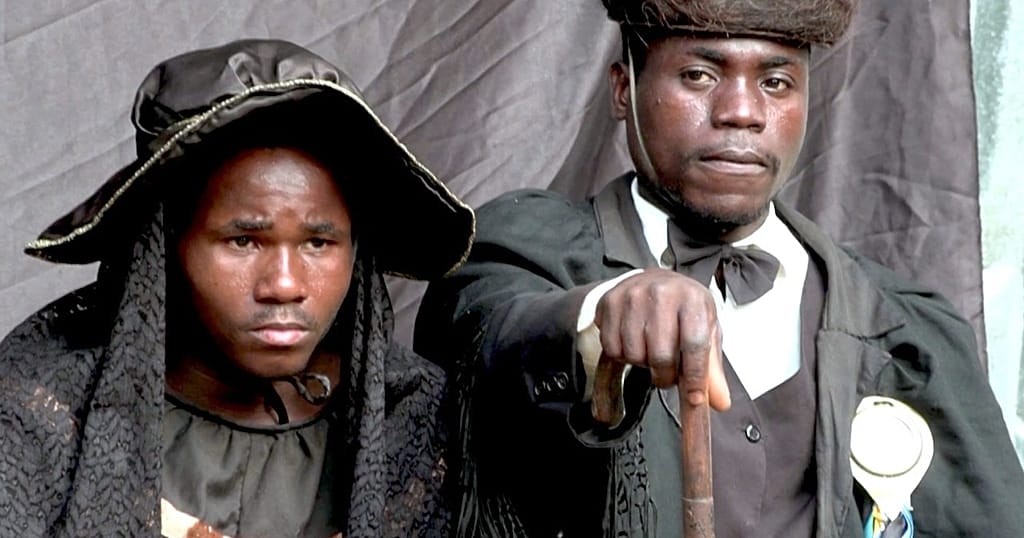
In a dusty courtyard in the Boa Morte quarter of São Tomé, a carved bamboo flute trills, the drums pick up the pace, and a troupe of actors in frock coats, top hats and white masks brings a medieval European tragedy to life on an island off Africa's west coast.
In a dusty courtyard in the Boa Morte quarter of São Tomé, a carved bamboo flute trills, the drums pick up the pace, and a troupe of actors in frock coats, top hats and white masks brings a medieval European tragedy to life on an island off Africa's west coast. This is Tchiloli, the open-air theatre tradition that Portugal's colonialists carried to the Gulf of Guinea more than 500 years ago — and that this small archipelago nation has made its own.
Tchiloli: São Tomé's Five-Century Theatre of Justice Thrives After UNESCO Milestone
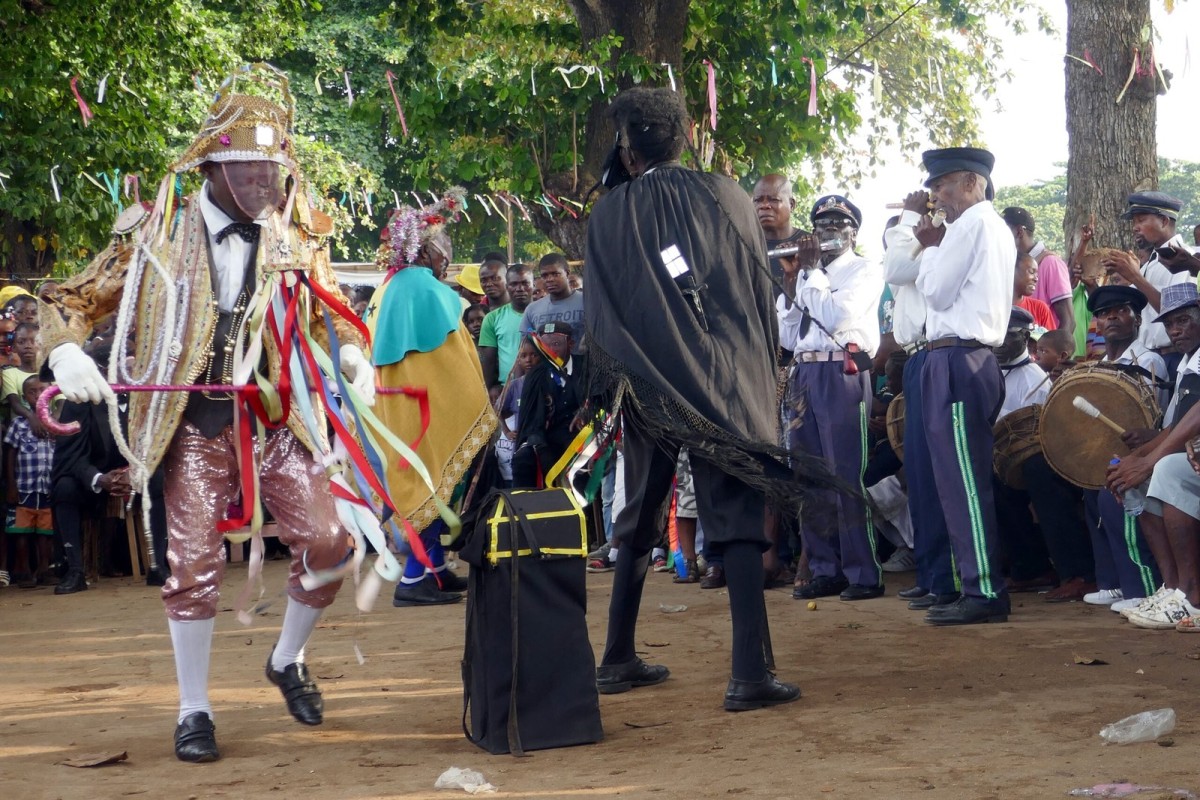
Boa Morte, São Tomé and Príncipe — On a September evening in the Boa Morte neighbourhood, spectators young and old gathered in a courtyard ringed by pastel houses to watch a story that began in the courts of Charlemagne. For hours, the Formiguinha da Boa Morte troupe danced, declaimed in Old Portuguese and acted out a murder trial in which an emperor's own son is brought to justice. The crowd talked back, cheered and sometimes joined the action — a ritual of communal judgement that has outlived the colonial order that brought it here.
A European Play, Reborn in the Tropics
To understand Tchiloli, you must first understand its strange and wonderful journey. The story draws on the legends of the Carolingian dynasty, the family that ruled much of Western Europe from the 8th to the 10th centuries AD. At its heart is a tale of power, grief and accountability: Charlemagne's heir, Charles the Younger, kills a knight during a hunting meet, a moment of reckless violence that sets the entire court into turmoil. The Marquis of Mantua, uncle of the victim, does something extraordinary for his time — he demands that the emperor submit his own son to justice, that no crown shall shield a murderer.
The script is performed in Old Portuguese, a language that rolls off the tongues of these island actors with a cadence that feels both ancient and alive. Scholars note that while the Portuguese brought this theatrical tradition to the archipelago in the 16th century, written evidence points more firmly to its flourishing in the late 19th century. But the oral tradition runs deeper than any document, passed from generation to generation in the courtyards and public squares of São Tomé, where Tchiloli has always been performed in the open air.
What strikes any visitor is how completely this European import has been transformed. Over generations, the performers integrated local practices, rhythms and cultural references until the play became something entirely new — a creolized art that belongs to São Tomé now, not to Portugal. The formal, stiff movements of medieval European theatre gave way to the swaying hips and grounded footwork of African performance. The story remained, but its soul was re-baptized in tropical waters.
The result is a living paradox: a medieval European tragedy that speaks directly to the daily realities of a small island nation in the Gulf of Guinea. The emperor's court becomes any government; the murdered knight becomes any citizen; the demand for justice becomes a communal prayer. This is why Tchiloli has survived while so many other colonial imports faded into museum pieces — because the people of São Tomé took it, broke it open, and filled it with their own breath.
When you watch the Formiguinha da Boa Morte troupe perform, you are not watching a historical re-enactment. You are watching a people rehearse their deepest values, using a story that arrived on slave ships and colonial caravels, and transforming it into a mirror held up to their own society. The past and present collide in that dusty courtyard, and the result is pure, unadulterated São Tomé.
Thirty Actors, One Question: Can Justice Reach the Powerful?
The performance unfolds with a cast of about thirty actors, each representing a piece of the justice system — the victim's family demanding accountability, the emperor and his court defending their privilege, and the legal and public figures who must decide whether the law applies equally to princes and peasants. This is not a simple morality play; it is a full courtroom drama, complete with arguments, evidence and a public reckoning that keeps spectators on the edge of their seats for hours.
The masks are among the most striking elements of the production. Actors wear oval white masks made of moulded mosquito netting, painted with eyes and mouth, smaller than the face itself. These masks are removed only after sunset, when the performance reaches its climax and the actors reveal their human faces to the crowd. There is something deeply symbolic in this — the mask represents the role, the institution, the weight of history, but underneath remains the ordinary person, the neighbour, the friend.
The costumes are an anachronistic delight: dark frock coats trimmed with ribbons and sequins, bicorn hats and top hats, white gloves, beards and wigs that would look at home in a European royal court of centuries past. Yet these garments have been adapted, mended and re-imagined by generations of island tailors, who add their own flourishes and colours. The result is a visual feast that mixes European formality with African creativity, creating a style that exists nowhere else on earth.
The music drives everything forward. Drums, bamboo flutes and maracas create a hypnotic rhythm that underpins the declamations and dances. A carved bamboo flute opens the performance, its high, plaintive notes cutting through the evening air like a call to attention. The orchestra sits at the edge of the performance space, their instruments passed down through families, each flute and drum carrying the memory of countless performances.
Typically, the ritual begins with a ceremony led by women, who prepare the space and invoke the ancestors before the male actors take their positions. This opening is sacred — it transforms the ordinary courtyard into a stage where justice will be enacted and where the community will reaffirm its values. The women's role, though often behind the scenes, is fundamental to the spiritual power of the performance.
The audience is never passive. Throughout the performance, spectators react loudly to the unfolding drama, cheering the Marquis of Mantua's demands for justice, booing the emperor's attempts to protect his son, and sometimes even joining the action when the spirit moves them. Performances last several hours, stretching deep into the night, and no one leaves early. This is theatre as communal ritual, staged during the dry season known as gravana, roughly June to September, and at Catholic patronal saints' feasts throughout the year.
'Justice Does Not Distinguish Between Rich and Poor'
Why does this tradition endure, five centuries after it arrived on these shores? The answer, according to those who keep it alive, is simple: it speaks to something fundamental in the human heart. Marco Carvalho, 61, has devoted more than three decades to Tchiloli, playing the traditional pitu bamboo flute for the Formiguinha da Boa Morte troupe. His breath has carried the melody of countless performances in the courtyards of Boa Morte.
"People love this culture because it speaks to something very real: justice," Carvalho told africanews. "Justice makes no distinction between the rich and the poor." His words carry the weight of a man who has seen his country struggle with inequality, with the legacy of colonialism, with the challenges of development — and who has found in this ancient play a timeless answer to those struggles.
Carvalho is refreshingly honest about the tradition's origins. "Tchiloli in itself is not originally from the island," he admitted. "It is an art adapted from European culture." But this honesty does not diminish his pride — quite the opposite. The adaptation, the creolization, the making-it-our-own is precisely what makes Tchiloli valuable. It proves that culture is not static, that people can take the tools of oppression and transform them into instruments of liberation and identity.
Maribel Borja, a 19-year-old spectator, offered her own interpretation of the play's enduring appeal. "Whoever sows evil reaps evil," she said, paraphrasing the moral at the heart of the drama. For her, the story teaches that everything must be fair regardless of religion or social class — a lesson that resonates deeply in a country where the gap between the powerful and the ordinary citizen can sometimes feel as wide as the ocean that surrounds these islands.
The quest for justice at the heart of Tchiloli is not abstract or theoretical. It is a lived demand, repeated generation after generation, that no one — not even an emperor's son — is above the law. In a world where the powerful often escape accountability, this small island nation has kept alive a theatrical tradition that insists on the opposite: that justice must reach everyone, that the poor man's grief is as valid as the prince's defence.
A 'Unifying Art' Wins UNESCO Recognition
In December 2025, the world finally took notice. UNESCO, at its 20th session of the Intergovernmental Committee, inscribed "Tchiloli, living theatre of Sao Tome and Principe in the quest of justice" on the Representative List of the Intangible Cultural Heritage of Humanity. This was the first UNESCO inscription of any kind for São Tomé and Príncipe, a historic moment for a two-island nation in the Gulf of Guinea with a population of roughly 220,000 people.
The culture ministry celebrated the recognition with language that captures the tradition's significance, describing Tchiloli as a "unifying art" that "reaffirms the primacy of law, the rule of law, the virtues of dialogue, and promotes living together and peaceful coexistence." These are not empty words — they reflect the role Tchiloli has played in São Toméan society for generations, bringing communities together around shared values of justice and accountability.
The UNESCO listing comes at a moment of cultural awakening for the archipelago. In August 2026, the nation's colonial roças plantations — the vast agricultural estates that once formed the backbone of the island's economy — recently joined UNESCO's World Heritage list. Together, these recognitions signal that São Tomé and Príncipe is claiming its place on the world's cultural map, not despite its colonial history but because of how it has transformed that history into something uniquely its own.
For a small island state, international recognition carries practical as well as symbolic weight. It opens doors to funding for preservation and transmission, attracts researchers and cultural tourists, and — perhaps most importantly — instils pride in the younger generation. When the world says your culture matters, it becomes easier to convince your children to learn the flute, to memorize the Old Portuguese lines, to carry the masks into the future.
The Gulbenkian Foundation in Portugal has long documented Tchiloli as part of São Tomé's cultural heritage, recognizing it as a living bridge between European and African memory. This documentation has been crucial in building the case for UNESCO recognition, providing scholars and policymakers with evidence of the tradition's depth, authenticity and continuing vitality.
Keepers of the Flame: Passing the Masks to a New Generation
Jardel Moniz Fernandes, 35, recently fulfilled a childhood dream when he joined the troupe, where he plays Ganelon, the figure who betrays Charlemagne to the Saracens at the Battle of Roncevaux. "I love it all, really all of it: the dancing, the sound of the flute, the drum," Fernandes said.
Fernandes has two children, and he is already planning for the future. "I have two children, and soon I'll start teaching my oldest to play the character of Kata, a young boy who, in the play, has to deliver a letter," Fernandes said. "I'll start getting him ready now so that he can also be part of the group."
This is how Tchiloli survives: roles, costumes and texts pass down within families, with one actor often keeping the same character for life. The emperor grows old in his role, the Marquis of Mantua carries his grief for decades, and when an actor can no longer perform, his son or nephew steps into his shoes. The masks are not just props; they are heirlooms, carrying the memory of all the faces that have worn them.
Young people learn by observing and practising, absorbing the tradition through immersion rather than formal instruction. But in recent years, Tchiloli has also been taught in schools, ensuring that even children from families without a strong theatrical tradition can discover this art. The transmission is both informal — within families and performance groups — and formal, through educational programmes that introduce students to the history, music and drama of Tchiloli.
One notable evolution is the emergence of the all-female troupe Txiloli Feminino de Cachoeira, founded in 2018 in the Mé-Zóchi district. Historically, all roles including women's were played by men, with women serving as the ritual leaders who opened performances and playing rattle and bell offstage. The new troupe breaks with this tradition while honouring its spirit, proving that Tchiloli can adapt to changing gender norms without losing its essence.
What Tchiloli Teaches Africa About Cultural Reclamation
The story of Tchiloli offers a profound lesson for Africa and the diaspora: a tradition imported through the painful context of colonialism can be re-interpreted and re-appropriated over generations until it becomes an authentic expression of local identity. The play arrived with the colonizers, but it belongs to the colonized. This is not cultural appropriation in the negative sense — it is cultural reclamation, the alchemy by which oppressed peoples transform the tools of their oppressors into instruments of their own self-definition.
Africa is full of such examples. The Pan-African Film and Television Festival of Ouagadougou, known as FESPACO, took a European art form — cinema — and made it a vehicle for African stories and aesthetics. The Saint-Louis Jazz Festival in Senegal reclaims a musical tradition born in the Americas and reconnects it to its African roots. The Dakar Biennale has become a global platform for contemporary African art, challenging the Western gaze and asserting African creativity on its own terms.
The word "Tchiloli" itself tells this story of transformation. It is thought to come from the Portuguese "tiroliro", a fife, named after the bamboo flutes that provide the tradition's musical foundation. A Portuguese word for a European instrument became the name of an African theatrical tradition — language itself was creolized, bent to new purposes, given new meaning in a new land.
The Gulbenkian Foundation and other institutions have documented Tchiloli as a living bridge between European and African memory, recognizing that this tradition does not belong exclusively to either continent. It is a hybrid, a creole, a testament to the fact that culture flows across boundaries and transforms everything it touches. In an era of rising nationalism and cultural purity claims, Tchiloli stands as a powerful counter-narrative: identity is not about purity but about synthesis, not about origins but about what we make of what we receive.
For contemporary African audiences, the quest for justice at the heart of the play speaks directly to ongoing struggles for accountable governance, rule of law and human dignity. When the Marquis of Mantua demands that the emperor submit his own son to justice, he articulates a principle that remains revolutionary in too many parts of the world: no one is above the law. Tchiloli keeps this principle alive in the public imagination, reminding citizens that justice is not a gift from the powerful but a right that must be demanded.
When the sun sets over Boa Morte and the actors finally remove their masks — a ritual the tradition allows only after nightfall — Tchiloli becomes something more than a theatrical tradition. It is a living philosophy, a communal meditation on power and accountability, a promise that the quest for justice will continue as long as there are voices to declaim and flutes to sing. São Tomé and Príncipe has given the world many gifts — cocoa, coffee, the warmth of its people — but Tchiloli may be the most precious of all: a five-century-old reminder that justice is possible, even for the powerless, even against the mighty.
This article was produced with AI-assisted research and editorial support. Sources: Africanews, AFP, UNESCO Intangible Cultural Heritage.
By Amara Diop, Staff Writer
What's Your Reaction?
 Like
0
Like
0
 Dislike
0
Dislike
0
 Love
0
Love
0
 Funny
0
Funny
0
 Wow
0
Wow
0
 Sad
0
Sad
0
 Angry
0
Angry
0

West Africa/Sahel Correspondent at Global1.News. Dakar-based journalist covering politics, security, climate, and development across Francophone and Anglophone West Africa. Tells the stories of a region undergoing profound transformation.













Comments (0)