
UAE Cuts Off Iran: Gulf Giant Suspends All Trade as Missiles Fly and Trump's Economic War Looms
The UAE suspended all trade with Iran after missile attacks on its waters and ADNOC tankers, joining Trump's "Operation Economic Outcast" sanctions push. Hormuz oil flows have collapsed to 4.9 million barrels daily, with Iran's currency at record lows and maritime attacks escalating.
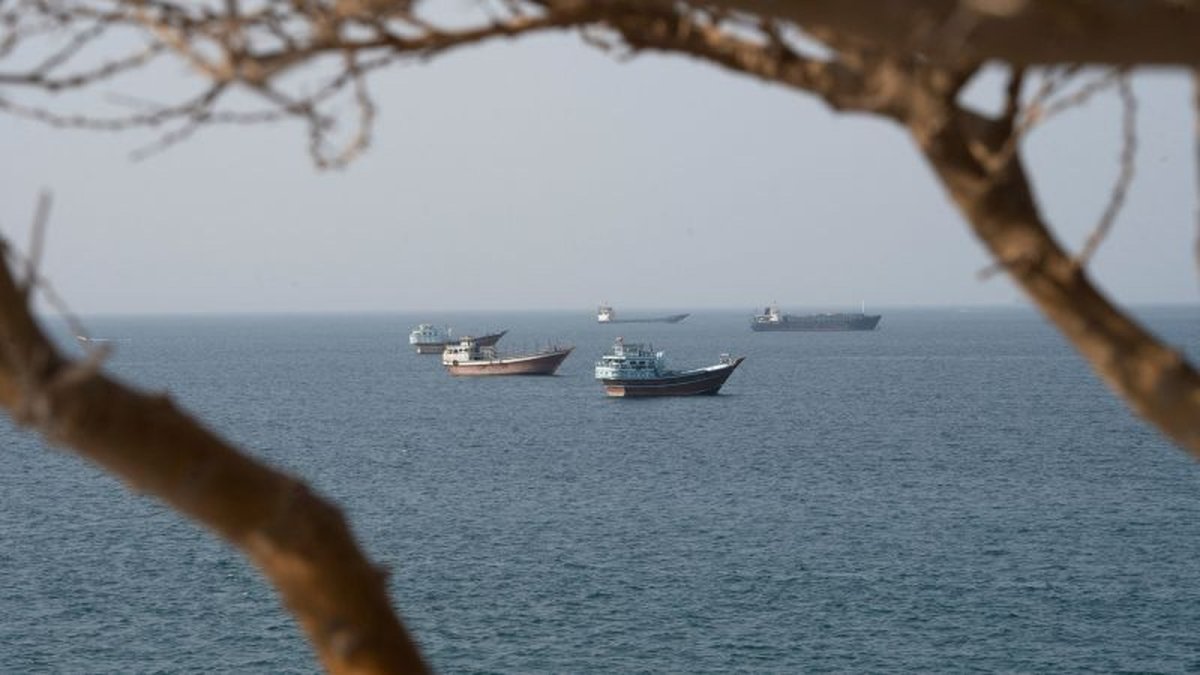
UAE Cuts Off Iran: Gulf Giant Suspends All Trade as Missiles Fly and Trump's Economic War LoomsThe United Arab Emirates has severed all commercial and financial ties with Iran, removing Tehran's second-largest trading partner just as Washington prepares to unleash what it calls the "most crushing economic operation" in history. The suspension, announced late Monday night and early Tuesday morning, August 17-18, 2026, came just hours before Iran fired two ballistic missiles toward Emirati territory, an attack Abu Dhabi says was directed at shipping.Afra Al Hameli, Director of Strategic Communications at the UAE Ministry of Foreign Affairs, announced the decision in a statement on X. "In light of regional escalations that undermine regional and international peace and security, all activities, trade exchanges, and financial transactions with Iran have been suspended until further notice," Al Hameli wrote, adding that the UAE "remains firmly committed to safeguarding the integrity of the international financial system, in line with international law and the highest global standards." The suspension is immediate and indefinite, leaving businesses on both sides of the Gulf scrambling to unwind contracts and reroute shipments.
Missiles Fired at UAE Waters as Tehran Denies Aggression
The decision was not made in a vacuum. On Tuesday, August 18, Iran launched two ballistic missiles toward the Emirates; the UAE said one projectile landed inside Emirati territorial waters and the second fell outside its territory, and later clarified the salvo had been directed at shipping lanes. Tehran categorically rejected the claim. Foreign ministry spokesman Esmail Baghaei said the accusation "runs counter to the principle of good-neighborliness."Earlier in the conflict, the Emirates recalled its ambassador from Tehran and shuttered Iran-linked schools and a hospital. But the trade suspension is a far more consequential step. The UAE had long balanced its security relationship with Washington against deep economic ties to Iran; that balancing act has collapsed under repeated attacks and a war that began on February 28, 2026, when US and Israeli airstrikes killed several Iranian officials, including Supreme Leader Ali Khamenei.ADNOC Tankers Under Fire in the Strait of Hormuz
The immediate trigger appears to be the sustained targeting of ADNOC's fleet. On August 8, a missile struck an ADNOC carrier crossing the Strait of Hormuz. Six days later, on August 14, two more ADNOC vessels were targeted in the same waterway. No casualties were reported, but the message was unmistakable: the UAE's economic lifeline was in Tehran's crosshairs.Abu Dhabi condemned the strikes as a "flagrant violation" of the UN Security Council resolution on freedom of navigation, declaring that "targeting commercial shipping and using the Strait of Hormuz as a tool of economic coercion or blackmail represents acts of piracy by Iran's Revolutionary Guard Corps." The human cost of the broader conflict has been significant: at least a dozen people have been killed in the UAE during the war, with more than 200 injured, according to The National. The attacks are part of a pattern of Iranian retaliation against Gulf states perceived as aligned with the US-led coalition — a pattern that has now forced the UAE to choose sides.Hormuz Traffic Collapses to a Quarter of Pre-War Levels
The suspension is set against catastrophic disruption in the Strait of Hormuz, the world's most critical oil chokepoint. Crude flow through the strait has fallen to less than a quarter of pre-war levels, averaging just 4.9 million barrels a day in Q2 2026, down from 21.6 million barrels a day in Q4 2025. The US Energy Information Administration expects flows to remain severely constrained through August, with a slow recovery beginning in September; it projects Middle East production shut-ins at an average of 5.5 million barrels a day in July and has raised its Brent forecast to $85 a barrel for Q3, an $11 increase.Kpler data shows that while total Hormuz crossings rose 2.5% to 121 last week, laden transits — ships actually carrying cargo — fell 27%. Sanctioned crossings increased from 9 to 16, and use of Iran's unilateral routing scheme climbed to 46.3% of crossings, a sign Tehran is forcing its own rules on the waterway. The US Strategic Petroleum Reserve has fallen by about 3.7 million barrels to 289.7 million, the lowest level since November 1982; Barchart says the US now holds about 41 days of crude oil inventory, the lowest in half a century.Trump Declares "Most Crushing Economic Operation"
President Donald Trump has moved to capitalize on the UAE's defection. On Wednesday, August 19, he said the situation with Iran is "so good" and suggested talks could reopen "maybe at some point," but a US official said Trump told envoys the previous day to halt their conversations with Tehran. The mixed signals continued when Trump announced on Truth Social that the US would begin "the MOST CRUSHING ECONOMIC OPERATION EVER TAKEN AGAINST ANY COUNTRY," warning of consequences for any nation providing "any type of lifeline to Iran." "Oil smuggling, swap lines, cash transfers, exchange houses, ship registries, front companies — It all needs to stop NOW," he wrote.The rhetoric was backed by action on Monday, August 24, when Treasury Secretary Scott Bessent unveiled the broad outlines of a new initiative dubbed "Operation Economic Outcast," per Axios. Bessent said every country would "be given a defined timeline to shut down its Iran-related business activity" and would face secondary sanctions if it failed to comply. The Treasury issued determinations against five critical sectors — digital assets, technology, gold, aviation, and shipping — and the Office of Foreign Assets Control sanctioned nearly 60 entities, individuals, and vessels. OFAC also suspended general licenses that had authorized remittance payments to Iran and Iranian access to the US cultural and academic system.Treasury Secretary Bessent Warns "No One Is Above the Reach"
Bessent was unapologetic. "We are level-setting with every country to tell them our expectations," he said. "So when the hammer of U.S. Treasury actions falls upon them, they will have no one to blame but themselves." Asked about China, the biggest buyer of Iranian oil, he was blunt: "no one is above the reach of U.S. sanctions." He then added: "Why would I want to blow up the global financial system?" — a hint of the tension between strangling Iran's economy and avoiding a global meltdown.Tehran's response was defiant. Parliament speaker Mohammad Bagher Ghalibaf claimed "Iran's trading partners... have made it clear that they don't take these statements into account." Spokesman Baghaei warned: "Any escalation of this situation will undoubtedly bring about consequences. Our hands are not tied." Mohsen Rezaei, head of Iran's national security council, went further on Saturday, threatening to attack US businesses and warning US allies they would be considered enemies if they joined the economic warfare. Iran's currency has already collapsed to a record low, with the USD selling rate on the free market reaching 200,000 tomans, according to Al Jazeera citing pashizi.com.Maritime Attacks Intensify Hours After Sanctions Announcement
The sanctions announcement was followed within hours by fresh attacks on shipping. The United Kingdom Maritime Trade Operations reported that an oil tanker was struck by "an unknown projectile" about 9 nautical miles northeast of Ash Shishah, Oman; the engine room was damaged and the vessel disabled, though the crew were reported safe. UKMTO did not assign blame. Separately, the Houthis struck the Saudi oil tanker Amzan off Yanbu, about 64 nautical miles west of the port, with a ballistic missile; the Egyptian Navy responded.The Houthis claim to have targeted eight Saudi oil tankers since declaring a maritime blockade on Saudi shipping in late July, and say nearly 50 Saudi tankers have been "prevented from transiting" the Red Sea and Arabian Sea. The attacks show the economic war is being fought not just in the halls of Treasury but on the high seas. The UAE's decision may aim to shield its own fleet, but the maritime environment remains extremely dangerous. NATO has said it is prepared to "address any threat" after reports that Iran is considering attacking US military targets in Europe if Trump escalates further.China, Iraq, and Saudi Arabia React to the Escalation
The international response has been fractured. China, the largest purchaser of Iranian crude, denounced the US threat of sanctions and said Beijing will take "all necessary measures" to protect its interests. Iraq's parliament speaker called on Iran to grant Iraqi oil exports going through the Strait of Hormuz "special status," highlighting Iraq's dependence on the waterway. Saudi Arabia, meanwhile, has placed financial transfers to the UAE under extra regulatory oversight reserved for high-risk money flows, according to Reuters — a sign even the Gulf states are not fully aligned.The diplomatic confusion was compounded by contradictory statements from Washington. Jared Kushner, Trump's envoy and son-in-law, said Monday there were "very positive and active conversations" with Tehran. The next day, Trump denied it: "There are no talks or conversations going on, or scheduled, with the Islamic Republic of Iran. The Naval Blockade remains in full force and effect." The whiplash left allies uncertain whether Washington seeks a negotiated settlement or a total economic siege. The human cost keeps mounting: 18 US service members killed and 757 wounded since the conflict began, according to Defense Casualty Analysis System totals combined with Operation Epic Fury, the Pentagon's designation for US operations in the war.The UAE's suspension marks a turning point in the 2026 war. It removes a critical economic lifeline for Tehran and signals Gulf states are no longer willing to tolerate Iranian aggression. But it raises the stakes: oil flow through Hormuz remains a fraction of pre-war levels, and the threat of attacks looms over every vessel transiting the waterway. The administration says it will enforce its new sanctions with a defined timeline for compliance, but implementation remains uncertain. What is clear: the economic war has begun in earnest, and the UAE has chosen its side.By Jessica Ali, Staff Writer
This article was produced with AI-assisted research and editorial support. Sources: CNN, Euronews, The National, The Jerusalem Post, Le Monde, The Guardian, Al Jazeera, TWZ, UKMTO, US Department of the Treasury.
What's Your Reaction?
 Like
0
Like
0
 Dislike
0
Dislike
0
 Love
0
Love
0
 Funny
0
Funny
0
 Wow
0
Wow
0
 Sad
0
Sad
0
 Angry
0
Angry
0

Jessica Ali
Editor-in-Chief at Global1.News. Atlanta-based journalist who cuts through the BS and tells it like it is. Lead anchor, host, and the voice you hear when the spin stops and the truth starts.














Comments (0)