
Deadly Fire at SIBUR-Sinopec's Amur Gas Chemical Complex Kills One, Injures Over 100 During Pre-Launch Testing
A fire broke out this week at the Amur Gas Chemical Complex (AGCC) in Russia's Far East, killing a Chinese contractor and injuring more than 100 workers during final testing ahead of the facility's planned launch.
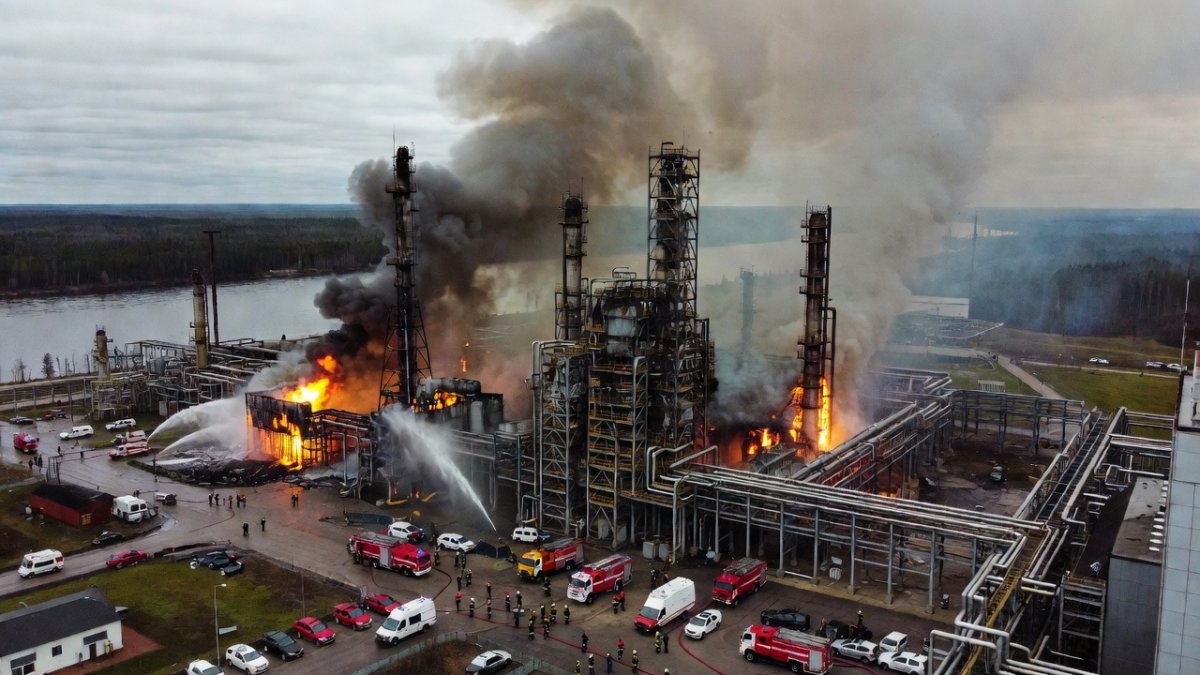
A fire broke out this week at the Amur Gas Chemical Complex (AGCC) in Russia's Far East, killing a Chinese contractor and injuring more than 100 workers during final testing ahead of the facility's planned launch. The incident at the $10 billion joint venture between SIBUR and Sinopec has raised questions about safety protocols at one of Russia's most strategically significant industrial projects, even as the company insists primary equipment was spared.
Deadly Fire at SIBUR-Sinopec's Amur Gas Chemical Complex Kills One, Injures Over 100 During Pre-Launch Testing
Svobodny, Russia – Tuesday — A fire broke out at the Amur Gas Chemical Complex (AGCC) near the town of Svobodny in Russia's Amur region, the company confirmed on Tuesday. The blaze, which erupted in a support section of a pyrolysis unit, resulted in the death of a Chinese national employed by a contractor and left 19 workers hospitalized with moderate to severe injuries, while another 104 received treatment for minor cuts and bruises.
Company Confirms Casualties and Ongoing Firefighting Efforts
AGCC, the joint venture between Russian petrochemical giant SIBUR and China's state-owned Sinopec, issued a statement Tuesday detailing the human toll of the incident. "Despite prompt medical care, one victim, a Chinese national employed by a contractor, could not be saved," the company said, confirming the fatality and the scale of injuries among the workforce.
The company said firefighting efforts were continuing and that emergency services were conducting "controlled burning" of residual gases to stabilize the site. AGCC emphasized that the fire was contained to a support section of the pyrolysis unit and that "primary equipment was not damaged," a claim that will be scrutinized as investigators begin their work.
Strategic Stakes: Russia's Largest Gas Chemical Complex
The AGCC is not merely another industrial construction site; it is a cornerstone of Russia's pivot toward Asian energy markets. Designed to become one of the world's largest polymer manufacturing facilities, the complex is 60% owned by SIBUR and 40% by Sinopec, representing a $10 billion bet on the future of Russia-China economic integration. The facility's design capacity is up to 2.7 million metric tons of basic polymers per year, including various grades of polyethylene and polypropylene, which would make it Russia's largest gas chemical complex.
The timing of the fire is particularly sensitive. The complex was undergoing final testing ahead of its planned launch in early 2027, with first polyethylene lines scheduled for the second half of 2026 and polypropylene production slated for 2027. Any significant delay to this schedule could have ripple effects on supply contracts and the broader regional economic outlook.
Feedstock Link to Gazprom's Power of Siberia Pipeline
The AGCC's strategic importance is amplified by its direct integration with Gazprom's adjacent Amur Gas Processing Plant. This plant processes wet gas from East Siberian and Yakutia fields that feed the Power of Siberia pipeline to China, a flagship project of the Kremlin's energy strategy. The AGCC receives ethane up to 2 million tons a year and LPG/propane-butane about 1.1 million tons a year from this neighboring facility, creating a tightly coupled industrial chain.
Analysts suggest this incident could signal vulnerabilities in the operational readiness of the entire cluster. The interdependence between the gas processing plant and the chemical complex means that any prolonged shutdown at AGCC could theoretically impact feedstock flows, though Gazprom has not indicated any disruption to its own operations. The proximity of the two facilities, both located about 15 km from Svobodny, makes the industrial zone a critical node in Russia's energy export infrastructure.
Regional Officials Move to Reassure Residents
In the immediate aftermath of the fire, regional authorities moved quickly to address public concerns about environmental and health risks. The Amur region's government stated that the incident posed no threat to people living in nearby towns, including Svobodny, which sits approximately 15 km from the complex. Consumer protection authorities said local air quality monitoring detected no toxic chemical spikes in Svobodny, offering some reassurance to a population accustomed to living alongside major industrial operations.
These official claims, however, are being weighed against the visible scale of the emergency response. The company's acknowledgment of "controlled burning" of residual gases suggests a complex and potentially prolonged operation to secure the site. For residents of the Amur region, the fire is a stark reminder of the risks associated with the rapid industrialization of their region, even as it brings jobs and investment.
Investigation Commission Formed to Determine Cause
A commission has been formed to investigate the cause of the fire, according to AGCC. The company has not provided any preliminary indications of what may have sparked the blaze in the support section of the pyrolysis unit. Pyrolysis units, which crack hydrocarbons at high temperatures, are among the most hazardous components of any petrochemical facility, and the investigation will likely focus on equipment integrity, procedural compliance, and the final testing protocols that were underway.
The involvement of a Chinese contractor fatality adds a diplomatic dimension to the investigation. With Sinopec holding a 40% stake in the venture, the incident will be closely watched in Beijing, where safety records of overseas Chinese workers are a matter of domestic political sensitivity. The company's statement confirming the death of a Chinese national suggests that communication channels with Chinese authorities and the victim's family have been opened, though no further details have been released.
Kremlin Energy Policy and Sanctions Resilience
This incident occurs against the backdrop of the Kremlin's broader strategy to deepen energy ties with China as a counterweight to Western sanctions. The Power of Siberia pipeline and its associated processing and chemical facilities represent billions of dollars in investment designed to lock in long-term demand for Russian gas and petrochemicals in Asian markets. The AGCC is a visible symbol of this partnership, and its successful launch is considered a priority for both Moscow and Beijing.
Independent analysts suggest the fire could complicate the narrative of seamless project execution that both SIBUR and Sinopec have cultivated. While the company's assertion that primary equipment was not damaged is encouraging, the final testing phase is precisely when latent defects and procedural errors often surface. The coming weeks will be critical in determining whether the launch schedule can be maintained or whether the incident will force a reassessment of timelines.
Implications for Ordinary Russians and the Region
For ordinary Russians in the Amur region, the AGCC represents both opportunity and risk. The complex has brought thousands of construction jobs and promises of long-term employment in a region that has historically struggled with economic development. Local businesses in Svobodny have benefited from the influx of workers and investment, and the planned launch of the facility was expected to transform the area's economic prospects.
However, Tuesday's fire is a sobering reminder of the dangers inherent in heavy industry. The 104 workers treated for minor injuries and the 19 hospitalized with more serious conditions are part of a workforce that includes many migrant laborers from China and other regions of Russia. Safety standards at large-scale construction and testing sites have been a recurring concern across Russia's industrial sector, and this incident will likely prompt renewed scrutiny from regulators and labor advocates.
Looking Ahead: Testing, Launch, and Oversight
As the investigation commission begins its work, the immediate priority for AGCC is extinguishing the fire and securing the site. The company has not indicated whether the final testing program will be paused or extended, but the psychological and operational impact of a fatal incident during this phase cannot be underestimated. The controlled burning of residual gases suggests that the situation is being managed methodically, but the full extent of the damage to the support infrastructure remains unclear.
The broader question for the Russia-China energy partnership is whether this incident will be treated as an isolated operational setback or as a signal of deeper systemic issues. Given the strategic importance of the AGCC and its integration with Gazprom's Power of Siberia infrastructure, both SIBUR and Sinopec have strong incentives to resolve the situation quickly and transparently. The coming weeks will reveal whether the complex can still meet its ambitious launch targets or whether the fire has introduced a new variable into an already complex equation.
By Irina Volkov, Staff Writer
This article was produced with AI-assisted research and editorial support. Reporting is based on sources cited in the article.
What's Your Reaction?
 Like
0
Like
0
 Dislike
0
Dislike
0
 Love
0
Love
0
 Funny
0
Funny
0
 Wow
0
Wow
0
 Sad
0
Sad
0
 Angry
0
Angry
0

Russia/Eastern Europe Correspondent at Global1.News. Covering Russian politics, energy, security, and the shifting dynamics of the post-Soviet space. Provides clear-eyed analysis on one of the world's most opaque regions.















Comments (0)