
Nebius expands Israel data center lease with Mega Or by 134MW
When Nebius inked a fresh lease with Mega Or for an extra 134 MW of capacity, the headline made it sound like another routine cloud‑provider expansion.
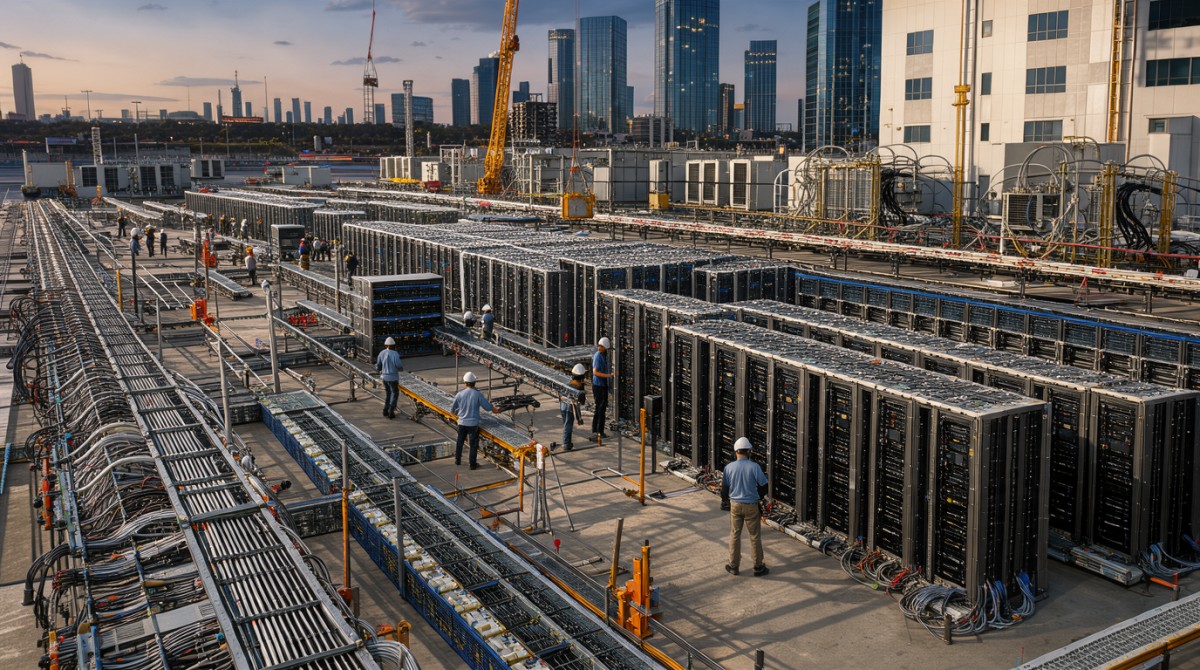
When Nebius inked a fresh lease with Mega Or for an extra 134 MW of capacity, the headline made it sound like another routine cloud‑provider expansion. But for anyone running a real data‑center business, the details reveal a lot about how hyperscalers are squeezing out independent players and why founders need to keep a hard eye on the economics of these mega‑leases.
Why the Mega Or deal matters for the Israeli market
The new contract adds two sites to Nebius’ footprint: a Beit Shemesh campus under construction and a planned Masmiya facility. Nebius will take roughly half of the 135 MW Beit Shemesh plant, and the earlier 58 MW phase at that campus is already under lease, with fit‑out slated for this quarter. In total, the latest agreement lifts Nebius’ leased capacity at Mega Or by 134 MW.
From Mega Or’s perspective, the deal translates into a net operating income of NIS 550 million on top of the NIS 740 million already locked in. That’s a solid cash‑flow boost for a company that already runs eight data‑centers across Israel, totalling more than 485,000 sqm and 1.5 GW of IT capacity. The new lease is the third such agreement Nebius has signed with Mega Or, underscoring how quickly the AI‑cloud player is scaling its Israeli presence.
The economics of a seven‑year lease
The contract runs for seven years with a five‑year extension option. That length gives Mega Or a predictable revenue stream, but it also locks Nebius into a long‑term commitment at a time when the AI‑cloud market is still volatile. Nebius’ Q3 2026 earnings showed that newly signed contracts came with pre‑payment agreements covering 100 percent of the associated capex, effectively front‑loading the cost. For an independent provider, that means the cash‑outflow is immediate while the revenue trickles in over the lease term.
In practice, a seven‑year term can become a double‑edged sword. If Nebius’ AI demand spikes, the lease gives it guaranteed capacity. If demand stalls, the fixed cost can become a drag on margins. Independent operators must weigh the certainty of a long‑term tenant against the risk of being tied to a single hyperscaler’s fortunes.
What the numbers say about Nebius’ growth trajectory
Nebius reported group revenue of $980.8 million for Q3 2026, a staggering 571 percent year‑on‑year jump and a 68 percent rise from the prior quarter. AI‑cloud revenue alone hit $973.8 million, up 643 percent, making up roughly 99 percent of total revenue. The company is forecasting full‑year revenue between $3 billion and $3.2 billion.
Those figures illustrate a classic hyperscaler pattern: explosive top‑line growth funded by massive upfront capital. The pre‑payment model Nebius uses to secure its new capacity means the company is burning cash to lock in future bandwidth. For a smaller player watching from the sidelines, the lesson is clear – the hyperscaler model relies on deep pockets and aggressive cash‑flow engineering that most independents simply cannot match.
Impact on Mega Or’s portfolio and the broader Israeli data‑centre landscape
Mega Or’s Mega DC subsidiary already manages a mixed portfolio of commercial sites, shopping centres, and logistics facilities. Adding a high‑profile AI tenant like Nebius bolsters its credibility and likely helps attract further hyperscaler interest. The company’s existing sites in Neve Yamin, Lod, and Haifa already contribute to a 1.5 GW capacity pool, so the new 134 MW lease is a modest increment relative to its overall footprint.
Nevertheless, the deal signals a shift: Israeli data‑centre operators are increasingly courting AI‑focused cloud providers, who demand power‑intensive facilities and are willing to pay premium rates for guaranteed capacity. This trend could push other operators to re‑tool their assets for AI workloads, potentially crowding out traditional colocation customers.
Risks for independent hosting providers
Independent hosting firms watching the Nebius‑Mega Or partnership should note three key risks. First, the pricing power of hyperscalers can drive up lease rates, squeezing margins for smaller tenants. Second, the long‑term nature of these contracts can lock operators into a single revenue source, making them vulnerable if the hyperscaler’s demand shifts or if regulatory changes affect AI workloads. Third, the capital intensity of AI‑grade power and cooling infrastructure means independents must either secure deep financing or partner with investors who understand the long payback horizon.
In practice, many independents still rely on older, less power‑hungry workloads to keep their balance sheets healthy. The Nebius deal shows that the market premium is now firmly attached to AI capacity, and those who cannot meet that demand risk being sidelined.
Strategic takeaways for founders
If you’re running a data‑centre business, the Nebius‑Mega Or story offers a clear playbook. Secure multi‑year contracts with pre‑payment clauses to lock in cash flow, but diversify your tenant mix to avoid over‑reliance on a single hyperscaler. Invest in modular power and cooling solutions that can be scaled up as AI demand grows, rather than committing to monolithic builds that tie up capital for a decade.
Also, keep an eye on the extension clauses. A five‑year extension right‑of‑first‑refusal can be a boon if your tenant’s growth continues, but it can also become a straitjacket if market dynamics change. Negotiating flexibility—such as step‑down clauses or capacity‑adjustment windows—can protect you from being locked into a sub‑optimal rate.
Actionable steps for the next quarter
First, audit your current lease agreements for any pre‑payment or long‑term extension terms that could be renegotiated. Second, model the cash‑flow impact of a 100 percent capex pre‑payment structure like Nebius uses; understand how it affects your liquidity and whether you need to line up financing in advance.
Third, assess whether your power infrastructure can support AI‑grade loads. If not, consider a phased upgrade path that aligns with tenant demand, rather than a full‑scale build‑out that could leave you with idle capacity. Finally, diversify your sales pipeline: target mid‑size SaaS firms, regulated industries, and edge‑computing players who need reliable colocation but aren’t chasing the hyperscaler price‑point.
In short, Nebius’ aggressive expansion in Israel is a textbook case of a well‑funded AI cloud player leveraging long‑term leases to lock in power‑hungry capacity. For independent operators, the lesson is to stay nimble, protect cash flow, and avoid getting shackled to a single hyperscaler’s whims.
— Allan Ali, Founder
This article was produced with AI-assisted research and editorial support. Reporting is based on the source material cited below. Sources: Data Center Dynamics; datacenterdynamics.com; Global1.News (21 November 2026).
By Allan Ali, Global1.News
What's Your Reaction?
 Like
0
 Dislike
0
 Love
0
 Funny
0
 Wow
0
 Sad
0
 Angry
0

Publisher of Global1.News. Automation architect, systems builder, and the guy making sure the truth gets published.













Comments (0)