
Trump Renames Lake Ontario as 'Lake America' — But Canada Isn't Backing Down
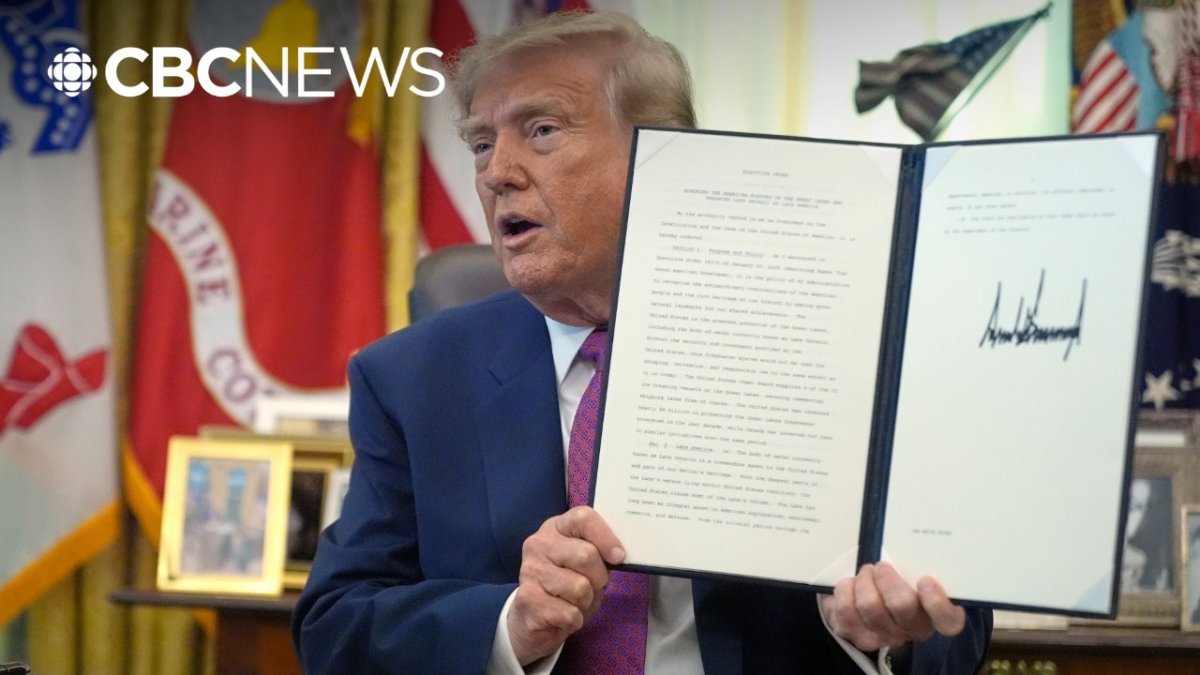
In a recent CBC News report, the moment President Donald Trump signed an executive order in the Oval Office on Thursday, August 27, 2026, renaming Lake Ontario as "Lake America" for U.S. government use was captured on camera. The order, titled "Honoring the American History of the Great Lakes and Renaming Lake Ontario as Lake America," directs Interior Secretary Doug Burgum and the U.S.
In a recent CBC News report, the moment President Donald Trump signed an executive order in the Oval Office on Thursday, August 27, 2026, renaming Lake Ontario as "Lake America" for U.S. government use was captured on camera. The order, titled "Honoring the American History of the Great Lakes and Renaming Lake Ontario as Lake America," directs Interior Secretary Doug Burgum and the U.S. Board on Geographic Names to update the Geographic Names Information System (GNIS) so that all federal references—maps, contracts, documents and communications—reflect the new name. The move, which Trump said takes effect "immediately" for U.S. government purposes, is the latest escalation in a bitter trade war that has pushed Canada-U.S. relations to their lowest point in decades.
Trump Signs Order Renaming Lake Ontario as 'Lake America' — But Canada Isn't Backing Down
Ottawa – Thursday — The executive order signed in the Oval Office on Thursday is a symbolic but pointed provocation aimed squarely at Canada, coming just days after the collapse of bilateral trade negotiations. With a map labelling the lake "Lake America" displayed at the signing, Trump declared that Canada has been "ripping us off for a long time" and called Canada the "worst" country to trade with. He also teased more renamings, saying: "We have a gulf and we have a lake. Now all we need is an ocean."
The Story: What the Executive Order Actually Does
The order, formally titled "Honoring the American History of the Great Lakes and Renaming Lake Ontario as Lake America," directs Interior Secretary Doug Burgum and the U.S. Board on Geographic Names to update the Geographic Names Information System (GNIS) so that all federal government references to Lake Ontario—including maps, contracts, documents and communications—reflect the new name. The U.S. Board on Geographic Names, created in 1890 and codified in its current form in 1947, is the federal body responsible for standardizing geographic names for official U.S. government use.
For American federal agencies, the change takes effect immediately. That means U.S. Coast Guard charts, Environmental Protection Agency documents, Army Corps of Engineers contracts and State Department communications will all refer to the lake as "Lake America." The order does not, however, have any legal force over Canadian territory, Canadian government documents, or the international boundary that runs through the lake. The lake is an international waterway shared by Ontario, Canada, and New York State, U.S., and is one of the five Great Lakes and among the largest freshwater lakes in the world.
Trump's decision to display a map at the signing ceremony labelling the lake "Lake America" was a deliberate visual provocation, designed to underscore his administration's willingness to use symbolic gestures to pressure Canada. The order follows weeks of escalating rhetoric from the White House, including Trump's earlier suggestion that he might rename the lake and his dismissive comments about Canadian leadership.
The Trade War Context: Why This Happened Now
The renaming order comes on the heels of the collapse of U.S.-Canada trade negotiations last week. On August 25, Canada announced retaliatory tariffs on a wide range of U.S. goods, dollar-for-dollar countermeasures designed to match the tariffs Washington had imposed on Canadian exports. The trade war has escalated for weeks, with Ontario Premier Doug Ford and Prime Minister Mark Carney trading barbs with Trump in increasingly personal terms.
Trump's comments at the signing ceremony—calling Canada the "worst" country to trade with and accusing Canada of "ripping us off for a long time"—reflect the administration's broader frustration with the trade imbalance and its willingness to use unconventional tactics to pressure Ottawa. The renaming of a shared international waterway is unprecedented in modern Canada-U.S. relations, and it signals that the White House is prepared to escalate beyond traditional economic measures.
The timing is significant. The trade negotiations collapsed last week after months of increasingly acrimonious exchanges. Canada's retaliatory tariffs, announced on August 25, were described by officials as "dollar-for-dollar" countermeasures, matching the scope and scale of U.S. tariffs on Canadian goods. The renaming order, signed just two days later, appears designed to send a message that the U.S. will not back down and that no aspect of the bilateral relationship is off-limits.
Canadian Context: What the Rename Means Legally and Diplomatically
Prime Minister Mark Carney pushed back forcefully on Thursday, saying: "Canadians also know that naming reality means calling it Lake Ontario – then, now and always." In a post on X, Carney noted that the name Lake Ontario comes from the Wendat word Ontari'io, which appropriately means "the lake is beautiful, the lake is big." The Prime Minister's response was measured but firm, framing the issue as one of Canadian sovereignty and cultural heritage.
Canada's Geographical Names Board has no intention of updating its records, meaning the lake will have two official names—one for U.S. federal use, one for Canadian use. This creates a unique situation where an international waterway will be known by different names depending on which country's jurisdiction is referencing it. Mapping services will need to label the lake differently depending on which country's users are viewing it, a logistical challenge that will require careful coordination between Canadian and American cartographic standards.
The international boundary through Lake Ontario is governed by the International Boundary Commission, the bilateral body responsible for surveying and maintaining the Canada-U.S. boundary. The renaming order does not affect the boundary itself, but it does raise questions about how international waterways are named and who has the authority to change those names. Under international law, the naming of geographic features that cross international boundaries typically requires consultation between the affected countries. The U.S. executive order, which was signed without any consultation with Canada, represents a departure from that norm.
For Canadians, the renaming is deeply symbolic. Lake Ontario is not just a body of water; it is a defining feature of the Canadian landscape, a source of drinking water for millions of people, and a vital transportation corridor for trade and commerce. The name itself carries centuries of Indigenous history, reflecting the Wendat people who first inhabited the region. To have that name unilaterally changed by a foreign government is seen by many Canadians as an affront to national sovereignty and cultural identity.
Impact on Canadians: Daily Life, Civic Pride and the Shared Waterway
For most Canadians, the practical impact of the renaming will be minimal. Canadian government documents, maps and communications will continue to use "Lake Ontario," and Canadian schools, media and everyday conversation will not change. However, the symbolic impact is significant. The renaming touches on deep-seated Canadian concerns about sovereignty, independence and the relationship with the United States.
The lake itself is a critical piece of shared infrastructure. It is part of the St. Lawrence Seaway system, which handles billions of dollars in trade annually. The Great Lakes region is home to tens of millions of people on both sides of the border, and the lakes are governed by a complex web of bilateral agreements, including the Great Lakes Water Quality Agreement and the Boundary Waters Treaty of 1909. The renaming does not affect these agreements, but it does inject an element of political uncertainty into a relationship that has historically been managed through cooperation and mutual respect.
Ontario Premier Doug Ford has said Canadians will pay a price in the trade war but that Canada can weather the storm, pointing to the U.S. national debt as evidence of American vulnerability. Ford's comments reflect a broader Canadian confidence that, despite the economic pain, Canada is well-positioned to withstand U.S. pressure. The renaming of Lake Ontario, however, adds a new dimension to the conflict, one that touches on national pride and identity in ways that tariffs and trade disputes do not.
For Canadians living along the lake's shores—in Toronto, Hamilton, Kingston and countless smaller communities—the renaming is a direct challenge to their sense of place. The lake is a source of recreation, livelihood and identity for millions of people. To have it renamed by a foreign government, without consultation or consent, is a reminder of the power imbalance that exists between Canada and its southern neighbour.
Reactions and Analysis: Carney's Measured Pushback
Prime Minister Carney's response has been characteristically measured, focusing on the historical and cultural significance of the name rather than engaging in direct confrontation with Trump. His reference to the Wendat origin of the name "Ontario" is a deliberate reminder that the lake's identity predates both Canada and the United States, and that no executive order can erase that history. "Canadians also know that naming reality means calling it Lake Ontario – then, now and always," Carney said.
Canada's Geographical Names Board, which serves the same function for Canadian federal agencies that the U.S. Board on Geographic Names performs in the United States, has indicated it has no intention of updating its records. That means the lake will officially carry two names — one for U.S. federal use and one for Canadian use — a situation without precedent for a shared international waterway.
Premier Ford, who has been a vocal critic of Trump's trade policies, has previously said Canadians will pay a price in the trade war but that Canada can weather the storm, pointing to the U.S. national debt. Trump, for his part, has escalated his personal attacks, calling Ford a "flunky" of "Governor Carney" and warning Canada to "fall in line" as the dispute intensified. When Trump first floated the renaming idea days ago, Canadians balked — a reaction that foreshadowed the firm response from Ottawa.
The renaming, while symbolic, departs from international norms. Under international practice, the naming of geographic features that cross international boundaries typically requires consultation between the affected countries. The U.S. executive order was signed without any consultation with Canada, and the international community — including the United Nations and the International Hydrographic Organization — is expected to continue using the name "Lake Ontario" in official documents and communications.
What Happens Next: Does the Name Actually Change Internationally?
The short answer is no. The executive order only applies to U.S. federal government use. The international community, including the United Nations, the International Hydrographic Organization and other multilateral bodies, will continue to use "Lake Ontario" as the official name. Canadian government documents, maps and communications will also continue to use the traditional name.
Mapping services, however, will face a unique challenge. Google Maps, Apple Maps and other digital platforms will need to decide how to label the lake for users in different countries. American users may see "Lake America" while Canadian users see "Lake Ontario," creating a digital divide that reflects the political divide between the two countries. This is unprecedented in modern cartography and will require careful coordination between the companies and the two governments.
The future of trade talks remains uncertain. The renaming order is unlikely to bring Canada back to the negotiating table; if anything, it may harden Canadian resolve. Carney has made it clear that Canada will not be bullied into accepting unfavourable trade terms, and the renaming of Lake Ontario is likely to be seen as further evidence of the need for Canada to diversify its trade relationships and reduce its dependence on the United States.
Trump's teasing of more renamings—"We have a gulf and we have a lake. Now all we need is an ocean"—suggests that this may not be the last symbolic gesture from the White House. The Gulf of Mexico was already renamed the "Gulf of America" earlier in his term, and the administration has shown a willingness to use geographic naming as a political tool. Whether Trump will follow through on his hint of renaming an ocean remains to be seen, but the possibility cannot be dismissed.
For Canadians, the renaming of Lake Ontario is a moment to reflect on what the lake means to them. It is a source of water, food, transportation and recreation. It is a defining feature of the Canadian landscape and a symbol of Canadian identity. No executive order can change that. As Prime Minister Carney said, the lake is "beautiful" and "big"—and it will always be Lake Ontario, then, now and always.
The coming weeks will test the resilience of the Canada-U.S. relationship. The trade war has already caused significant economic pain on both sides of the border, and the renaming of Lake Ontario adds a symbolic dimension that neither country can easily walk back. But Canadians have weathered difficult times before, and the country's history is defined by its ability to stand firm in the face of pressure. The lake will remain Lake Ontario, and Canada will remain Canada—independent, proud and unafraid to defend its sovereignty.
By Alex Thompson, Staff Writer
This article was produced with AI-assisted research and editorial support. Reporting is based on sources cited in the article.
What's Your Reaction?
 Like
0
Like
0
 Dislike
0
Dislike
0
 Love
0
Love
0
 Funny
0
Funny
0
 Wow
0
Wow
0
 Sad
0
Sad
0
 Angry
0
Angry
0

Canada Correspondent at Global1.News. Based in Toronto, covering Canadian politics, energy, trade, and US-Canada relations. Provides the Canadian perspective on North American and global affairs.














Comments (0)