
Trump Refuses to Endorse Thune for Another Term — Senate GOP Rallies Behind Its Leader
Trump refused to endorse John Thune for another term as Senate GOP leader over filibuster and SAVE America Act disputes. Republicans rallied behind Thune, exposing GOP divisions before the November midterms.
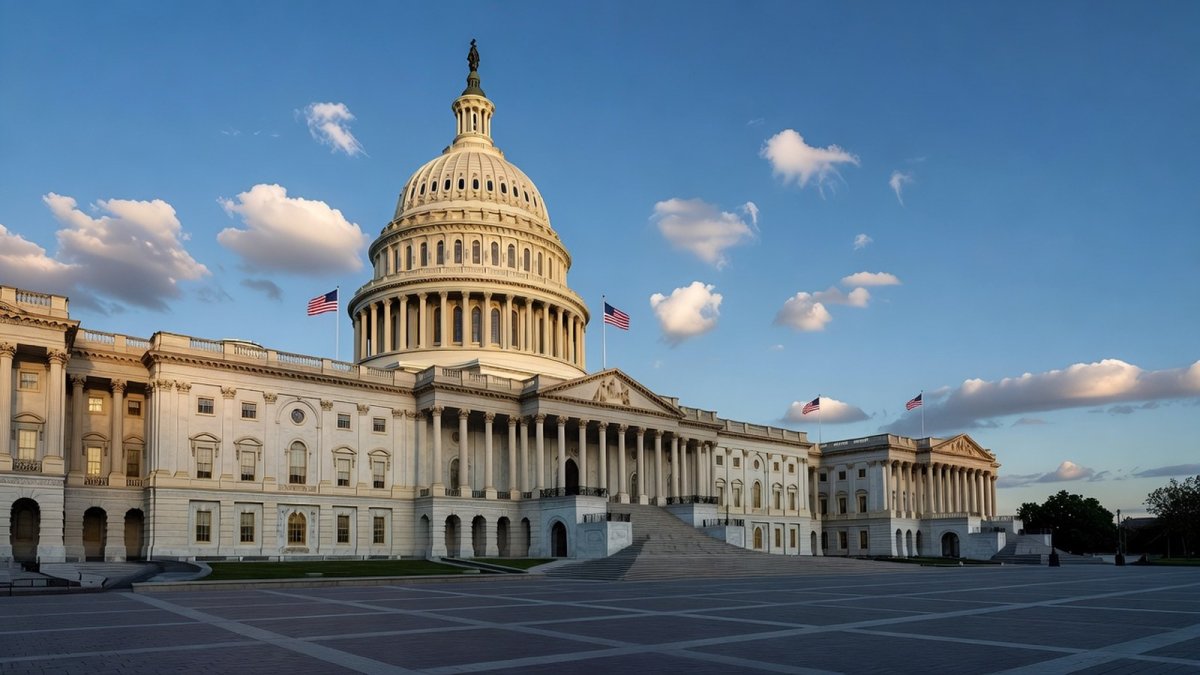
The knives are out in Washington, folks, and this time they're aimed at the Senate GOP's own leader. President Trump has publicly declined to endorse John Thune for another term as Senate Republican leader, and the fallout is reshaping the party's internal battle lines just months before the November midterms. But here's the twist: Senate Republicans aren't backing down — they're rallying behind Thune with a ferocity that suggests Trump may have miscalculated.
Trump vs. Thune: Senate GOP Circles Wagons in Leadership Fight
Washington, D.C. — The tension between the White House and Capitol Hill has boiled over into an open political confrontation, with Senate Majority Leader John Thune (R-S.D.) at the center of a storm that could define the Republican Party's future. President Trump's refusal to endorse Thune for another term as GOP leader, coupled with his renewed push to abolish the filibuster, has triggered a rare public show of solidarity from Republican senators who are tired of being pushed around.
The Punchbowl Interview That Started It All
It was Friday, Aug. 7, when Trump sat down with Punchbowl News and dropped a political bombshell. Asked whether he'd back Thune for another term as Republican leader after the midterm election, Trump didn't mince words: "I don't want to get into that necessarily." He added, "I get along with him. It's unfortunate that he doesn't have the votes" — a direct reference to Thune's insistence that Senate Republicans lack the 60 votes needed to pass the Safeguard American Voter Eligibility (SAVE America) Act.
Trump didn't stop there. He doubled down on his long-standing frustration with the legislative filibuster, declaring, "I believe strongly in terminating the filibuster, and by the way, getting SAVE America Act approved immediately, and about 400 other things in every hour of every day." The president also issued a stark warning: if Democrats retake the chamber, they'll eliminate the filibuster without hesitation. "If they get in, they're going to do it very quickly... I will be the last Republican president," Trump said.
The message was clear: Thune's refusal to nuke the 60-vote threshold is a cardinal sin in Trump's eyes. But the president's public pressure campaign may have backfired spectacularly, uniting Senate Republicans behind their embattled leader in a way that few expected.
Senate Republicans Close Ranks Behind Thune
By Monday, Aug. 11, The Hill reported that Senate Republicans are publicly rallying behind Thune with remarkable unanimity. Sen. Jerry Moran (R-Kan.) captured the mood of the conference, telling reporters, "There's a lot of respect for John Thune. There's a lot of recognition of how he works and how difficult his job is and a belief that he's doing it really well under difficult circumstances."
Moran went further, drawing a line in the sand on leadership independence. "I also think there are some things where the Senate seems willing to accede their privileges, but I think who our leader is, there's a real sense that that belongs to us," he said. That's a direct rebuke to the idea that Trump should hand-pick the Senate GOP leader — a privilege senators clearly believe is theirs alone.
Even Sen. Rick Scott (R-Fla.), a leading proponent of the SAVE America Act and a man who has clashed with Thune in the past, offered sympathy rather than criticism. "It's a hard job, it's really a hard job," Scott said. On Trump's frustration with the 60-vote hurdle, Scott was almost philosophical: "I'm sure if I were president of the United States, I would be frustrated if everything I wanted didn't get done. So that's probably pretty common."
Kennedy and Thune: A Study in Political Realism
Sen. John Kennedy (R-La.) offered a more nuanced read of the situation, suggesting the Trump-Thune relationship isn't as toxic as it appears. "I think the president and John like each other. I think these are tough issues and they obviously disagree over things like the filibuster," Kennedy said. He also dismissed any immediate threat to Thune's position, stating he doesn't "know of any movements to replace" the South Dakota Republican.
Kennedy, never one to sugarcoat, also delivered a sobering reality check about the party's electoral prospects. "I think Republicans are angry at all of us, I mean the voters. I think the voters are angry, period. And I think they're angry most about … cost of living, and I think that's what this election is going to be primarily about," he said. That's a pointed reminder that the filibuster fight and leadership drama may be inside baseball to voters who are struggling with grocery bills and rent.
Thune himself took the high road when asked about Trump's withheld endorsement. "That's probably to be expected," he said, displaying the stoic demeanor that has defined his tenure. He defended the session's record, noting, "I think we've had a really productive run. There are a couple things I said right from the very beginning are going to be difficult if not impossible — frankly more impossible — to do," referring to SAVE America and filibuster abolition.
The SAVE America Act and the Filibuster Fight
At the heart of this dispute is the SAVE America Act, a voter ID and proof-of-citizenship bill that has become a rallying cry for Trump and his allies. The legislation lacks the 60 votes needed to overcome a filibuster, and Thune has been blunt about that reality from day one. Trump, however, sees the filibuster itself as the enemy, and he's made clear he wants it gone — now.
This isn't just a policy disagreement; it's a fundamental clash over how the Senate should function. Thune and a majority of Senate Republicans view the filibuster as a core institutional protection, a check on majority overreach that has preserved minority rights for generations. Trump views it as an obstacle to his agenda, a procedural relic that allows a handful of senators to block the will of the president and the voters who elected him.
The stakes couldn't be higher. If Trump succeeds in pressuring Republicans to abolish the filibuster, it would fundamentally transform the Senate, allowing legislation to pass with a simple majority. That's a change that would have profound implications for every future administration, Republican or Democrat. Thune's refusal to go along with that plan has made him a target — but it's also made him a hero to institutionalists in his own party.
A Productive Session, But Not Without Setbacks
Despite the drama, Thune pointed to a string of legislative victories as evidence that his leadership is working. The Senate confirmed Attorney General Todd Blanche, a "good, solid win for the team and obviously … not an easy one," Thune said. The confirmation was narrow, with Sen. Susan Collins (R-Maine) opposing and Sen. Mitch McConnell (R-Ky.) absent, meaning Blanche could only afford to lose one more Republican. Sens. Lisa Murkowski (Alaska) and Bill Cassidy (La.) had been undecided, but ultimately Blanche was confirmed.
The Senate also passed a Russia sanctions package on Friday, Aug. 7, named after the late Sen. Lindsey Graham (R-S.C.), a staunch Ukraine supporter. That same day, senators approved a short-term government funding bill, a continuing resolution that keeps the government running into Dec. 11, and confirmed a bloc of 74 lower-level executive branch nominees. The Senate then left for August recess on Aug. 8, having checked off several major items on its to-do list.
But there were notable failures too. The SAVE America Act was not passed — senators bucked the voter ID measure. And Thune postponed the Clarity Act, a digital assets bill, until September, a setback for the crypto industry that had been lobbying hard for its passage. These misses have given Trump ammunition in his campaign against Thune, but they've also demonstrated the limits of what any leader can accomplish in a deeply divided chamber.
The White House Pressure Campaign Intensifies
The White House isn't letting up. Press secretary Karoline Leavitt has said Trump's "patience is running out" with Thune's job performance, a clear signal that the president intends to keep the pressure on. Trump told Punchbowl News last week that Republican voters are "not angry at me, but they are angry at Republicans" in Congress — a not-so-subtle warning that the party's base is looking for heads to roll.
But one unnamed Thune ally suggested this is all part of a familiar playbook. Trump's public criticism is a tactic to put "pressure" on Thune, the ally said, and predicted it could "change" after the election. In other words, this may be political theater designed to extract concessions, not a genuine effort to oust the leader.
That analysis aligns with Thune's own approach. "We'll keep grinding away and let the chips fall where they may," he said, projecting the calm confidence of a man who has weathered political storms before. Thune won the GOP leadership in November 2024, succeeding Mitch McConnell after nearly two decades of McConnell's tenure. He's not easily rattled.
Broader GOP Divisions and the Midterm Stakes
This leadership fight is playing out against a backdrop of broader Republican anxiety. GOP senators have already pushed back against the Justice Department's proposal for a nearly $1.8 billion "anti-weaponization" fund, with more than half the conference voicing concerns at a fiery meeting with Blanche in May. They also quashed Trump's push for $1 billion in funding for a new 90,000-square-foot White House ballroom and are resisting his call for immediate passage of a budget resolution to fund the military conflict with Iran.
These aren't isolated incidents; they're part of a pattern of Senate Republicans seeking to distance themselves from Trump ahead of the November midterm election. Polls show independent voters moving away from the president, and Republican voters are losing enthusiasm. Kennedy's warning about voter anger over the cost of living is a reminder that the party's electoral fate may hinge on kitchen-table issues, not procedural battles in the Senate.
The 2026 midterms are just months away, and Democrats could win back control of one or both chambers. If that happens, Trump's warning about Democrats eliminating the filibuster could become a self-fulfilling prophecy — but it would be Republicans who handed them the opportunity by failing to unify.
What to Watch For
Here's the thing, folks: this fight is far from over. The immediate question is whether Trump will actively campaign against Thune or back a challenger in the leadership race. So far, no serious challenger has emerged, and Kennedy's assessment that there are no "movements to replace" Thune suggests the leader's position is secure for now.
But the bigger question is whether Trump's pressure campaign will force Thune to bend on the filibuster. Thune has been adamant that the 60-vote threshold must remain, and his colleagues are backing him up. If Trump continues to push, he risks alienating the very senators he needs to advance his agenda — a political miscalculation that could haunt him in the midterms.
Watch for three things in the coming weeks: whether Trump escalates his rhetoric against Thune, whether any Republican senator steps forward to challenge the leader, and whether the SAVE America Act resurfaces in September with a new strategy. The August recess may provide a cooling-off period, but the embers of this conflict are still burning. And in Washington, folks, that usually means one thing: this isn't over — it's just getting started.
By Jessica Ali, Staff Writer
This article was produced with AI-assisted research and editorial support. Sources: The Hill, Punchbowl News, Reuters.
What's Your Reaction?
 Like
0
Like
0
 Dislike
0
Dislike
0
 Love
0
Love
0
 Funny
0
Funny
0
 Wow
0
Wow
0
 Sad
0
Sad
0
 Angry
0
Angry
0

Editor-in-Chief at Global1.News. Atlanta-based journalist who cuts through the BS and tells it like it is. Lead anchor, host, and the voice you hear when the spin stops and the truth starts.















Comments (0)