
Russian Missiles Fall in Poland as NATO Drills Run Next Door, and Tusk Says It Was No Accident
Poland says three Russian objects fell on its soil during NATO drills, and Donald Tusk calls it an intentional provocation. Nobody in Poland was hurt, and Warsaw is asking NATO for more air defenses as Secretary General Mark Rutte arrives in the capital.
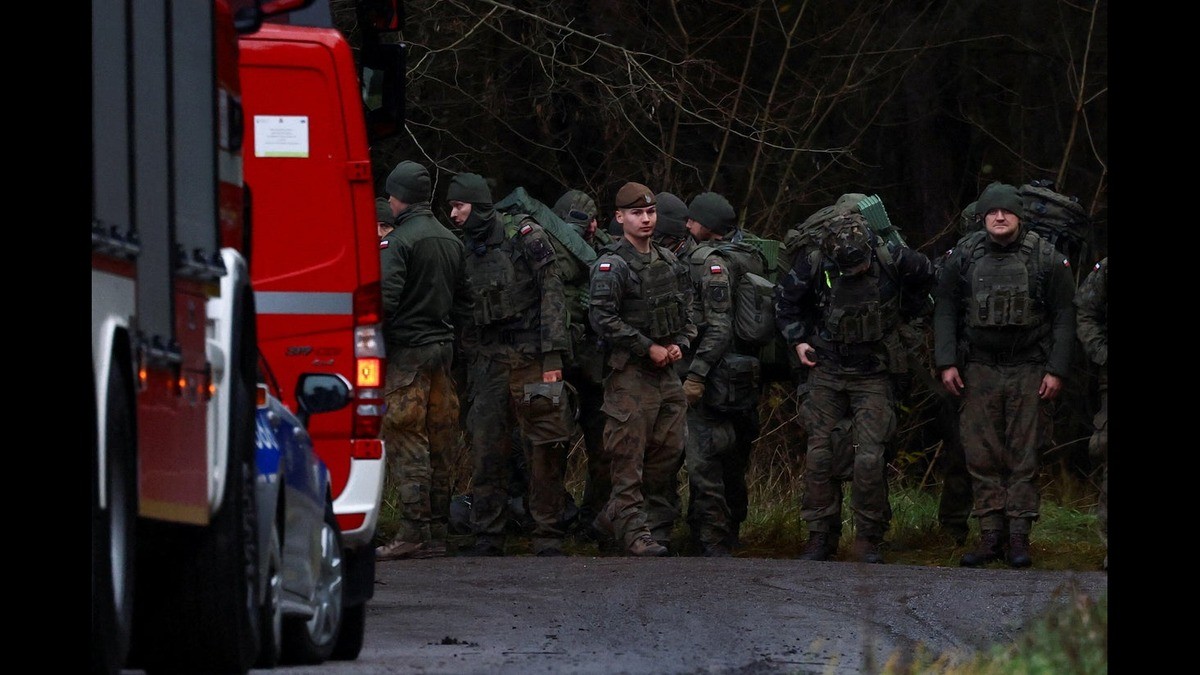
Folks, three Russian objects crossed into Poland on Friday morning while troops from eleven countries were training in the same corner of the country, and Warsaw is refusing to call it bad luck. A Kh-101 cruise missile came down among farm buildings about 50 kilometers from the Ukrainian border at 6:30 in the morning. Two more objects fell nearby. Nobody was hurt, nothing critical was destroyed, and yet a NATO member spent the day using a word that changes the temperature of this war: provocation.
Russian Missiles Fall in Poland as NATO Drills Run Next Door, and Tusk Says It Was No Accident
Warsaw, Poland — Three objects crossed into Polish airspace overnight, Poland's defense minister said Friday, and the government's central argument is not about what fell but about when it fell.
Three Objects, Three Villages, 6:30 in the Morning
Poland's defense minister, Władysław Kosiniak-Kamysz, said three objects entered Polish airspace early Friday: two missiles and a jet-powered drone. The one investigators can already name is a Kh-101, a Russian air-launched cruise missile built to fly low and strike precise targets. It came down at Nowy Lipowiec in Biłgoraj County, roughly 50 kilometers from the Ukrainian border. A second object, also believed to be a missile, landed west of there at Rudnik nad Sanem. The third, most likely a jet-powered drone, came down to the south at Mołodycz. The missile hit a rural area at about 6:30 a.m. local time. Natalie Szponar, a local resident, told the BBC she was getting her children ready for school when she heard "a whistle and a dull impact" from the direction of the crash. A farm camera caught the moment of impact. Kosiniak-Kamysz said there were no injuries and no damage to critical infrastructure.
A Warning at 01:40, and Nothing Fired
The air picture began hours before the first impact. Kosiniak-Kamysz said the Polish command received its first warning signals at 01:40. Polish F-16 pairs and Swedish Gripen fighters stayed on duty through the night. A Dutch tanker aircraft was airborne to keep them fueled, and a Swedish-built early-warning plane worked the airspace over the Podkarpackie and Lublin regions. Patriot batteries around Rzeszów-Jasionka airport and near Świdnik were activated, along with Poprad and Pilica+ short-range systems. Helicopters and three Territorial Defense brigades were committed. Two NATO AWACS aircraft began patrolling over Poland in the morning. And still, no object was intercepted. Kosiniak-Kamysz said those decisions belong to pilots and commanders, taken after weighing the circumstances and the danger to civilians. Poland has not said why the cruise missile was not engaged, or whether it could have been.
Tusk Chooses His Words Carefully
Donald Tusk did not reach for the language of accident. The prime minister said at a press conference in Warsaw: "It seems we are dealing with an intentional provocation." He added that he was choosing his words carefully because the matter was serious. He put it more plainly a moment later: "This doesn't look like an accident." Tusk said American officials have access to the wreckage, and he expected the physical evidence to settle the argument. "I think that in this particular case, no one will try to pretend anymore that this was just an innocent accident." He had convened ministers, military commanders and the heads of the intelligence services that morning. Then he drew a line from the crash sites to Poland's place in the wider negotiations: "Today, it is clearer than ever before that Poland must participate in decisions and discussions regarding the future of Ukraine and security in Europe."
The Drills at Nowa Dęba
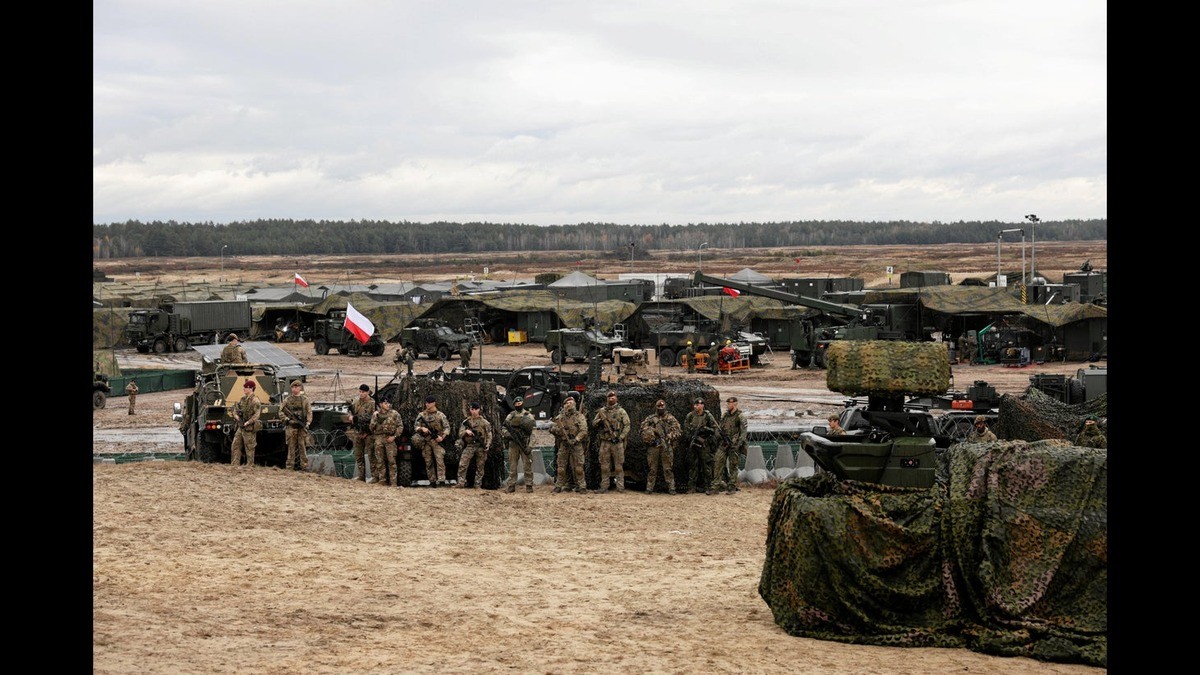
A two-week exercise called Koalicja 26.2 opened at the Land Forces Training Range in Nowa Dęba on November 9. Eleven countries are taking part under the Coalition of the Willing, the grouping preparing a possible postwar stabilization mission in Ukraine, and the drills run under the name Multinational Force – Ukraine. Britain and France lead them. On Friday, five coalition defense ministers from Britain, France, Poland, Estonia and Lithuania were at the range to watch. The British defense secretary, Wes Streeting, called the incursion "yet another example of Russian provocation that is designed to divide Europe and to deter Ukraine's allies from supporting their fight for freedom and democracy." Kosiniak-Kamysz went further. He wrote: "It is hard to regard it as a coincidence that the time and place of the violation of Polish airspace coincide with the Coalition of the Willing's exercises."
Trump Called It a Mistake. Tusk Disagreed.
Hours before the missiles landed, President Trump offered a different reading of the pattern. Speaking to Fox News on Thursday, he said "Putin has been landing drones in Poland and a couple of little missiles, by mistake." The remark referred to earlier incidents, but it reached Warsaw as a preview of how Washington might describe this one. Tusk answered it directly. He said: "To put it mildly, I don't always agree with the American side's assessment and interpretation of these incidents." The timing sharpened the contrast. Trump had met Xi Jinping and Vladimir Putin in Shenzhen on Thursday, at a summit that CBS News reported seemed to achieve little. Putin used the same day to rule out direct talks with Kyiv and to promise retaliation for Ukraine's strike on the Kerch Bridge, warning that his retaliatory actions would be "far more painful" than what Kyiv had done to the bridge. Within hours, more than four hundred drones and more than a hundred missiles were flying at Ukraine.
What Warsaw Wants From NATO
Poland is not asking NATO to treat this as an armed attack under Article 5. It is asking for hardware and attention. Kosiniak-Kamysz said he will ask NATO Secretary General Mark Rutte to release additional forces and assets in support of Operation Eastern Sentry, the alliance mission that guards the eastern flank, and specifically for AWACS early-warning aircraft. He also intends to press for an emergency meeting of alliance member states. Warsaw is weighing Article 4, the clause that convenes emergency consultations, according to Onet, which cited BILD. The same report said Berlin was counseling against it on the argument that the clause should not be overused, and that Germany had received no formal request. Poland has used Article 4 before: in 2014 after Russia's moves on Ukraine, in 2022 alongside seven other eastern states, and in September 2025 after Russian drones crossed its border. Article 4 produces talks. It does not produce a fight.
Rutte Arrives in Warsaw Today
Rutte is due in Warsaw today. He spent Friday on social media, calling the incursion a "grave violation" and confirming that NATO jets had been scrambled. He wrote: "This incident is clearly dangerous – a consequence of Russia's ongoing war against Ukraine." He added that NATO stood "in solidarity with Poland and will continue to strengthen our ability to deter and defend." Tusk said he had asked Rutte for recommendations on reinforcing the eastern flank. The alliance's top military officer is already engaged: General Alexus Grynkewich, NATO's Supreme Allied Commander Europe, has been in close contact with Poland's chief of defense and its defense minister, his spokesman said. Poland's leverage in that conversation is real. It hosts more than a million Ukrainian refugees, serves as the main transit route for Western weapons heading east, and is one of five European countries chosen to represent the continent in future US-led talks on ending the war.
The Night Russia Filled Ukraine's Sky
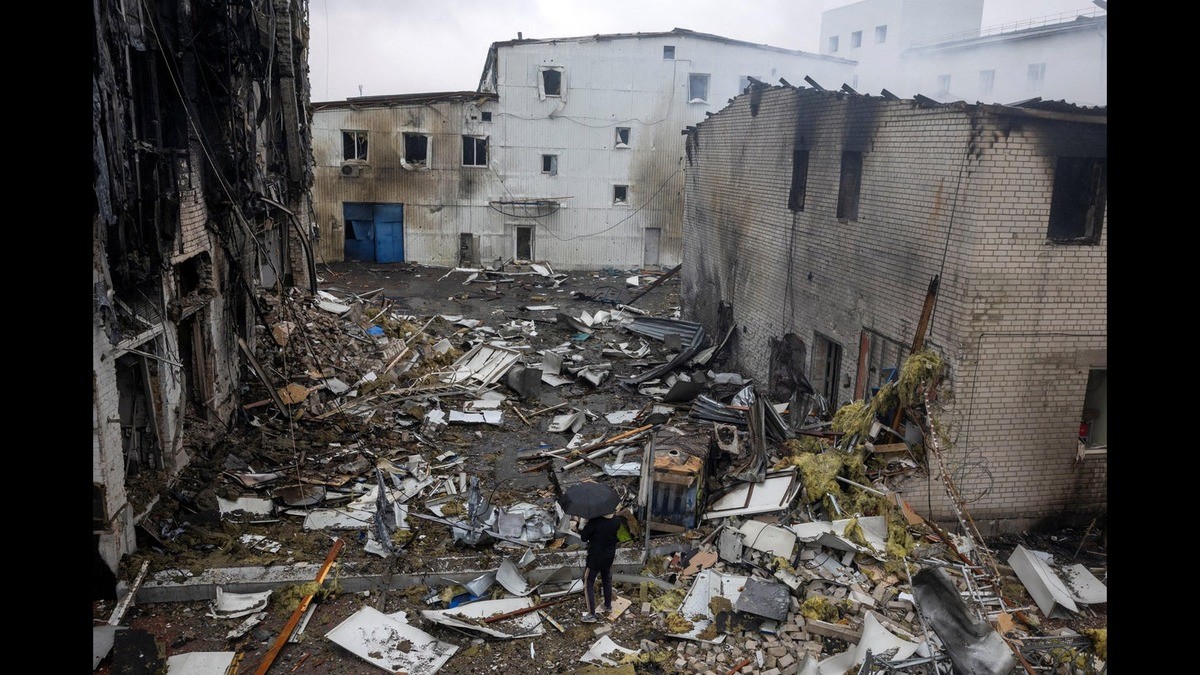
All of this happened on a night when Russia put a very large amount of metal into Ukrainian airspace. Ukraine's Air Force counted 84 cruise missiles and 404 attack drones, and President Volodymyr Zelensky said another 27 ballistic missiles were fired. Defenses shot down or suppressed 79 cruise missiles, 3 ballistic missiles and 380 drones, with strikes recorded at 23 locations. Zelensky called it "one of the biggest attacks" of the war and described a tactic built to exhaust rescuers: "several groups of missiles launched at intervals of 20 to 30 minutes to complicate firefighting, clearing debris, and recovery efforts." In Kyiv, three bridges across the Dnipro were damaged: the Podilsko-Voskresenskyi, the Pivdennyi and the Darnytskyi. Two water utility workers were killed. A hospital in Kharkiv was hit. Energy infrastructure was struck, and nuclear plants cut output. France called for a Security Council meeting.
Where the Numbers Stop Agreeing
The casualty figures do not agree, and the gap matters. Ukraine's prime minister, Serhii Koretskyi, said eight people were killed, six of them in Kyiv, and 28 wounded. Reuters and Al Jazeera carried the same figure. The Kyiv Independent's first report said at least nine. Its later countrywide round-up put the previous 24 hours at 12 killed and 82 injured, a rolling national total that also counts separate attacks the day before, so it is not the same measurement. The distances are just as uneven. The BBC and the Associated Press put the Kh-101 crash about 50 kilometers from the border; Al Jazeera says roughly 60. The Associated Press reported one missile came down about 35 kilometers from the drills, while the Guardian placed the crash sites between 50 and 96 kilometers away. On the Austrian embassy, CBS News places the damage inside Friday's assault while the Kyiv Independent dates it to Thursday's drone attack.
Four Years of This, and Less Room for Error
This is not the first time the war has crossed the border, and the pattern has a cost curve. In November 2022, two Polish farmers were killed in Przewodów by a missile that was believed to be a Ukrainian air-defense round responding to a Russian attack. In September 2025, Russian drones crossed into Poland in numbers, Warsaw invoked Article 4, and NATO stood up Eastern Sentry. In July, a cruise missile came down in Poland and left a crater 10 meters wide during an attack on Lviv. Moldova said its airspace was violated again on Friday, taking its recorded total since February 2022 to 118. Russia has said nothing about Friday's incursion, and its embassy in Warsaw did not answer Reuters' written request for comment. What happens next runs through one room in Warsaw today, where Rutte will hear exactly how much more Poland believes the alliance owes it.
By Jessica Ali, Staff Writer
This article was produced with AI-assisted research and editorial support. Sources: Reuters, the Associated Press, BBC News, Al Jazeera, Politico Europe, Euronews, CBS News, the Kyiv Independent, Ukrainska Pravda, TVP World, Onet, the Polish Ministry of National Defense and NATO. Photographs: Kacper Pempel/Reuters; Patryk Ogorzalek/Agencja Wyborcza via Reuters; Thomas Peter/Reuters. Any editorial cover card is produced in-house.
What's Your Reaction?
 Like
0
 Dislike
0
 Love
0
 Funny
0
 Wow
0
 Sad
0
 Angry
0

Editor-in-Chief at Global1.News. Atlanta-based journalist who cuts through the BS and tells it like it is. Lead anchor, host, and the voice you hear when the spin stops and the truth starts.












Comments (0)