
COA Auditor Confirms Confidential Funds Released Across PH in VP Impeachment Trial
In a recent ANC 24/7 report, the Senate impeachment court heard a state auditor confirm that confidential funds were released across the Philippines under circumstances that defy both geography and auditing rules. The testimony on day 14 of Vice President Sara Duterte's impeachment trial painted a picture of acknowledgment receipts dated the same day but scattered across seven different provinces — a feat one prosecutor likened to a comic book superhero.
In a recent ANC 24/7 report, the Senate impeachment court heard a state auditor confirm that confidential funds were released across the Philippines under circumstances that defy both geography and auditing rules. The testimony on day 14 of Vice President Sara Duterte's impeachment trial painted a picture of acknowledgment receipts dated the same day but scattered across seven different provinces — a feat one prosecutor likened to a comic book superhero. For ordinary Filipinos watching from their living rooms in Quezon City or their sari-sari stores in Cebu, this is not just political theater; it is a test of whether public funds meant for intelligence work were actually spent on the people they were supposed to protect.
Senate Impeachment Trial Day 14: COA Auditor Confirms P73 Million Disallowance, Raises Questions on Vice President's Confidential Fund Disbursements
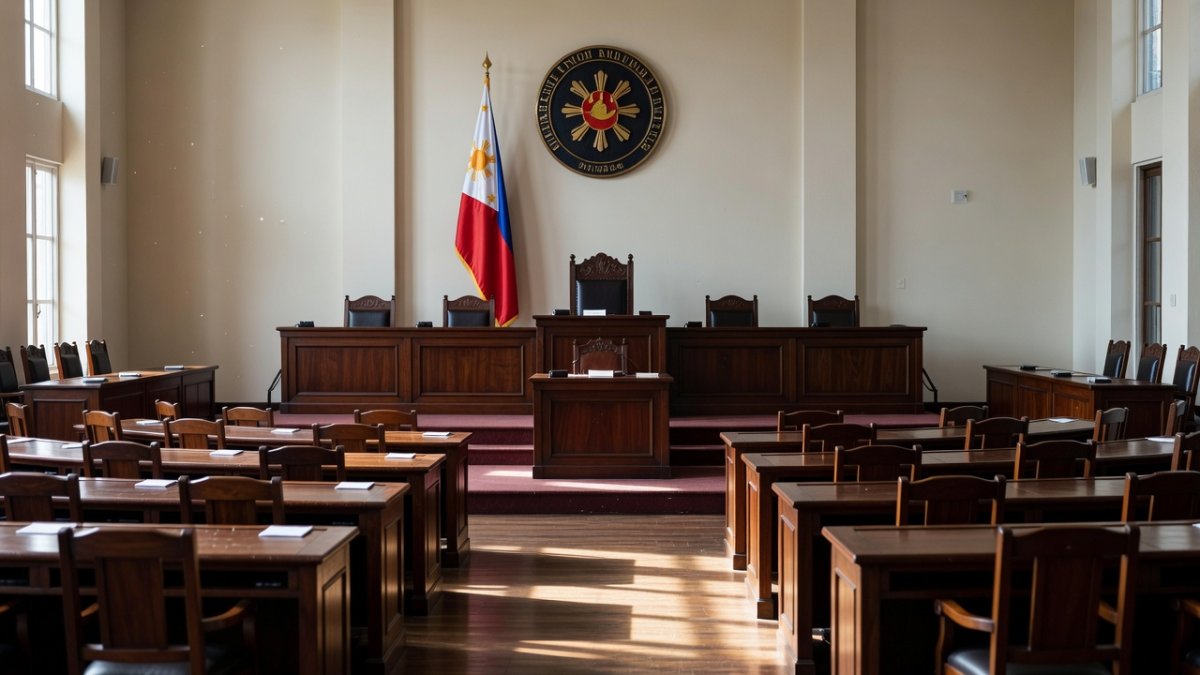
Manila, Philippines – August 11, 2026 — The Senate impeachment court, presided over by Senate President Francis Escudero, resumed hearing Article I of the Articles of Impeachment on Tuesday after Monday's session was suspended due to heavy southwest monsoon rains that flooded parts of Metro Manila. The article alleges misuse and misappropriation of P612.5 million in confidential funds by Vice President Sara Duterte, who also served as Secretary of the Department of Education (DepEd) during the period in question.
COA Auditor's Testimony: The P73 Million Disallowance
State auditor Xylene Mae Del Campo of the Commission on Audit's Intelligence and Confidential Funds Audit Office (COA-ICFAO) took the witness stand as a prosecution witness, delivering testimony that cut to the heart of the impeachment case. Del Campo confirmed that COA sent a notice of disallowance to the Office of the Vice President (OVP) covering P73 million in confidential funds — P69.5 million for payments of rewards backed only by acknowledgment receipts, and P3.5 million for items not enumerated under Joint Circular 2015-01, such as furniture and computers that were not covered by invoices or official receipts.
The OVP appealed the disallowance, but COA affirmed it in April. The OVP then filed a motion for reconsideration in May, which remains pending. This administrative process, while separate from the impeachment trial, provides the documentary backbone for the prosecution's argument that the Vice President's office systematically violated auditing rules.
Del Campo's testimony went beyond the disallowance itself. She detailed how acknowledgment receipts for DepEd's confidential funds — when Duterte was still secretary — all dated 21 February 2023, list addresses in Danao, Malolos, Davao City, Negros Occidental, Agusan del Sur, Makati, and Negros Oriental. Seven different places on the same date. Private prosecutor Lorna Kapunan, known for her sharp questioning, quipped, "Like Superman," when asking how one special disbursing officer (DepEd SDO Edward Fajarda) could have disbursed funds in all those places on the same day.
Presiding Officer Escudero, a lawyer by training, noted the obvious: if Fajarda is the only authorized officer, "clearly it's physically impossible to be in all of these locations in one day." The observation was not just rhetorical; it goes to the core of whether the funds were actually disbursed to legitimate recipients or merely papered over with fabricated receipts.

The Receipts: A Pattern of Impossibility
The pattern did not stop with the February 21 receipts. Del Campo presented another set of receipts all dated 25 February 2023, disbursed in Olongapo, Samar, Masbate, Pangasinan, Compostela Valley, Davao City, Nueva Ecija, Batangas, Kalinga-Apayao, Southern Leyte, and Abra. Several of these signed receipts had no names attached. A third set, all dated 9 August 2023, were also disbursed nationwide by Fajarda.
Under Joint Circular 2015-01, only the special disbursing officer is authorized to release confidential funds, and this authority is not transferable. Del Campo testified that COA received no document showing Fajarda authorized another person to act on his behalf. She also said she could not recall any of at least 30 agencies she has audited submitting similar receipts — a statement that underscores how anomalous these disbursements appear to a seasoned auditor.
Earlier in the trial, former COA state auditor Roderick Wamil identified Duterte's signature on three OVP disbursement vouchers dated January 31, April 10, and July 13, 2023, certifying expenses as "necessary, lawful and incurred under my direct supervision." Wamil also testified that the OVP did not attach payment documents for medical or food aid for two periods totaling P82 million — a significant gap in documentation for funds ostensibly meant to help Filipinos in need.
Philippine Context: The First Impeachment Trial of a Sitting Vice President
This trial is historic — it is the first impeachment trial of a sitting vice president in Philippine history, and the second of a Duterte, following the separate proceedings against former president Rodrigo Duterte. The political weight of this moment cannot be overstated. The Duterte family has dominated Philippine politics for nearly a decade, and this trial represents a direct challenge to that legacy.
The case also intersects with broader governance issues that Filipinos have long grappled with: the opacity of confidential funds, the difficulty of auditing intelligence expenditures, and the tension between national security claims and public accountability. The December 2024 PSA confirmation that 405 out of 677 listed confidential fund "recipients" were either nonexistent or had no birth certificates added a layer of gravity to the proceedings. At the time, Duterte refused to explain the acknowledgment receipts, saying it would compromise intelligence operations — a defense that prosecutors argue is being used to shield what may be systematic misuse.
The prosecution earlier presented LandBank testimony that the P612.5 million was released by the National Treasury and withdrawn in cash through seven checks — P500 million from the OVP account and P112.5 million from the DepEd account. Cash withdrawals of this magnitude, without clear documentation of recipients, raise serious questions about where the money actually went.
Impact on Filipinos: What This Means for Ordinary Families
For the average Filipino, this trial is not just about one politician's fate. It is about whether public funds — money taken from taxpayers, from jeepney drivers in Manila, from farmers in Negros, from OFWs sending remittances home — are being used for their intended purpose. Confidential funds are meant to support intelligence operations that protect national security. When those funds are disbursed for tree planting, commencement exercises, courtesy visits, and coordination meetings — as Del Campo testified the OVP's 2023 engagement reports showed — the public has a right to ask whether these are legitimate intelligence activities or something else entirely.
Kapunan challenged these activities directly: "Napakadaming Christmas party, napakadaming awards ceremony. Yan ba pinapayagan sa confidential funds?" (So many Christmas parties, so many awards ceremonies. Is that allowed under confidential funds?) The witness answered simply: "Hindi po" (No). For Filipinos who have seen their communities benefit from legitimate government programs, the idea that confidential funds may have been spent on parties and ceremonies is deeply troubling.
The P73 million disallowance, while significant, represents only a fraction of the P612.5 million at issue. If the full amount was misused, that is money that could have funded classrooms, health centers, or disaster relief — resources that many Filipino families desperately need, especially in the wake of the monsoon rains that suspended Monday's session.
Reactions and Responses: Defense and Prosecution Spar Over Process
Defense spokesperson Michael Poa spoke to media after day 14, but the defense's strategy has drawn criticism from prosecutors. Defense lawyers have pushed to examine evidence, while prosecutors raised concerns that these moves were slowing proceedings. Kapunan accused the defense of bad faith, noting that they did not show up for a document-comparison meeting. Escudero urged both parties to submit documents to the court instead of engaging in procedural wrangling.
The tension between the prosecution's desire for a swift trial and the defense's push for thorough examination is a familiar dynamic in Philippine political trials. But with the trial being streamed live by the Senate, the public is watching every move. The transparency of the proceedings is itself a significant development — a departure from the closed-door nature of many past investigations.
Civil society groups and legal experts have weighed in on the significance of the trial. Some argue that the evidence presented so far — the impossible receipts, the missing documentation, the disallowance affirmed by COA — builds a compelling case for conviction. Others caution that the defense has yet to present its full case and that the burden of proof remains with the prosecution.
What to Watch For: The Road Ahead
The trial is expected to continue in the coming weeks, with the prosecution likely to present more witnesses and documentary evidence. The defense will eventually have its opportunity to cross-examine witnesses and present its own case. Key questions remain: Will the defense call Duterte herself to testify? How will the Senate impeachment court rule on the admissibility of the PSA data on nonexistent recipients? And what will the COA's pending motion for reconsideration mean for the administrative case?
Beyond the trial itself, there are broader implications for Philippine governance. If the Senate convicts Duterte, it would set a precedent that even the highest officials are accountable for how they handle public funds. If she is acquitted, it could embolden future officials to treat confidential funds as a discretionary slush fund. Either outcome will shape how future administrations approach the delicate balance between intelligence secrecy and public accountability.
For now, the Filipino people are watching — in their homes, in their barangays, in their workplaces. They are watching to see if the institutions designed to protect them will hold power to account. The trial of Vice President Sara Duterte is more than a political spectacle; it is a test of whether the Philippines can truly uphold the rule of law, even when the accused is one of the most powerful figures in the land.
The monsoon rains may have delayed the proceedings by a day, but the storm over confidential funds shows no signs of letting up. As the Senate impeachment court continues its work, the nation waits — not just for a verdict, but for a reckoning on how public money should be spent and who should be held responsible when it is not.
By Bella Reyes, Staff Writer
This article was produced with AI-assisted research and editorial support. Reporting is based on sources cited in the article.
What's Your Reaction?
 Like
0
Like
0
 Dislike
0
Dislike
0
 Love
0
Love
0
 Funny
0
Funny
0
 Wow
0
Wow
0
 Sad
0
Sad
0
 Angry
0
Angry
0

Philippines/Southeast Asia Correspondent at Global1.News. Manila-based journalist covering Philippine politics, environment, maritime security, and social issues. Passionate about marine conservation and the communities protecting the Philippines' natural heritage.













Comments (0)