
Trump 'Low-Keying' Iran Talks as Hormuz Standoff Tightens, Pentagon Scrambles for Missiles
The chessboard is on fire. And the man moving the pieces just told us he’s not even trying to win the opening match. President Trump says the U.S. is "low-keying" negotiations with Iran. Not pausing. Not canceling. Low-keying. As in, barely showing up. As in, letting the Islamic Republic choke on its own inflation while the Pentagon scrambles to rebuild an arsenal that is, according to two sources, nearly bone-dry on long-range precision missiles. This is not a strategy announcement.
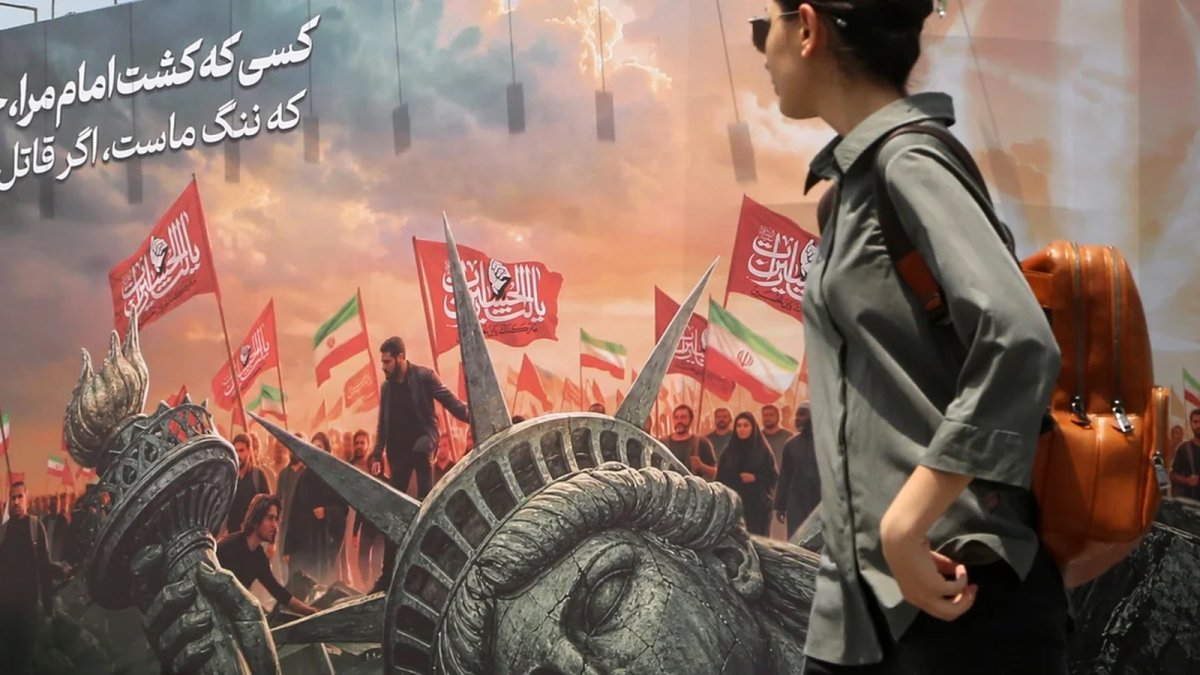
The chessboard is on fire. And the man moving the pieces just told us he’s not even trying to win the opening match.
President Trump says the U.S. is "low-keying" negotiations with Iran. Not pausing. Not canceling. Low-keying. As in, barely showing up. As in, letting the Islamic Republic choke on its own inflation while the Pentagon scrambles to rebuild an arsenal that is, according to two sources, nearly bone-dry on long-range precision missiles. This is not a strategy announcement. This is a confession.
And it comes on the same day Iran shuffles its war cabinet, hardens its line on the Strait of Hormuz, and the entire region tightens like a fist around a lit fuse. Welcome to Monday, August 10, 2026. Buckle up.
Trump 'Low-Keying' Iran Talks as Hormuz Standoff Tightens, Pentagon Scrambles for Missiles Washington, D.C. – August 10, 2026 — In a phone interview with Axios on Sunday, President Trump signaled a deliberate shift in posture, telling the outlet the U.S. is "only semi-negotiating with them. We are just watching Iran with its huge inflation and the fact they have no money." He described Iran as being in "very bad shape," claiming the U.S. blockade on the Strait of Hormuz is doing exactly what it was designed to do: suffocate the regime's economy. "It will work out. It always works out. It's like a chess game," Trump said. But this chess game is being played with live ammunition. While the President projects patience, his own Pentagon is sending desperate memos to defense contractors demanding they move at the speed of war, not the speed of bureaucracy. And in Tehran, the leadership is not blinking.
Trump 'Low-Keying' Iran Talks as Hormuz Standoff Tightens, Pentagon Scrambles for Missiles Washington, D.C. – August 10, 2026 — In a phone interview with Axios on Sunday, President Trump signaled a deliberate shift in posture, telling the outlet the U.S. is "only semi-negotiating with them. We are just watching Iran with its huge inflation and the fact they have no money." He described Iran as being in "very bad shape," claiming the U.S. blockade on the Strait of Hormuz is doing exactly what it was designed to do: suffocate the regime's economy. "It will work out. It always works out. It's like a chess game," Trump said. But this chess game is being played with live ammunition. While the President projects patience, his own Pentagon is sending desperate memos to defense contractors demanding they move at the speed of war, not the speed of bureaucracy. And in Tehran, the leadership is not blinking.
The Rezaei Shuffle: A General Takes the Wheel
Iran is adapting. On Sunday, state media announced that Mohsen Rezaei, a former Revolutionary Guard commander and military adviser to Supreme Leader Ayatollah Mojtaba Khamenei, has been named the new head of Iran's Supreme National Security Council (SNSC). He replaces Mohammad Bagher Zolghadr, who took the role after Ali Larijani was killed by an Israeli strike in March. Zolghadr now shifts to a political adviser role for Khamenei. This is not a routine bureaucratic change. This is a wartime cabinet reshuffle, replacing a politician with a general who, earlier this month, made Iran's position crystal clear: the Strait of Hormuz will never see an unauthorized route. Rezaei is not a diplomat. He is a hardliner's hardliner, and his appointment signals that Tehran is digging in for a long, grinding confrontation, not a negotiated exit.The Strait is a 'Theatre of War'
If there was any doubt about Iran's intentions, the Islamic Revolutionary Guard Corps (IRGC) erased it on Sunday. Spokesman Hossein Mohebi declared, "Our current strategy is to maintain this strait until the enemy accepts all our conditions... the strait is now actually a theatre of war for us and not just a waterway." The SNSC followed up with a list of non-negotiable demands: the U.S. must never threaten Iran again, permanently end the war, lift the naval blockade, withdraw all military forces from the area, "completely compensate" Iran for war damage, lift sanctions, and "unconditionally" release frozen assets. Foreign Minister Abbas Araghchi added that until U.S. violations of the June memorandum of understanding end and compensation is paid, "there is no possibility of resuming negotiations." Iran is even talking to Oman about the strait's future management. Araghchi says those talks are "approaching the final stages," but he cautioned that is not a sign of reopening. It's a sign of consolidation. They are not looking for a way out. They are looking for a way to win.The Pentagon's 21-Day Panic
While the President plays chess, the Pentagon is playing catch-up. Deputy Defense Secretary Steve Feinberg sent a memo to industry leaders on Wednesday, obtained by the Washington Post, demanding a dramatic acceleration in weapons production. The deadline? No more than 21 days to submit plans to "drive significantly faster, more aggressive delivery schedules and/or increased production for critical capabilities." Feinberg wrote, "Years-long development cycles are not acceptable. We must dramatically accelerate our program schedules and expand our production capacity now." The urgency is not theoretical. Two sources told CBS News the U.S. has used nearly all of its global stockpile of long-range precision missiles—including virtually all of its ATACMS and Precision Strike Missiles. The arsenal that was supposed to deter this war is nearly empty. Trump posted on Truth Social Thursday that the U.S. has "massive amounts" of munitions, but the Pentagon's own actions tell a different story. Pentagon spokesman Sean Parnell confirmed the memo is "real," framing it as part of modernization. But this is not modernization. This is replenishment under fire.A Blockade That Isn't Working
The numbers don't lie. The first blockade, from April 14 to June 18, redirected 140 ships. The renewed blockade, reinstated July 14 after Iran targeted ships in the strait, has redirected just 53 ships as of August 9. More than 30 ships carrying humanitarian aid have been let through. It's a pressure campaign, but it's not a seal. On Saturday, Iran launched a missile strike on an ADNOC tanker transiting the strait. No casualties, fire extinguished, but the message was sent. ADNOC says 15 of its vessels have been attacked since the war began, three this week alone. This is not a blockade working in America's favor. This is a shooting gallery.The Regional Powder Keg
This is no longer a two-player game. On August 7, Turkey, Saudi Arabia, and Pakistan signed the Mecca Joint Defence Pact—a NATO Article 5-style agreement where an attack on one is an attack on all. Turkish Foreign Minister Hakan Fidan says Egypt may join next. Iran's lawmakers dismissed it as a "paper agreement." We'll see how paper-like it feels when the Houthis—who claimed a Sunday drone attack on an Aramco refinery in Saudi Arabia—test it. The Houthis also fired on the Yemeni government-held port of Mocha, and Egypt's Damietta port was hit by a drone attack on July 29, igniting two oil tankers. Meanwhile, Israeli Prime Minister Netanyahu said Sunday he will prevent Iran from having nuclear weapons "with an agreement or without an agreement." He also rejected a U.S.-backed Gaza peace plan outright.The Eighth Round: Sanctions and Stalemate
The Trump administration announced its eighth round of Iran-related sanctions on Friday, targeting Shahr Bank — a lender the Treasury says helped major Iranian exporters, including the National Iranian Oil Company, move oil revenue — along with two Dubai-based exchange houses, Titan Exchange and Alps International, that allegedly laundered tens of millions of dollars on the bank's behalf. Treasury Secretary Scott Bessent warned, "Every facilitator that keeps the regime afloat is putting a target on its own back." But here's the question: what happens when the targets run out and the missiles are gone? Senator Bill Cassidy (R-LA) said Sunday on "Face the Nation" that Trump needs to speak forcefully to the American public about the path forward. He described a long-term strategy of blockades and "continued selective operations"—a slow bleed. "It's not something that ends it tomorrow, but something which gradually brings it to a close."The Khamenei Question
Supreme Leader Ayatollah Mojtaba Khamenei has not been seen in public since the war began in February. State media released an undated video claiming to show him, but CBS could not independently verify when it was taken. If it's recent, it's the first time the supreme leader has been seen since the war reignited. If it's old, then we have to ask: who is actually running Iran right now? President Masoud Pezeshkian met with Khamenei on Sunday, at the start of his third year in the presidency, according to the supreme leader's office. The office said the two "discussed in detail the country's issues and problems," including the "current military situation and future prospects" — but it did not indicate when the meeting happened, and Khamenei's prolonged silence has only deepened questions about his condition and his grip on power. With Rezaei now at the SNSC, the military is in charge. And the military is not interested in talking. This is the moment. The U.S. is low-keying a negotiation with a regime that is high-keying a war. The Pentagon is counting bullets while Iran counts ships. And the entire region is one miscalculation away from a conflagration that no chess metaphor can contain. You want to know the truth? Here it is: The strategy is not a strategy. It's a hope. A hope that inflation will break Iran before the missile stockpile breaks us. A hope that the blockade will bite before the Houthis escalate. A hope that the Mecca pact holds without being tested. But hope is not a doctrine. And in a theatre of war, the only thing that matters is what you can actually put on target. Right now, we're running low. And the other side knows it. Stay sharp. Stay informed. And demand answers. Because the next move in this chess game might not be a move at all—it might be a detonation. By Jessica Ali, Staff Writer This article was produced with AI-assisted research and editorial support. Sources: CBS News, Axios, Al Jazeera, The Washington Post, AFP.What's Your Reaction?
 Like
1
Like
1
 Dislike
0
Dislike
0
 Love
0
Love
0
 Funny
0
Funny
0
 Wow
0
Wow
0
 Sad
0
Sad
0
 Angry
0
Angry
0

Jessica Ali
Editor-in-Chief at Global1.News. Atlanta-based journalist who cuts through the BS and tells it like it is. Lead anchor, host, and the voice you hear when the spin stops and the truth starts.











Comments (0)