
Trump Halts Iran Strikes as Tehran Rejects Deal Claims
Folks, President Trump says he pulled the plug on massive U.S. strikes against Iran because a deal was suddenly in reach. Tehran calls it a new lie, and the Strait of Hormuz stays shut on day 156 of the war.
Folks, President Trump just hit Truth Social with a bombshell claim that he pulled the plug on massive U.S. strikes against Iran because a deal was suddenly in reach. Tehran fired back calling it a straight-up lie, and the Strait of Hormuz remains shut tight on day 156 of this war. Somebody's version of events here isn't adding up, and the world is left staring at the gap.
Trump Halts Iran Strikes as Tehran Rejects Deal Claims
Washington, D.C. — President Trump announced on Truth Social that he cancelled planned U.S. strikes on Iran after claiming the perimeters of a deal had been reached, only for Tehran to reject the account outright as a new lie. The move comes amid a grinding war that began February 28, 2026, and now sits at its 156th day with the Strait of Hormuz still closed by Iranian forces. This sudden stand-down leaves Americans and markets wondering which side is spinning the truth harder.
Trump's Truth Social Bombshell Announcement
Folks, let's lay out exactly what the president posted. On Saturday, August 1, 2026, Trump wrote that Washington was locked and loaded and ready to go against the Islamic Republic of Iran at levels of military terror, strength, and power not seen since World War II. He said he had agreed to cancel those strikes subject to a deal being reached rapidly. The post framed the decision as a win for American power, but it also revealed just how close the U.S. came to launching one of the heaviest bombing campaigns in recent memory.
The phrasing echoed Trump's earlier maximum-pressure playbook from his first term, when he withdrew from the 2015 JCPOA nuclear deal and imposed sweeping sanctions aimed at crippling Iran's economy. That approach had already pushed Tehran to ramp up uranium enrichment far beyond civilian needs, a trajectory that now sits at the center of the current standoff. Markets reacted instantly to the Truth Social post, with oil futures dipping on hopes of de-escalation before climbing again once Iran's denial hit the wires.
Analysts note that such social-media diplomacy compresses decision timelines and leaves little room for the usual back-channel vetting that once tempered crises like the 2020 Soleimani strike. The absence of any attached timeline or verification mechanism in Trump's message only heightens the risk that both sides will interpret the pause differently, potentially setting the stage for renewed escalation if the deal perimeters collapse.
The Deal Trump Says Was on the Table
Trump claimed Iran and other Middle Eastern countries asked the U.S. to hold off because the perimeters of a deal had been agreed. That arrangement, he said, would involve the immediate and complete opening of the Strait of Hormuz and an end to Iran's nuclear threat. He added that Israel had joined the commitment. The language sounded decisive, yet it left out any timeline or verification steps, which is exactly the kind of gap that lets both sides claim victory while nothing actually changes on the ground.
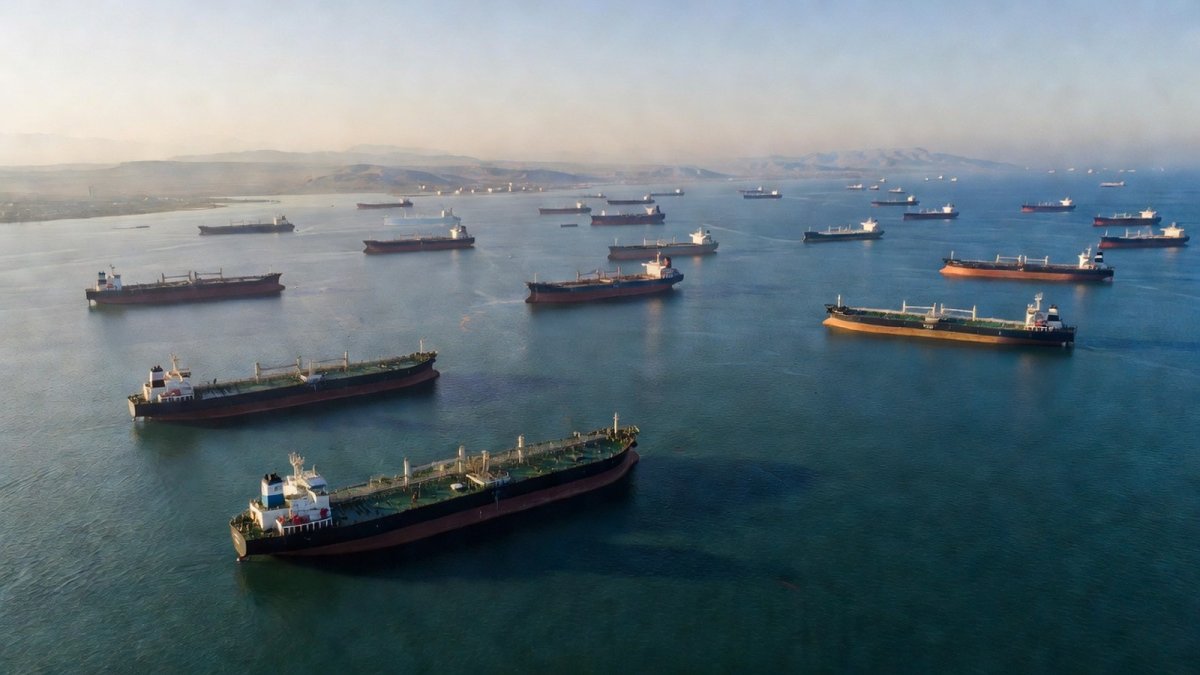
The Strait of Hormuz has long been the world's most critical energy chokepoint, with roughly one-fifth of global crude—about 20 million barrels per day—transiting its narrow waters. On its shores sit OPEC members Iran, Saudi Arabia, Iraq, the UAE, and Kuwait, making any closure an immediate shock to worldwide supply. Past incidents, including the 2019 tanker attacks, showed how quickly tensions there can spike insurance rates and reroute tankers around Africa at far higher cost.
Ending Iran's nuclear threat would require verifiable limits on enrichment levels and centrifuge numbers, issues that have bedeviled diplomacy since the original JCPOA. Without on-site inspectors or a clear enforcement trigger, the "perimeters" Trump described risk becoming another round of vague promises that collapse under the weight of mutual distrust. Oil traders are already pricing in that uncertainty, keeping the geopolitical risk premium elevated despite the announced stand-down.
Tehran's Blunt Rejection and Warning
Iran's semi-official Mehr news agency called the entire story a new lie. Acting Defence Minister Majid Ibn al-Reza made clear that Tehran regards every threat as real and credible, even psychological warfare, and that Iran would neither be caught off guard nor remain passive. Parliament National Security and Foreign Policy Committee spokesperson Ebrahim Rezaei warned that any hostile action would be met with a strong response. These statements cut through the diplomatic fog and show a country still treating the U.S. posture as an active danger.
Tehran's messaging aligns with its long-standing doctrine of strategic patience combined with asymmetric retaliation. After the 2020 Soleimani strike, Iran demonstrated its ability to launch direct missile attacks on U.S. bases while avoiding full-scale war. That same capability now underpins warnings that any renewed U.S. or Israeli action would trigger a proportionate response across multiple fronts.
The rejection also serves domestic purposes inside Iran, where hardliners have long accused moderates of trusting American assurances that later proved empty. By labeling the deal claim a lie, Tehran reinforces the narrative that Washington cannot be relied upon, making any future negotiations even more difficult. Regional observers note this stance leaves little daylight for the kind of face-saving compromise that might otherwise end the Hormuz closure.
The War Already 156 Days In
This conflict did not start yesterday. U.S. and Israeli forces launched large-scale strikes on Iranian territory on February 28, 2026. Iran answered with daily waves of missiles and drones aimed at U.S. and Israeli assets across the region and closed the Strait of Hormuz. Al Jazeera reported the war had reached its 156th day by August 2, 2026. That long grind explains why any sudden cancellation of strikes carries so much weight and why both capitals are now racing to control the narrative.
The cumulative toll of 156 days of conflict has already reshaped regional energy flows. With the Strait closed, tankers have been forced into longer, costlier routes, adding upward pressure on global crude benchmarks. U.S. gasoline prices have climbed in tandem, feeding into broader inflation concerns that central banks had only recently begun to tame.
Daily Iranian missile and drone barrages have also strained U.S. and Israeli defensive systems, raising questions about sustainability if the pause collapses. Historical precedents like the tanker war of the 1980s show how quickly such grinding conflicts can escalate when one side perceives weakness. The extended timeline makes the current stand-down feel more like a tactical breather than a strategic turning point.
Regional Diplomacy and Backchannel Pressure
While the public statements clashed, quieter channels stayed busy. Iranian Foreign Minister Abbas Araghchi told his Saudi counterpart Faisal bin Farhan that any hostile action by the U.S. or Israel, or participation by regional countries, would be met with a decisive and proportionate response from Iran's powerful armed forces. Araghchi also spoke with Turkish and Pakistani officials. Pakistani Army Chief Field Marshal Asim Munir has been involved in mediation efforts between Tehran and Washington. The Guardian noted that Saudi alarm and threats from Tehran appear to have played a role in Trump's decision to climb down.
Saudi Arabia's concerns stem from its own vulnerability to Iranian retaliation, given the kingdom's proximity to the Strait and its history of absorbing Houthi drone strikes. Riyadh's quiet diplomacy reflects a broader regional desire to avoid another oil-price shock that could derail post-pandemic recovery efforts across the Gulf.
Pakistan's mediation role carries its own risks, given its economic dependence on Gulf financing and its delicate balancing act between Washington and Tehran. Turkish involvement adds another layer, as Ankara seeks to maintain energy ties with Iran while preserving NATO alignment. These overlapping interests explain why the stand-down may hold only as long as back-channel pressure continues to outweigh domestic incentives for escalation on both sides.
The Planned Bombing Campaign That Got Shelved
CBS News and BBC's U.S. partner reported that Washington and Israel had been preparing one of the most intense bombing campaigns yet against Iranian energy infrastructure. The plan was raised at Trump's cabinet meeting on Friday, July 31. That level of preparation makes the sudden cancellation even more striking. It also raises the question of whether the pause is temporary or whether the military momentum has genuinely shifted.
Targeting energy infrastructure would have aimed to degrade Iran's ability to fund proxy forces and sustain missile production. Such strikes, however, carry high risks of environmental damage and long-term supply disruptions that could dwarf the current Hormuz closure effects. Past U.S. planning exercises have shown how quickly attacks on refineries and export terminals can spiral into wider conflict.
The cabinet-level discussion on July 31 indicates the operation had moved well beyond contingency planning. Yet the abrupt reversal suggests external pressure—particularly from Gulf states worried about their own exposure—outweighed the military argument for proceeding. Whether that balance holds depends on whether Tehran follows through on any deal commitments or uses the breathing room to harden its defenses further.
Oil Markets and the Hormuz Chokepoint
The Strait of Hormuz carries roughly one-fifth of global crude, about 20 million barrels per day. Its closure remains one of the most acute supply-side risks in the world. A confirmed stand-down from strikes on Iranian energy infrastructure would remove a major supply-side threat and ease the geopolitical risk premium. Yet Iran's denial keeps uncertainty alive and sentiment choppy. Red Sea shipping continues to face disruption from Iran-backed Houthis in Yemen, adding another layer of pressure on energy flows that everyday drivers and businesses will feel.
Even a temporary reopening of the Strait would not instantly normalize prices, because the Red Sea route remains contested. Houthi attacks have already forced many vessels to reroute around the Cape of Good Hope, adding weeks to voyages and millions in fuel and insurance costs. Those added expenses eventually reach U.S. consumers at the pump and contribute to persistent core inflation readings.
Traders are watching inventory data closely, knowing that any perceived weakening of the stand-down could trigger a rapid repricing. Historical episodes, from the 2019 tanker incidents to the 2020 Soleimani aftermath, demonstrate how quickly risk premiums can swing 10 to 20 percent on headlines alone. The current denial from Tehran ensures that volatility will remain a feature, not a bug, of the market outlook.
What Happens Next and What You Can Do
The U.S. government has urged Americans in the Middle East to remain alert and ready to leave the region should tensions escalate. Conflicting accounts from Washington and Tehran mean the situation can flip fast. Folks, this is the moment to stay sharp. Check official State Department alerts before any travel. Contact your members of Congress and demand clear updates on any new military commitments. Follow multiple independent sources instead of relying on one side's social media feed. Track oil price movements and prepare household budgets for possible swings. The more people demand transparency, the harder it becomes for either capital to hide behind spin. By Jessica Ali, Staff Writer
This article was produced with AI-assisted research and editorial support. Reporting is based on sources cited in the article.
What's Your Reaction?
 Like
0
Like
0
 Dislike
0
Dislike
0
 Love
0
Love
0
 Funny
0
Funny
0
 Wow
0
Wow
0
 Sad
0
Sad
0
 Angry
0
Angry
0

Editor-in-Chief at Global1.News. Atlanta-based journalist who cuts through the BS and tells it like it is. Lead anchor, host, and the voice you hear when the spin stops and the truth starts.










Comments (0)