
Trump's 50% Tariffs on Canada: Section 338 Deadline Looms Over $20 Billion in Trade
Folks, listen. I’m going to level with you. Six days. That’s all we have left. Six days until a 1930s-era trade weapon, dusted off and aimed directly at our northern neighbor, detonates at 12:01 a.m. Eastern Time on August 19, 2026. And when that clock strikes midnight, the price of your next car, your Friday night six-pack, and the cheese on your kid’s macaroni is about to get a whole lot uglier. This isn’t a drill.
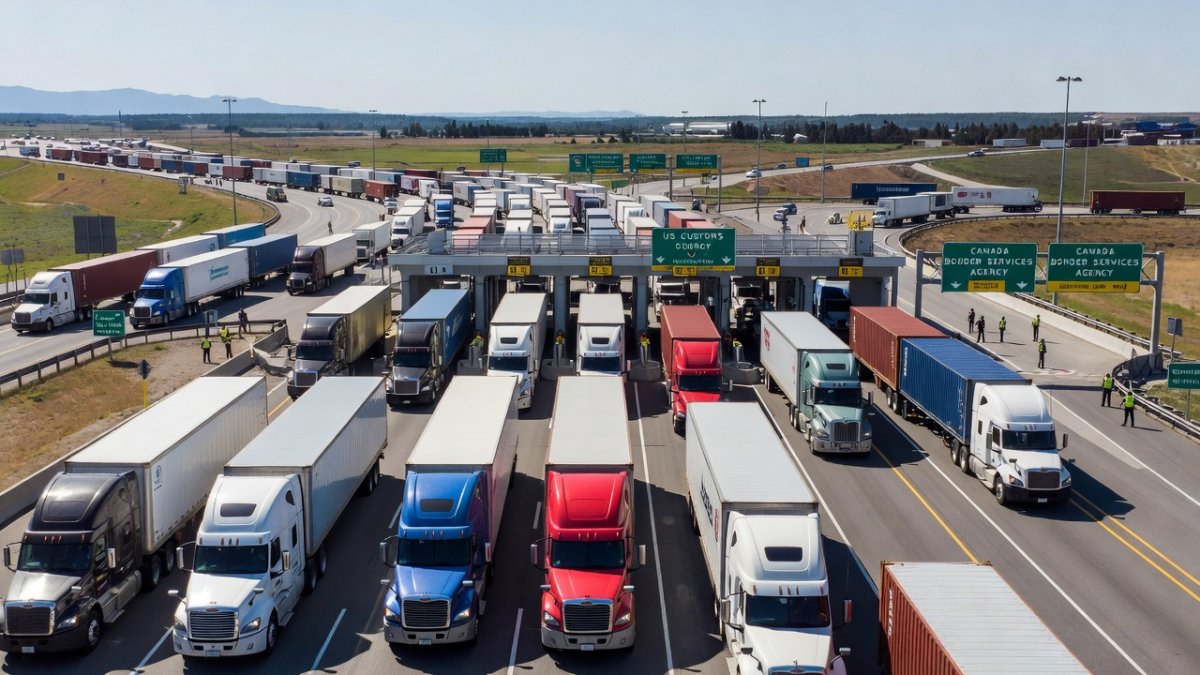
Folks, listen. I’m going to level with you. Six days. That’s all we have left. Six days until a 1930s-era trade weapon, dusted off and aimed directly at our northern neighbor, detonates at 12:01 a.m. Eastern Time on August 19, 2026. And when that clock strikes midnight, the price of your next car, your Friday night six-pack, and the cheese on your kid’s macaroni is about to get a whole lot uglier.
This isn’t a drill. This isn’t a negotiating bluff that’s going to fizzle out in a press conference. President Donald Trump has signed the papers. He’s invoked Section 338 of the Tariff Act of 1930 — a dormant, draconian authority that hasn’t been used in decades — and he’s slapped a 50% tariff on roughly $20 billion worth of Canadian goods. We’re talking motor vehicles, alcoholic beverages, dairy products, and a grab bag of electronics and machinery. No exemptions. No USMCA carve-outs. No mercy.
I’ve been covering trade wars for years, folks. I’ve seen the bluster, the tweets, the photo ops. But this one is different. This one has a hard deadline, a ticking clock, and a Canadian Prime Minister who is walking a political tightrope so thin you could shave with it. And the clock is ticking. Let’s break this down, because you need to know exactly what’s coming for your wallet.
What Exactly Is Section 338?
Let’s take a trip in the wayback machine, folks. The year is 1930. Herbert Hoover is in the White House. The Great Depression is just beginning to bite. And Congress, in its infinite wisdom, passes the Tariff Act of 1930. Most people know it for Smoot-Hawley, the infamous law that economists blame for deepening the global economic collapse. But buried inside that legislative behemoth is Section 338, codified at 19 U.S.C. 1338.
Here’s what it does: it gives the President the power to impose “new or additional duties” on goods from any country that is “discriminating” against American commerce. It’s a blunt instrument, designed for a world of empires and colonial trade blocs, not for the integrated, just-in-time supply chains of the 21st century. For decades, it sat there, gathering dust, a relic of a bygone era. Presidents of both parties ignored it. They preferred the more surgical tools of Section 301 or the WTO dispute process.
Not anymore. On July 20, 2026, President Trump signed not one, not two, but THREE proclamations under this forgotten law. Each one targets a different category of Canadian imports. The first hits motor vehicles. The second hits alcoholic beverages. The third hits dairy. And then, because that wasn’t enough, the administration expanded the coverage to include electronics and machinery. Total tab: roughly $20 billion in trade, suddenly facing an additional 50% ad valorem duty.
Let me repeat that for the folks in the back: 50%. Not 10%. Not 25%. Half. On top of any existing tariffs. And here’s the kicker that has trade lawyers scrambling for their calculators: there is NO exemption for goods that qualify under USMCA. The United States-Mexico-Canada Agreement, the supposed “greatest trade deal ever” that Trump himself negotiated, is being overridden by a law from the Hoover administration. The free trade pact is, for all intents and purposes, null and void when it comes to these specific goods. That’s not a negotiation tactic. That’s a declaration of economic war.
What’s on the Line for American Consumers
Now, let’s get down to brass tacks, folks. You don’t care about legal arcana. You care about what happens when you swipe your credit card. And let me tell you, it’s not pretty.
First, the car lot. Canada is a massive supplier of vehicles to the U.S. market. We’re not just talking about maple syrup and hockey sticks. We’re talking about assembled cars, trucks, and SUVs that roll across the border every single day. A 50% tariff on those vehicles doesn’t just get absorbed by the manufacturers. They pass it straight down the line to you. Analysts at Bloomberg and Thomson Reuters have been crunching the numbers, and the consensus is grim: expect sticker prices to jump by thousands of dollars on Canadian-assembled models. And don’t think you can just buy American. The supply chain is integrated. Parts cross the border multiple times before a car is finished. This tariff is a wrecking ball aimed at the entire North American auto industry.
Second, the liquor store. Raise your hand if you enjoy a nice Canadian whisky or a cold Molson. Well, put your hands down and start stocking up. The tariff on alcoholic beverages is going to hit beer, wine, and spirits hard. Canadian beer, in particular, is a staple in many border states. A 50% tariff means that six-pack you used to grab for $10 is now going to cost you $15, if you can even find it. Retailers are going to pull products from shelves rather than eat the cost. And for the wine snobs out there, Ontario’s ice wine and British Columbia’s pinot noirs are about to become luxury items.
Third, the grocery aisle. Dairy. Cheese. Butter. Milk. Canada has a notoriously protectionist dairy system, but it still exports a significant amount of product to the U.S. A 50% tariff on that dairy is going to ripple through the entire food supply chain. Pizza places that use Canadian mozzarella? They’re going to raise prices. Grocery stores that stock Canadian cheddar? They’re going to swap it out for domestic brands, and if domestic supply can’t keep up, you’re looking at shortages. The Globe and Mail reported that Canadian dairy farmers are bracing for a catastrophic loss of market access, but the pain is going to be felt in American shopping carts just as acutely.
And don’t forget the electronics and machinery. Your new laptop, your industrial equipment, your household appliances — if they have Canadian components, they’re getting more expensive. This isn’t a targeted strike. It’s a carpet bombing of the consumer economy.
Carney’s Political Tightrope
Now, let’s head north of the border, folks, because the drama in Ottawa is just as intense as anything happening in Washington. Canada’s Prime Minister is Mark Carney. He’s a former central banker, a guy who’s used to navigating financial crises. But this is a political crisis, and he’s caught between a rock and a hard place.
On one side, you have President Trump, who has publicly called Canada “nasty” and has shown zero interest in backing down. Carney has pushed back, publicly, but he knows he’s dealing with a man who thrives on leverage. On the other side, you have Conservative opposition leader Pierre Poilievre, who is hammering Carney from the right, telling him to stop conceding to Trump. Poilievre is painting Carney as weak, as a man who will sell out Canadian sovereignty just to keep the border open. It’s a brutal political pincer movement.
Bloomberg reported on August 13, 2026, that Carney is walking a political tightrope. He can’t be seen as capitulating to Trump, because that would hand Poilievre a massive victory in the next election. But he also can’t afford a full-blown trade war, because the Canadian economy is deeply intertwined with the American one. The U.S. is Canada’s largest trading partner by a mile. A 50% tariff on $20 billion in goods is going to hurt Canadian businesses, Canadian workers, and the Canadian dollar.
Carney’s strategy, according to BNN Bloomberg, is to try to negotiate a framework deal before the deadline. He’s dispatched his Trade Minister, Dominic LeBlanc, to meet with U.S. Trade Representative Jamieson Greer. They’ve met twice in less than a week. That’s a frantic pace, folks. That’s the pace of a government that knows the cliff is approaching.
But here’s the rub: what can Carney actually offer? The items on the table reportedly include eliminating Canada’s retaliatory auto tariffs. That’s a big concession. Canada had slapped its own tariffs on American goods in response to earlier U.S. actions. If Carney agrees to drop those, he’s giving Trump a win. And Poilievre is going to scream bloody murder. He’s already telling Carney to stop conceding. If Carney gives up the auto tariffs and gets nothing in return, he might as well start packing his bags in Ottawa.
The Last-Minute Negotiating Blitz
So, what’s happening right now, with six days to go? It’s a full-court press, folks. LeBlanc and Greer are burning the midnight oil. They’re trying to hammer out a framework that they can present to Trump before the August 19 deadline. The goal, according to BNN Bloomberg, is to have a deal in principle that Trump can sign off on, even if the details are still being worked out.
But let’s be realistic. This is Trump we’re talking about. He loves the drama. He loves the suspense. He loves making people sweat. He’s not going to make this easy. And he’s got a history of moving the goalposts. Earlier in July, he threatened even more tariffs on Canada over wildfire smoke that blanketed parts of the U.S. Midwest and East Coast. Wildfire smoke! As if Canada controls the wind. That tells you everything you need to know about the mindset of this administration. They will use any excuse, any lever, any grievance to extract concessions.
The U.S. House of Representatives passed a symbolic vote to end the tariffs back in February 2026. That was a clear signal that even members of Trump’s own party are worried about the economic fallout. But symbolic votes don’t stop proclamations. They don’t override presidential authority under Section 338. They’re just political theater, a way for lawmakers to say “we tried” when their constituents start screaming about prices.
Meanwhile, the Canadians are playing a long game. Analysts say this dispute could accelerate Canada’s long-term effort to diversify trade beyond the United States. They’re looking at Europe, they’re looking at Asia, they’re looking at any market that doesn’t have a mercurial president threatening them with 50% tariffs. That’s a slow burn, though. It won’t help them next week. It won’t help them on August 19.
What Happens at 12:01 a.m. on August 19
Let’s game this out, folks. There are two scenarios. Scenario A: No deal. The clock strikes midnight, and the tariffs go into effect. Immediately, customs agents at the border start applying the 50% duty. Trucks carrying Canadian cars, beer, and cheese are either turned back or forced to pay the massive new tax. Supply chains seize up. Retailers panic. Prices spike within days, not weeks. The stock market, which has been nervously watching this, will likely take a hit. And the blame game will begin. Trump will claim victory, saying he’s protecting American workers. Carney will call it an unjustified attack. Poilievre will say he told you so.
Scenario B: A framework emerges. LeBlanc and Greer manage to get a deal in principle on the table. Trump, wanting to look like a dealmaker, accepts it. The tariffs are suspended or reduced. The crisis is averted, at least for now. But here’s the catch: any framework is likely to be vague. It’s likely to kick the can down the road. It might include a “cooling off” period, or a commitment to further talks. But the underlying threat remains. Section 338 is still on the books. Trump can revive it again at any time.
Which scenario is more likely? I’m not a betting woman, but I’d say it’s a coin flip. The Canadians are desperate for a deal. The Americans are demanding concessions. And the clock is ticking. The New York Times reported that both sides are aiming to present a framework to Trump before the deadline, but that’s a big “if.” Trump is unpredictable. He might wake up on August 18 and decide he wants to see the world burn.
The Bottom Line
Folks, here’s the truth. This isn’t about trade policy. This is about power. This is about a president who wants to show he can bend a neighbor to his will. And this is about a Canadian Prime Minister who is fighting for his political life. The American consumer is caught in the crossfire.
You’re going to feel this at the pump, at the dealership, and at the grocery store. You’re going to feel it in your wallet. And you’re going to feel it in the uncertainty that hangs over the economy. This is a self-inflicted wound, and we’re all bleeding.
So, what do you do? Don’t just sit there and take it. Pay attention. Watch the news. Watch the markets. And most importantly, call your representatives. The House already voted symbolically to end these tariffs. Make them do it for real. Make them stand up to the White House. Make them remember that they work for you, not for a president’s ego.
Six days, folks. Six days until the hammer drops. Buckle up.
By Jessica Ali, Staff Writer
This article was produced with AI-assisted research and editorial support. Sources: Bloomberg, The New York Times, BNN Bloomberg, The Globe and Mail, The Canadian Press, Thomson Reuters, CBS News.
What's Your Reaction?
 Like
0
Like
0
 Dislike
0
Dislike
0
 Love
0
Love
0
 Funny
0
Funny
0
 Wow
0
Wow
0
 Sad
0
Sad
0
 Angry
0
Angry
0

Editor-in-Chief at Global1.News. Atlanta-based journalist who cuts through the BS and tells it like it is. Lead anchor, host, and the voice you hear when the spin stops and the truth starts.












Comments (0)