
Kroger to Cut 3,000 Corporate Jobs in Three-Year Restructuring
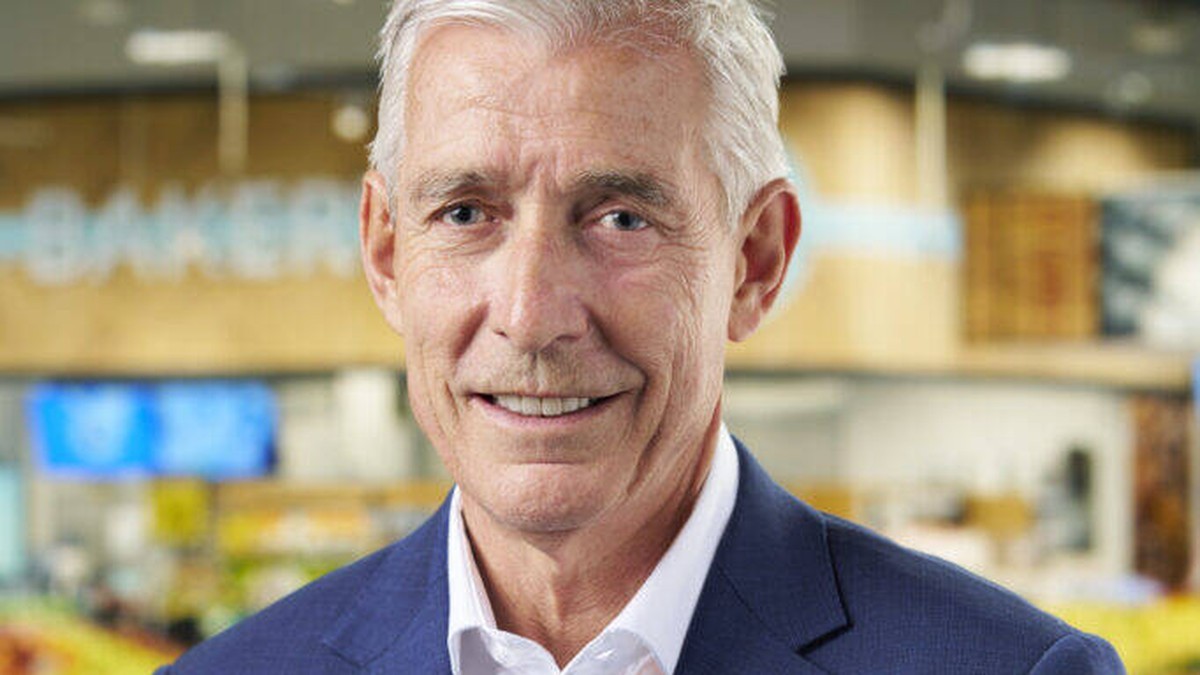
Kroger told employees Monday it will cut roughly 3,000 corporate jobs over the next three years, shrinking its corporate workforce from about 8,200 people to roughly 5,200, about 37 percent, as CEO Greg Foran presses to lower prices and lean more on technology.
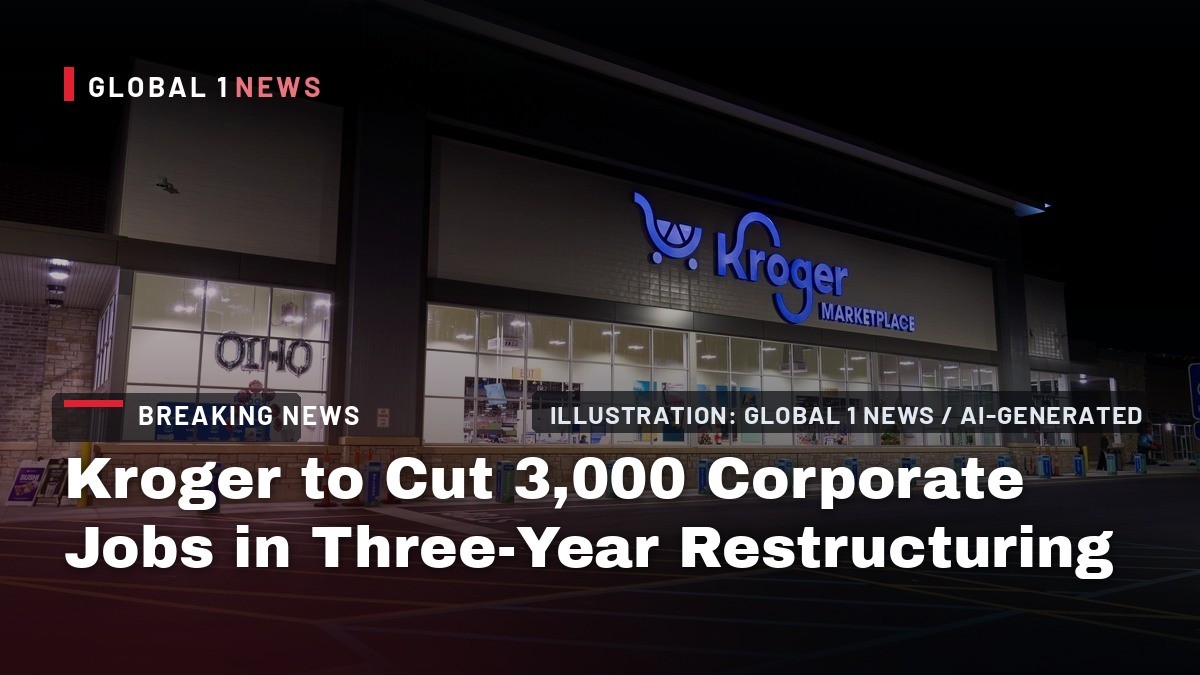
Kroger told employees Monday it will cut roughly 3,000 corporate jobs over the next three years, taking its corporate workforce from about 8,200 people to roughly 5,200. The announcement came on an all-company call and in a memo from CEO Greg Foran.
Kroger to Cut 3,000 Corporate Jobs in Three-Year Restructuring
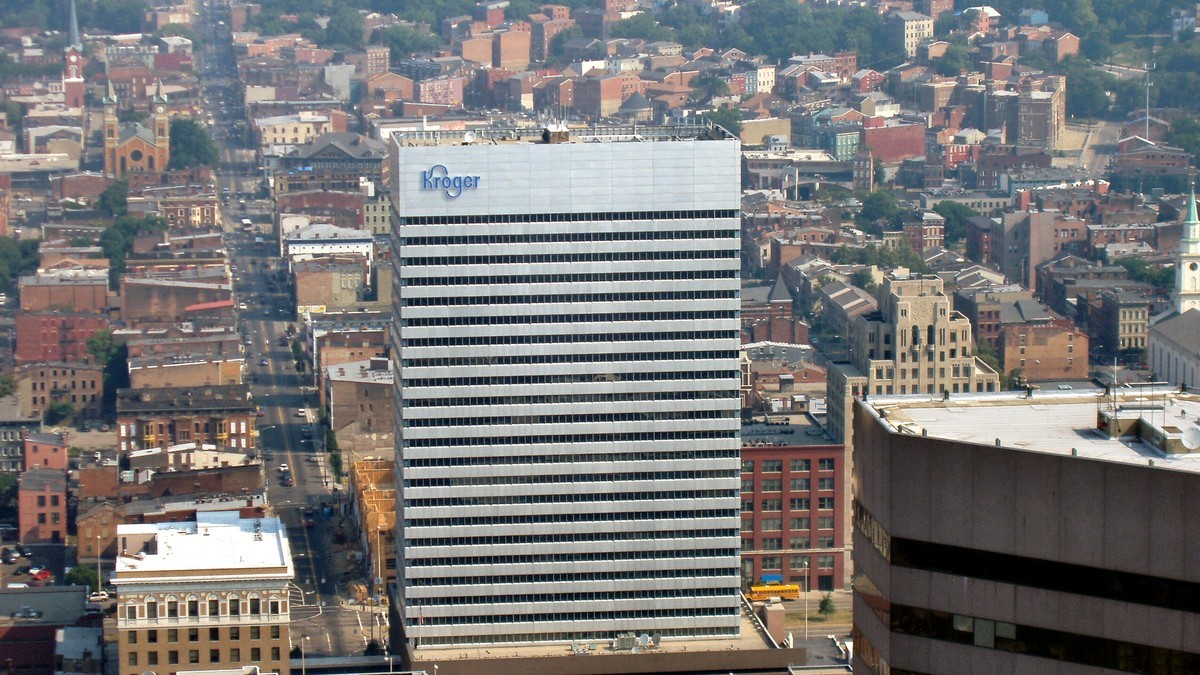
Cincinnati, Ohio — Kroger will eliminate more than a third of its corporate staff over the next three years, the company told employees Monday, in a restructuring that lands hardest on its hometown and two other hubs.
What Kroger Told Its Employees
Foran's memo, seen by Reuters and the Cincinnati Enquirer, framed the cuts as a structural change rather than a temporary squeeze. "As a company, we have made great progress on many fronts with our customers," Foran wrote. "We started reducing prices and improving our customer experience in stores and online, and we made investments in simplifying our associates' lives through technology."
He continued: "Our business is becoming leaner, more focused and more competitive. We are working to be more agile; more precise in our execution; and deliver benefits to our customers, associates and our shareholders."
Foran wrote that "these reductions will allow us to continue to invest in our frontline associates." He called the decisions "difficult," said they were not being made lightly, and described them as "the right thing for the company's long-term future." He said Kroger needs to simplify operations to deliver lower prices and make better use of technology. The memo named no roles. Bloomberg News first reported the cuts. Kroger did not immediately respond to a Reuters request for comment.
A Third of the Corporate Ranks
The math is blunt. Kroger's corporate payroll sits at about 8,200 people. The company plans to run it at roughly 5,200. That removes more than a third of the corporate staff, about 37% of them.
The cuts are slated to begin rolling out in the next few months and to play out over three years. Foran's memo gave no department-by-department breakdown, no severance terms and no total dollar savings figure.
Kroger employs 403,000 workers overall, including nearly 20,000 in the Greater Cincinnati region. The company operates more than 2,700 supermarket and multi-department stores under 20 brands, including Ralphs, Harris Teeter, Fred Meyer and King Soopers, across 35 states and the District of Columbia.
Reuters noted the company cut about 1,000 corporate roles in an earlier round of reductions. The new figure is three times that size.
The Word AI in the Memo
Reuters reported the cuts come as the grocer integrates AI into its workflow. Foran wrote that Kroger should reduce duplicative work and adapt with technology, adding that the reductions would help the company cut prices and invest in in-store employees.
Last month Kroger outlined its AI strategy, including the use of models to manage workflows and leverage customer data to power tools such as its AI shopping assistant. The memo ties the reductions to technology adoption without stating that AI is the cause of the job losses.
Reuters reported that companies have been rethinking corporate structures and cutting jobs as they increasingly turn to AI to streamline workflows and divert more resources toward the technology, fuelling concerns over widespread disruption across sectors. Kroger's own language tracks that pattern: fewer corporate roles, more automation, and a stated intent to move savings toward the shelf.
What the memo does not say is how many of the 3,000 roles will be replaced by software and how many will simply be removed.
A Price War With Walmart and Aldi
The cuts arrive alongside a pricing problem Kroger has already acknowledged. The company lowered its annual identical sales target and said it is seeking to cut prices to better compete with rivals such as Walmart and Aldi as consumers grow more frugal under pressure from high gas prices.
In May 2026, Foran said Kroger planned to cut prices on thousands of items to regain market share from Walmart, Costco and Aldi. "The reality is, the basket has to come down," he said. "And not everyone's basket is the same."
Foran said Kroger planned to fund the price cuts in part by reducing costs, including by importing merchandise directly and using technology more effectively, before reinvesting the savings into lower shelf prices.
Kroger's first-quarter results showed total sales of $46.1 billion, up from $45.1 billion a year earlier. Excluding fuel and Vitacost, sales rose 0.5%. Identical sales excluding fuel rose 1%, adjusted ecommerce sales rose 19%, and profit from its Kroger Precision Marketing retail media business grew more than 20%. Kroger held firm on full-year guidance of identical sales without fuel up 1% to 2%.
Cincinnati, Charlotte and Portland
The restructuring will disproportionately affect Kroger's hometown of Cincinnati, as well as hubs in Charlotte, North Carolina, where the grocer has a cluster of tech positions, and Portland, Oregon, the old headquarters of Fred Meyer before it was acquired in 1999.
Charlotte holds a concentration of technology roles. Portland carries the legacy of a chain Kroger absorbed more than a quarter-century ago. Cincinnati is where the company is headquartered and where it runs 77 stores.
The memo did not say how many jobs would be lost in each city, or which departments would be cut beyond those hubs.
For Cincinnati, the cuts land on a company that is also the city's most prominent corporate citizen. For Charlotte, they land on a technology cluster built to serve a national grocery operation. For Portland, they land on a workforce that has already watched its parent company's center of gravity shift east.
The Executives Who Left First
2026 has been among the busiest years of the decade for senior executive turnover at Kroger. Tim Massa, its top human resources officer, retired after 16 years. Valerie Jabbar, a senior vice president of retail divisions, retired in May after 38 years. Joe Kelley, a divisions head, left in April to become chief operating officer of Associated Wholesale Grocers. Gabriel Arreaga, the executive vice president in charge of supply chain, departed in March.
That is four senior departures in a single year, spanning human resources, retail divisions, division leadership and supply chain. The exits came before Monday's announcement and were not described by the company as connected to it.
Foran himself is new to the job. He took over as Kroger's CEO in February 2026. He was previously CEO of Air New Zealand, and between 2014 and 2019 he was president and CEO of Walmart's U.S. operations. He is Kroger's first chief named from outside the company.
The $8 Billion Fight Next Door
The Wall Street Journal reported on Monday that Albertsons wants Kroger to pay $8 billion after their failed merger two years ago. Albertsons accused Kroger leaders of making "lowball offers" to federal regulators to largely keep the most-profitable stores in the combined company and hive off the weaker-performing ones, according to a court filing unsealed Monday.
The filing is part of Albertsons' lawsuit against Kroger in Delaware Chancery Court. A bench trial is slated to begin October 19 and is expected to last about two weeks.
The timing puts two pressure points on Kroger in the same news cycle: a corporate restructuring announced to employees Monday, and a multibillion-dollar claim unsealed the same day. The Albertsons filing does not allege anything about the job cuts, and the job cuts do not address the Albertsons claim.
What the two share is a balance sheet under scrutiny. Kroger is defending a failed merger in court while funding price cuts, absorbing an acquisition and removing 3,000 corporate roles. The company has not said how those reconcile.
Buying Giant Eagle While Cutting Jobs
In July 2026, Kroger agreed to buy Pittsburgh-based Giant Eagle for $1.65 billion — $1.25 billion in cash plus around $400 million in assumed liabilities. Giant Eagle operates more than 200 supermarkets and standalone pharmacies across western Pennsylvania, north central Ohio, northern West Virginia, Maryland and Indiana, with annual sales estimated around $9 billion. The deal is expected to close in 2027, subject to regulatory clearance.
The acquisition adds stores, pharmacies and roughly $9 billion in annual sales to a company that is simultaneously removing 3,000 corporate positions. Kroger has not said how Giant Eagle's corporate functions will be absorbed, or whether they will be.
Foran's memo said the reductions would allow Kroger to "continue to invest in our frontline associates." Giant Eagle brings frontline associates of its own.
What Kroger has not explained publicly is how a larger store footprint and a smaller corporate center fit together, or which of the two is expected to pay for the other. The memo offered no link between the acquisition and the cuts.
What the Cuts Do Not Touch
The reductions do not touch store-level staffing. Foran said the job cuts would help the company cut prices and invest in in-store employees.
They do not include severance terms. They do not include a total dollar savings figure. They do not include a number of Cincinnati jobs lost. They do not name which departments are cut beyond the Cincinnati, Charlotte and Portland hubs.
The timeline is no more specific than "the next three years" and "the coming months." The cuts have not begun.
What is specified is the corporate headcount target: from about 8,200 to roughly 5,200. Everything else — who goes, when, from which teams, and with what support — sits behind Foran's promise to share details later. For roughly 8,200 corporate employees, that is the only firm number on the table.
What Comes Next
The cuts are slated to begin rolling out in the next few months, with the reductions scheduled to play out over three years. Foran said details would be shared in the coming months.
In July 2026, an industry consultant who preferred not to be named said Kroger might cut more than 5,700 jobs by 2028 by outsourcing departments to a Global Capability Center in India. A source close to the situation said there would be terminations, but that the 5,700 figure was overblown. Monday's announced figure of roughly 3,000 is lower than that estimate.
The Albertsons trial begins October 19 in Delaware Chancery Court and is expected to last about two weeks. Kroger's full-year guidance stands at identical sales without fuel up 1% to 2%.
For the employees on the all-company call Monday, the next concrete step is the detail memo Foran promised. Until then, the corporate workforce knows the size of the reduction and the three cities that will feel it most, and not much else.
By Jessica Ali, Staff Writer
This article was produced with AI-assisted research and editorial support. Sources: Reuters, The Cincinnati Enquirer, Cincinnati Business Courier, WVXU, Bloomberg News, Supermarket News and The Wall Street Journal.
What's Your Reaction?
 Like
0
Like
0
 Dislike
0
Dislike
0
 Love
0
Love
0
 Funny
0
Funny
0
 Wow
0
Wow
0
 Sad
0
Sad
0
 Angry
0
Angry
0

Editor-in-Chief at Global1.News. Atlanta-based journalist who cuts through the BS and tells it like it is. Lead anchor, host, and the voice you hear when the spin stops and the truth starts.















Comments (0)