
B.C. Conservative Caucus Exodus: Six MLAs Quit in August as Leadership Crisis Deepens
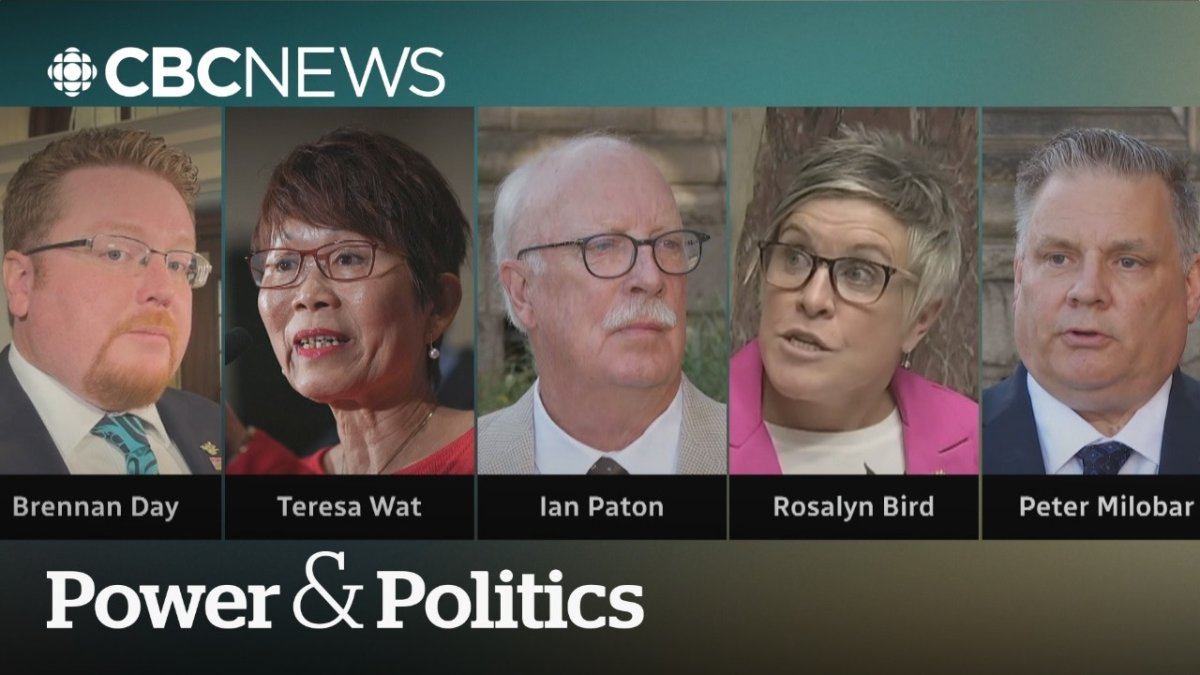
In a recent CBC News Power & Politics report, the focus turned to the dramatic collapse of unity within the B.C. Conservative Party, a caucus that has hemorrhaged members at an alarming rate since the election of Kerry-Lynne Findlay as leader. The segment highlighted the sheer velocity of the departures, which have transformed the Official Opposition into a shell of its former self and raised serious questions about the stability of the province's legislative balance.
In a recent CBC News Power & Politics report, the focus turned to the dramatic collapse of unity within the B.C. Conservative Party, a caucus that has hemorrhaged members at an alarming rate since the election of Kerry-Lynne Findlay as leader. The segment highlighted the sheer velocity of the departures, which have transformed the Official Opposition into a shell of its former self and raised serious questions about the stability of the province's legislative balance. This week's events mark a critical juncture for the party, which came within a whisper of forming government just two years ago.
B.C. Conservative Caucus in Freefall: Six MLAs Depart in August as Leadership Crisis Deepens Victoria, B.C. – This week
The British Columbia Conservative Party is facing an unprecedented existential crisis, with six Members of the Legislative Assembly (MLAs) abandoning the caucus in a single month, leaving the Official Opposition fractured and its new leader fighting for political survival. The exodus, which culminated this week with the resignations of Brennan Day and Bruce Banman, has reduced the party's standing in the legislature to roughly 27 MLAs, a staggering decline from the 44 seats the party won in the 2024 provincial election. The departures follow the election of former federal Conservative MP Kerry-Lynne Findlay as party leader in May, a choice that has proven deeply divisive among the party's elected officials.
The Story: A Caucus in Chaos
The current turmoil represents a dramatic reversal of fortune for a party that, in October 2024, secured 44 seats and formed the Official Opposition under the leadership of John Rustad, coming within three ridings of defeating Premier David Eby's NDP government. However, the internal fractures that were papered over during that successful campaign have now become gaping wounds. The party's trajectory since the election has been one of steady attrition, punctuated by explosive leadership battles and ideological clashes over the direction of conservatism in the province.
The immediate catalyst for the current crisis was the election of Kerry-Lynne Findlay on May 30, 2026, at a leadership convention in Vancouver. Findlay, a former Conservative MP who does not hold a seat in the legislature, won the leadership on a platform that many sitting MLAs have described as too populist and divisive. Her ascension has triggered a wave of resignations, with critics citing concerns over her leadership style, her judgment, and what they perceive as a shift toward a brand of politics more closely associated with former U.S. President Donald Trump than with traditional Canadian conservatism. The party is now grappling with the reality that its leader may be unelectable in the eyes of the very people who were elected under the party's banner.
The Timeline of Departures: A Month of Reckoning
The August wave of departures began on Aug. 14, when Peter Milobar (Kamloops Centre), a former leadership contender and the party's finance critic, quit the caucus, citing a fundamental lack of "ideological alignment" with Findlay. Milobar's exit was followed on Aug. 22 by Reann Gasper (Abbotsford-Mission), who announced she would step down from her seat to allow Findlay to run in a byelection, a move that saw Gasper appointed as Findlay's deputy chief of staff. This was not a resignation in protest, but rather a strategic manoeuvre to get the leader into the legislature, a move that has since backfired spectacularly as the political landscape has shifted.
The situation escalated rapidly on Aug. 24 when Ian Paton (Delta South) quit, stating the party's direction under Findlay no longer aligns with his beliefs. Paton announced his intention to form a new party with Milobar, a development that threatens to split the conservative vote in the province. Milobar acknowledged they "could be a party of two" but hinted that more defections could follow. The following day, Rosalyn Bird (Prince George-Valemount) quit to sit as an Independent, issuing a stark warning about "divisive leadership" and stating that legislators "should be able to firmly reject racism, antisemitism, homophobia and hatred while still having difficult and necessary conversations about immigration, Indigenous reconciliation, addiction, crime, gender, religion."
On Aug. 26, the crisis deepened with two more resignations. Teresa Wat (Richmond-Bridgeport) resigned to sit as an Independent, accusing Findlay of reneging on a promise to apologize over "serious and unfounded accusations." Wat claims Findlay reportedly called her "CCP," a reference to the Chinese Communist Party, and said she cannot remain in a party whose leader has questioned her loyalty to Canada. Findlay responded by calling Wat's departure "a betrayal of the hardworking volunteers, campaign workers and voters who helped get her elected." Later that same day, Brennan Day (Courtenay-Comox) exited, saying he had lost confidence in "the judgment, conduct and ethical standards" of Findlay's leadership, choosing to sit as an "Independent Conservative." The final blow came on Aug. 27, when Bruce Banman (Abbotsford South) quit, becoming the sixth MLA to leave this month. Banman, one of the first MLAs to represent the provincial Conservatives and a key figure in helping the party gain official party status, delivered a damning verdict: "Person after person has informed me they have decided that our new leader is unelectable."
Canadian Context: The Fragility of the Official Opposition
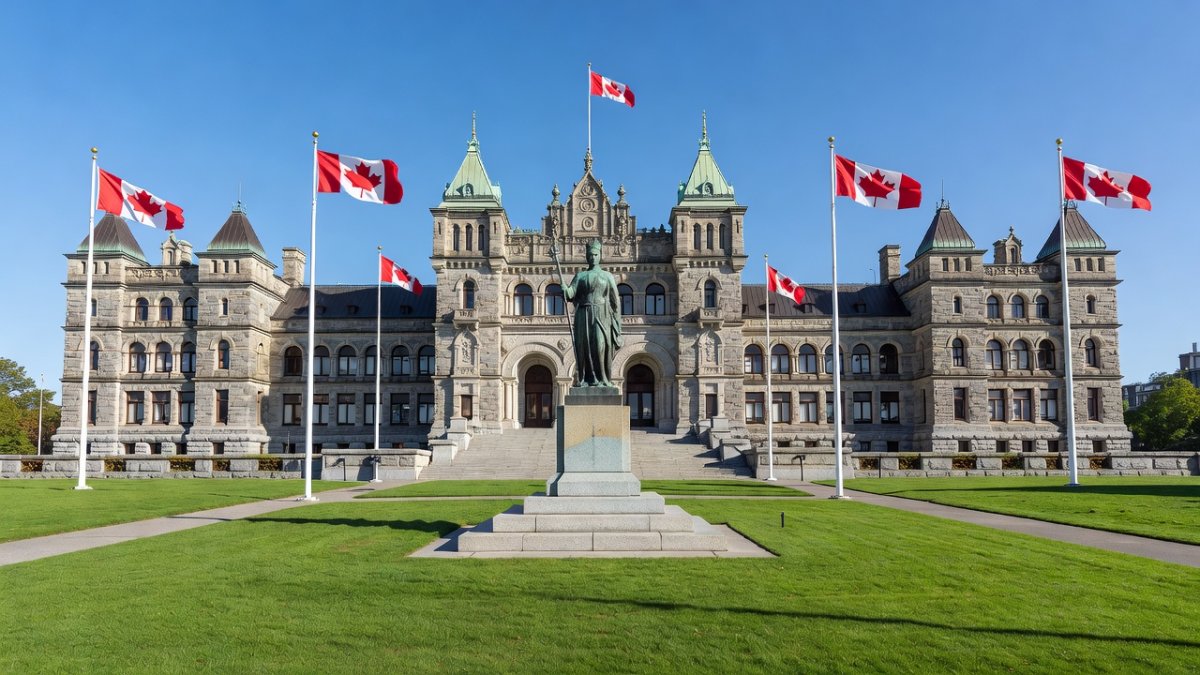
This internal collapse is not merely a B.C. story; it is a significant development in the broader landscape of Canadian conservative politics. The B.C. Conservatives, as the Official Opposition, hold a constitutional responsibility to hold the NDP government to account. With the caucus in disarray, the scrutiny of Premier David Eby's government is severely weakened. The chaos also mirrors debates occurring within conservative movements across the country, including the federal Conservative Party, about the balance between populist energy and traditional, disciplined governance. The situation in B.C. serves as a case study in how quickly a successful coalition of voters can fracture when leadership fails to manage the diverse ideological factions within its own ranks.
Premier David Eby has not shied away from commenting on the opposition's troubles, stating this week that "it's not a surprise that we continue to see this chaos." Eby has previously characterized Rustad's coalition as a "hodgepodge of craziness," bringing together MLAs who peddle anti-vaccine conspiracy theories and pro-Trump tweets. The NDP's majority government, which has been in power since 2017, now faces an opposition that is numerically diminished and ideologically splintered. Political observers note that the proposed third-party split led by Milobar and Paton could further dilute the conservative vote, potentially hurting Findlay's chances in the upcoming Abbotsford-Mission byelection, a seat she needs to win to gain a foothold in the legislature.
Impact on British Columbians: Weakened Scrutiny and Policy Uncertainty
For the citizens of British Columbia, the immediate impact of this political instability is a diminished opposition capable of providing robust checks and balances on government legislation. With the B.C. Conservatives in turmoil, the NDP government faces less rigorous questioning in the legislature on critical issues such as healthcare wait times, the cost of living, and resource development. The chaos also creates an atmosphere of policy uncertainty, as the future of the conservative movement in the province is now unclear. Voters who supported the Conservatives in 2024, believing they were voting for a stable alternative to the NDP, are now left wondering which party, if any, will represent their interests in the next election, expected in 2028.
The situation also raises concerns about the personal toll on MLAs and their constituents. The rapid turnover and public infighting can erode public trust in democratic institutions. Furthermore, the specific allegations made by Teresa Wat regarding the "CCP" comment highlight the dangers of identity-based politics in a multicultural province like B.C., where a significant portion of the population has ties to China. Wat's departure, framed as a matter of loyalty to Canada, underscores how internal party disputes can have real-world consequences for community relations and social cohesion. The byelection in Abbotsford-Mission, when it is eventually called, will be a critical test of whether the party can regain its footing or whether the voters will punish it for the infighting.
Reactions and Analysis: A Party at War With Itself
The reactions to the exodus have been swift and pointed. Findlay, after being acclaimed as the party's candidate for the Abbotsford-Mission byelection, admitted the uncertainty, saying "there may be others who leave our caucus. I don't know." Her response has been to shuffle critic roles in an attempt to consolidate her control, but the damage appears extensive. The Canadian Press reports that political observers believe the third-party split could be fatal to her byelection hopes. The departure of Bruce Banman, a foundational figure for the party, is particularly symbolic, as he was instrumental in helping the party achieve official status in the legislature, a status that is now under threat as the caucus shrinks.
Analysts are drawing parallels to other conservative movements in Canada, where leaders have struggled to balance the demands of social conservatives, fiscal conservatives, and populist newcomers. The B.C. situation is unique, however, in its speed and severity. The party has lost more than a quarter of its caucus since the 2024 election, with 12 legislators exiting for various reasons. These include Dallas Brodie (Vancouver-Quilchena), who was thrown out in March 2025 over remarks about residential school survivors; Elenore Sturko (Surrey-Cloverdale), a former RCMP officer fired in September 2025; and Hon Chan (Richmond Centre), removed in March 2026 after being charged with assault and uttering threats in an alleged intimate partner violence case, which he denies. The sheer volume of exits suggests a systemic failure of leadership and party culture, not just a disagreement over policy.
What Happens Next: A Precarious Future
The immediate future for the B.C. Conservative Party is fraught with peril. The first major test will be the Abbotsford-Mission byelection, where Findlay must win a seat to legitimise her leadership. With the conservative vote potentially split between her and a new party led by Milobar and Paton, her path to victory is far from certain. If she loses, her position as leader would become untenable, plunging the party into yet another leadership contest. The party must also contend with the possibility of further departures, as Findlay herself acknowledged. Each exit weakens the party's ability to function as an effective opposition and raises the prospect of the party losing its official status in the legislature.
Looking further ahead, the chaos has fundamentally reshaped the political landscape in B.C. ahead of the 2028 provincial election. The NDP, under David Eby, appears more entrenched than ever, while the centre-right vote is now fragmented across at least three potential entities: the B.C. Conservatives, a new Milobar-Paton party, and a handful of independents. This fragmentation could hand the NDP another majority government, not because of their own popularity, but because the opposition is unable to organise an effective challenge. For now, the B.C. legislature enters a period of uncertainty, with the Official Opposition in a state of profound disarray and the province watching to see if the party can survive its own self-inflicted wounds.
By Alex Thompson, Staff Writer
This article was produced with AI-assisted research and editorial support. Reporting is based on sources cited in the article.
What's Your Reaction?
 Like
0
Like
0
 Dislike
0
Dislike
0
 Love
0
Love
0
 Funny
0
Funny
0
 Wow
0
Wow
0
 Sad
0
Sad
0
 Angry
0
Angry
0
Canada Correspondent at Global1.News. Based in Toronto, covering Canadian politics, energy, trade, and US-Canada relations. Provides the Canadian perspective on North American and global affairs.









Comments (0)