
Qatar’s LNG shipments reach highest pace since start of US-Iran war: Report
Qatar’s liquefied natural gas (LNG) exports have surged to their most rapid pace since the onset of the US‑Iran war, according to a Bloomberg report that cites data from the maritime analytics firm Kpler.
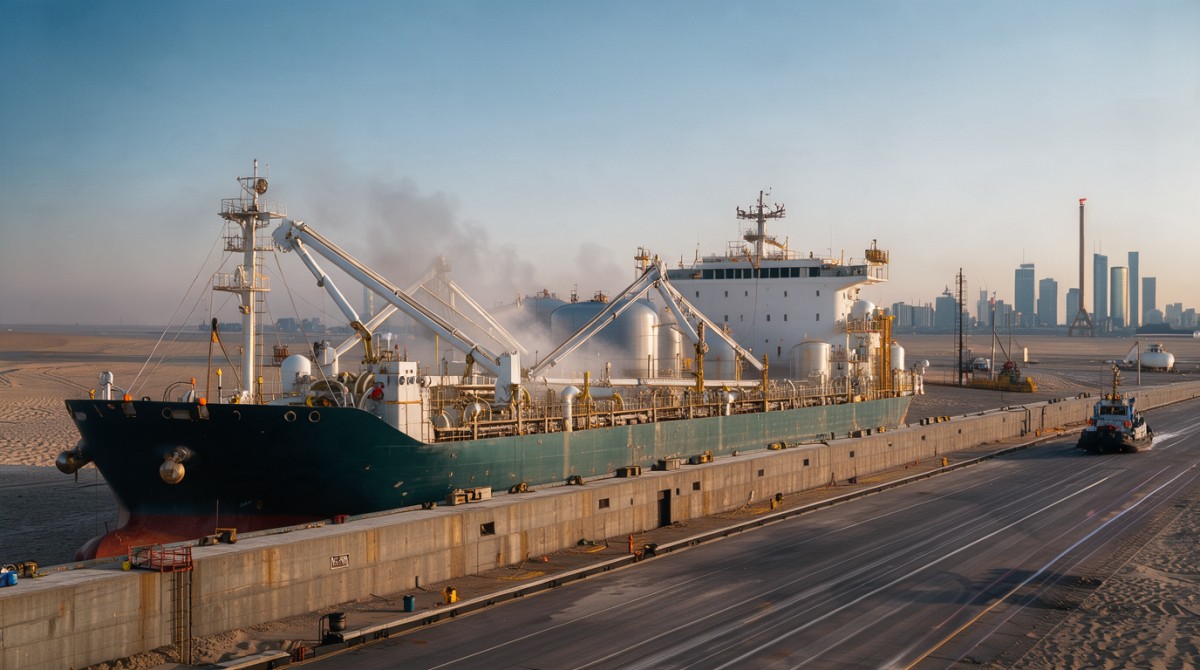
Qatar’s liquefied natural gas (LNG) exports have surged to their most rapid pace since the onset of the US‑Iran war, according to a Bloomberg report that cites data from the maritime analytics firm Kpler. The increase comes amid a volatile regional security environment and soaring natural‑gas prices that are now roughly double pre‑war levels in both Asian and European markets. While the heightened activity signals a partial rebound for Qatar’s energy sector, it also underscores the fragility of global supply chains that depend on the narrow Strait of Hormuz, a chokepoint that has repeatedly been threatened by conflict‑related disruptions.
Rising shipment frequency at Ras Laffan
The Ras Laffan export terminal, Qatar’s primary hub for LNG and gas‑to‑liquid products, has averaged about 1.4 LNG shipments per day so far in November. This represents an increase of roughly 25 percent compared with October, marking the highest daily dispatch rate since the US‑Iran war began. The surge reflects both an attempt to capitalize on elevated market prices and a response to earlier capacity constraints caused by attacks on the facility in March.
Despite the uptick, the current loading rate remains around half of the pre‑war pace. The lingering reduction highlights how physical damage and operational setbacks continue to limit Qatar’s ability to fully meet the heightened global demand that has been amplified by colder weather across key consuming regions.
Price dynamics and global demand pressures
Natural‑gas prices in Asia and Europe have climbed to about twice their pre‑war levels. This sharp rise is driven by a combination of colder seasonal weather, which boosts heating demand, and ongoing disruptions in the Persian Gulf that have constrained supply. The price surge has made LNG an increasingly attractive commodity for import‑dependent nations seeking to diversify away from pipeline gas that may be vulnerable to regional instability.
For Qatar, the higher price environment offers an incentive to increase shipments, yet it also places the country under intense scrutiny from international observers who question the sustainability of a market that is heavily influenced by geopolitical volatility. The elevated price levels underscore the broader human cost of conflict, as higher energy costs translate into increased living expenses for households across Europe and Asia.
Strait of Hormuz traffic and security challenges
LNG tanker crossings through the Strait of Hormuz fell earlier this month after a series of attacks, but recent ship‑tracking data and satellite imagery indicate that traffic is beginning to recover. The strait remains a critical artery for Qatar’s LNG exports, with at least 34 tankers regularly navigating the passage to deliver cargoes to global markets.
One complicating factor is the practice of vessels switching off their tracking signals while transiting the strait, a maneuver that hampers real‑time monitoring of loadings and movements. This opacity raises concerns about the safety of crews and the potential for further incidents that could exacerbate supply disruptions, adding another layer of risk to an already precarious energy landscape.
Age profile of Qatar’s LNG fleet
The tankers employed by Qatar for LNG transport have an average age of 18 years, noticeably older than the global LNG fleet, which averages about 10 years. Older vessels often require more intensive maintenance and may be less equipped with the latest safety and environmental technologies, increasing the operational risk in a high‑tension environment.
The reliance on an aging fleet reflects the broader constraints faced by Qatar’s energy sector, which has had to balance the urgency of meeting market demand with the limited availability of newer, more efficient ships. This situation underscores the need for investment in fleet renewal to enhance resilience and reduce the potential for accidents that could further jeopardize regional stability.
Satellite evidence of heightened activity
Satellite imagery captured on 21 November showed heat signatures at nine of Ras Laffan’s 14 LNG production units, the highest number of active units observed since the war began. While the images confirm increased operational activity, they do not disclose the exact volume of LNG being produced at those units.
The visual evidence of intensified heat output suggests that Qatar is pushing its remaining capacity to meet the surge in export demand. However, the inability to quantify output from satellite data alone leaves analysts uncertain about the precise scale of production, highlighting the challenges of obtaining transparent information in a conflict‑affected region.
Operational constraints and reduced capacity
Since the attacks that damaged Ras Laffan in March, the terminal has been operating at reduced capacity. The damage has forced Qatar Petroleum, the state‑run entity overseeing LNG production, to adjust its output and rely on a smaller number of functional units. This limitation has contributed to the current loading rate being only half of pre‑war levels, despite the recent increase in daily shipments.
The reduced capacity not only affects Qatar’s revenue streams but also has broader implications for global energy security. Countries dependent on Qatari LNG must navigate a market where supply is constrained, potentially prompting them to seek alternative sources or invest in domestic energy projects, decisions that carry significant economic and environmental ramifications.
Human and legal implications of the LNG surge
The escalation in LNG shipments occurs against a backdrop of ongoing conflict that has inflicted civilian suffering across the region. The heightened demand for energy, driven by soaring prices, places additional strain on households already coping with the economic fallout of war. Higher energy costs translate into higher living expenses, affecting the most vulnerable populations.
From an international‑law perspective, the attacks on energy infrastructure and the practice of disabling vessel tracking raise serious concerns. Targeting civilian‑linked facilities such as LNG terminals can be construed as a breach of the principles of distinction and proportionality under international humanitarian law. Moreover, the opacity created by turning off tracking signals hampers accountability and may impede investigations into potential violations.
As Qatar strives to restore its export capacity, the international community must remain vigilant to ensure that the pursuit of economic recovery does not eclipse the imperative to protect civilian lives and uphold legal standards. The intertwining of energy markets with conflict dynamics illustrates how the human cost of war extends far beyond the battlefield, permeating everyday life through the price of the gas that powers homes and industries worldwide.
This article was produced with AI-assisted research and editorial support. Reporting is based on the source material cited below. Sources: Middle East Monitor; middleeastmonitor.com; Global1.News (26 November 2026).
By Fatima Al-Rashid, Staff Writer
What's Your Reaction?
 Like
0
 Dislike
0
 Love
0
 Funny
0
 Wow
0
 Sad
0
 Angry
0

Gulf/MENA Correspondent at Global1.News. Based in Doha, covering Gulf politics, energy markets, diplomacy, and development across the Middle East and North Africa. Tracks the economic transformation of the Gulf states.











Comments (0)