
Police quell Bangladesh garment worker protests after pay hike
Bangladesh’s garment sector, a linchpin of its export economy and a major employer of its workforce, has once again become the flashpoint of social unrest.
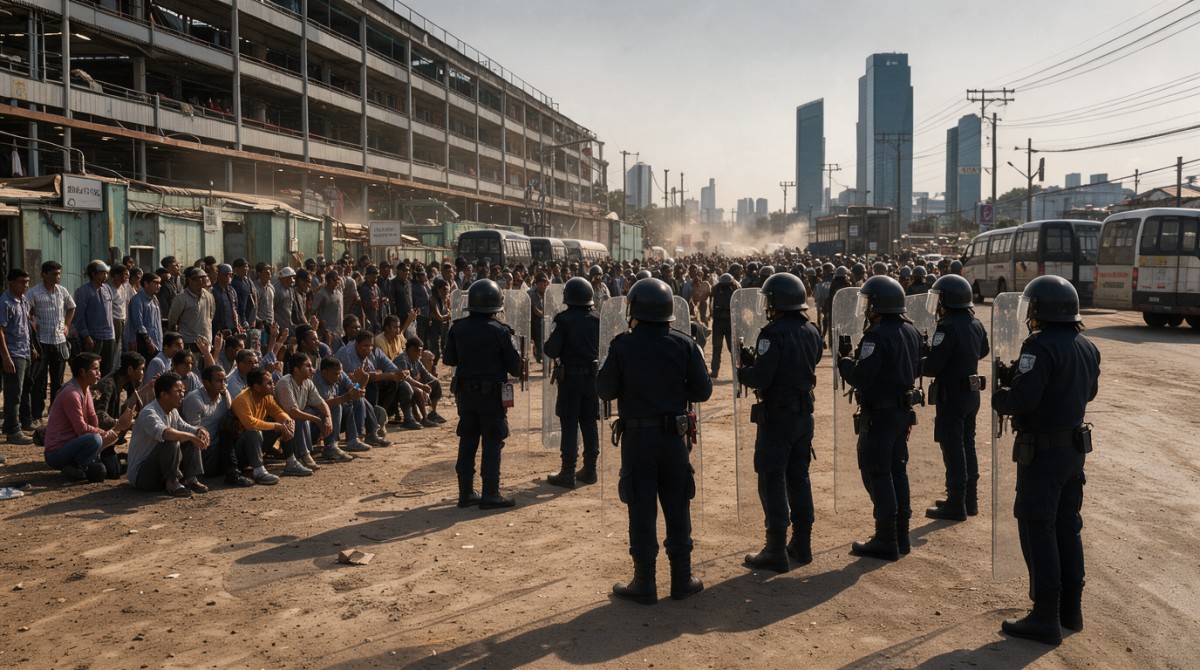
Bangladesh’s garment sector, a linchpin of its export economy and a major employer of its workforce, has once again become the flashpoint of social unrest. On Thursday, police deployed tear‑gas canisters and stun grenades to disperse workers attempting to block a key highway, an incident that underscores the fragility of labour relations in a country that supplies a significant share of global apparel. The unrest follows a government‑appointed wage board’s decision to raise the minimum wage for garment workers by 36 percent – the smallest increase recorded in four decades – a move that has failed to satisfy a workforce that has been mobilising for weeks.
Background: The garment sector’s strategic importance
Bangladesh’s garment industry employs more than four million people, a sizeable proportion of the nation’s labour force, and accounts for a substantial share of its export earnings. In a country of roughly 175 million, the sector’s scale makes any disruption reverberate beyond factory walls, affecting supply chains that feed retailers across Europe and North America. The concentration of production in hubs such as Gazipur, a city that has repeatedly been at the centre of workers’ agitation, further amplifies the impact of localized protests on national economic stability.
From a regional perspective, Bangladesh’s position as the world’s second‑largest garment exporter after China adds a layer of strategic relevance. The country’s ability to maintain steady output is closely watched by investors and trade partners, especially as global apparel brands seek alternatives to Chinese manufacturing amid shifting trade policies and rising labour costs in East Asia. Consequently, labour unrest in Bangladesh is not merely a domestic concern; it carries implications for supply‑chain resilience and price stability in the broader market.
The wage board’s decision and its limits
The six‑member wage board convened for nearly twelve hours of negotiations between workers’ and employers’ representatives before announcing a 36 percent increase in the minimum wage for garment workers. While the figure represents a rise, officials and analysts note that it is the smallest adjustment in forty years, signalling a cautious approach by the authorities. The decision was delivered in the early hours of Wednesday, yet protests erupted within hours, indicating that the increase fell short of the expectations of the workforce.
Labour rights advocates, cited in the reports, argued that the new wage level does not constitute a living wage. Their assessment reflects a broader sentiment among workers that the increment, though numerically significant, fails to keep pace with inflation and the rising cost of living. The rapid resurgence of demonstrations suggests that the wage board’s compromise was perceived as insufficient to address the underlying grievances that have been building over weeks of industrial action.
Escalation of protests and police response
On Thursday, demonstrators attempted to block a major highway, a tactic that disrupted traffic and highlighted the growing boldness of the movement. Police responded with tear gas and stun grenades, a forceful measure aimed at dispersing the crowd. In Gazipur, protesters set fire to a police motorcycle, an act that underscores the intensity of the confrontation and the willingness of some participants to target state symbols.
Mohammad Amjad Hossain, superintendent of Gazipur Industrial Police, described the situation as “now calm, but we remain on alert.” This statement reflects the authorities’ assessment that while the immediate disturbance was contained, the potential for renewed unrest persists. The use of crowd‑control weapons indicates a willingness by law‑enforcement agencies to employ robust tactics to restore order, a factor that may influence future protest dynamics.
Impact on production and the broader economy
The protests have already taken a toll on garment production. Factories have been shuttered, highways blocked, and property damaged, leading to disruptions that reverberate through supply chains. With the sector employing a substantial portion of the workforce, any prolonged shutdown threatens to erode earnings for millions of households, potentially exacerbating socio‑economic tensions.
Beyond immediate losses, the unrest raises concerns about Bangladesh’s ability to meet international delivery schedules. Global buyers, already sensitive to lead‑time reliability, may seek alternative sourcing options if disruptions become chronic. Such a shift could undermine Bangladesh’s competitive edge in the apparel market, where cost advantages have traditionally offset concerns about infrastructure and regulatory environments.
Political undercurrents: The Sheikh Hasina factor
The garment workers’ protests are occurring against a backdrop of broader political turbulence. Former Prime Minister Sheikh Hasina’s plan to return to Dhaka from self‑imposed exile in India has sparked separate tensions and violence, adding another layer of instability to the national climate. While the protests are primarily labour‑driven, the convergence of economic and political grievances amplifies the perception of a volatile environment.
Analysts note that the simultaneity of industrial action and political unrest can create a feedback loop, where each fuels the other. The government’s handling of the wage board’s decision and the police response to protests will be scrutinised not only for their immediate impact on labour relations but also for their broader implications on political legitimacy and governance.
Regional implications and great‑power interests
Bangladesh’s internal dynamics are observed keenly by regional powers, particularly as the country navigates its economic development while balancing relationships with neighbouring India, China, and Gulf states. Stability in the garment sector is essential for maintaining foreign investment flows and securing development assistance, both of which are instrumental in the country’s broader strategic positioning.
Great‑power rivalry, especially between India and China, often manifests in economic engagement and infrastructure projects within Bangladesh. Prolonged unrest could affect the timing and scope of such initiatives, as investors weigh the risk of operating in a climate of labour discontent. Moreover, Gulf investors, who have increasingly diversified into South Asian markets, may reassess exposure to sectors vulnerable to social upheaval.
Prospects for resolution and future outlook
Given the scale of the grievances and the limited scope of the recent wage increase, a durable resolution may require a more comprehensive dialogue between workers, employers, and the state. The wage board’s limited concession, while a step forward, appears insufficient to quell the underlying demand for a living wage and improved working conditions.
Future negotiations will likely hinge on the government’s willingness to engage in further talks and on the capacity of employers to absorb higher labour costs without compromising competitiveness. The police’s alert stance suggests that authorities anticipate continued activism, and any heavy‑handed approach could risk deepening mistrust.
In the short term, the sector will need to navigate the immediate disruptions while maintaining production commitments. Over the longer horizon, the trajectory of Bangladesh’s garment industry will depend on its ability to reconcile economic imperatives with the social contract of its massive workforce, a balance that will shape not only domestic stability but also the country’s standing in the global apparel market.
This article was produced with AI-assisted research and editorial support. Reporting is based on the source material cited below. Sources: Daily Sabah Middle East; dailysabah.com; Global1.News (26 November 2026).
By Malik Hassan, Staff Writer
What's Your Reaction?
 Like
0
 Dislike
0
 Love
0
 Funny
0
 Wow
0
 Sad
0
 Angry
0
Middle East Correspondent at Global1.News. Based in Beirut, covering politics, conflict, energy, and society across the Middle East. Brings context and depth to a region often reduced to headlines.











Comments (0)