
The End of Cervical Cancer? How the HPV Vaccine Is Rewriting Oncology for Latin America
For decades, we have been taught to fear cancer as a mysterious, often fatal foe, something to be detected and treated, frequently too late. But a landmark study from England, published in June 2026, has shattered that paradigm, proving that we now possess a tool that doesn't just treat cancer—it prevents it.
For decades, we have been taught to fear cancer as a mysterious, often fatal foe, something to be detected and treated, frequently too late. But a landmark study from England, published in June 2026, has shattered that paradigm, proving that we now possess a tool that doesn't just treat cancer—it prevents it. The human papillomavirus (HPV) vaccine has driven cervical cancer deaths among young women in England to zero, a historic first that signals a seismic shift in global oncology and offers a blueprint of hope for Latin America, a region still burdened by thousands of preventable deaths each year.
This is not a distant European miracle; it is a clarion call for our region. As an Al Jazeera English explainer, "How the HPV vaccine changes how we think about cancer," narrated by Linh Nguyen, highlighted on June 29, 2026, the vaccine fundamentally reframes our approach from a disease we treat to a disease we can eradicate. For Latin America, where cervical cancer remains a leading killer of women, this isn't just a scientific breakthrough—it is the most powerful tool we have ever had to save the lives of our mothers, sisters, and daughters.
The End of Cervical Cancer? How the HPV Vaccine Is Rewriting Oncology and What Latin America Must Do Now
São Paulo, Brazil – August 15, 2026 — The news from England is nothing short of revolutionary. A study led by Peter Sasieni, published in June 2026, found that cervical cancer deaths among women aged 20-24 in England fell to zero between 2020 and 2024—the first time this has happened in decades. Sasieni estimates that the HPV vaccination programme, which began in 2008, has prevented nearly 200 young women from dying of this disease. The risk of dying from cervical cancer before age 30 in England is now close to zero. This is the definitive, real-world proof that the HPV vaccine is not just a preventative measure; it is the world's first cancer-preventing vaccine, and it works with stunning efficacy.
For those of us in Latin America, this milestone is both exhilarating and a painful reminder of our own unfinished battle. While England celebrates zero deaths, our region still records thousands of fatalities annually from a disease we know how to prevent. The science is settled, the data is irrefutable, and the tools are available. The question that now haunts us is not whether the vaccine works, but whether our governments, health systems, and societies have the political will and operational capacity to deliver it to every girl and boy who needs it. The Al Jazeera explainer underscores this global shift in thinking, and we must now translate that thinking into urgent, large-scale action across our continent.
The Science — How a Virus Becomes Cancer
To understand the magnitude of this breakthrough, we must first understand the enemy. Cervical cancer is not a random genetic mutation; it is the direct consequence of a viral infection. The human papillomavirus (HPV) is a common sexually transmitted infection, but in a significant number of cases, it does not clear on its own. Over time, persistent infection with high-risk HPV genotypes can cause cellular changes that lead to cancer. The data is stark: HPV causes nearly all cervical cancer cases globally, with over 95% of cases attributable to this virus. Among the more than 200 types of HPV, the high-risk genotypes 16 and 18 are the most dangerous, responsible for at least 70% of all cervical cancers.
This viral etiology is precisely what makes the disease so preventable. Unlike other cancers with complex, multi-factorial causes, cervical cancer has a single, necessary infectious agent. This means that by targeting the virus, we can effectively stop the cancer before it ever begins. The Al Jazeera explainer, "How the HPV vaccine changes how we think about cancer," emphasizes this paradigm shift: we are no longer waiting for a tumor to appear to intervene. We are intercepting the infection at its source. This is a fundamental change in oncology, moving from a reactive model of treatment to a proactive model of prevention. For Latin America, where screening programs are often inconsistent, this science offers a powerful, one-time intervention that can protect a girl for her entire lifetime.
A Vaccine That Prevents, Not Just Treats
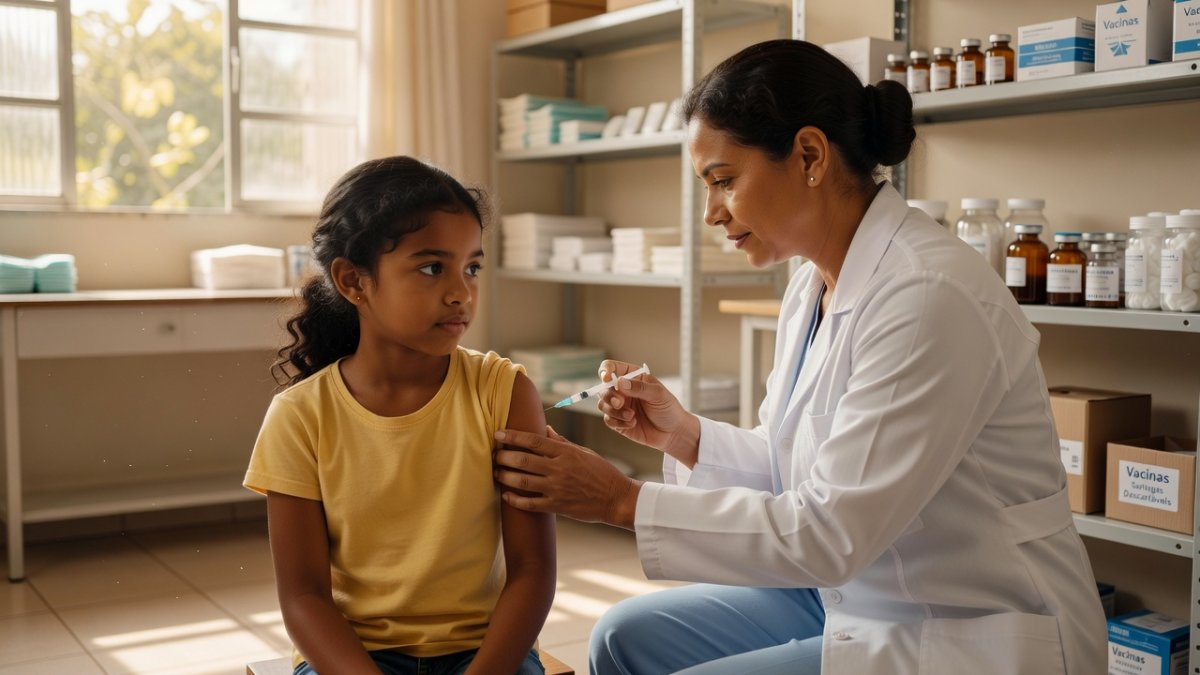
The genius of the HPV vaccine lies in its elegant and safe design. It is not a live virus vaccine; it is built from a single protein, the L1 protein, which has the remarkable ability to self-assemble into virus-like particles (VLPs). These VLPs mimic the outer shell of the real virus but contain no live virus and no viral DNA. This means the vaccine is biologically incapable of causing an HPV infection. Instead, it presents a harmless decoy to the immune system, training it to recognize and neutralize the actual virus before it can ever transform cervical cells into cancerous ones.
The current standard, the 9-valent vaccine (Gardasil 9), is a formidable weapon. It protects against nine HPV types, including the high-risk types 16 and 18, as well as types 6 and 11, which are responsible for more than 90% of genital warts. In total, this vaccine can prevent more than 90% of HPV-caused cancers. And its reach extends far beyond the cervix. HPV is also implicated in cancers at five other sites: the oropharynx, anus, penis, vagina, and vulva. This makes the vaccine a multi-cancer preventative, a true medical marvel. The Al Jazeera explainer correctly frames this as a turning point in how we think about cancer—not as an inevitable tragedy, but as a preventable disease. For our region, this means we have the power to protect not just women, but men and boys as well, from a host of devastating malignancies.
Brazil — The Regional Bellwether
Brazil stands as the undeniable bellwether for Latin America, possessing both the largest population and the most extensive public health system, the SUS. We incorporated the HPV vaccine into our national schedule in 2014 for girls, expanding to boys in 2017. The results are beginning to show. PAHO reports that Brazil has achieved coverage above 82% of girls and nearly 67% of boys aged 9-14. This is a significant achievement, but the battle is far from over. We still face roughly 17,000 new cervical cancer cases and nearly 7,000 deaths annually—a tragic toll for a preventable disease. A study in The Lancet Global Health has already shown that our national HPV vaccination program has reduced cervical cancer and CIN3 incidence in women aged 20-24, proving our efforts are working.
However, we cannot rest on these laurels. In December 2025, Brazil adopted the single-dose schedule, a move that could dramatically improve coverage and reduce costs. An npj Vaccines study published in June 2026 assessed the effects of HPV vaccination at scale in Brazil, providing crucial data for future policy. The next frontier is legislative. In August 2026, a bill before the Chamber of Deputies (Câmara dos Deputados) proposes to expand SUS HPV vaccination coverage and prioritize molecular DNA-HPV testing. If implemented, this would be a game-changer, moving us from a purely vaccination strategy to a comprehensive prevention and early-detection program. This is the kind of bold, integrated thinking we need to see across the continent.
Mexico — From Success Story to Unfinished Business
Mexico presents a frustrating paradox: a nation that was once a leader in HPV vaccination but now faces an unfinished battle. Since 2008, Mexico has had a national HPV vaccination program, and by 2022, it achieved over 90% coverage among girls under 15. This is a remarkable feat that should be celebrated. Yet, despite this high vaccination rate, cervical cancer remains the second leading cause of cancer death among Mexican women. This disconnect highlights a critical flaw: vaccination alone is not enough if screening and treatment are neglected. The high coverage is not translating into lower mortality because many women are not being screened, and those with precancerous lesions are not being treated.
Experts are now calling for an urgent restructuring of the program. The focus must shift from just vaccinating a single cohort to a comprehensive national catch-up strategy that reaches older women who missed the vaccine, and expanded eligibility to include boys. The government has announced plans to distribute 2.5 million HPV vaccine doses, a positive step, but if implemented without a robust screening and treatment infrastructure, it will only partially solve the problem. The Mexican experience is a cautionary tale for the rest of the region: we must build a seamless continuum of care, from vaccination to screening to treatment, to truly eliminate cervical cancer. A vaccine is a powerful tool, but it is not a silver bullet.
Argentina and Peru — The Coverage Crisis
While some countries struggle with the continuum of care, others are facing a more fundamental crisis: declining vaccination coverage. Argentina is a stark example. In 2015, the country boasted an HPV vaccination coverage of roughly 80%. By 2024-2025, that number had plummeted to about 50%. This is a catastrophic regression. Experts point to communication and delivery gaps rather than widespread vaccine refusal. This suggests a failure of the health system to consistently reach parents and adolescents with accurate information and convenient access. The result is a generation of Argentine girls left vulnerable to a preventable cancer.
Peru's situation is even more alarming. Advocates there warn that the Health Ministry has not approved the 2026 National HPV Vaccination Plan, leaving an operational vacuum. This bureaucratic paralysis has created a documented gap of more than 1.6 million unvaccinated girls. This is not a resource problem; it is a political and administrative failure. Every day this plan remains unapproved, more girls age out of the target vaccination window, and the risk of future cervical cancer cases grows. This is a moral outrage. We cannot allow bureaucratic inertia to condemn a million and a half girls to a preventable death. The stories from Argentina and Peru are a stark reminder that our progress is fragile and requires constant political will and public investment to sustain.
The 90-70-90 Roadmap — Closing the Gap
The path forward is not a mystery; it is a clearly defined global strategy. The World Health Organization (WHO) has set an ambitious but achievable target: eliminate cervical cancer as a public health problem by 2030. This is encapsulated in the 90-70-90 targets. First, we must vaccinate 90% of girls by age 15. Second, we must screen 70% of women with high-performance tests by age 35 and again by 45. Third, we must treat 90% of precancerous and cancerous cases. These are not arbitrary numbers; they are the thresholds needed to break the chain of transmission and drive the disease into extinction.
In the Americas, the Pan American Health Organization (PAHO) is leading this charge. On February 3, 2026, the eve of World Cancer Day, PAHO announced that 24 countries in the Americas have adopted the single-dose HPV vaccination schedule, a move that simplifies logistics and reduces costs. However, PAHO also warned that greater efforts are needed on screening and treatment, and called on countries to accelerate toward the 2030 elimination targets. The Lancet Regional Health Americas, in a February 4, 2026 publication, provided a cross-country overview of cervical cancer control in Latin America and the Caribbean, highlighting both opportunities and challenges. Countries like Chile and El Salvador have shared their progress at a PAHO forum on November 18, 2025, showing that progress is possible. The roadmap is clear; we just need to follow it.
What This Means for Latin America
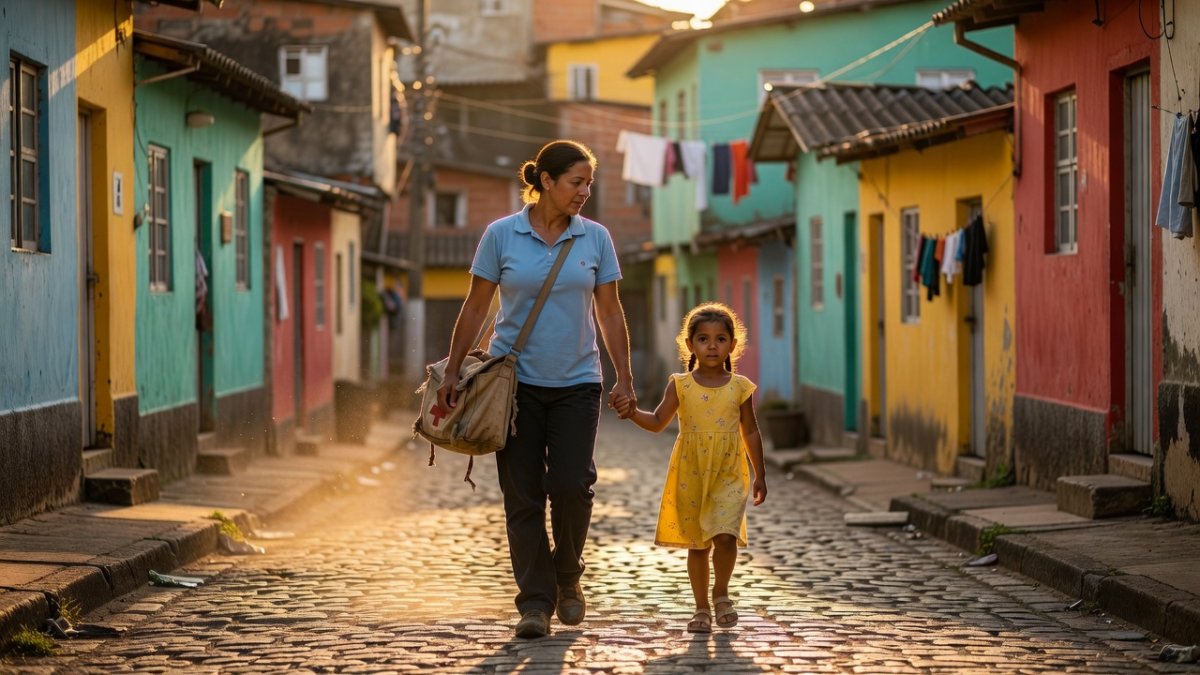
For Latin America, the HPV vaccine is more than a medical intervention; it is a tool for social justice. Cervical cancer disproportionately affects poor, rural, and Indigenous women who lack access to regular screening. A single-dose vaccine, administered to a 9-year-old girl in a favela in São Paulo or a rural Amazon town, can protect her for life, regardless of her future access to healthcare. This is a powerful equalizer. It is a one-time intervention that can break the cycle of poverty and disease that has plagued our communities for generations. The England study proves that the vaccine works in the real world, not just in clinical trials. It gives us the confidence to push for universal coverage.
But we must be honest about the challenges. The success in England was built on decades of robust public health infrastructure and high vaccine uptake. In Latin America, we face logistical hurdles, vaccine hesitancy, and political instability. We must invest in our community health workers, the Agentes Comunitários de Saúde, who are the trusted messengers in our most vulnerable communities. We must ensure that the vaccine is available not just in capital cities, but in every remote clinic. We must also integrate vaccination with screening and treatment programs, as the Mexican experience shows that vaccination alone is insufficient. The Al Jazeera explainer's message is clear: we have the power to prevent cancer, but we must have the will to use it.
The Bottom Line — A Generation We Can Save
The bottom line is stark and simple: we have the power to save an entire generation of Latin American women from a horrific and preventable death. The England study is not just a European success story; it is a global proof of concept. It demonstrates that with high vaccination coverage, cervical cancer can be eliminated. The science is on our side, the vaccines are safe and effective, and the WHO has given us a clear roadmap. The only thing missing is the collective political will and sustained investment from our governments. We cannot afford to be complacent. We cannot afford to let bureaucratic delays, like those in Peru, or communication failures, like those in Argentina, rob our daughters of their futures.
This is a call to action for every parent, every health worker, every policymaker, and every citizen in Latin America. We must demand that our governments prioritize HPV vaccination, not as an optional program, but as a national emergency. We must hold them accountable to the 90-70-90 targets. We must ensure that the bill in Brazil's Câmara dos Deputados is passed and implemented, that Mexico's 2.5 million doses are distributed and followed by a robust screening program, and that Peru's National HPV Vaccination Plan is approved immediately. The vaccine is a miracle of modern science, but it is only effective if it reaches the arm of a child. Let us not be the generation that had the cure but failed to deliver it. Let us be the generation that ended cervical cancer.
By Elena Vasquez, Staff Writer
This article was produced with AI-assisted research and editorial support. Reporting is based on sources cited in the article.
What's Your Reaction?
 Like
0
Like
0
 Dislike
0
Dislike
0
 Love
0
Love
0
 Funny
0
Funny
0
 Wow
0
Wow
0
 Sad
0
Sad
0
 Angry
0
Angry
0

Latin America Correspondent at Global1.News. Based in Mexico City, covering politics, economics, energy, and culture across the region. Brings an on-the-ground perspective to stories spanning from the Rio Grande to Patagonia.














Comments (0)