
The Day 3,800 Megawatts Fled the Grid — and PJM Decided Data Centers Need a Leash
After nearly 3,800 megawatts of Northern Virginia data center load switched off the grid in seconds on July 22, PJM filed rules forcing new large loads to bring their own capacity or face earlier emergency curtailment. A hosting founder on the AI buildout's first behavioral test.
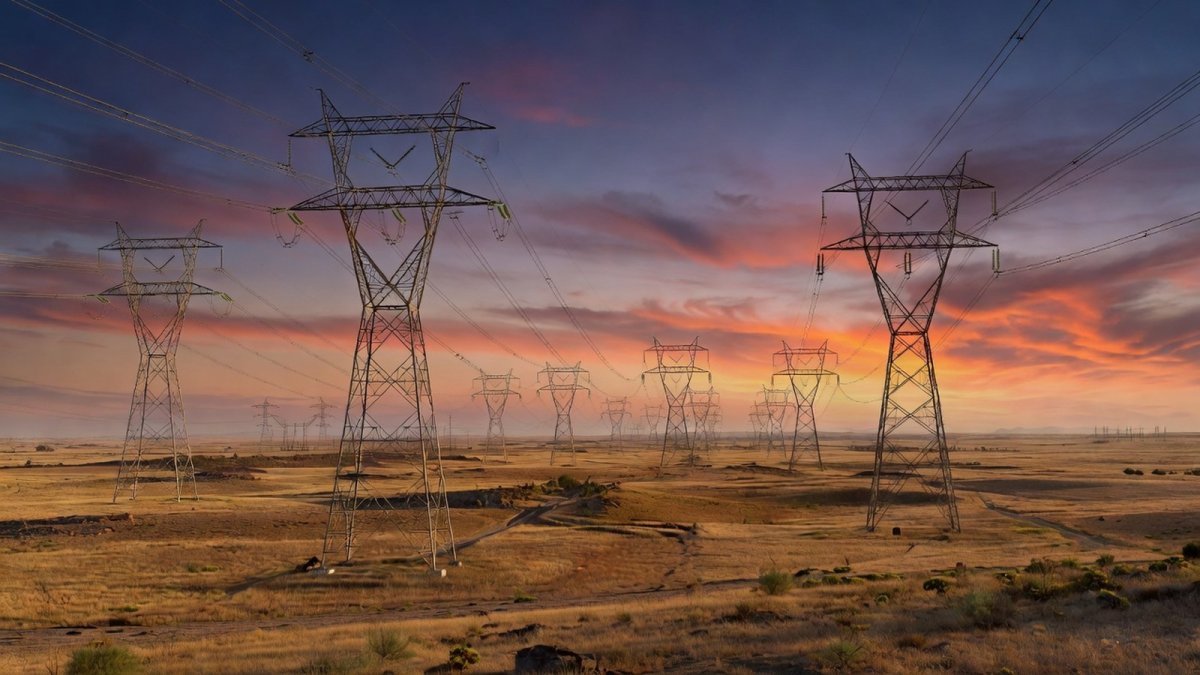
The Day 3,800 Megawatts Fled the Grid — and PJM Decided Data Centers Need a Leash
Let me tell you something that's been sitting heavy with me all week. I've been running hosting infrastructure for over a decade, and most of that time I've thought about power the way people think about oxygen — it's just there, and the moment you notice it, something's already wrong. But this week I read something that made me stop. On the morning of July 22, at 7:55 a.m. Eastern, more than three gigawatts of electricity demand vanished from America's biggest power grid in seconds. Not because a plant failed. Not because a storm hit. Because the data centers themselves — the very buildings every hosting guy on the planet depends on — disconnected from the grid, all at once, the way a spooked horse bolts. And three weeks later, PJM has had enough.
This is the story of how the AI buildout just hit its first real behavioral test, and how the grid operator for 13 states and 65 million people decided that the biggest electricity consumers in history need to either behave like good grid citizens or bring their own damn power. It matters for every one of us who hosts anything, because the rules being written right now will decide who gets power first when things get tight.
The News — Three Threads, One Message
Start with the date: August 13, 2026. That's when PJM Interconnection filed a formal tariff proposal with the Federal Energy Regulatory Commission — a "conditional reliability framework" for what it calls New Large Loads. Under the proposal, a data center of 50 megawatts or more at a single site can still come online before enough new capacity exists to back it up. But here's the catch: any portion of that demand not covered by qualifying new capacity gets curtailed before other pre-emergency demand-response measures. Bring your own power, or be first in line for the cut.
The same week, PJM confirmed it is actively evaluating mandatory ride-through standards for data centers and other computational loads — voltage and frequency ride-through, rules for how facilities reconnect after disturbances — in the wake of a July 22 event it now calls the largest of its kind in PJM history. Federal regulators have already ordered NERC to start drafting enforceable reliability standards for computational loads. Three threads, one message: the passive era of the data center consumer is over.
What Actually Happened on July 22
Let me walk you through the mechanics, because the numbers are the story. At 7:55 a.m. on July 22, a 230-kilovolt transmission line in Northern Virginia suffered a mechanical failure. Routine fault, the kind grids absorb constantly. Except this time, the data centers' own protective control systems did exactly what they were designed to do — they switched to backup power to protect the servers. The problem is that "they" means hundreds of facilities making the same call at the same instant. Roughly 2,970 megawatts of load transferred to onsite generation in the initial scramble, then another 1,099 megawatts followed as conditions improved. Call it nearly 3,800 megawatts — about three percent of PJM's total demand — gone in seconds.
The grid wobbled. Voltage disturbances were felt from Washington, D.C. to Chicago. Lights flickered. Appliances hummed weirdly. Normal grid corrections take milliseconds; this one took roughly ten minutes to stabilize. Nobody lost power — PJM says reliability was never at risk — but that's not the point. The point is what Neil Osnato, founder of Persistence Analytics Group, told reporters: grid planners have to start thinking about not just how much load is connected, but how loads behave during disturbances. A single data center campus is now the size of a small city, and when a small city sneezes, the whole grid feels it.
The Two Readings — Adult Supervision, or a Quiet Admission
Here's where I do my dual-reading thing, because this story has two faces and both of them are true. The first reading: this is responsible grid management. PJM has an obligation to keep the lights on for 65 million people, and after watching three-plus gigawatts vanish in seconds, it's entirely reasonable to demand that gigawatt-scale loads either ride through disturbances like generation does or back their demand with real capacity. The "bring your own new capacity" pathway — new generation, generation uprates, surplus interconnection service, repowered resources, fuel conversions, storage — is a legitimate engineering response. That's the adult-supervision reading, and it's hard to argue with.
The second reading is the one that keeps me up at night. This filing is a quiet admission that the hyperscaler buildout is destabilizing the grid in ways nobody modeled. PJM's own board decision in July cited roughly 70 gigawatts of new large-load demand expected by 2038 — against about 15 gigawatts of generation retirements since 2022. That's the grid equivalent of adding several New Yorks to the system while taking power plants offline. And those first-ever backup-generator warnings PJM issued during July's heat wave? That wasn't theoretical. That was the grid operator begging the biggest customers to fire up their diesel because the system was that close to the edge. Ent? The leash isn't going on data centers because PJM is mean. It's going on because the dog has grown bigger than the yard.
The New Deal — BYONC, IRAS, and the Registry
Now let's get into the fine print, because that's where the real story lives. PJM defines a New Large Load as anything entering service or adding incremental demand after June 1, 2027, with a cumulative peak of at least 50 megawatts at a single electrical site — affiliated facilities within a one-mile radius count as one site. The framework centers on three acronyms you're going to see a lot in the next year: IRAS, BYONC, and RPM.
IRAS is the Interim Resource Adequacy Service — the mechanism that would curtail the portion of demand not covered by qualifying capacity during specified reliability conditions, before PJM calls for pre-emergency load management. BYONC is "bring your own new capacity" — the path to opt out of IRAS exposure entirely by designating qualifying new capacity equal to or greater than your registered peak. Qualifying resources include new generation, certain generation uprates, surplus interconnection service, repowered resources, fuel conversions, storage, and some demand-side resources. And under the Reliability Pricing Model changes, beginning with the 2029/30 delivery year, PJM would stop procuring capacity for excluded new large loads — they'd be responsible for securing their own, rather than pushing that demand into what everyone else pays.
There's also a new Large Load Registry — location, peak demand, ramp schedule, telemetry specifications, backup generation, contracts. And that's where the first fight has already broken out. The Independent Market Monitor, Monitoring Analytics, says the tariff doesn't require data centers to provide supporting evidence for their registry entries, and wants monthly validation with explicit access for the monitor. PJM's spokesman says the operator has enhanced its large-load vetting. Monitor executive director Joseph Bowring's response, quoted directly: "We have not seen any evidence of that." That's the polite version of calling the other guy a liar in public.
The Secondary Bottleneck Nobody's Talking About — Load Behavior
Here's the thing I keep coming back to, and it's the part of this story that doesn't get enough attention. For a hundred years, grid planners modeled load as a number — a megawatt figure on a curve. They never had to model load as a behavior. But that's exactly what a data center is now: a behavioral entity with its own protective relays, its own UPS systems, its own switchover logic, all tuned to protect the servers inside the building with zero regard for what's happening on the other side of the meter.
That's the secondary bottleneck — load behavioral unpredictability. When 3,800 megawatts can vanish because thousands of individual protection systems all made the same "safe" decision at the same instant, the grid's stability math stops working. It's the same structural seam we saw with the Bit2Watt GPU power-grid attack: the compute side and the grid side are operated by different companies, and nobody owns the seam between them. Ride-through standards are the first attempt to give that seam an owner. Expect them to become a mandatory design consideration for every new facility — and a retrofit headache for every existing one.
What This Means for Independent Hosting Providers
So what does a founder in Atlanta do with this? Same thing I'm doing — treat it as a signal, not a story.
First, read the fine print on your colocation agreement's power section like your business depends on it, because it does. If your colo sits in PJM territory and takes curtailment directives through its load-serving entity, the question isn't whether your provider passes the risk through — it's how fast. Ask whether your facility has ride-through-compliant switchover gear, and get the answer in writing.
Second, document your own backup behavior. If you run your own facility, test and document your transfer-to-generator response curves. The next generation of interconnection agreements is going to require it, and the operators who already have the data will sail through compliance while everyone else scrambles.
Third, watch the capacity market signals. PJM's decision not to procure capacity for excluded new large loads from the 2029/30 delivery year onward is a quiet transfer of cost — hyperscalers' capacity obligations will show up in their power purchase prices, their colo rates, and eventually their cloud pricing. When cloud prices rise, independent hosting gets more attractive. Position for that.
Fourth, don't build your expansion plans on the assumption that unlimited cheap power is coming. The 70-gigawatt-by-2038 forecast is the bull case; 15 gigawatts of retirements is the floor. Between them sits a regulatory process with a September 3 comment deadline and a long list of interveners — Maryland's Public Service Commission, the Illinois Attorney General, New Jersey's Rate Counsel, the industrial customers' coalition, power producers, and more. That's not a rubber stamp. That's a fight.
The Bottom Line
Here's the truth bomb. For the last three years, the AI buildout has operated on a simple assumption: the grid will be there. It will scale. It will absorb whatever the hyperscalers throw at it. July 22 broke that assumption in ten minutes, and the rules now being written — ride-through standards, bring-your-own-capacity requirements, the Large Load Registry — are the industry's first official admission that the assumption was never safe.
This isn't the death of the AI buildout. It's not even a pause. It's the moment the biggest electricity consumers in human history got told to act like grown-ups. The winners will be the operators — hyperscaler or independent — who treat grid behavior as a first-class design constraint instead of an afterthought. The losers will be the ones still pretending power is somebody else's problem. I know which side I'm building for.
— Allan Ali, Founder
This article was produced with AI-assisted research and editorial support. Sources: Data Center Knowledge (Aug 17, 2026), PJM Inside Lines, Utility Dive, Data Center Dynamics, Power Magazine, FERC, Marcellus Drilling News.
What's Your Reaction?
 Like
0
Like
0
 Dislike
0
Dislike
0
 Love
0
Love
0
 Funny
0
Funny
0
 Wow
0
Wow
0
 Sad
0
Sad
0
 Angry
0
Angry
0

Publisher of Global1.News. Automation architect, systems builder, and the guy making sure the truth gets published.















Comments (0)