
Hezbollah's Moussawi: Resistance Is a Reaction to Occupation
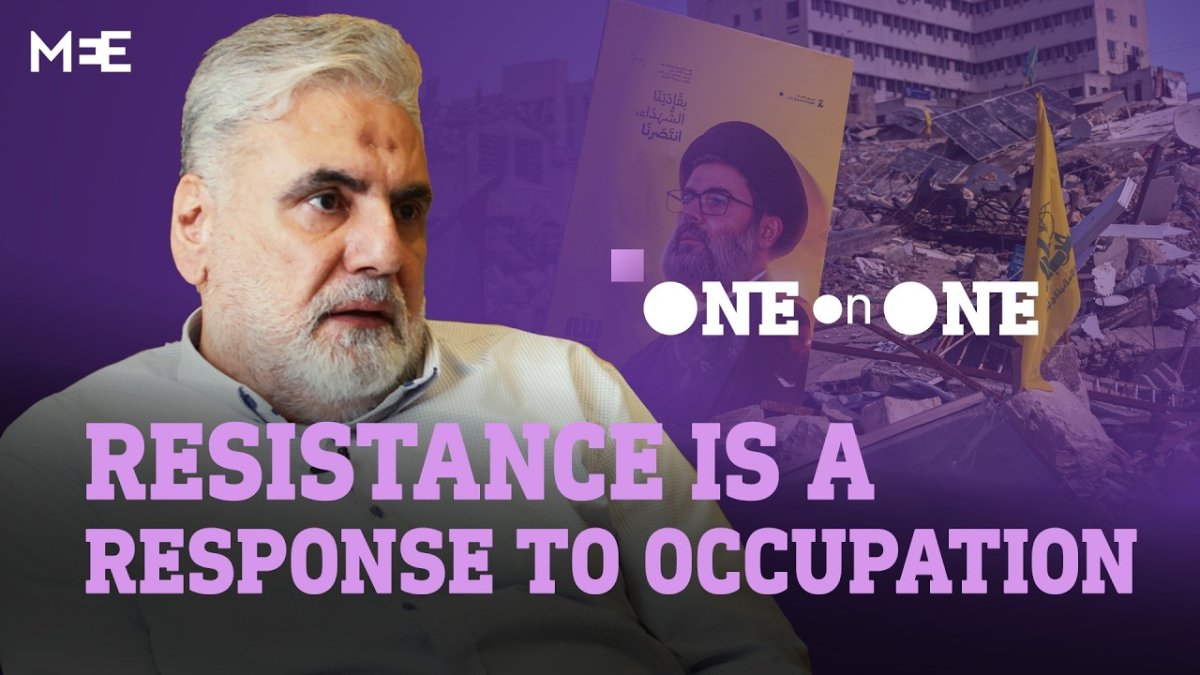
In a recent Middle East Eye "One on One" interview, senior Hezbollah official Nawaf Moussawi offered a defiant defence of his party's role in the 2026 Lebanon war, framing resistance as a direct response to Israeli occupation rather than a cause of it.
In a recent Middle East Eye "One on One" interview, senior Hezbollah official Nawaf Moussawi offered a defiant defence of his party's role in the 2026 Lebanon war, framing resistance as a direct response to Israeli occupation rather than a cause of it. His remarks come at a moment of profound national crisis, with more than one million Lebanese displaced, Israeli forces occupying territory up to the Litani River, and a bitter domestic blame game intensifying over who is responsible for the catastrophe.
Hezbollah's Defiance Meets Lebanon's Displacement: A Nation Trapped Between Occupation and Blame
Beirut, Lebanon - 17 August 2026 — Nawaf Moussawi, a senior Hezbollah official, former member of parliament and head of the party's border and resources department, sat down with Middle East Eye's One on One programme to deliver a message that cuts to the heart of Lebanon's current agony: "Resistance is a reaction to something — the Israeli occupation and aggression." In the interview, published 17 August 2026, Moussawi insisted that Israelis will never leave Lebanon through negotiations alone, and dismissed accusations that his party bears responsibility for the war as part of a "media campaign to try to turn facts upside down." "Rather than identifying the occupation as the problem, this media campaign seeks to claim that the resistance is the problem," he said.
The Interview: Resistance as Reaction, Not Provocation
Moussawi's central argument is both historical and strategic. He positions Hezbollah's armed struggle not as an ideological choice but as an inevitable response to seven decades of Israeli military presence and aggression. "Resistance is a reaction to something," he repeated, pointing to the occupation of Lebanese territory that began with the 1948-49 war, continued through the 1978 invasion, the 1982-2000 occupation, the 2006 war, the 2024 conflict, and now the seventh occupation that began in March 2026.
His logic is straightforward: if the occupation is the problem, then the resistance is the solution. Negotiations, in his view, have never delivered Lebanese sovereignty. The 2000 withdrawal from the south came after years of armed struggle, not diplomacy. The 2006 war ended with UN Resolution 1701, yet Israeli forces returned in 2024 and again in 2026. For Moussawi, the pattern is clear — Israel only leaves when the cost of staying becomes too high.
He also addressed the party's staggering losses with a generational framing that is both stark and defiant. "Yes, it can be said today that the first generation was killed, as was the second generation, along with many of the third generation. Nevertheless, continue the resistance," he said. He added a chilling observation about Israeli intelligence: "Israeli intelligence had strong intelligence on the first, second and third generations. But now, it is fighting with a new generation that it does not know."
The "Media Campaign" and the Blame Narrative
Moussawi's reference to a "media campaign" is not abstract. Since the war began on 2 March 2026, a concerted narrative has emerged — in Israeli statements, some international coverage, and increasingly within Lebanon itself — that Hezbollah's decision to resume rocket strikes on Israel following the 28 February 2026 US-Israeli war against Iran and the assassination of Iran's Supreme Leader Ali Khamenei was a reckless provocation that dragged Lebanon into a devastating conflict.
Lebanese Deputy Prime Minister Tarek Mitri told Middle East Eye that the war was "a war that Lebanon did not want, did not seek." The Lebanese government has moved to ban Hezbollah's military activities, a significant shift for a state that has long accommodated the party's arsenal. Moussawi dismisses this as scapegoating. He argues that the occupation existed before Hezbollah, and would exist after it. In a separate Middle East Eye report published 5 August 2026, "The resurrection of Hezbollah," he made the point even more forcefully: "Let us suppose that Hezbollah did not exist. There would still be an organisation expressing the will of the Lebanese people to liberate their land. That organisation would then become the problem, even if it were called the Democratic Party of America."
Hezbollah chief Naim Qassem has echoed this line, accusing Lebanese authorities of "targeting the resistance instead of targeting the enemy" and failing to abide by agreements. The tension between the state and the party is now existential — not just about who controls weapons, but about who speaks for the Lebanese people and who bears responsibility for their suffering.
The 2026 War and the Seventh Occupation
The timeline of the current catastrophe is precise and brutal. On 2 March 2026, Hezbollah resumed rocket strikes on Israel, a direct response to the US-Israeli war against Iran and the assassination of Khamenei. Israel responded with large-scale airstrikes across Lebanon, including Beirut. On 16 March, Israeli forces launched a ground invasion of southern Lebanon, blowing up the main bridges on the Litani River and cutting the south off from the rest of the country. Bint Jbeil, a town that has become synonymous with resistance since 2006, saw intense ground combat.
On 24 March, Israeli Defence Minister Israel Katz declared that Israel would demolish Lebanese border villages and permanently occupy Lebanese territory up to the Litani River. This is the seventh occupation of Lebanon by Israel — following the 1948-49 war, the Shebaa Farms since 1967, the 1978 invasion, the 1982-2000 occupation, the 2006 war, and the 2024 conflict. Israeli forces expanded their occupation to roughly 570-600 square kilometres by the time of the temporary ceasefire.
Prime Minister Benjamin Netanyahu has been unambiguous about Israeli intentions. On 15 June 2026, he said: "We will stay in the Lebanon security buffer zone for as long as necessary." On 24 June, Defence Minister Katz went further, saying Israeli forces would not withdraw even if "the United States demands it," adding that "200,000 residents will not return." On 5 July, Netanyahu claimed that some Christian-majority villages had "asked to be annexed" — a claim denied by villages in the Marjayoun district — and reiterated that Israel would maintain the occupation.
Life Under Occupation and the Human Cost
The human toll is staggering. More than 4,000 people have been killed by Israeli strikes in Lebanon, and over one million people have been forcibly displaced. UN OCHA reported at least 3,798 deaths, including 363 women and 247 children, and 11,781 injuries as of mid-June 2026. More than 1.2 million Lebanese civilians — over 20 percent of the population — have been forced from their homes. Israel has prohibited returns "until security is guaranteed for the residents of the north" of Israel, and has issued evacuation orders covering about 2,000 square kilometres south of the Zahrani River, with further orders in southern Beirut.
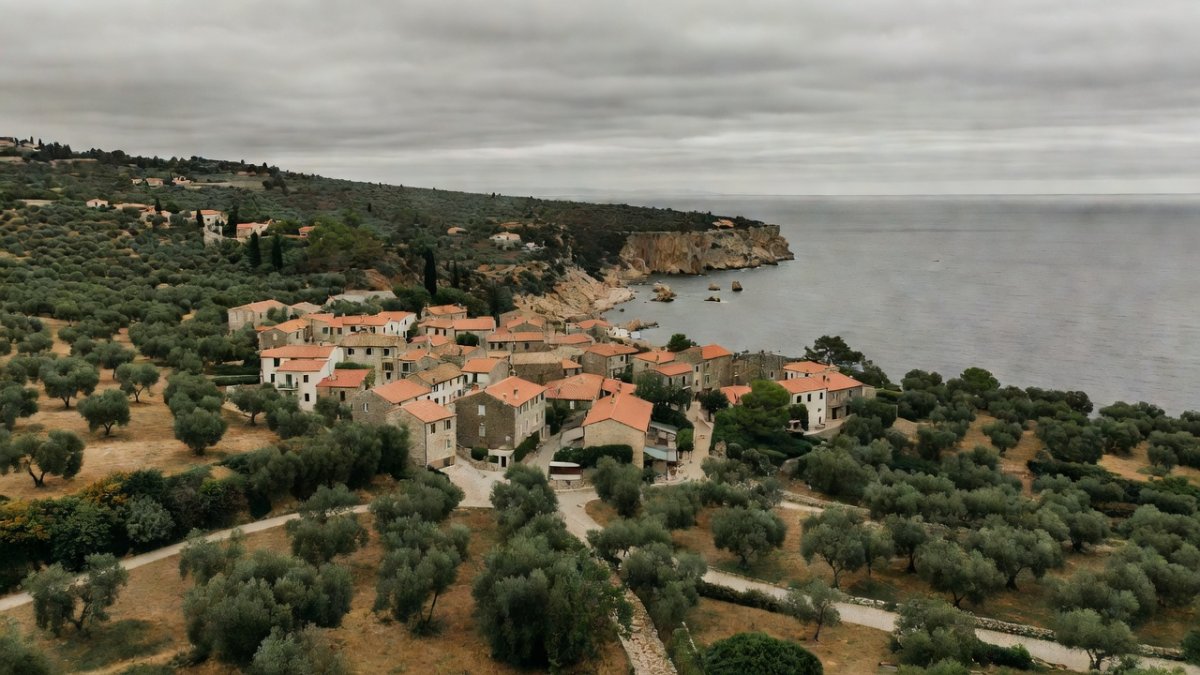
For those who remain inside the occupied zone, life is a daily ordeal. The New York Times reported that Israel has privately pressured local Christian and Druze leaders to expel Shiite residents from their towns. The Guardian quoted Lebanese villagers describing life inside Israel's "yellow line" as "It's the West Bank." Arrests, searches, strict curfews, restricted movement, food and electricity shortages, and limited healthcare define existence under occupation. Around half a million Shia Lebanese are homeless, according to Middle East Eye reporting, and neither the state's negotiations nor Hezbollah's force has returned them home.
The comparison to the West Bank is not incidental. Israeli military tactics in southern Lebanon — checkpoints, identity checks, settlement-like outposts, and demographic engineering — mirror decades of practice in the Palestinian territories. For the villagers living under the "yellow line," the occupation is not a geopolitical abstraction; it is the sound of drones overhead, the taste of rationed bread, and the fear of a knock on the door at midnight.
Diplomacy and the Question of Withdrawal
Diplomatic efforts have so far failed to produce a comprehensive withdrawal. US-brokered talks in Rome in July 2026 proposed "pilot zones" for partial Israeli withdrawal, a concept that would legitimise, at least temporarily, the occupation of Lebanese territory. The seventh round of Israel-Lebanon talks began on 4 August 2026, with Israel still occupying and striking southern Lebanon. The talks are taking place against a backdrop of continued violence and displacement, with no clear endgame.
Moussawi's position on negotiations is dismissive. Israelis, he argues, will never leave through talks alone. History supports him — every Israeli withdrawal from Lebanon has come after armed resistance exacted a price. But the cost of that resistance has now been paid by the entire Lebanese population, including the Shia communities who form Hezbollah's base and who are now homeless in their own country. The state's negotiations have not returned them home. Hezbollah's force has not returned them home. The "pilot zones" would return only a fraction of the occupied territory, and only under conditions set by Israel.
The Lebanese government's move to ban Hezbollah's military activities is a direct challenge to the party's raison d'être. But it also raises a painful question: if the state cannot protect its citizens from occupation, cannot secure their return, and cannot negotiate a full withdrawal, what is the alternative to resistance? Moussawi's answer is that there is none. His critics answer that resistance has only brought more occupation, more death, and more displacement.
Analysis: A Nation Trapped Between Two Failures
The tragedy of Lebanon in August 2026 is that both sides of this argument are simultaneously right and wrong. Hezbollah is correct that Israeli occupation is the root cause of Lebanese suffering, and that negotiations alone have never delivered sovereignty. But the party's decision to enter the war on 2 March 2026, in response to events in Iran, has resulted in the seventh and most extensive occupation of Lebanese territory in the country's history. The state is correct that Lebanon did not seek this war, but its negotiations have failed to end the occupation or return a single displaced family to their home.
Moussawi's generational framing — that Israeli intelligence knows the old generations but not the new — suggests a long struggle ahead. But it also reveals a deeper truth: the resistance has been decimated. The first, second, and third generations of fighters are gone. The new generation is unknown to Israeli intelligence, but it is also unknown to the Lebanese people, who have yet to see what this new resistance will look like, and at what cost.
The "media campaign" Moussawi decries is real, but so is the anger of Lebanese citizens who have lost everything. The blame game between the state and the party is a luxury that displaced families cannot afford. They do not care whether the occupation is the problem or the resistance is the problem. They care about returning home, about rebuilding their villages, about burying their dead with dignity, and about living without the sound of bombs.
As the seventh round of talks continues in August 2026, the people of southern Lebanon remain in limbo — neither free nor fully occupied, neither home nor exiled. The "pilot zones" offer a partial return, but they also risk normalising a permanent Israeli presence. Hezbollah's resistance offers a long war, but it has already cost more than 4,000 lives and a million displaced. The state offers negotiations, but it has delivered nothing.
For the villagers of Bint Jbeil, for the families sheltering in Beirut schools, for the mothers who have lost children and the children who have lost homes, the question is not whether resistance is justified or whether the state has failed. The question is whether anyone — Hezbollah, the Lebanese government, the international community — can offer a path that ends the occupation without demanding another generation of sacrifice. Moussawi says the resistance will continue. The state says it will negotiate. The people wait, displaced and uncertain, caught between a war they did not choose and a peace that has not come.
By Fatima Al-Rashid, Staff Writer
This article was produced with AI-assisted research and editorial support. Reporting is based on sources cited in the article.
What's Your Reaction?
 Like
0
Like
0
 Dislike
0
Dislike
0
 Love
0
Love
0
 Funny
0
Funny
0
 Wow
0
Wow
0
 Sad
0
Sad
0
 Angry
0
Angry
0

Gulf/MENA Correspondent at Global1.News. Based in Doha, covering Gulf politics, energy markets, diplomacy, and development across the Middle East and North Africa. Tracks the economic transformation of the Gulf states.









Comments (0)