
Fifty-One Provinces on Alert as Thailand Braces for Heavy Rains
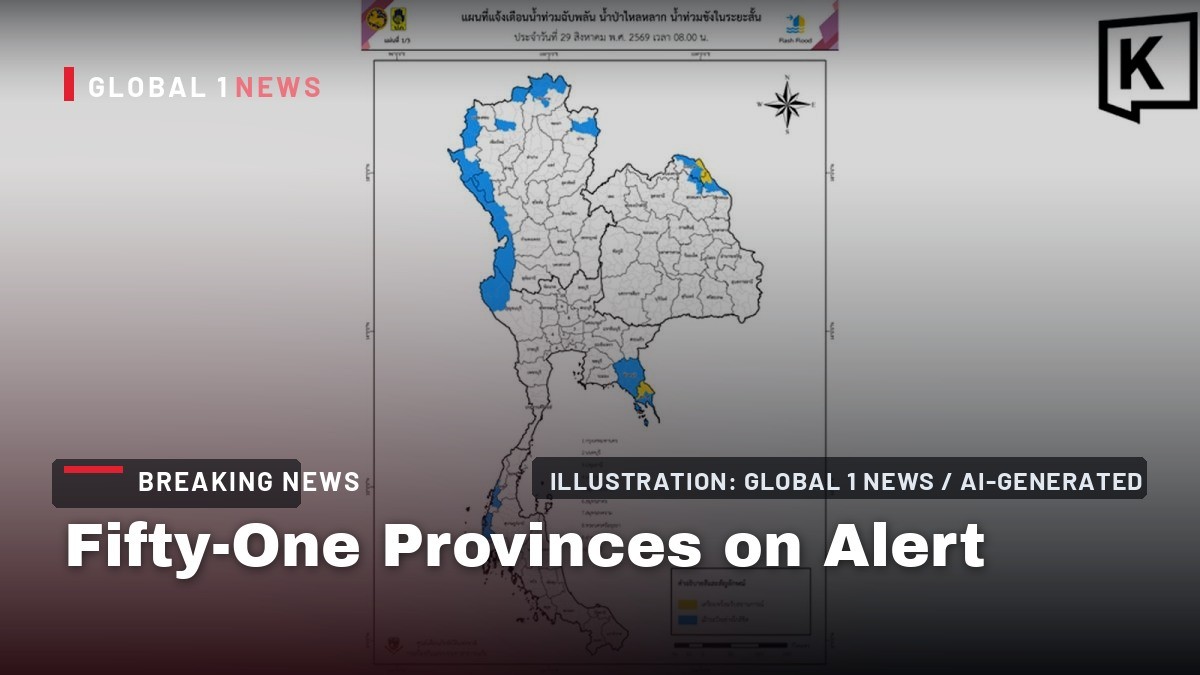
BANGKOK — The Department of Disaster Prevention and Mitigation (DDPM) has issued a sweeping warning across 51 provinces today, urging local authorities and residents to closely monitor the risk of flash floods, forest runoff, and inundation from Saturday through Wednesday. The announcement comes as rainfall is expected to intensify across the country, placing communities from the northern mountains to the northeastern riverbanks on high alert.
Fifty-One Provinces on Alert as Thailand Braces for Heavy Rains
BANGKOK — The Department of Disaster Prevention and Mitigation (DDPM) has issued a sweeping warning across 51 provinces today, urging local authorities and residents to closely monitor the risk of flash floods, forest runoff, and inundation from Saturday through Wednesday. The announcement comes as rainfall is expected to intensify across the country, placing communities from the northern mountains to the northeastern riverbanks on high alert.
The Central Disaster Prevention and Mitigation Command (CDPMC), operating under the DDPM, has been coordinating with relevant agencies to track weather patterns and assess the evolving situation. The National Disaster Warning Center has identified specific high-risk areas in the North, Northeast, and East, with instructions for local officials to prepare for potential emergencies around the clock.
For Thai communities, this warning carries deep significance. Many of the provinces named are home to riverside villages, hill-tribe communities, and agricultural heartlands where flooding can disrupt lives and livelihoods in an instant. The DDPM's proactive stance reflects lessons learned from recent disasters, including the devastating floods that have already affected parts of the North this monsoon season.
High-Risk Provinces Named Across Three Regions
In the North, the provinces of Mae Hong Son, Chiang Mai, Chiang Rai, and Tak have been placed on the highest alert. These areas are particularly vulnerable due to their mountainous terrain, where forest runoff can quickly transform gentle streams into raging torrents. The region has already experienced significant rainfall in recent weeks, saturating the soil and raising river levels.
The Northeast faces its own set of challenges, with Bueng Kan, Nakhon Phanom, and Sakon Nakhon identified as high-risk zones. These provinces sit along the Mekong River, where rising water levels threaten both riverside communities and agricultural land. In the East, Chanthaburi and Trat have also been flagged, areas known for their fruit orchards and coastal communities that can suffer from both flash floods and storm surges.
Authorities have instructed local agencies to disseminate warnings through every available channel, including warning towers and the Cell Broadcast system, which sends alerts directly to mobile phones. This multi-layered approach ensures that even residents in remote areas receive timely information about impending dangers.
Community Leaders Key to Reaching Every Resident
One of the most notable aspects of this warning is the emphasis on linguistic accessibility. Officials have been directed to coordinate with community leaders to translate warning information into local and ethnic languages, ensuring that residents in all communities can understand the alerts and respond quickly.
This approach reflects Thailand's rich cultural diversity, particularly in the northern highlands where numerous ethnic groups, including the Karen, Hmong, and Lahu communities, maintain their own languages and traditions. By working through trusted community leaders, the DDPM aims to bridge communication gaps that could otherwise leave vulnerable populations uninformed and unprepared.
The instruction also acknowledges that disaster preparedness is not merely a matter of issuing alerts, but of ensuring those alerts are understood and acted upon. In many rural areas, community leaders serve as the primary link between government agencies and residents, making their role in translating and explaining warnings absolutely vital.
Flood Situation Improving in Some Areas
While the new warning covers the coming days, the DDPM also reported progress in areas that have already experienced flooding. In Nan province, floodwaters have fallen below the riverbank, marking a significant milestone as the province enters its recovery phase. Nearly 100 percent of cleanup operations, known locally as "Big Cleaning," have been completed, and public utilities have returned to normal functioning.
Authorities have also begun providing initial compensation and financial assistance to families of those who lost their lives in the floods. This step, while difficult, represents an important part of the recovery process, helping affected families begin to rebuild their lives after the trauma of disaster.
In Chiang Rai, some districts remain affected by standing water, and officials are monitoring water levels through CCTV systems around the clock. The persistent flooding in certain areas serves as a reminder that recovery can be uneven, with some communities bouncing back quickly while others continue to struggle.
Proactive Measures in Mae Hong Son and Tak
Mae Hong Son, a province known for its misty mountains and remote villages, has adopted proactive measures to protect its residents. Officials have been warning people in high-risk areas and using the Cell Broadcast system to prepare communities for possible floods and landslides. The province's rugged terrain makes it particularly susceptible to landslides during periods of intense rainfall, and early preparation is essential.
In Tak province, water levels in the Moei and Wang rivers are trending downward and have stabilized, offering some relief to residents who have been watching the waters rise in recent days. Authorities are conducting damage assessments and distributing relief bags to affected residents, providing both practical support and a measure of comfort to those who have lost belongings or seen their homes damaged.
The situation in Bueng Kan requires continued vigilance, as authorities monitor rising water levels in the Mekong River. Although the river remains below its banks, rising water has already affected some agricultural areas. Officials have accelerated the installation of water pumps and prepared sandbags as a precaution, demonstrating the importance of preparation even when the immediate threat has not yet materialized.
Twenty-Four Hour Monitoring Ordered
The CDPMC has issued clear instructions to DDPM offices in high-risk areas to coordinate closely and prepare for possible flooding and landslides from Saturday through Wednesday. Officials have been ordered to maintain 24-hour monitoring, with a directive that if the risk becomes severe, they must coordinate with the National Disaster Warning Center to issue urgent alerts through Cell Broadcast, warning towers, and community announcement systems.
This round-the-clock vigilance reflects the unpredictable nature of monsoon weather, where conditions can change rapidly and without warning. The instruction to maintain constant monitoring ensures that authorities can respond quickly to emerging threats, potentially saving lives and reducing property damage.
Local officials have also been instructed to work with community leaders to translate warnings into local languages, reinforcing the importance of accessible communication. Authorities have been told to pre-position personnel, disaster-response machinery, and rescue equipment, as well as prepare evacuation centers and conduct evacuation drills with local administrative organizations.
Vulnerable Groups Prioritized in Evacuation Plans
In a significant directive, officials have been instructed to prioritize vulnerable groups during any evacuation. This includes the elderly, young children, people with disabilities, and those with limited mobility who may require additional assistance in emergency situations. This focus on vulnerable populations reflects a growing awareness that disaster response must be inclusive and considerate of diverse needs.
Officials have also been instructed to clear obstructions from waterways, inspect the stability of electricity poles, and trim tree branches that could pose a danger during storms. These preventive measures, while seemingly mundane, can make a significant difference in reducing the impact of flooding and wind damage.
Provincial authorities must hold regular situation-monitoring meetings and continuously report developments to the DDPM. This structured communication ensures that the central command remains informed about local conditions and can adjust its response accordingly.
How the Public Can Stay Informed
Members of the public can follow disaster updates through the DDPM's official Facebook page, X account, and Line channel. These platforms provide real-time information about developing situations and offer guidance on how to stay safe during emergencies.
Those affected by disasters can report incidents and request assistance through the DDPM's 1784 hotline, available 24 hours a day. This direct line of communication allows residents to seek help quickly and enables authorities to respond to emerging needs in affected communities.
For Thai readers, this warning serves as a reminder of the importance of preparedness during the monsoon season. Whether you live in a high-risk province or have family members in affected areas, taking time to understand the risks and prepare accordingly can make a meaningful difference. The DDPM's emphasis on community-level communication and support reflects a holistic approach to disaster management that values every resident's safety and well-being.
As the nation watches the skies and monitors the rivers, the coming days will test the preparedness of communities across Thailand. With coordinated efforts between government agencies, local officials, and community leaders, the hope is that the impact of this week's rains can be minimized and that those affected will receive the support they need to recover and rebuild.
This article was produced with AI-assisted research and editorial support. Sources: Khaosod English
By Ann Srisawat, Staff Writer
What's Your Reaction?
 Like
0
Like
0
 Dislike
0
Dislike
0
 Love
0
Love
0
 Funny
0
Funny
0
 Wow
0
Wow
0
 Sad
0
Sad
0
 Angry
0
Angry
0

Southeast Asia Correspondent at Global1.News. Based in Bangkok, covering Thai and Southeast Asian politics, economy, technology, and culture. Deep regional perspective on one of the world's most dynamic regions.















Comments (0)