
Tetsuya Chiba, Creator of 'Ashita no Joe' and the First Manga Artist Awarded Japan's Order of Culture, Dies at 87
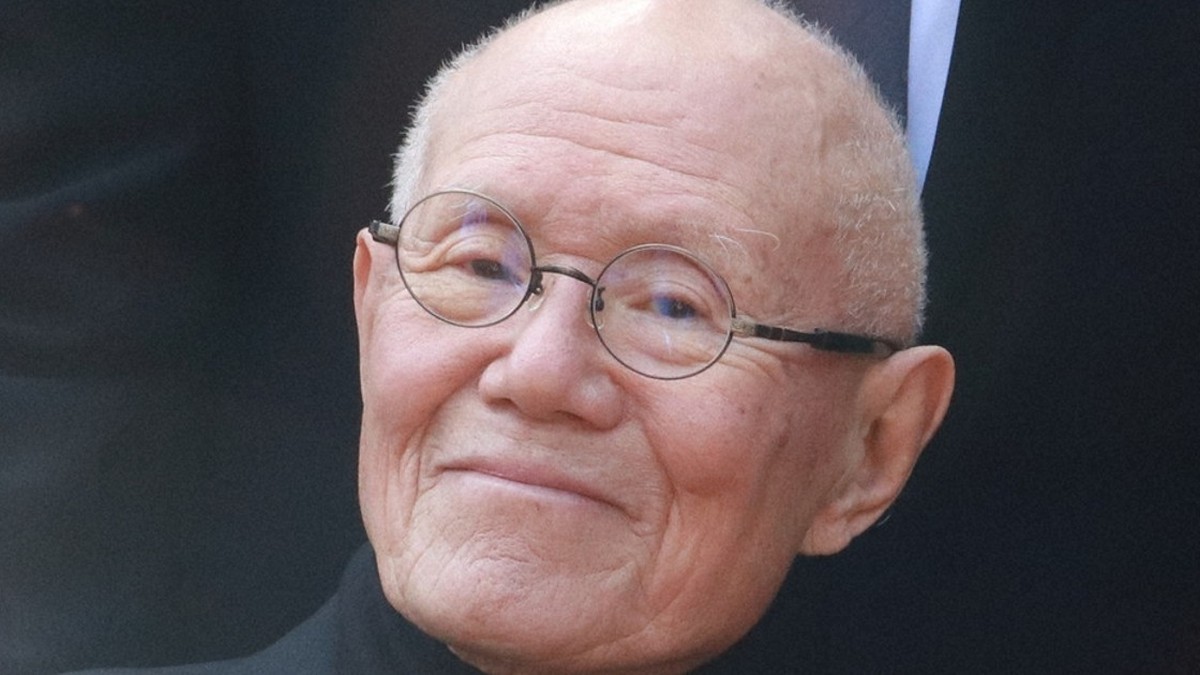
Tetsuya Chiba, the manga artist behind Ashita no Joe and the first manga creator to receive Japan's Order of Culture, died on October 22 at a hospital in Tokyo aged 87. His publisher Kodansha announced the death five days later and said the funeral had already been held with close family.
Tetsuya Chiba, whose boxing manga Ashita no Joe turned a drifter named Joe Yabuki into a national fixation and who in 2024 became the first manga artist awarded Japan's Order of Culture, died on October 22 at a hospital in Tokyo. He was 87. His publisher, Kodansha, announced the death on October 27 and said the funeral had already been held with close family.
Tetsuya Chiba, Creator of 'Ashita no Joe' and the First Manga Artist Awarded Japan's Order of Culture, Dies at 87
TOKYO — Kodansha's notice gave the time and the place and said nothing about what killed him. NHK reported that he died of a myelodysplastic syndrome, a disorder of the bone marrow.
Five Days, Then Kodansha's Notice
The notice, issued on October 27, five days after he died, said Chiba passed away at 18:00 on October 22 at a hospital in Tokyo. It said the funeral had already been conducted as a family funeral and asked media to refrain from interviewing the bereaved family and close relatives; condolence money, flowers and telegrams are declined at the family's request. A farewell gathering is under consideration, with details to be announced once decided. The notice carried no cause of death. Anime News Network described the myelodysplastic syndrome as "a type of cancer that affects the blood cells in the bone marrow," and Kyodo News, which broke the story in English, attributed the death to "a source familiar with the matter." Kodansha's tribute said he held "limitless love for, and trust in, manga as a creative work."
Born in Tsukiji, a Professional at Seventeen
Chiba was born on January 11, 1939, at St. Luke's Hospital in Tsukiji, Tokyo, according to his official profile. In January 1941, aged two, he was taken with his family to Manchuria by way of the Korean peninsula and settled in Fengtian, now Shenyang in Liaoning province. After the war the family returned to Japan. He joined a friends' manga fanzine called Manga Club in 1950 and made his professional debut in 1956 with a book-length work, while still in high school and aged seventeen. In 1958 he began magazine serialization with Mama no Violin. In 1961 he broke into a weekly boys' magazine with the baseball manga Chikai no Makyū, written by Kazuya Fukumoto — the move that carried him out of girls' comics and into the readership that would define him.
The Chapter That Made a Nation Grieve a Drawing
Ashita no Joe was written by Asao Takamori, the pen name of Kajiwara Ikki, and drawn by Chiba. Serialization began in the issue of Weekly Shonen Magazine released in December 1967 — an issue carrying a January 1968 cover date, which is why some accounts date the series to 1968 — and ran until 1973. It follows Joe Yabuki, an orphan and rootless drifter from a downtown doya-gai, who finds boxing in a juvenile prison and fights his way up through rivals including Rikiishi Toru toward the world championship. Asahi Shimbun wrote that the depiction of Joe burning his life in the fight, set against the era of the student movement, turned the series into a social phenomenon. Kyodo News noted that it "became so popular in Japan that fans attended a mock funeral for the protagonist's fictional rival," and Asahi reported that playwright Shuji Terayama and others held a funeral for Rikiishi when the character died.
The Ending He Never Settled, and the Versions That Followed
The final chapter in 1973 showed Joe sitting in the corner of the ring, looking as though he had turned to pure white ash, Sports Hochi reported. Whether he is alive in that panel or dead has been argued ever since. Chiba said he drew the ending at the last minute and that Takamori's original ending was different; Takamori said in a 1979 biography that Joe died, while Chiba refused to comment directly and hinted that Joe may have survived. The question was never settled. The series became two television anime, in 1970 and 1980, and two anime films, in 1980 and 1981. A 2011 live-action film starred Tomohisa Yamashita, and the Shinkokugeki troupe staged it. Kodansha published the first official English release, Ashita no Joe: Fighting for Tomorrow, in December 2024, and the 2018 anime Megalobox reimagined the story in a science-fiction setting, with a sequel, Megalobox 2: Nomad, arriving in April 2021.
Manchuria, and the Winter That Never Left Him
On August 15, 1945, the day Japan announced its surrender, Chiba was in Fengtian, according to a Mainichi Shimbun feature published on August 20, 2026. His family of six finally reached Hakata Port in Fukuoka in the summer of 1946, having survived the winter moving from place to place in hiding and traveling vast distances on foot and in freight cars. Sports Hochi reported that he was six when the war ended, that his father worked for a printing company, that the family had lived relatively comfortably, and that the defeat changed everything. Asahi Shimbun reported that he returned to the experience repeatedly in his manga and in his autobiography, lectured about it, and — out of a wish to protect peace and freedom — spoke against controls on expression, including at a Japan PEN Club gathering against the anti-conspiracy law.
The Orphans He Saw in Tokyo
Mainichi Shimbun reported that Joe Yabuki, the rootless drifter, was inspired by war orphans Chiba saw in Tokyo. The paper also reported that Chiba called an episode in which the Korean boxer Kin Ryuhi kills his own father while suffering from hunger during the Korean War "cruel, but realistic." Both details put the series in the aftermath of the collapse rather than in the gym. Hunger is a motive. The boy has no household behind him. The violence leaves marks that do not fade by the next chapter. Chiba came back to the period in later life: his autobiographical manga Hinemosu Notari Nikki, begun in Big Comic in December 2015, chronicles memories of the past and scenes from his everyday life, including his wartime experiences, and its seventh collected volume appeared in November 2025.
The Range, and the Room He Made for Others
Beyond Ashita no Joe, Chiba worked the whole field: the war story Shidenkai no Taka, the school comedy Harris no Kaze, the kendo manga Ore wa Teppei, the sumo series Notari Matsutarō in Big Comic, the golf manga Ashita Tenki ni Naare, and titles including Misokkasu, Yuki no Taiyō, 1-2-3 to 4-5-Roku and Yuka o Yobu Umi. Kodansha founded the Chiba Tetsuya Award for new manga artists 46 years ago and said its winners "walked the path to professional careers and are still active today," calling his contribution to the manga world "one that no one else could have made." From 2005 he taught manga at Bunsei University of Art in Utsunomiya and was its president from April 2019 to March 2022. At the Japan Cartoonists Association he was chairman from July 2012 to June 2018 and president from June 2018; Machiko Satonaka has been chairman since June 2018. Shogakukan's comic division said he "packed a warm gaze on human beings and a wish for peace into his works."
What the Weekly Did to His Body
During the Ashita no Joe years Chiba fell ill and was hospitalized with a duodenal ulcer, forcing a break in serialization, Sports Hochi reported. He said in an interview that he repeatedly asked himself: "Why am I drawing manga? Life or manga — which is more important?" In October 2021 he was admitted to a Tokyo hospital after his health worsened and was treated for a chronic heart condition. In January 2022, at 82, he had surgery to insert a stent into a coronary artery. On August 30, 2024, he posted that he had undergone surgery on his left eye and would take a break from work. He resumed Hinemosu Notari Nikki in Big Comic in December 2024, and it was later reported that he had contracted the coronavirus. In September 2026 Big Comic announced, on Friday the 25th, that the manga would go on hiatus again because of poor health. His final blog post was written on August 17, 2026.
The First Manga Artist to Wear the Culture Medal
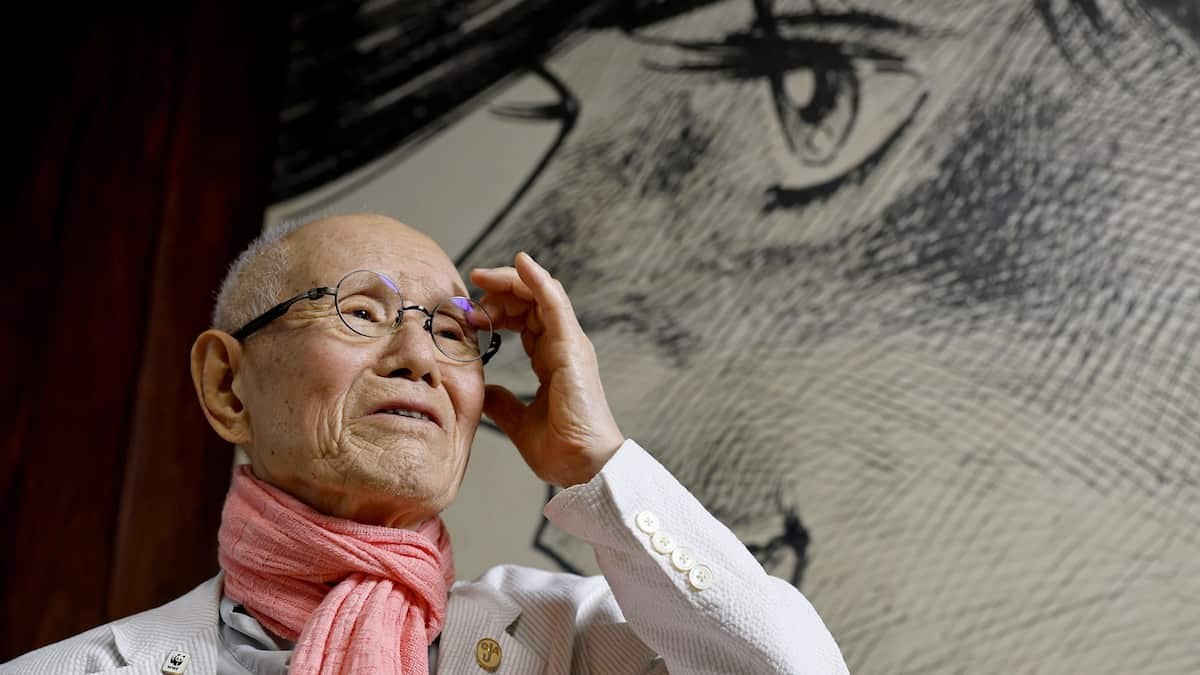
Chiba received the Medal with Purple Ribbon in 2002 and the Order of the Rising Sun, Gold Rays with Rosette, in 2012. He was named a Person of Cultural Merit in 2014 and took the Tezuka Osamu Cultural Prize Special Award in 2018. In 2022 he was one of the first two manga artists admitted to the Japan Art Academy, alongside Yoshiharu Tsuge. In 2024 came the Kikuchi Kan Prize and then the Order of Culture, announced on October 25 among seven recipients — the first manga artist ever to receive it. Cellist Tsuyoshi Tsutsumi was honored the same year as the first Western musician to do so. At the Imperial Palace ceremony on Culture Day, November 3, 2024, Emperor Naruhito handed over the badge and said: "I'm very pleased that you have made great achievements after many years of hard work and served to improve our culture." At a press conference afterwards, Chiba recalled the late Osamu Tezuka weeping in an era when manga was treated as a "harmful book," and said manga had now been added to the culture, and that Tezuka would be the happiest of anyone.
Seventy Thousand Sheets Already in the State's Hands
Nearly six months before he died, the state had already taken the paper. In a release dated April 30, 2026, the Agency for Cultural Affairs said it had begun storing more than 70,000 items of Chiba's materials, original drawings among them, at a dedicated storage facility near Tokyo, as the first planned collection of the National Center for Media Arts. The agency said it borrowed all the materials in Chiba's keeping from March 2026 in order to research them, and that the center's storage building is targeted for completion in 2029. Asahi Shimbun reported that the material had until then been managed by Chiba Production and that, at Chiba's own wish, almost all of it passed into state custody. The agency calls such production-stage material "intermediate generated materials," and treats it as "important primary sources showing the reality of creation." Chiba's comment, released through the agency, was this: "In every single frame, the suffering and the life of that time are packed."
By Jessica Ali, Staff Writer
This article was produced with AI-assisted research and editorial support. Sources: Kyodo News, NHK, The Asahi Shimbun, The Sankei Shimbun, The Yomiuri Shimbun, The Mainichi Shimbun, Sports Hochi, Nikkei, Kodansha, Shogakukan, Anime News Network, and the Agency for Cultural Affairs. Photographs: Kyodo News, Sports Nippon, and Shunsuke Sakamaki / The Sankei Shimbun.
What's Your Reaction?
 Like
0
 Dislike
0
 Love
0
 Funny
0
 Wow
0
 Sad
0
 Angry
0

Editor-in-Chief at Global1.News. Atlanta-based journalist who cuts through the BS and tells it like it is. Lead anchor, host, and the voice you hear when the spin stops and the truth starts.












Comments (0)