
'No Foreigners Will Enter': Stun Grenades in Durban as South Africa Reopens Its Asylum System
South African police fired stun grenades in Durban on Wednesday after anti-immigrant protesters forced about 1,000 asylum seekers out of a queue at a Home Affairs refugee centre, days into a court-ordered reopening of the country's asylum system.
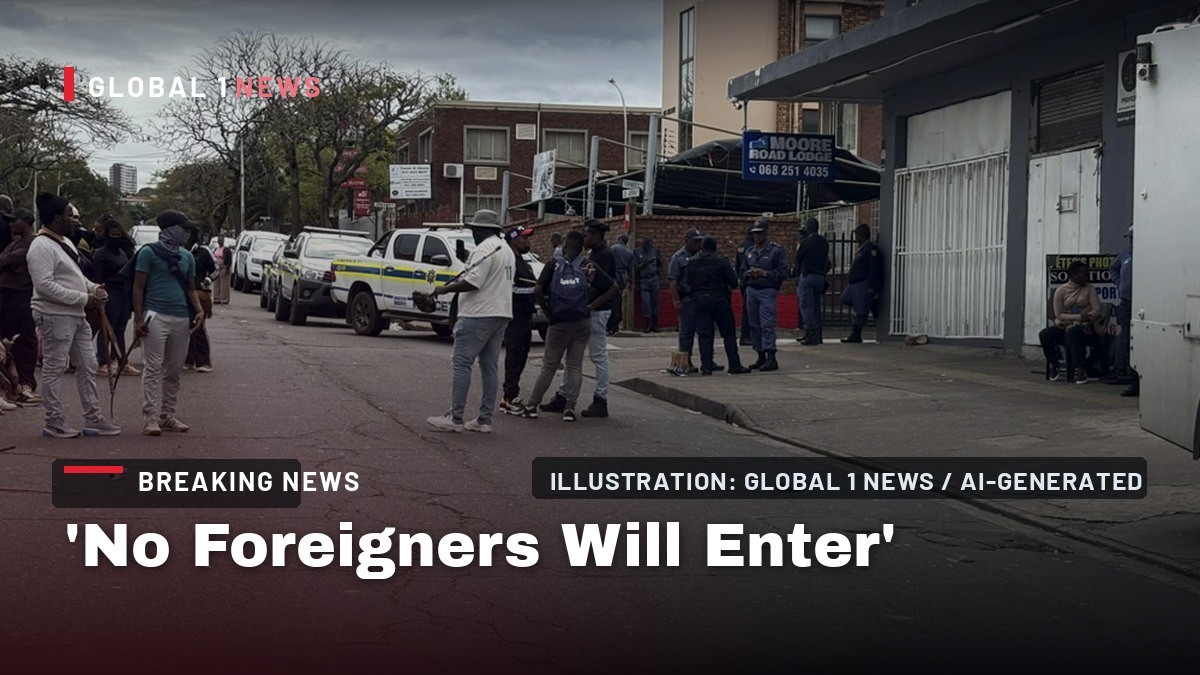
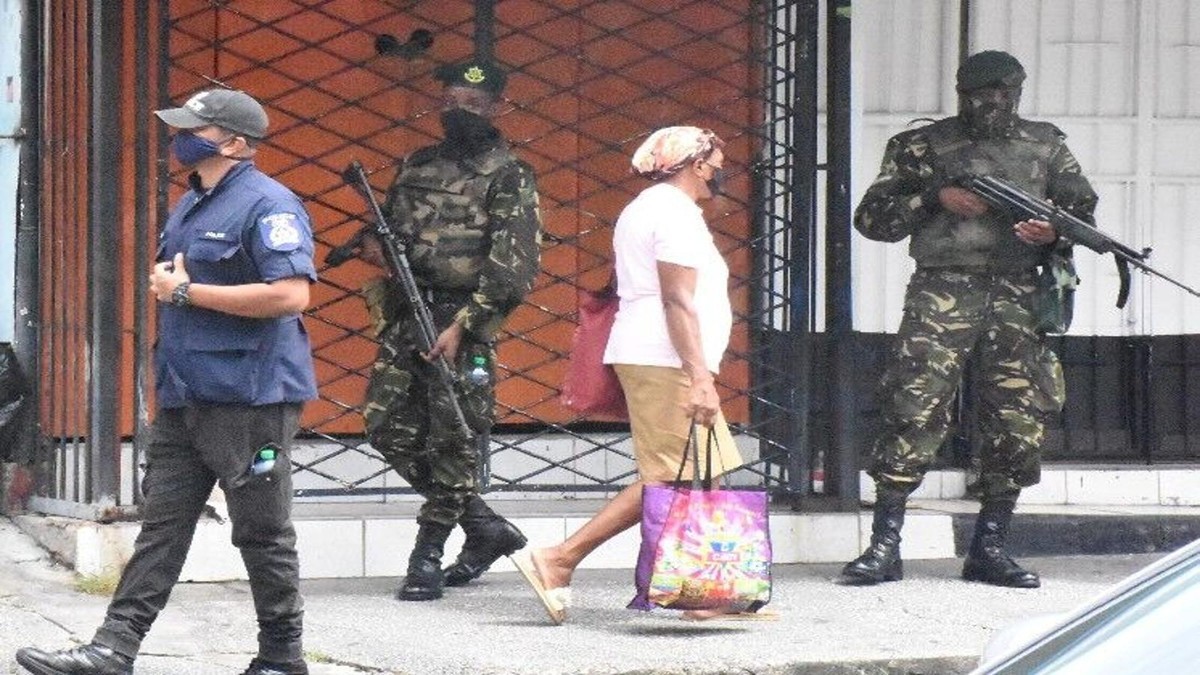
Thousands of asylum seekers who gathered at Durban's Refugee Reception Centre on Wednesday were driven out of their queues by stick-wielding demonstrators, as South Africa reopened an asylum system that had been shut to most new applicants for years. Public order police fired stun grenades after protesters pushed through barricades outside the Home Affairs facility on Che Guevara Road.
'No Foreigners Will Enter': Stun Grenades in Durban as South Africa Reopens Its Asylum System
Durban, South Africa — Home Affairs began accepting in-person asylum applications at five Refugee Reception Offices across the country, and in Durban the first full week of that reopening ended with stun grenades, scattered queues and a security alert from a foreign embassy.
The Confrontation on Che Guevara Road
On Wednesday 7 October, thousands of asylum seekers gathered at the Department of Home Affairs Refugee Reception Centre on Che Guevara Road in Durban, KwaZulu-Natal, to submit applications and supporting documents. Members of the anti-illegal-immigration movement March and March arrived and disrupted operations. According to IOL, protesters carrying sticks and sjamboks forced about 1,000 asylum seekers out of the queues that had formed around the facility.
Demonstrators confronted police, accusing officers of protecting foreign nationals rather than South Africans. They pushed through barricades and threw bottles and insults. Public order police fired stun grenades to disperse the crowd, IOL reported. Large numbers of foreign nationals, including people from Ethiopia, Somalia, Bangladesh and Pakistan, were among those waiting outside. Further protest activity was reportedly possible on Thursday. Social media reported looting targeting foreign nationals in the area; SABC News attached an editorial note that the reports were unconfirmed.
What the Constitutional Court Actually Ruled
The legal basis for Wednesday's queues is the Constitutional Court judgment in Scalabrini Centre of Cape Town and Another v Minister of Home Affairs and Others, CCT 126/25/24, [2026] ZACC 30, handed down on 7 July 2026. The Court confirmed a Western Cape High Court order striking down sections 4(1)(f), 4(1)(h), 4(1)(i) and 21(1B) of the Refugees Act 130 of 1998, along with regulations 8(1)(c)(i), 8(2), 8(3) and 8(4).
Those provisions, introduced by 2017 amendments and in force from January 2020, let the state shut asylum seekers out of the process for immigration-related non-compliance - entering outside a designated port of entry, failing to report within five days, or lacking a transit visa - without assessing the merits of their claims. The Court held this violated the principle of non-refoulement, the Bill of Rights and international law. Amici curiae included the Helen Suzman Foundation, Amnesty International and the UNHCR. The applicants, the Scalabrini Centre of Cape Town and its trustees, represented by Lawyers for Human Rights, told the Court that hundreds of thousands of people were affected.
The Six-Year Shutdown That Just Ended
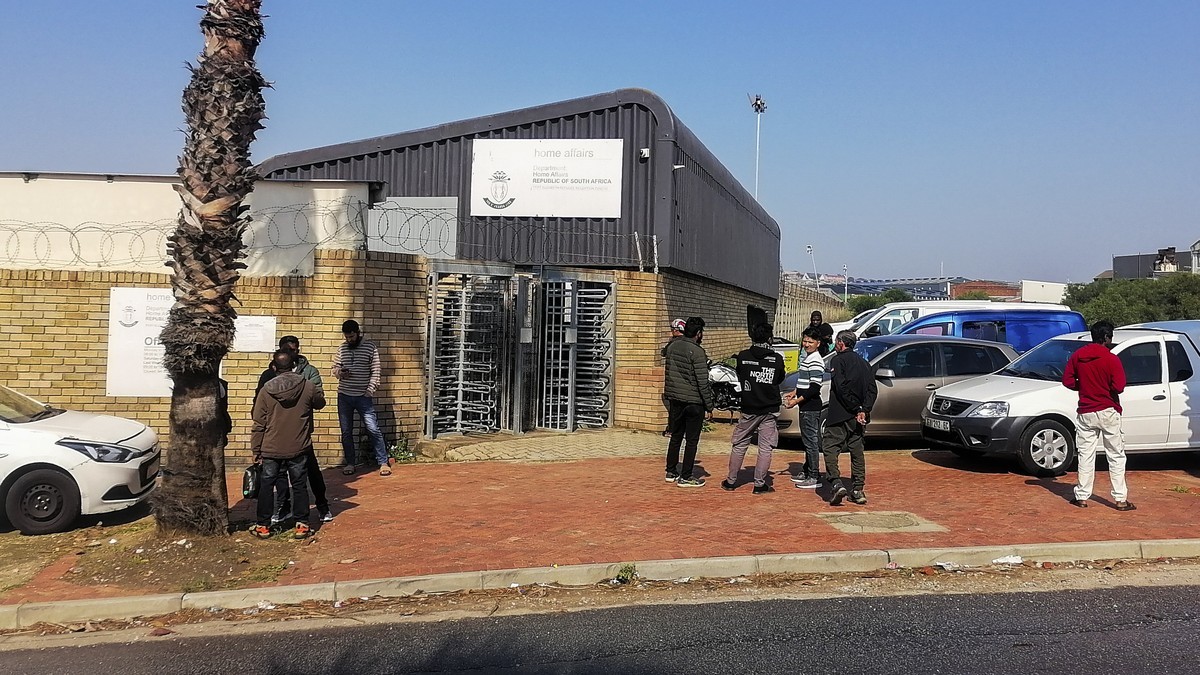
Five active Refugee Reception Offices must now accept applications in person, capture biometrics and issue Section 22 asylum-seeker visas: Pretoria, Durban, Musina, Cape Town and Gqeberha. The practical effect is the reopening of a system that had been largely sealed. Refugee Reception Offices were closed from March 2020 to May 2022 because of Covid and took no new applications, GroundUp reported. Access through the transit-visa route was negligible: only 91 transit visas were issued between April 2022 and March 2024, according to GroundUp.
On 28 September 2026, Home Affairs issued a circular directing all Refugee Reception Offices to immediately accept and process applications from anyone presenting in person. The UNHCR welcomed the decision as a vital step that restores access to asylum procedures in line with national and international law. A separate May 2026 Constitutional Court ruling confirmed that failed asylum seekers have no statutory right to lodge subsequent applications after a final rejection. Cabinet's Final Revised White Paper on Citizenship, approved in April 2026, proposes a "first safe country" principle and the longer-term relocation of reception functions closer to ports of entry.
Who Is March and March
March and March is an anti-illegal-immigration movement led by Jacinta Ngobese-Zuma. It demanded that all undocumented migrants leave South Africa by 30 June 2026, and later set a 30 September deadline, staging protests in several cities. Ngobese-Zuma says it will remain a civic organisation rather than a political party and wants to model it on AfriForum - "an AfriForum for black South Africans". It has set up the SA First Forum, a social justice litigation body led by her husband, Xolani Zuma, and the March and March Foundation.
At the Durban protest she called on the Constitutional Court to reverse its decision. "Right now, we are seeing thousands and thousands of men who are coming here because they want to legalise their stay in South Africa," she said. "We want the Home Affairs department to go to the Constitutional Court and try by all means to make sure that this decision must be revoked if there is a way of doing so." She has also said: "Home Affairs has a backlog, and what they should be doing is identifying real refugees instead of those who are coming to the country to open tuckshops, spaza shops and be economic migrants."
The Government's Response, and Its Disinformation Claim
The Inter-Ministerial Committee on Migration held an urgent meeting on the evening of Wednesday 7 October to consider the implications of the judgment. Its chairperson, Minister Mmamoloko Kubayi, was to brief the media. Deputy government spokesperson William Baloyi said the committee was "acutely aware of the uncertainty, concern, panic and confusion that have arisen following the recent Constitutional Court judgment concerning asylum seekers". He added: "South Africans should be assured that government remains committed to maintaining the integrity of our migration system, upholding the rule of law and safeguarding national interest."
Baloyi said a coordinated disinformation campaign was inflaming the issue. "People just saw that the undocumented migrants to now have access to all benefits, including that they will go and vote, they will access now SASSA grants," he said. "That is disinformation and it is incorrect." Home Affairs, in a statement by Minister Spokesperson Carli van Wyk, called false the claims that the judgment grants asylum seekers citizenship or blanket legalisation of foreign nationals. The department said it would refer the matter to the Independent Electoral Commission under a new Code of Conduct on Countering Disinformation, and that the falsehoods were "designed to inflame tensions and violence".
The United States Steps In
The US Consulate General issued a security alert warning its personnel and citizens to avoid Durban's central business district after violence and reported looting targeting foreign nationals. US government personnel were told to exercise "extreme caution" in the area and to divert travel where necessary until further notice. The alert landed amid a broader deterioration in relations between Washington and Pretoria: International Relations Minister Ronald Lamola and US ambassador Leo Brent Bozell exchanged public criticism this week.
The friction has a migration dimension of its own. On 27 August 2026, the United States announced plans to revoke the visas of up to 200,000 asylum applicants, SABC News reported. The Durban alert did not cite that decision as its cause.
A Judge's Split and a Gauteng Moratorium
Gauteng Judge President Aubrey Ledwaba has turned to a Full Court to seek clarity on undocumented asylum seekers who are detained and facing deportation, after two Gauteng High Court judges reached opposing conclusions on the same issue. One judge ruled that once a detainee expresses an intention to seek asylum, release from detention must follow immediately. The other did not release the applicants but ordered Home Affairs to process their asylum interviews.
Ledwaba placed a moratorium on the hearing of all similar applications in Gauteng until legal certainty is established. The split leaves detainees in the province in an uncertain position: the same facts can produce immediate release in one court and a processing order in another, while the moratorium freezes the cases in between. The July judgment addressed the exclusion of asylum seekers from the process, but it did not resolve the detention question now before the Full Court.
Why Durban, and Why Now
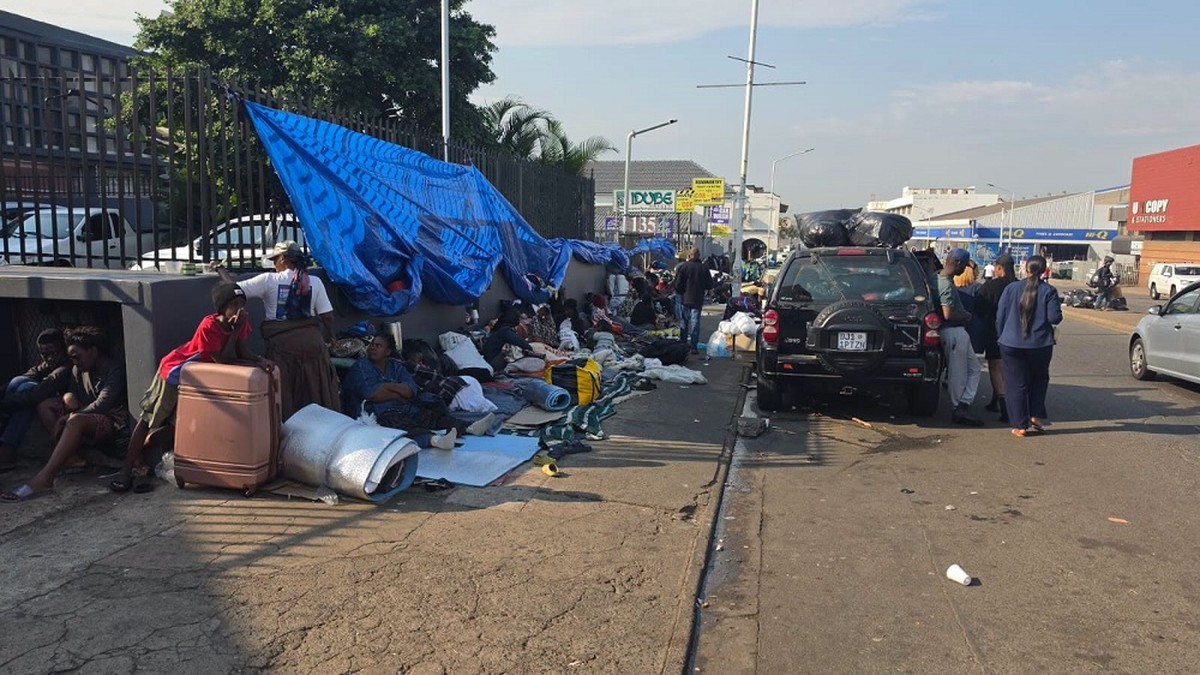
Durban has been the centre of the movement's activity for months. On 3 September, a protest descended into chaos, with police using teargas and rubber bullets; at least three people were injured and one person arrested, Business Day reported. On 4 September, a group raided a camp housing hundreds of refugees outside Durban's Home Affairs offices; several people were injured and at least four refugees were hospitalised. Those refugees, mainly from the DR Congo, Burundi and Rwanda, had lived at the site for more than three months after being displaced by xenophobic threats, according to allAfrica.
On 10 September, about 300 March and March protesters marched in Durban, Ngobese-Zuma carrying a traditional sleeping mat and saying: "If the government allows the Congolese to sleep on the streets, so will we." During the 46th SADC summit in Durban, an expected 3,000 turnout drew only about 200, SABC News reported. Ngobese-Zuma claims about 200,000 undocumented foreign nationals have been deported since June; that figure is her claim and has not been independently verified.
The Cost That Has Already Been Paid
The South African economy has already felt the cost of anti-immigrant sentiment. In Bellville, Cape Town, dozens of documented traders abandoned a once-bustling market after harassment, leaving stalls empty despite holding valid permits. Somali- and Ethiopian-owned spaza shops and cross-border trading hubs such as Johannesburg's Jeppe Street were looted, torched or shuttered; analysts warn this threatens roughly three million jobs and about 5 percent of GDP. Analysts tie the campaign partly to November's local elections.
Earlier, on 15 September, refugees were bussed from Durban's Che Guevara Road to the Lindela repatriation centre. A provincial official said the occupation contravened eThekwini Metro bylaws and posed a health risk, adding that "these conditions are not suitable for human habitation". Political analyst Zweli Ndevu said the right to protest could not come at the expense of other people's rights: "Once that right infringes on other people's right to get services, then it becomes a problem. That's where you want government to intervene, to be able to protect those who are vulnerable."
What Happens Next
Further protest activity was reportedly possible on Thursday. The Gauteng moratorium remains in place until the Full Court establishes legal certainty on the detention of undocumented asylum seekers. Home Affairs has said it will refer what it calls a large-scale disinformation campaign to the Independent Electoral Commission under the Code of Conduct on Countering Disinformation.
The five Refugee Reception Offices - Pretoria, Durban, Musina, Cape Town and Gqeberha - must now accept applications in person, capture biometrics and issue Section 22 visas. For the roughly 1,000 people forced out of the Che Guevara Road queue on Wednesday, the reopened process remains the only lawful route to a claim - and it now runs through a street where stun grenades were fired this week.
By Jessica Ali, Staff Writer
This article was produced with AI-assisted research and editorial support. Sources: SABC News, IOL, GroundUp, allAfrica, Business Day, eNCA, the Constitutional Court of South Africa, and UNHCR.
What's Your Reaction?
 Like
0
Like
0
 Dislike
0
Dislike
0
 Love
0
Love
0
 Funny
0
Funny
0
 Wow
0
Wow
0
 Sad
0
Sad
0
 Angry
0
Angry
0

Editor-in-Chief at Global1.News. Atlanta-based journalist who cuts through the BS and tells it like it is. Lead anchor, host, and the voice you hear when the spin stops and the truth starts.












Comments (0)