
PM Modi calls for global framework to tackle cyber frauds, deepfakes, digital crimes
Prime Minister Narendra Modi used the inauguration of the tenth India Mobile Congress (IMC) in New Delhi on 8 October 2026 to raise a warning that digital threats now cross borders as easily as data packets.
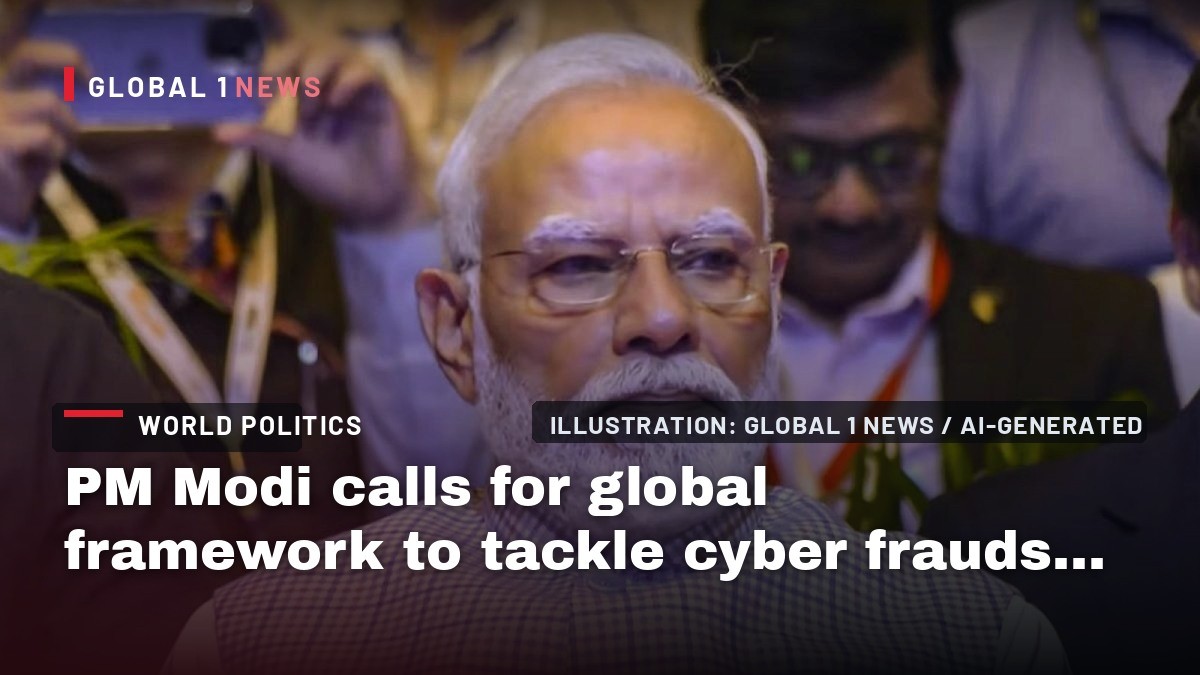
Prime Minister Narendra Modi used the inauguration of the tenth India Mobile Congress (IMC) in New Delhi on 8 October 2026 to raise a warning that digital threats now cross borders as easily as data packets. He called for a coordinated global framework that would bring together governments, technology firms, telecom operators and financial institutions to curb cyber fraud, deepfakes and other forms of digital crime. Modi’s appeal reflects a broader Indian strategy that links robust digital infrastructure with public trust, and it underscores the country’s ambition to shape international standards in emerging technologies such as 6G.
Why a Global Mechanism Is Needed Now
Modi warned that a single individual in one country can enlist help from another to perpetrate a crime in a third, highlighting the trans‑national nature of modern cyber fraud. He described deepfakes as a “big challenge,” noting that synthetic media can be weaponised to erode confidence in institutions and to facilitate financial scams. By urging the GSMA and telecom operators worldwide to create a pre‑emptive global mechanism, the prime minister signalled that national regulatory tools alone are insufficient to stop threats that originate beyond any single jurisdiction.
The call for a shared framework aligns with India’s own experience in building digital public infrastructure that has become a backbone for both economic activity and national security. The scale of India’s digital ecosystem—evident in the massive uptake of mobile broadband, the ubiquity of UPI and the rapid fall in data costs—means that any breach can have ripple effects far beyond its borders. Modi’s emphasis on “technology can achieve scale only when it gains people’s trust” captures the essential premise that trust must be nurtured through transparent, collaborative safeguards.
India’s Tele‑Connectivity Milestones
Communications Minister Jyotiraditya Scindia used the same platform to showcase India’s rapid ascent in telecom. He noted that the country’s 5G user base, currently at 550 million, is slated to double to one billion by 2030. This growth is built on a broadband base that has expanded from 60 million users in 2017 to over 1.1 billion today, alongside a mobile subscriber base of 1.35 billion. The cost of 1 GB of data has plunged from ₹268 in 2014 to just ₹8, a price point he described as the cheapest in the world.
These figures illustrate not only the scale of India’s consumer market but also the depth of its digital penetration. The massive user base provides a fertile ground for innovation, yet it also expands the attack surface for cyber criminals. The minister’s data underscore why India is keen to embed security protocols at the core of its next‑generation networks, especially as the nation prepares to lead the world in 6G research and deployment.
The Bharat 6G Alliance and Patent Landscape
Scindia highlighted the Bharat 6G Alliance, a consortium of 90 institutions that has already filed 7,700 patents, of which 4,400 have international recognition. This patent portfolio signals a concerted effort to shape the technical foundations of 6G, positioning India as a potential standard‑setter. The alliance’s work dovetails with the government’s broader push to host the International Telecommunication Union’s (ITU) Plenipotentiary Conference in 2030, a move that would give India a seat at the table for global telecom policy.
The emphasis on patents reflects a strategic shift from merely adopting foreign standards to actively contributing to the global standards‑setting process. By building a robust intellectual property base, India can influence the security architecture of future networks, embedding safeguards against fraud and deepfakes at the protocol level. This proactive stance is essential for a country that already processes a staggering volume of digital transactions.
Digital Public Infrastructure: UPI as a Model
India’s Unified Payments Interface (UPI) was presented as a flagship example of secure, high‑volume digital infrastructure. According to Scindia, UPI accounts for 84 % of digital transactions in the country, and nearly half (49 %) of the world’s digital transactions now take place in India. The platform processes about 260 billion transactions a year, amounting to roughly $3.4 trillion in value. Its success has spurred cross‑border deployments in 11 other nations.
The sheer scale of UPI illustrates how a well‑engineered, open‑architecture system can generate trust and drive financial inclusion. However, the platform’s prominence also makes it a lucrative target for fraudsters seeking to exploit vulnerabilities. Modi’s call for a global anti‑fraud framework can be seen as an extension of the lessons learned from safeguarding UPI, where coordinated oversight among banks, fintech firms and regulators proved vital.
Rural Connectivity Through BharatNet
The government‑funded BharatNet programme, with an allocation of $15 billion, aims to bridge the digital divide by extending middle‑mile connectivity to close to 2.6 lakh gram panchayats and providing on‑demand connectivity to an additional 3.8 lakh villages. The goal is to deliver 100 Mbps connections to every home, responding to citizen demand for high‑speed broadband even in remote areas.
This ambitious rollout is crucial for extending the reach of secure digital services, including e‑health, e‑education and online banking, to the hinterland. By ensuring that rural populations are linked to the same secure infrastructure as urban users, the government reduces the risk of isolated pockets becoming fertile ground for fraudsters who exploit connectivity gaps. Moreover, universal broadband creates a larger pool of data that can be leveraged for AI‑driven fraud detection, provided appropriate privacy safeguards are in place.
Manufacturing Growth and Export Potential
Scindia highlighted the transformation of India’s mobile phone manufacturing sector. From a modest $2‑3 billion industry in 2014, it has expanded to a $63 billion enterprise, making India the world’s second‑largest mobile phone producer. Export revenues now approach $29 billion. This growth reflects a broader policy of “Make in India” that seeks to reduce import dependence and create domestic supply chains for critical hardware.
Domestic manufacturing also offers a strategic advantage in embedding security features at the device level. With a large share of the global handset market, Indian manufacturers can influence the inclusion of secure boot processes, hardware‑based encryption and tamper‑resistant designs that mitigate the spread of deepfakes and malware. Aligning production standards with the proposed global anti‑fraud framework could ensure that devices entering the market worldwide adhere to a baseline of security.
Policy Implications and the Way Forward
Modi’s appeal for a global framework dovetails with India’s domestic agenda of scaling secure digital infrastructure. The country’s rapid expansion of broadband, its leadership in mobile payments and its burgeoning 6G research ecosystem provide a strong foundation for shaping international norms. By sharing its experiences—such as the cost‑effective data pricing model, the UPI architecture and the BharatNet rollout—India can influence the design of cross‑border mechanisms that detect and block fraudulent transactions before they reach consumers.
For policymakers, the challenge lies in translating high‑level commitments into actionable protocols. This could involve establishing a multinational threat‑intelligence sharing platform, standardising deepfake detection APIs across telecom networks, and mandating security certifications for AI‑generated content. The involvement of the GSMA, as urged by Modi, would be pivotal in aligning operator‑level safeguards with broader regulatory frameworks.
In the coming months, the success of India’s push will be measured not only by the number of patents filed or the volume of data consumed, but by the resilience of its digital ecosystem against coordinated cyber attacks. If the proposed global mechanism gains traction, it could become the cornerstone of a more trustworthy digital future—one where the scale of technology is matched by the scale of collective security.
This article was produced with AI-assisted research and editorial support. Reporting is based on the source material cited below. Sources: The Hindu; thehindu.com; Global1.News (08 October 2026).
By Dr. Raj Patel, Staff Writer
What's Your Reaction?
 Like
0
Like
0
 Dislike
0
Dislike
0
 Love
0
Love
0
 Funny
0
Funny
0
 Wow
0
Wow
0
 Sad
0
Sad
0
 Angry
0
Angry
0

India/South Asia Correspondent at Global1.News. Analytical voice with a background in science and health journalism. Based in New Delhi, covering Indian politics, education, healthcare, technology, and policy. Breaks down complex data into clear, actionable reporting.















Comments (0)