
Strait of Hormuz Standoff Deepens as US-Iran Deal Deadline Expires
The US-Iran 60-day deal expired Aug 17 with no extension, leaving the Strait of Hormuz in a standoff. Iran vows a "fully offensive" posture, Trump claims the strait as US territory, and shipping traffic has collapsed by over 92 percent.
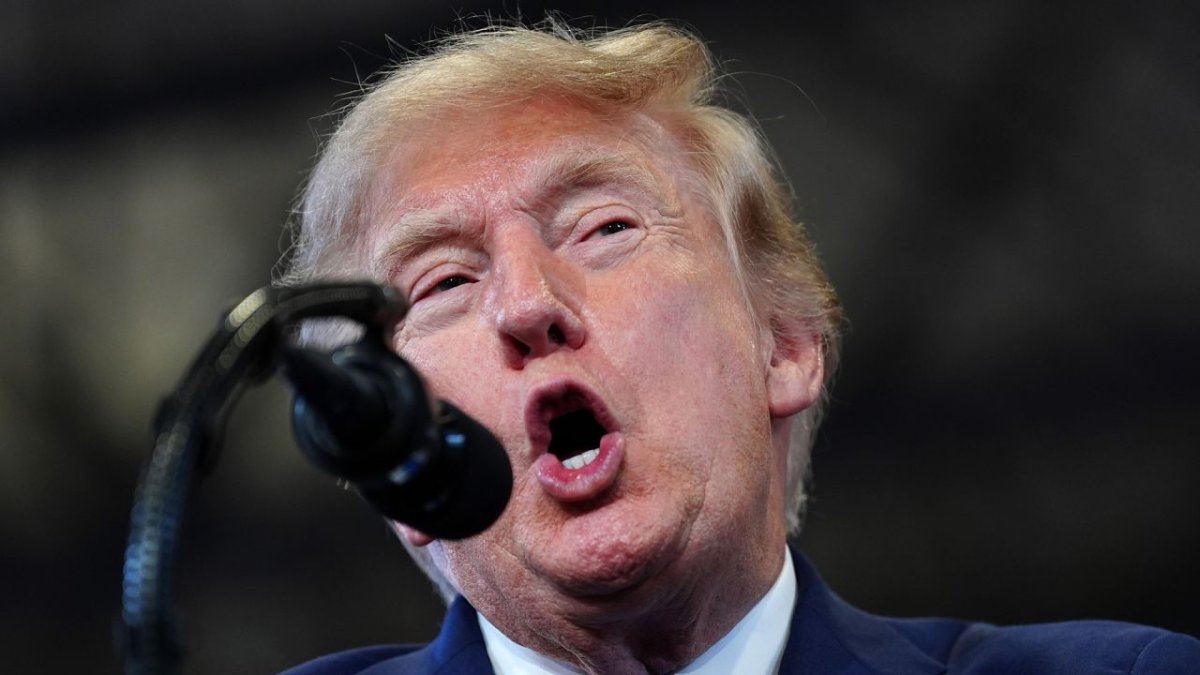
The 60-day deadline for a US-Iran agreement to end their war expired Monday, August 17, 2026, with both sides deadlocked over the future of the Strait of Hormuz. The memorandum of understanding, signed June 17, 2026, declared an "immediate and permanent termination of military operations on all fronts" and set a two-month window for a broader deal covering Iran's nuclear program and US sanctions. That framework has unraveled, and President Donald Trump confirmed Monday there will be no extension of the interim agreement.
Iran has vowed a shift to a "fully offensive" military posture, while the US maintains a naval blockade that has cut traffic through the strategic waterway to a fraction of its pre-war levels. Roughly a fifth of the world's oil and liquefied natural gas once flowed through Hormuz, so this is a live military confrontation with global economic stakes.
Asked whether the United States would extend the interim agreement, Trump said no, according to remarks reported by Reuters. Instead, he declared the strait "NEW US territory" on Truth Social and insisted the naval blockade "remains in full force and effect." The war, which began February 28, 2026, with US and Israeli attacks on Iran, has already killed thousands, primarily in Iran and Lebanon.
The 60-Day Framework That Collapsed
The June 17 memorandum was hailed at the time as a potential off-ramp from a devastating conflict. It committed both sides to an immediate cessation of hostilities and outlined a 60-day negotiation period to resolve the two core issues: Iran's nuclear ambitions and the sweeping US sanctions regime. The agreement's language was unambiguous about the goal, but verification and enforcement mechanics stayed vague — a weakness that quickly proved fatal.
Within weeks, the focus narrowed to the Strait of Hormuz, the narrow passage between the Persian Gulf and the Gulf of Oman. Iran's parliament speaker and top negotiator, Mohammad Bagher Ghalibaf, has been explicit: the strait will remain closed until the US meets conditions including lifting the marine blockade, ending sanctions, and freeing Iran's frozen assets. The US has refused to relax the blockade while the strait remains contested.
The result is a diplomatic vacuum. President Trump confirmed there are "no talks or conversations going on, or scheduled" with Iran. A senior Iranian official told Reuters on Monday that Tehran will now conduct a "timely and precise" military attack to break the US naval blockade if diplomacy fails — a stated shift from defensive to offensive doctrine.
Trump's Territorial Claim Over International Waters
President Trump's declaration that the Strait of Hormuz is "NEW US territory" marks a significant escalation in rhetoric. On Truth Social, he posted a crude map of the region with a large blue circle drawn over Hormuz, a circle that visibly included parts of Iran's coastline. The post was accompanied by a defiant message: "The Naval Blockade remains in full force and effect. The Hormuz Strait is open and operating. All water mines have been removed or detonated."
The claim has no basis in international law: the strait falls under the UN Convention on the Law of the Sea, which guarantees transit passage for all vessels, and no state can unilaterally claim sovereignty over international waters. But the framing appears designed to justify the blockade and signal that the US will not be dislodged.
At a Friday rally, Trump warned Americans to prepare for continued high fuel prices, and reiterated that his top goal is preventing Iran from obtaining a nuclear weapon — a statement that undercuts advisers who argue keeping oil prices low is equally important. He also said that after the US finishes defeating Iran, he would soon declare the strait a US territory.
Iran's "Fully Offensive" Posture and the IRGC Backchannel
The senior Iranian official who spoke to Reuters on Monday described a shift to a "fully offensive" military posture — a departure from the more restrained approach Tehran adopted early in the war. The official said the change is a direct consequence of stalled negotiations.
The official said any attack would be "timely and precise," suggesting a targeted strike to break the blockade rather than a broader campaign — an attempt to make the cost of maintaining the blockade prohibitive.
Complicating the picture, Trump claims his administration established a direct backchannel with Iran's Islamic Revolutionary Guard Corps — which the IRGC denies. The denial matters because the IRGC is the primary actor in the strait; any negotiation that excludes it would be meaningless.
Shipping Data Shows a Waterway in Freefall
The practical impact shows up in the shipping data. Kpler data shared with The Independent shows only ten vessels passed through the Strait of Hormuz on Monday, compared with 130 to 140 before the war — a decline of more than 92 percent in daily transits.
The reduction in traffic is not solely the result of the blockade. Shipping companies have been steering clear of the waterway since the war began, and many have chosen to reroute or suspend operations entirely — a reality reflected in the Kpler numbers. The risk of mines, which Trump insists have been removed or detonated, remains a deterrent for the crews who would have to transit.
The economic consequences are already being felt: the disruption has contributed to sustained high fuel prices, which Trump acknowledged at his Friday rally. The longer the standoff persists, the more severe the damage — regionally and globally.
Regional Escalation: Israeli Strikes on Syrian Airbase
The standoff over Hormuz is not occurring in isolation. On Tuesday, August 18, Israeli airstrikes hit the Abu al-Duhur airbase in Syria, according to Syria's state-run Ekhbariya, citing a military source. The strikes, eight in total, targeted the runway and storage facilities. No casualties were reported, but the attack appears to be Israel's first on Syrian government assets since March.
The strike came one day after the Hormuz deadline expired, suggesting Israel is signaling its willingness to act unilaterally while the US is focused on the strait. Turkey condemned the strikes, and US special presidential envoy for Syria and Iraq Tom Barrack called them an unnecessary escalation that does not advance regional stability.
Barrack's criticism signals friction within the US administration over the scope of military action: while Trump has been bellicose toward Iran, his envoy is publicly cautioning against widening the conflict. The strike raises the risk of a multi-front war, with Israel, the US, and allies facing adversaries in Syria, Lebanon, and the Gulf.
The Gaza Side Story: Kushner's Four-Hour Meeting
Amid the standoff, a parallel diplomatic effort is underway in Gaza. Trump's son-in-law Jared Kushner met Israeli Prime Minister Benjamin Netanyahu for more than four hours Monday, pressing the US-backed Gaza ceasefire plan — one sign of an administration juggling multiple crises at once.
Kushner said Hamas could disarm soon, suggesting progress in the ceasefire talks. But he also indicated the US would support further Israeli military action if the group does not follow through — a dual message that offers peace while keeping the threat of force as leverage.
The Gaza talks are separate from the Iran negotiations but not unrelated: a ceasefire could ease regional tensions and open space for diplomacy, while continued fighting could make a Hormuz resolution harder. The Kushner-Netanyahu meeting is a reminder that the US is juggling multiple conflicts with limited diplomatic capital.
What Happens Next: The Threat of a "Timely and Precise" Attack
The immediate question is whether Iran follows through on its threat of a "timely and precise" attack. The official's statement to Reuters was carefully worded: it could mean a strike on US naval assets in the strait, an attack on a US ally, or a cyber operation — and the ambiguity is itself a form of pressure.
Trump's response has been to escalate rhetoric. His threat to bomb Oman if it "gets in the way" in the strait is striking, given Oman has historically mediated between Washington and Tehran. Trump previously threatened the ally in May; repeating it suggests he views the strait as a zero-sum contest where neutrality is not an option.
The coming days will be critical. With no talks scheduled and both sides committed to maximalist positions, the risk of miscalculation is high. The strait is already effectively closed to normal commerce; a strike could shut it entirely, delivering a new and potentially more severe shock to the global economy.
The expiration of the 60-day deadline has not produced a resolution; it has produced a hardening of positions. Iran has shifted to an offensive posture, the US has declared the strait its territory, and the region is bracing for the next move. The only certainty is that the status quo is unsustainable, and the window for a diplomatic solution is closing rapidly.
By Jessica Ali, Staff WriterThis article was produced with AI-assisted research and editorial support. Sources: CNN, Reuters, The Independent, Al Jazeera, USA Today.What's Your Reaction?
 Like
0
Like
0
 Dislike
0
Dislike
0
 Love
0
Love
0
 Funny
0
Funny
0
 Wow
0
Wow
0
 Sad
0
Sad
0
 Angry
0
Angry
0

Editor-in-Chief at Global1.News. Atlanta-based journalist who cuts through the BS and tells it like it is. Lead anchor, host, and the voice you hear when the spin stops and the truth starts.













Comments (0)