
The Strait of Hormuz Is Nearly Empty: Inside the Shipping Collapse Reshaping the World Economy
Shipping through the Strait of Hormuz has collapsed to historic lows — as few as 7 ships daily versus 130 before the war. With insurance costs tripled, Iran proposing tolls, and the war projected into 2027, Americans face prolonged energy price pressure.
The Numbers Behind a Historic Silence
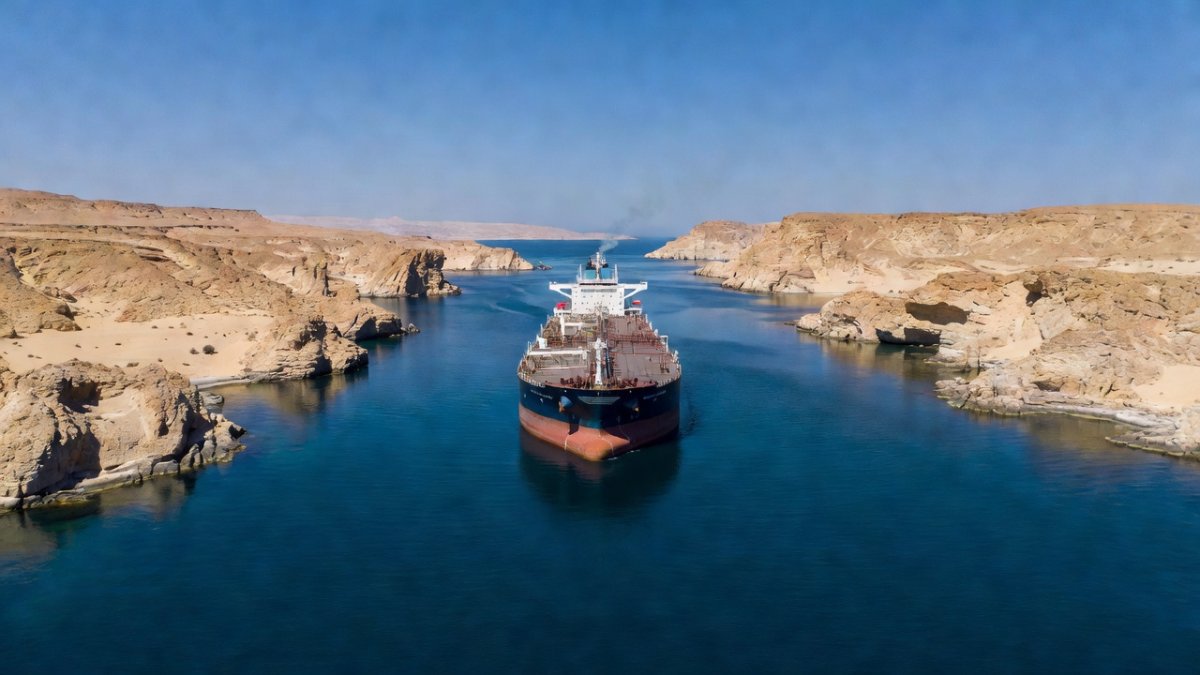
The world’s most critical oil chokepoint has gone quiet. Shipping-tracking data from Kpler, analyzed by CNBC, shows a five-day average of roughly 10 transits per day through the Strait of Hormuz in late August — the lowest volume since May 11. On one Thursday in the final week of August, only 7 ships passed through the waterway. Before the war, about 130 vessels crossed daily. This is not a slowdown; it is a collapse.
UN Secretary-General António Guterres has publicly flagged the decline, calling attention to the dramatic falloff in commercial traffic through a waterway that normally carries about 20 million barrels of oil per day — roughly 20 to 21 percent of global petroleum consumption. The strait’s normal flow, measured at 20.9 million barrels per day in the first half of 2025, has been reduced to a trickle. For context, that volume represented the single most important energy transit lane on Earth, and it is now operating at less than 8 percent of its pre-war capacity on some days.
The August 18 attack on a ship transiting the strait — which resulted in one crew casualty — underscored the danger. President Trump responded by declaring the strait “open,” but the data tells a different story. The gap between official messaging and observable reality is widening, and the economic consequences are beginning to ripple far beyond the Gulf.
From February 28 to a Blockaded Waterway
The roots of this collapse trace back to February 28, 2026, when the United States and Israel launched an air war against Iran. Within weeks, Iran largely halted vessel traffic through the strait, threatening strikes on any shipping that attempted passage. The United States responded by imposing a blockade on Iranian ports, effectively sealing off the country’s maritime trade routes. The result is a standoff that has turned the world’s busiest oil lane into a militarized no-man’s-land.
The escalation was not gradual. A US Apache helicopter was downed on June 8; the United States retaliated on June 9; and Iran attacked US bases in the Gulf on June 10. Each step ratcheted up the risk for commercial shipping, and insurers responded accordingly. War-risk premiums for transiting the strait jumped from 0.125 percent of a vessel’s insured value per transit to between 0.2 percent and 0.4 percent — a tripling or quadrupling of cost that made many voyages economically unviable.
By August, the situation had reached a point where shipping firms were making a simple calculation: the risk of a missile strike or naval interception outweighed the revenue from a single transit. The strait, which once moved one-fifth of the world’s oil, had become a liability. The blockade on Iranian ports compounded the problem, cutting off not just oil but also food, medical supplies, and consumer goods bound for Iran’s 89 million people.
Who Actually Controls the Strait? The Battle Over Data
Both Tehran and Washington claim the upper hand. Iran insists the strait is closed and that it controls the waterway. The Trump administration pushes back, asserting that US naval forces have secured freedom of navigation. CNN reported on August 18 that Iran has lost significant control of the strait, but the reality is more nuanced — and the data suggests neither side has a clean victory.
Al Jazeera’s analysis of shipping routes between August 1 and 19 provides a clearer picture. Of 236 energy vessels and other cargo ships that passed through the strait during that period, 83 used the Iranian route, 148 had no confirmed route, and only 3 used the Omani route. The “no confirmed route” category is telling: it suggests ships are transiting without declaring their paths, likely to avoid detection or to hedge against attacks from either side.
The competing narratives are not just a matter of pride. Control of the strait determines insurance rates, shipping schedules, and global oil prices. If Iran truly controls the waterway, then every transit is a political act. If the United States controls it, then the blockade is a strategic choice. The truth, based on the routing data, is that the strait is neither fully open nor fully closed — it is a zone of chaos where ships move at their own risk, and the data reflects that uncertainty.
The Human and Economic Toll
The August 18 attack that killed one crew member was not an isolated incident. India Today reported on August 6 that at least 16 Indian-flagged vessels remain in the Gulf, and 19 attacks on India-linked ships have been recorded since March. The human cost is mounting, but the economic cost is staggering.
Bloomberg reported in March that the biggest oil supply shock in history had reached its one-month mark, with prices surging and growth forecasts cut worldwide. CNBC noted on July 7 that oil prices rose more than 2 percent after attacks on tankers in the strait. The cumulative effect has been a persistent upward pressure on energy costs, feeding inflation in economies that were already struggling to recover from prior shocks.
The insurance premium increases are a direct tax on global trade. A ship carrying $100 million in cargo now faces war-risk premiums of $200,000 to $400,000 per transit, up from $125,000 before the war. For a tanker moving 2 million barrels of crude, that cost is passed directly to consumers. The result is a compounding crisis: fewer ships mean less supply, which means higher prices, which makes the remaining transits even more expensive to insure.
Iran’s Parliament Moves to Monetize the Strait
In a striking development, Iran’s parliament is advancing legislation to charge “service fees” for vessels using the strait. Al Jazeera reported on August 23 that the Iranian government is moving to formalize a revenue stream from the waterway, effectively treating it as a toll road. The move is a clear signal that Tehran intends to assert its claim over the strait not just militarily, but economically.
The proposed fees are a double-edged sword. On one hand, they represent a de facto recognition that some shipping is still transiting — otherwise, there would be nothing to tax. On the other hand, they formalize Iran’s control over a waterway that international law considers international waters. The legislation is still advancing through parliament, and its final form is unclear, but the direction is unmistakable: Iran is trying to turn a military standoff into a revenue-generating enterprise.
This is not just about money. The fees are a political statement, a way for Tehran to claim legitimacy over the strait while the United States insists it is open. If the legislation passes, it will create a new flashpoint: any ship that pays the fee is implicitly recognizing Iranian sovereignty; any ship that refuses is inviting retaliation. The international community, including the United States, will have to decide whether to treat the fees as an act of piracy or a legitimate charge.
Diplomacy at a Crossroads
The diplomatic track is running out of time. Al Arabiya reported on August 18 that Iran has threatened to go on the offensive in the strait if diplomacy with the United States fails. A 60-day period has passed since a critical deadline in the US-Iran conflict, and no breakthrough has emerged. The window for a negotiated settlement is narrowing, and the military options on both sides are becoming more aggressive.
One potential off-ramp is the proposed Strait of Hormuz shipping corridor, which Iran and Oman are negotiating. India Today reported on August 6 that the corridor is part of the discussion, and Fortune noted on August 23 that it is a key element of the broader diplomatic effort. The idea is to create a designated lane for commercial shipping, patrolled by neutral forces, that would allow vessels to transit without fear of attack. But the details are unresolved, and the mistrust between the parties is profound.
India’s stranded vessels are a case study in the human cost of the standoff. With 16 Indian-flagged ships stuck in the Gulf and 19 attacks on India-linked vessels since March, New Delhi is under pressure to act. The Oman corridor could provide a solution, but it requires Iran’s cooperation — and Tehran has shown little appetite for compromise while the blockade remains in place.
What This Means for Americans
For American consumers, the strait’s collapse translates directly into higher prices at the pump. The United States is not as dependent on Gulf oil as it was two decades ago, but the global market is interconnected: when the strait’s 20 million barrels per day disappear, every barrel of oil on the market becomes more expensive. The July 7 price spike of more than 2 percent was a preview of what is to come if the crisis persists.
The broader economic impact is more insidious. Supply chains that rely on Gulf shipping — not just for oil but for petrochemicals, plastics, and fertilizers — are being disrupted. The cost of shipping insurance is rising globally, and the uncertainty is discouraging investment in energy infrastructure. Analysts at Fortune expect the war could drag deep into 2027, which means the current pain is not a temporary blip but a structural shift.
The 2027 outlook is grim. If the war continues, oil prices will remain elevated, inflation will stay stubbornly high, and the Federal Reserve will face a difficult choice between fighting inflation and supporting growth. The strait’s collapse is not just a foreign policy problem; it is a kitchen-table issue for every American who fills a tank, heats a home, or buys goods shipped across the ocean.
The Bottom Line
The Strait of Hormuz is not just empty — it is a symbol of a failed policy. Six months into the war, neither side has achieved its objectives. Iran has not closed the strait entirely, but it has made transit so dangerous that commercial shipping has nearly abandoned it. The United States has not secured freedom of navigation, despite its claims of control. The result is a stalemate that is bleeding the global economy.
The data is unambiguous: 7 ships on a bad day, 10 on an average day, versus 130 before the war. The insurance premiums have tripled. The UN Secretary-General is alarmed. Iran is trying to monetize the chaos. And the war is projected to last into 2027. The question is no longer whether the strait will reopen, but at what cost — and who will pay it.
The answer, as always, is the consumer. Every barrel of oil that does not transit Hormuz is a barrel that must come from elsewhere, at a higher price. Every ship that avoids the strait adds days to global shipping routes, increasing costs and delays. The world economy is absorbing the shock, but it is not adapting. It is merely enduring.
The strait will not stay empty forever. Wars end, negotiations resume, and shipping lanes reopen. But the longer this standoff continues, the deeper the damage will be. The United States and Iran are playing a game of chicken with the global economy, and the rest of the world is stuck in the middle. The only question is who blinks first — and how much the rest of us will pay while they decide.
By Jessica Ali, Staff Writer
This article was produced with AI-assisted research and editorial support. Sources: Reuters, Al Jazeera, CNBC, CNN, Bloomberg, India Today, Al Arabiya, Fortune.
What's Your Reaction?
 Like
0
Like
0
 Dislike
0
Dislike
0
 Love
0
Love
0
 Funny
0
Funny
0
 Wow
0
Wow
0
 Sad
0
Sad
0
 Angry
0
Angry
0

Editor-in-Chief at Global1.News. Atlanta-based journalist who cuts through the BS and tells it like it is. Lead anchor, host, and the voice you hear when the spin stops and the truth starts.











Comments (0)