
Smithsonian Secretary Lonnie Bunch Steps Down as Trump Pressures Museums
Lonnie Bunch, the first Black secretary in the Smithsonian’s history and the man who built its African American museum from nothing, is walking away—and the political earthquake shaking the National Mall just got a whole lot louder.
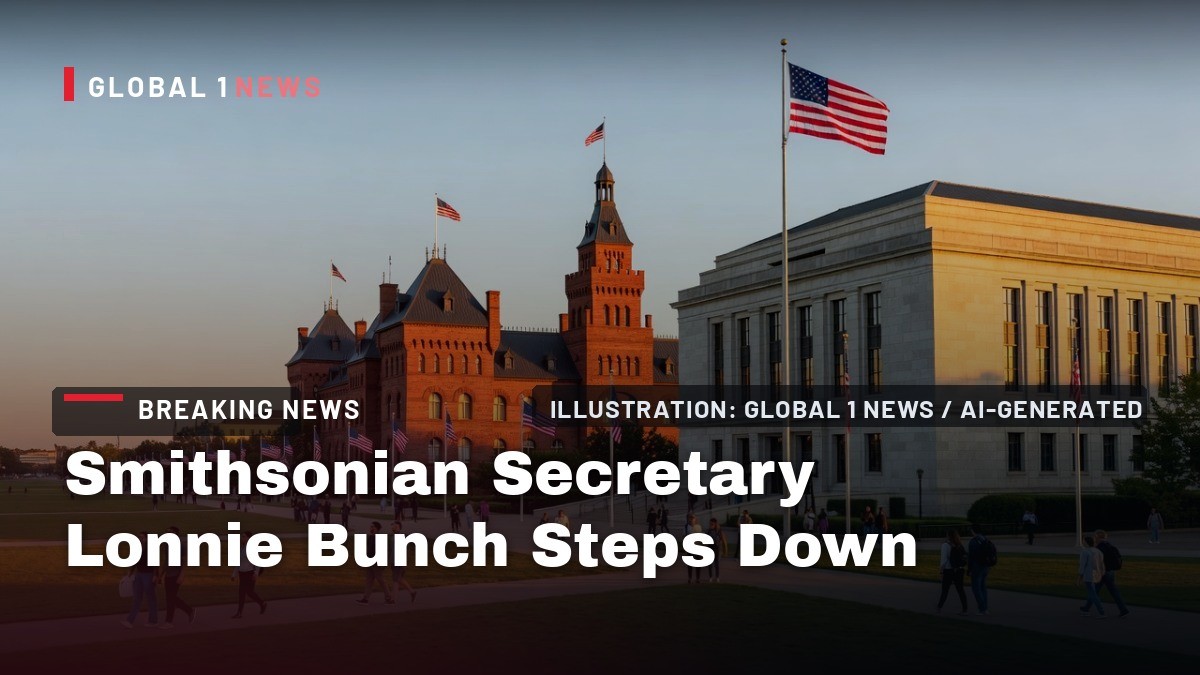
Lonnie Bunch, the first Black secretary in the Smithsonian’s history and the man who built its African American museum from nothing, is walking away—and the political earthquake shaking the National Mall just got a whole lot louder.
Bunch’s Exit Sparks New Battle Over American Memory
Washington, D.C. – Sept. 8, 2026 — The announcement landed like a thunderclap on a Tuesday morning: Smithsonian Secretary Lonnie G. Bunch III is stepping down by the end of 2026, ending a 38-year career at the institution he helped reshape. His departure, framed in his own words as a retirement "with very mixed emotions and heartfelt gratitude," comes not as a quiet exit but as a capitulation under fire—or a strategic retreat, depending on whom you ask. Bunch insists the White House pressure did not drive him out, but the timing, after 18 months of escalating executive orders, funding threats, and ideological warfare over how America tells its own story, suggests otherwise. This is not a retirement; it is a seismic event in the ongoing fight for the soul of the nation’s attic.
A National Leader Steps Back
Bunch could have chosen any moment to leave. He chose this one. His official statement, released through the Smithsonian’s press office, was measured and gracious: "It is with very mixed emotions and heartfelt gratitude that I announce my retirement." But the subtext was unmistakable. For the past year and a half, the Trump administration has waged a relentless campaign against the institution Bunch has led since 2019, accusing it of peddling "divisive narratives" and "improper ideology." The White House has threatened to withhold funding, demanded signage changes, and, most recently, saw the Interior Department threaten to cut off support entirely over alleged "radical ideology." Bunch, known for his diplomatic demeanor and even-handed leadership, has largely staved off these encroachments—until now. His exit leaves a leadership vacuum at a partially federally funded institution that has traditionally operated independently of the party in power, and the timing could not be more precarious.
From One Employee to a National Museum
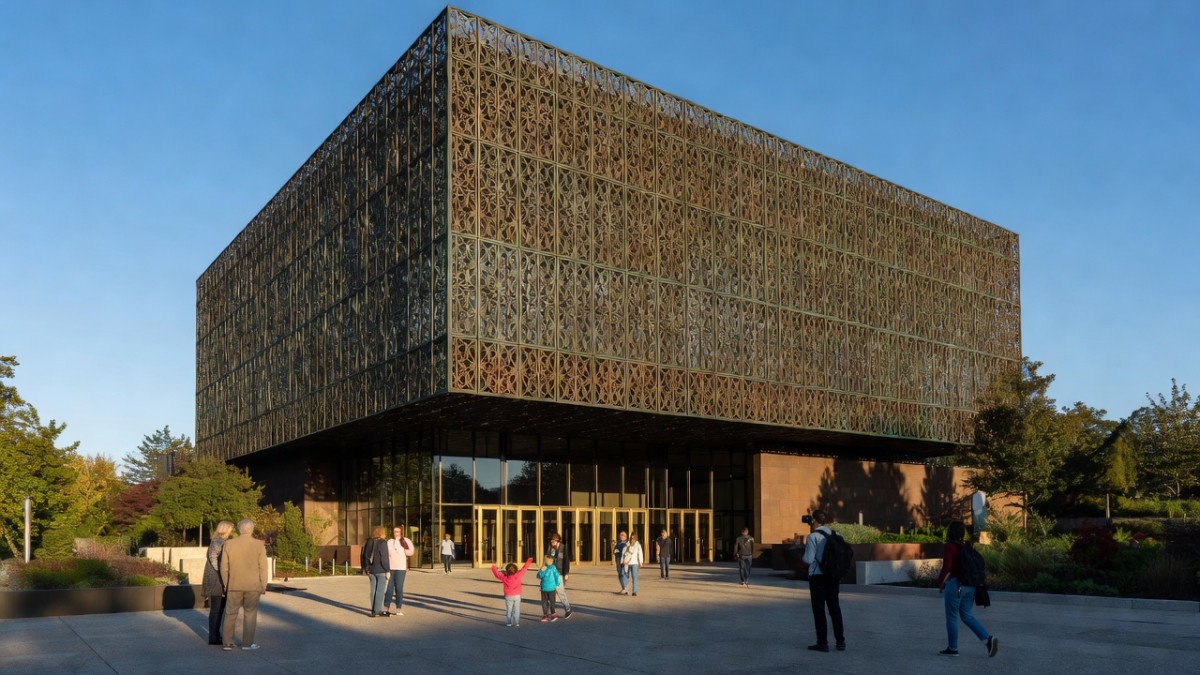
To understand the weight of Bunch’s departure, you have to understand the arc of his career. He didn’t just ascend to the Smithsonian’s top job; he earned it by building something from nothing. As the founding director of the National Museum of African American History and Culture (NMAAHC), Bunch started with no collection, no building, and exactly one employee. For years, the very idea of such a museum on the National Mall was met with skepticism from some and outright opposition from others. By the time NMAAHC opened its doors in 2016, it had become one of the most visited museums on the Mall, a gleaming bronze beacon that told the full, unvarnished story of Black America—from slavery to the White House. Bunch’s vision was not just to build a building but to create a space where Americans could confront their history, however uncomfortable. That mission made him a hero to many and a target to others. When he became secretary in 2019, the first Black person to hold the role in the Smithsonian’s 180-plus-year history, it felt like a natural culmination. Now, that legacy is under siege.
The White House Campaign Over History
The battle lines were drawn long before Bunch’s announcement. In March 2025, President Trump signed an executive order targeting Smithsonian funding, accusing the institution of advancing programs that promote "divisive narratives" and "improper ideology." The order claimed there was a "concerted and widespread" effort to rewrite American history, replacing "objective facts" with "a distorted narrative driven by ideology rather than truth." It was a direct shot at the museums Bunch had spent his life championing. But the administration didn’t stop there. Most recently, Trump signed another executive order calling for signage to be added to the exterior of the National Museum of American History—signage that would warn visitors about what the administration believes is an inaccurate and partisan telling of history. The move was unprecedented, turning a museum into a battleground for political messaging. Bunch, ever the diplomat, tried to navigate the storm, but the pressure only intensified. Last week, the Interior Department escalated further, threatening to cut off support and alleging that Smithsonian facilities present a "radical ideology" that weakens "shared American identity." For an institution that has long prided itself on being above the political fray, the message was clear: no one is safe.
Bunch's Defense of an Independent Smithsonian
Throughout the onslaught, Bunch has been a study in restraint. He has not fired back with fiery rhetoric or partisan attacks. Instead, he has leaned on his signature calm, insisting that the Smithsonian’s role is to tell the truth, even when it’s uncomfortable. In a widely shared interview, he said, "It scares me when people aren't brave enough to face their history." That line has become something of a rallying cry for his supporters, a reminder that the fight over the Smithsonian is not about politics but about integrity. In his retirement statement, Bunch struck a similar tone, saying, "There is no place like the Smithsonian — it has been one of the great loves of my life, and I am extraordinarily proud of what we have accomplished together." He added, "I leave with pride and sadness, gratitude and joy, and with enormous confidence in the people who will carry this remarkable institution forward." But he also vowed, according to reports, to defend the institution’s independence until his final day in office. That promise will be tested in the coming months as the Board of Regents begins the search for his successor.
The Interior Department Escalation
The Interior Department’s threat last week marked a new chapter in the administration’s assault. It wasn’t just about funding; it was about the very purpose of the Smithsonian. The allegation that the institution’s facilities present a "radical ideology" that weakens "shared American identity" is a fundamental challenge to the idea that museums should present multiple perspectives. For Bunch, who has spent his career championing the inclusion of marginalized voices, this is existential. The Smithsonian is not a private entity; it is a public trust, partially funded by federal appropriations—roughly two-thirds of its operating budget has historically come from the government. That financial dependence makes it vulnerable to political pressure, and the Trump administration has shown it is willing to use that leverage. The Interior Department’s move is a warning shot: fall in line, or lose your lifeline. Bunch’s response has been characteristically measured, but his resignation suggests he sees the writing on the wall. He may be leaving, but he is not surrendering—at least not quietly.
What Happens Next
The immediate question is who will replace him. The Smithsonian’s Board of Regents, chaired by Chief Justice John Roberts, will manage the transition. Roberts praised Bunch in a statement, saying, "From his days as a young curator at the National Air and Space and American History Museums through his tenure as the founding director of the African American History and Culture Museum and culminating in his distinguished service for the past seven years in the Smithsonian's top job, Secretary Bunch has pursued excellence in the telling of our nation's story." Roberts added that the Regents look forward to a smooth transition. But a smooth transition is unlikely. The next secretary will inherit an institution under siege, with the White House demanding ideological conformity and the cultural world watching to see if the Smithsonian caves. The search for a successor will be a test of whether the institution can maintain its independence or whether it will become a tool of the administration. Bunch’s departure, while framed as voluntary, leaves a void that will be difficult to fill—not just in leadership but in moral authority.
Why This Fight Matters
This is bigger than one man’s retirement. It is about the broader battle over American memory, a fight that has been brewing for years and has now reached a boiling point. The Trump administration’s takeover of the Kennedy Center in 2025, when the president named himself chairman of the board, was a warning shot to all cultural institutions. The Smithsonian, with its 21 museums, 20 libraries, and the National Zoo, is the crown jewel of that world. If the administration can bend it to its will, no institution is safe. The stakes are existential: how we tell our history shapes how we understand ourselves as a nation. Do we embrace the full, complicated truth of our past, or do we sanitize it to fit a political agenda? Bunch has spent his life answering that question with courage and conviction. His exit, whether voluntary or forced, is a sign that the answer is no longer clear. As the midterm political climate heats up, the Smithsonian will become a flashpoint—a symbol of the fight over who gets to define America. And with Bunch stepping aside, the question is not just who will lead the institution, but whether it will survive the battle intact.
By Jessica Ali, Staff Writer
This article was produced with AI-assisted research and editorial support. Sources: NBC News, The Associated Press, ABC News, The Atlantic, Reuters, The Washington Post.
What's Your Reaction?
 Like
0
Like
0
 Dislike
0
Dislike
0
 Love
0
Love
0
 Funny
0
Funny
0
 Wow
0
Wow
0
 Sad
0
Sad
0
 Angry
0
Angry
0

Editor-in-Chief at Global1.News. Atlanta-based journalist who cuts through the BS and tells it like it is. Lead anchor, host, and the voice you hear when the spin stops and the truth starts.












Comments (0)