
Shattered Childhoods: Israel's War on Lebanese and Palestinian Children
In a recent Middle East Eye report, the devastating toll of Israel's ongoing military campaigns on the youngest lives in Lebanon and Gaza was laid bare, painting a harrowing picture of a generation whose childhood has been systematically dismantled. The report, aired on the MEE LIVE programme on 12 August 2026, focuses on the human cost behind the statistics, centering on families like the Shararas of Bint Jbeil and the countless others navigating a landscape of loss and survival.
In a recent Middle East Eye report, the devastating toll of Israel's ongoing military campaigns on the youngest lives in Lebanon and Gaza was laid bare, painting a harrowing picture of a generation whose childhood has been systematically dismantled. The report, aired on the MEE LIVE programme on 12 August 2026, focuses on the human cost behind the statistics, centering on families like the Shararas of Bint Jbeil and the countless others navigating a landscape of loss and survival. As the conflict enters its third year, the testimony of children who have endured unimaginable trauma serves as a stark indictment of a world that has failed to protect them.
Childhood Shattered: The Unrelenting Toll of War on Lebanese and Palestinian Children
Beirut, Lebanon - August 13, 2026 - The names Celine, Hadi, and Silan Sharara are now etched into the painful history of southern Lebanon, three children whose lives were cut short on a quiet highway, victims of a war they did not start. Their father, Shadi Sobhy Sharara, a Lebanese American engineer who had returned from Michigan to his homeland, perished alongside them, a single moment of violence erasing a family's future in an instant. The 21 September 2025 drone strike in Bint Jbeil did not discriminate between civilian and combatant, killing five people, including the three Sharara children and their cousin, Mohammad Marwa, as Shadi stopped to greet him on the Marjayoun-Bint Jbeil highway.
Bint Jbeil: A Family Erased in One Instant
Aceel Sharara, 13, Bint Jbeil
In the aftermath of that strike, Aceel Sharara, just 13 years old, was left to navigate a world without her father and her three siblings. Her words, captured in the Middle East Eye report, resonate with a profound grief that belies her age: "All the pain in the world passes through my heart every night, but I'll grow up, not to seek revenge, but to tell the truth. That we were here, that our childhood was shattered, and that justice may be delayed, but it must not die." Aceel's determination to bear witness is a powerful counterpoint to the violence that sought to silence her family, transforming her personal tragedy into a testament of resilience and a demand for accountability.

Gaza: Sisters Surviving Amputation and Loss
The Sharara family's story is not an isolated incident but a harrowing pattern repeated across the region. In Gaza, sisters Hanan and Misk are grappling with a different kind of loss, having lost their mother after their apartment building was targeted in the middle of the night. The attack left both sisters with severe injuries requiring painful amputations, forcing them to confront a new reality of physical and emotional recovery. Misk, a three-year-old girl, remains in a precarious state, still waiting for the medical care she desperately needs, a symbol of the countless children whose access to healthcare has been decimated by the conflict.
A Generation Lost: The Scale of the Casualties
The individual stories of Aceel, Hanan, and Misk are set against a backdrop of staggering, almost incomprehensible, numbers. Nearly three years since October 2023, the Middle East Eye report cites that at least 20,700 Palestinian and Lebanese children have been killed by Israeli attacks, with the vast majority of these deaths occurring in Gaza. This figure is not merely a statistic; it represents a generation of potential doctors, teachers, artists, and leaders who will never have the chance to contribute to their communities. The sheer scale of the loss has prompted international bodies to issue urgent condemnations and calls for a cessation of hostilities, yet the violence continues.
The Legal Reckoning: UN Findings on Child Deaths
Corroborating these figures, a UN commission of inquiry chaired by Srinivasan Muralidhar has reported more than 20,000 Palestinian children killed since October 2023, documenting a minimum of 20,179 child deaths and some 44,143 child injuries. The commission's detailed report provides a legal and factual basis for understanding the magnitude of the tragedy, highlighting the systematic nature of the violations against children. These are not accidental casualties of war but the predictable outcome of military operations conducted in densely populated civilian areas, often with weapons that have indiscriminate effects.
The West Bank and Lebanon: A Wider Circle of Suffering
While Gaza has borne the brunt of the casualties, the conflict's impact on children extends far beyond its borders. In the occupied West Bank, the Office of the UN High Commissioner for Human Rights (OHCHR) has verified 241 children killed by Israeli security forces and settlers since 7 October 2023. This figure reflects a disturbing trend of increased violence and impunity in the West Bank, where children are caught in the crossfire of military raids, settler attacks, and daily friction. The psychological toll on these children, who face the constant threat of violence and the humiliation of checkpoints, is immense and will have long-term consequences for the entire society.
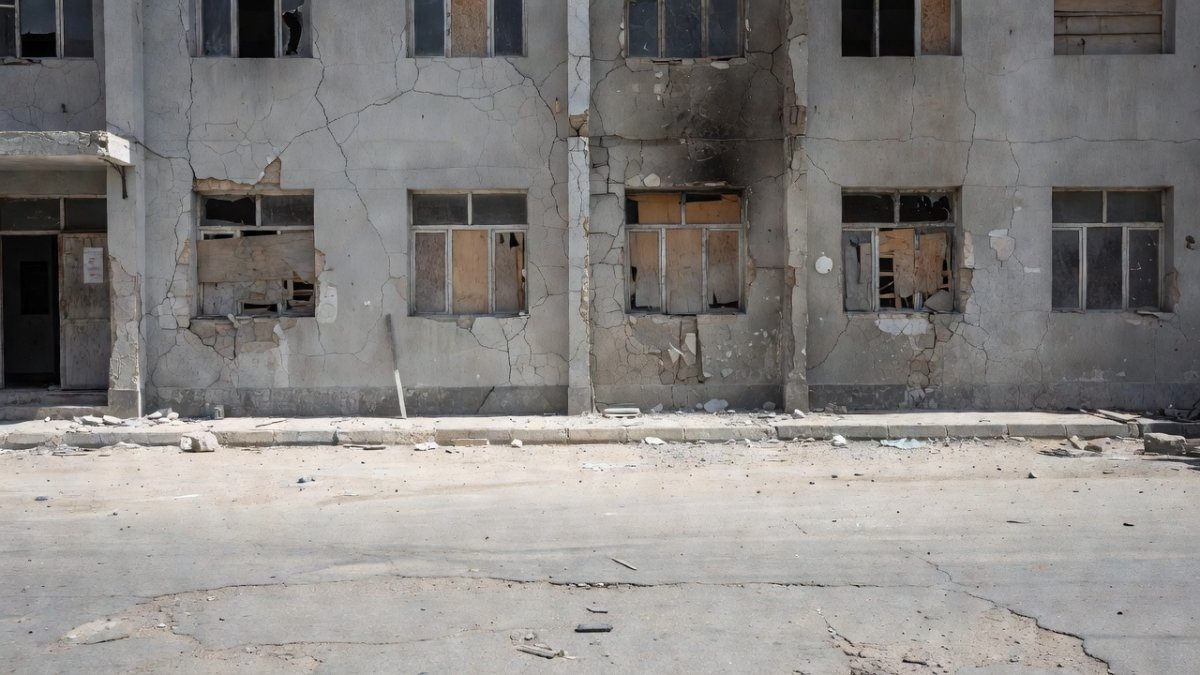
In Lebanon, the 2024 war and subsequent hostilities have also taken a severe toll on the nation's children. UNICEF reported that more than 310 children were killed and over 1,500 wounded in Lebanon's 2024 war, out of more than 4,000 total fatalities. The figures are a stark reminder that the conflict has regional dimensions, drawing in neighbouring countries and their civilian populations. The targeting of residential areas in southern Lebanon and the southern suburbs of Beirut has displaced hundreds of thousands of families, creating a new generation of refugees within their own country.
Ceasefire Violations and the Persistence of Violence
The promise of a temporary ceasefire in Lebanon offered a glimmer of hope, but the data suggests that it did little to protect children. Save the Children reported that more than four children were killed or injured every day in Lebanon during the first 25 days of a temporary ceasefire in May 2026, with 22 children killed and 89 injured in that period. This alarming statistic indicates that even in moments of supposed calm, the threat to civilian life remains acute, often due to unexploded ordnance, ongoing skirmishes, or a failure to adhere to the terms of the truce. The ceasefire, rather than providing a safe haven, became another period of peril for the most vulnerable.
The situation has only deteriorated with the renewal of hostilities. In Lebanon, UNICEF has stated that 12 children were killed or maimed daily during more than 100 days of renewed hostilities in 2026. This staggering rate of child casualties underscores the complete disregard for international humanitarian law, which mandates the protection of civilians, particularly children, during armed conflict. The daily reality for children in these zones is one of constant fear, interrupted schooling, and the ever-present sound of drones and explosions, a toxic environment for healthy development.
Analysis and Implications: A Failure of Protection
The evidence presented in the Middle East Eye report and corroborated by international organisations points to a systemic failure of the international community to protect children in conflict zones. The repeated calls for ceasefires, the UN resolutions, and the condemnations have not translated into meaningful action on the ground. The lack of accountability for those who perpetrate these attacks has created a culture of impunity, where the lives of children are tragically devalued. The legal frameworks designed to protect civilians in wartime, such as the Geneva Conventions, appear to be increasingly toothless in the face of modern warfare and geopolitical realpolitik.
For the children who survive, the trauma is not a temporary condition but a lifelong burden. The loss of parents, siblings, homes, and schools creates deep psychological scars that will require years of specialised support to heal. In Gaza, the destruction of the educational and healthcare infrastructure means that even basic services are unavailable, leaving children like Misk to wait indefinitely for treatment. The long-term impact on the region's social fabric is profound, as a generation grows up knowing only conflict, displacement, and loss, potentially perpetuating cycles of violence for decades to come.
The testimony of Aceel Sharara, who vows to grow up to tell the truth, is a powerful reminder that the spirit of these children is not easily broken. Yet, their resilience should not be a justification for inaction. The international community, including the United States, European nations, and Arab states, must move beyond performative condemnation and take concrete steps to enforce international law. This includes imposing targeted sanctions on those responsible for war crimes, establishing a credible mechanism for accountability, and using diplomatic and economic leverage to compel an immediate and lasting ceasefire. The children of Palestine and Lebanon deserve more than sympathy; they deserve a future where their childhood is not defined by war.
As the world looks away, the bombs continue to fall, and the list of names grows longer. The story of Celine, Hadi, Silan, and their father Shadi is a single chapter in a much larger, ongoing tragedy. The question that remains is not whether the international community is aware of the suffering, but whether it has the will to act. Justice may be delayed, as Aceel says, but for the sake of an entire generation, it must not be allowed to die. The children who have survived are watching, and their demand for truth and accountability is a challenge to us all.
By Fatima Al-Rashid, Staff Writer
This article was produced with AI-assisted research and editorial support. Reporting is based on sources cited in the article.
What's Your Reaction?
 Like
0
Like
0
 Dislike
0
Dislike
0
 Love
0
Love
0
 Funny
0
Funny
0
 Wow
0
Wow
0
 Sad
0
Sad
0
 Angry
0
Angry
0
Gulf/MENA Correspondent at Global1.News. Based in Doha, covering Gulf politics, energy markets, diplomacy, and development across the Middle East and North Africa. Tracks the economic transformation of the Gulf states.










Comments (0)