
Germany Should Reconsider Israel Policy, Ex-Envoy Says
Germany's former ambassador to Israel has broken with decades of diplomatic orthodoxy, urging Berlin to recalibrate its support for the Israeli government and to condemn the settlement enterprise that has defined the occupied West Bank for nearly six decades.
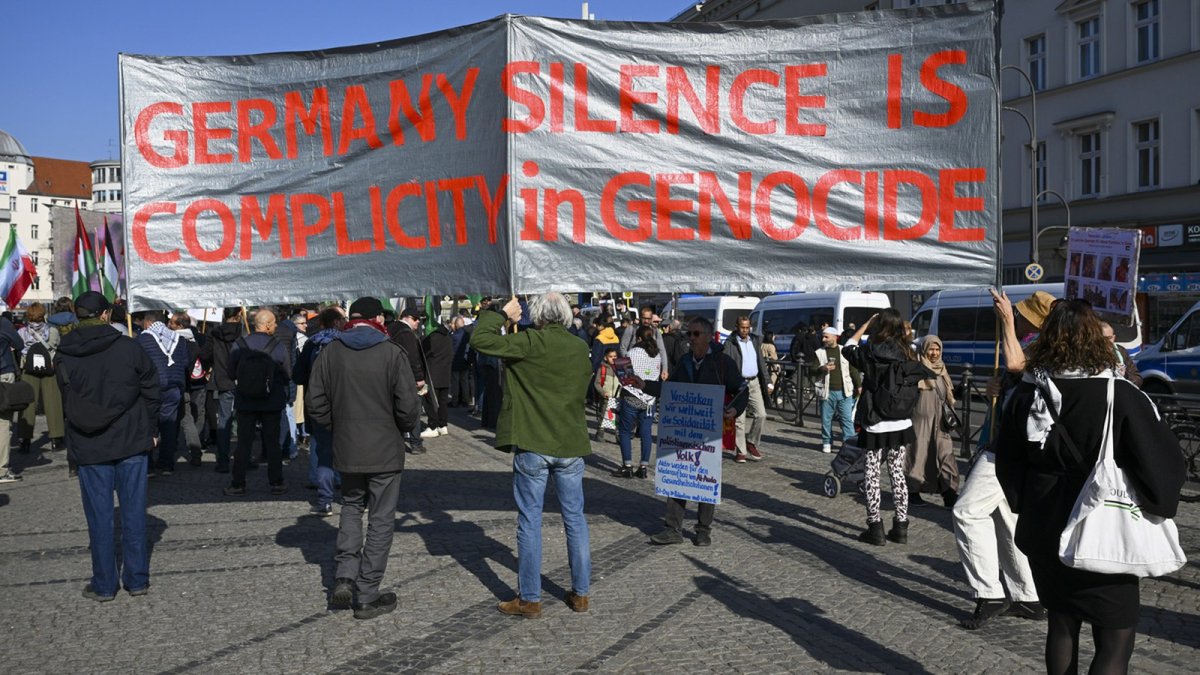
Germany’s former ambassador to Israel has broken with decades of diplomatic orthodoxy, publicly urging Berlin to recalibrate its unwavering support for the Israeli government and to explicitly condemn the settlement enterprise that has defined the occupied West Bank for nearly six decades. Steffen Seibert, who served as Chancellor Angela Merkel’s chief government spokesperson before his posting to Tel Aviv, told the weekly newspaper Die Zeit that Israel’s settlement policy amounts to “displacement through psychological and physical violence.” His remarks, reported by Anadolu Agency on Wednesday, mark one of the most significant public critiques of German-Israeli policy from a senior former official, challenging the foundational premise that Germany’s national interest is inextricably tied to every action of the Israeli government.
Seibert’s intervention comes at a moment of acute tension, as the occupation of the West Bank and East Jerusalem enters its 60th year and as documented incidents of settler violence against Palestinian communities reach levels that human rights organizations describe as a campaign of forced displacement. His call for Berlin to clarify the meaning of its oft-repeated pledge to stand by Israel has ignited debate among German policymakers, Palestinian rights advocates, and a public increasingly divided over the moral and legal implications of the country’s Middle East policy.
A Senior Diplomat Breaks Ranks
Steffen Seibert is not a marginal figure in German foreign policy. As the federal government’s chief spokesperson from 2010 to 2021, he was the public face of Merkel’s administration through a decade of crises, and his subsequent appointment as ambassador to Israel in 2022 was seen as a signal of continuity in Berlin’s special relationship with the Jewish state. His decision to speak out in such stark terms carries weight precisely because he has operated at the highest levels of German statecraft.
In the interview, Seibert drew a clear distinction between the security of the State of Israel and the actions of its government in the occupied territories. He recalled that Merkel had declared Israel’s security to be part of Germany’s national interest, a formulation that has guided German policy for years. But he argued that this commitment applies only to Israel within its internationally recognized borders. “But that does not apply to the settlers in the Jordan Valley,” Seibert said. “Under international law, these are illegal settlements that follow the ideology: ‘This is our land alone; God gave it to us.’”
Seibert’s language is notable for its directness. He did not hedge or qualify his assessment of the settlement movement’s ideology, nor did he shy away from the legal characterization that successive German governments have been reluctant to apply with such clarity. “The German national interest does not apply to this; it does not support a sense of superiority over another population,” he added, explicitly rejecting the notion that German support should extend to a project he described as rooted in domination.
What Seibert Said About Settlements and International Law
The former ambassador’s remarks on international law align with a broad consensus among legal scholars and the international community. The International Court of Justice, in its landmark advisory opinion of July 2024, declared Israel’s occupation of Palestinian territories unlawful and called for its end. The United Nations Security Council has repeatedly passed resolutions, including Resolution 2334 of 2016, affirming that Israeli settlements in the West Bank, including East Jerusalem, have “no legal validity” and constitute a “flagrant violation” of international law.
Seibert’s specific reference to the Jordan Valley is significant. This strategic strip of land, which accounts for roughly 30 percent of the West Bank, has been a focal point of settlement expansion and military control. Israeli governments have long sought to annex the area, and settler outposts there have grown in number and population. For Palestinian farmers and herders, the Jordan Valley represents a vital agricultural heartland, yet access to their own land is increasingly restricted by military zones, settlement fences, and violent intimidation.
By invoking the Jordan Valley, Seibert pointed to the most extreme manifestation of the settlement project, where the ideology of exclusive Jewish entitlement is most visibly enacted. His statement that the settlements follow the belief that “God gave it to us” echoes the rhetoric of settler leaders and their political allies, who openly speak of a divine mandate to claim the land. This is not a fringe view within the Israeli government; it is the stated position of ministers who hold significant power over settlement policy.
The 60-Year Occupation Debate
Seibert’s call for Germany to reconsider its stance is rooted in a simple but profound observation: the occupation is now entering its 60th year. “For decades, we have spoken of Israel as the only democracy in the region, and that is true,” he said. “But that does not mean that our support extends to every action taken by the Israeli government — for example, not the occupation, which is now entering its 60th year.”
The six-decade mark is a sobering milestone. Since the 1967 war, in which Israel captured the West Bank, East Jerusalem, the Gaza Strip, and the Golan Heights, the international community has repeatedly called for an end to the occupation, yet it persists and deepens. The Oslo Accords of the 1990s promised a path to Palestinian statehood, but the interim period they established has become a permanent reality, with the Palestinian Authority exercising limited self-rule in enclaves while Israel retains overarching control of land, borders, water, and security.
For Palestinians, the 60th year of occupation is not an abstract anniversary. It marks the lived reality of checkpoints, land confiscation, home demolitions, and the daily humiliations of military rule. It is a system that has produced a generation of young Palestinians who have known nothing else, and whose frustration has periodically erupted in violence, further entrenching the cycle of conflict. Seibert’s acknowledgment that the occupation is not something Germany should support is a recognition that the status quo is not sustainable and that Berlin’s policy has been complicit, by omission, in its perpetuation.
Rising Settler Violence in the West Bank
The context for Seibert’s intervention is a documented surge in settler violence against Palestinian communities. Acts of violence by Israeli occupiers against Palestinians in the West Bank have increased in recent years, according to multiple monitoring groups, including the United Nations Office for the Coordination of Humanitarian Affairs. These attacks often take the form of night raids on villages, the burning of olive groves, the poisoning of wells, and the physical assault of farmers and shepherds.
The Israeli army has repeatedly been accused of failing to take decisive action against such attacks. In many documented cases, soldiers have stood by while settlers attacked Palestinians, or have arrived only to detain the victims rather than the perpetrators. Israeli human rights activists have accused the army of supporting occupiers in the West Bank in their acts of violence against Palestinians, a charge that has been substantiated by testimonies from former soldiers and by footage captured by human rights groups.
The impact on Palestinian communities is devastating. Entire villages have been depopulated as residents flee the relentless pressure of settler violence, often after their homes have been attacked multiple times. The phenomenon has been described by human rights organizations as a form of forced displacement, a slow-motion ethnic cleansing that proceeds without the dramatic imagery of war but with the same effect: the removal of Palestinians from their land. Seibert’s phrase, “displacement through psychological and physical violence,” captures this process with chilling accuracy.
What It Means for Palestinian Communities
For Palestinians in the West Bank, Seibert’s words are a rare validation from within the German establishment. For years, Palestinian leaders and civil society groups have appealed to Germany to take a stronger stance against settlement expansion and settler violence, only to be met with the standard response that Israel’s security is a German priority. The former ambassador’s statement suggests that this position is no longer tenable, at least in its most unconditional form.
The practical implications of a policy shift could be significant. Germany is one of Israel’s largest trading partners and a major donor to Palestinian humanitarian programs. A clearer German position on settlements could influence European Union policy, which has struggled to adopt a unified approach to the conflict. It could also embolden other European governments to speak out more forcefully against settlement expansion and the violence that accompanies it.
For Palestinian communities, however, the immediate impact is likely to be symbolic. Words from a former diplomat, however powerful, do not stop a bulldozer or deter a mob of settlers. The hope is that such statements contribute to a broader shift in international opinion, one that translates into concrete measures such as sanctions on settlement products, travel bans on extremist settlers, and a genuine commitment to holding perpetrators of violence accountable. Whether Berlin will act on Seibert’s call remains to be seen, but his intervention has opened a door that will be difficult to close.
German and International Reaction
The reaction to Seibert’s interview has been swift. In Germany, his remarks have been met with a mix of support and criticism. Pro-Palestinian groups and human rights organizations have welcomed his clarity, while some pro-Israel voices have accused him of undermining the special relationship between the two countries. The German government has not issued an official response, but the debate has reignited questions about the limits of German solidarity with Israel.
Internationally, Seibert’s statement has been noted in diplomatic circles as a sign of shifting attitudes within the European establishment. The war in Gaza, which has killed tens of thousands of Palestinians since October 2023, has already strained Germany’s traditional stance, with public opinion increasingly critical of Israeli military operations. A poll conducted earlier this year suggested that a majority of Germans believe their government should adopt a more balanced approach to the conflict, a significant shift from the unconditional support that has long been the norm.
Seibert’s intervention is part of a broader reckoning. Germany’s post-Holocaust commitment to Israel’s security is a moral imperative that cannot be dismissed, but it is increasingly clear that this commitment must be reconciled with international law and human rights. The former ambassador’s call for Berlin to clarify what it means when it says it stands by Israel is a challenge to the vague formulations that have allowed successive governments to avoid difficult choices. As the occupation enters its 60th year, the question is no longer whether Germany will change its policy, but when and how.
This article was produced with AI-assisted research and editorial support. Sources: Middle East Monitor, Anadolu Agency.
By Fatima Al-Rashid, Staff Writer
What's Your Reaction?
 Like
0
Like
0
 Dislike
0
Dislike
0
 Love
0
Love
0
 Funny
0
Funny
0
 Wow
0
Wow
0
 Sad
0
Sad
0
 Angry
0
Angry
0

Gulf/MENA Correspondent at Global1.News. Based in Doha, covering Gulf politics, energy markets, diplomacy, and development across the Middle East and North Africa. Tracks the economic transformation of the Gulf states.














Comments (0)