
NASA ponders a Hubble servicing mission or a controlled deorbit
NASA just floated a request for information (RFI) to the commercial space sector, asking who can give the Hubble Space Telescope a last‑minute lifeline before it becomes a falling sky‑rock.
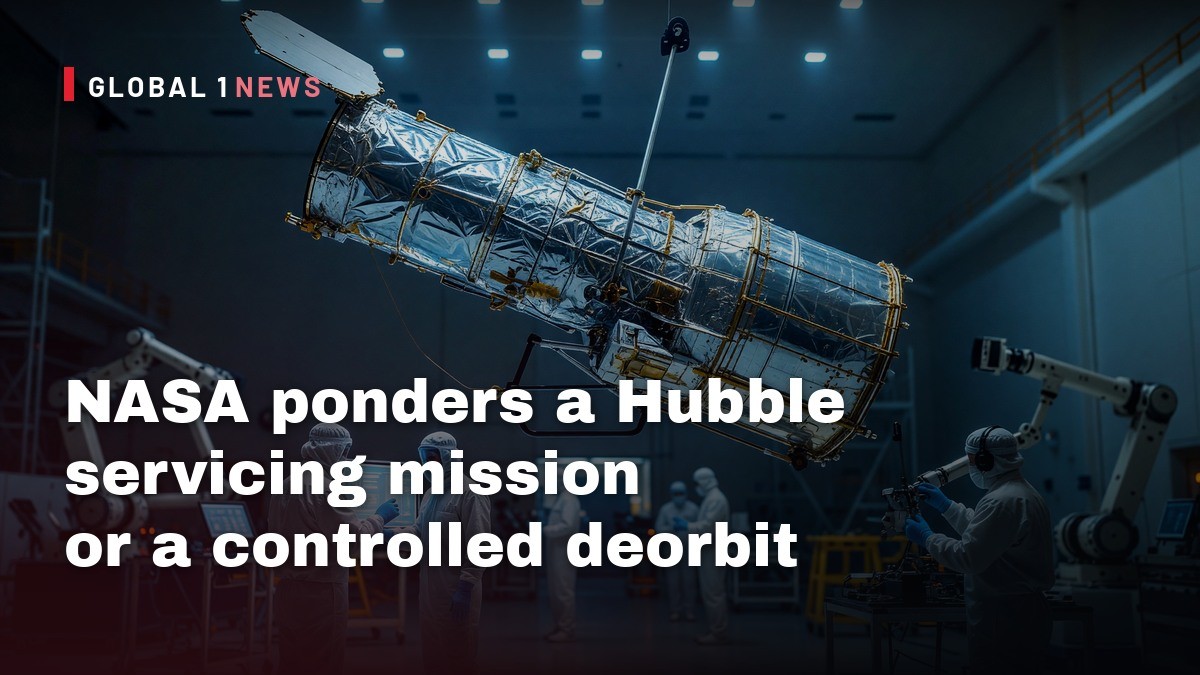
NASA just floated a request for information (RFI) to the commercial space sector, asking who can give the Hubble Space Telescope a last‑minute lifeline before it becomes a falling sky‑rock. The agency’s own numbers are stark: a ten‑percent chance of an uncontrolled re‑entry by September 2032, climbing to fifty percent by December 2033. That’s not a distant risk; it’s a ticking clock that could see a 15‑tonne satellite plummeting back to Earth without any way to steer it. For anyone running a hosting or infrastructure business, the lesson is simple – ignore the timeline and you’ll be left cleaning up a mess you could have avoided.
Why Hubble Still Matters in 2026
Even after more than three decades in orbit, Hubble remains a workhorse. NASA reports a seven‑to‑one oversubscription for its observing time, a figure that dwarfs the demand for newer assets like the James Webb Space Telescope (JWST) and the Nancy Roman Space Telescope. The telescope’s scientific output is still high, and the community isn’t ready to wait for the Habitable Worlds Observatory (HWO) slated for the 2040s. That demand translates into real business risk: a sudden loss of Hubble would rip a hole in research pipelines, grant funding, and the broader ecosystem that depends on its data.
From a founder’s perspective, this is a reminder that legacy assets can retain outsized value long after the hype cycle has moved on. Just as an old server rack can still generate revenue when newer clouds charge premium rates, Hubble’s continued relevance makes it a prime candidate for a low‑cost, high‑impact service contract – if you can move fast enough.
The Options on the Table
NASA’s RFI outlines three broad pathways: a controlled de‑orbit, an orbital boost to at least 600 km, or a “performance‑enhancement” mission to increase resilience and extend on‑orbit life. The first option – grappling Hubble and guiding it into a safe re‑entry corridor – is the most straightforward from a liability standpoint. A controlled re‑entry eliminates the remote but real chance of debris striking a populated area, a scenario NASA admits could give someone on the ground “a very bad day.”
The boost option would raise the telescope’s altitude, buying more years of science without the need for a full‑service mission. The third, more speculative route, calls for on‑orbit upgrades that could improve pointing accuracy, power margins, or even add a modest propulsion capability. All three require a vehicle that can latch onto the soft‑capture mechanism installed during the 2009 STS‑125 mission – a feature that makes docking easier than the grappling required for the Swift satellite.
What the Market Can Learn from the Hubble Playbook
Commercial space firms have been watching NASA’s servicing needs for years, especially after the success of Northrop Grumman’s Mission Extension Vehicle (MEV) on geostationary satellites. The MEV demonstrates that on‑orbit life extension is technically feasible and can be monetized. Hubble is “an order of magnitude more challenging,” but the same principles apply: you need a reliable capture mechanism, a propulsion system capable of handling the mass, and a clear business case.
For independent hosting providers, the takeaway is that niche, high‑value contracts can exist outside the hyperscaler hype. While the big players chase megaprojects with billion‑dollar budgets, there’s room for a lean outfit that can deliver a single‑mission service at a fraction of the cost – provided you have the engineering chops and can move within NASA’s immutable 2032 deadline.
Risk Management: The Real Cost of Inaction
If NASA does nothing, Hubble will re‑enter uncontrolled, and the probability of debris reaching the ground, however remote, is non‑zero. The agency itself labels this as a “remote chance somebody on the ground could have a very bad day.” From a risk‑management angle, that language is a red flag for insurers and regulators. Any contractor stepping in must present a robust liability mitigation plan – something we’ve had to do for our own data centre expansions when local authorities demand proof of safety.
Moreover, the cost of a failure could far outweigh the price of a service contract. Consider the Swift mission, which suffered an uncontrolled re‑entry due to increased solar activity and atmospheric drag. The lesson is clear: solar cycles can accelerate decay, and budgets that “whittle away” – as former astronaut John Grunsfeld described – leave you exposed to sudden, unplanned de‑orbit events.
Funding Realities and the Absence of a Price Tag
NASA’s RFI makes it explicit that this is not a request for proposals and there is “no indication of how much the agency expects to pay.” That uncertainty can be a double‑edged sword. On one hand, it means contractors must propose a cost structure that is attractive enough to win the contract without a set ceiling. On the other, it forces bidders to be disciplined in cost estimation, avoiding the “VC‑funded hype” trap where budgets balloon with little justification.
For founders, this is a chance to apply the same rigor we use when pricing hosting services: break down every component, from launch integration to on‑orbit operations, and present a transparent, fixed‑price offer. Transparency builds trust with a government client that is notoriously cautious about overruns.
Technical Hurdles and How to Overcome Them
The soft‑capture mechanism on Hubble, installed during STS‑125, is a boon. It reduces the complexity of a grapple and aligns with the docking approach used on the MEV. However, the telescope’s mass and lack of built‑in propulsion mean any service vehicle must carry its own thrust capability. The vehicle also needs to accommodate the delicate optics and gyroscopic systems – Hubble recently shifted from three‑gyro to one‑gyro mode to eke out more life, indicating that any vibration or mis‑alignment could jeopardize its scientific payload.
Engineering teams can draw on lessons from the MEV’s on‑orbit docking procedures, but must also factor in the tighter tolerances required for a scientific instrument. A modular design that isolates the capture interface from the service payload could mitigate risk, a strategy we’ve employed in our own hardware upgrades to avoid downtime on critical customer sites.
Actionable Steps for Founders and Providers
First, assess whether you have the capability to design, build, and launch a service vehicle within the 2032 window. If not, consider partnerships with established launch providers or satellite servicing firms. Second, develop a clear value proposition that highlights cost savings over a full‑scale replacement – remember, Hubble’s replacement isn’t expected until the 2040s.
Third, prepare a detailed risk mitigation plan that addresses liability, debris mitigation, and mission assurance. Use the soft‑capture mechanism as a selling point; it simplifies docking and reduces the chance of mission failure. Finally, submit a concise response to NASA’s RFI, focusing on how your solution meets the “not harm the Hubble” requirement while delivering a controlled re‑entry or altitude boost within budget constraints.
In short, the Hubble RFI is a rare, high‑visibility contract that can reward a nimble, disciplined provider. Ignoring it would be the same as ignoring a server’s end‑of‑life warning – you’ll end up scrambling when the thing finally crashes. Move fast, keep the engineering tight, and you could turn a legacy space telescope into a profitable service win.
— Allan Ali, Founder
This article was produced with AI-assisted research and editorial support. Reporting is based on the source material cited below. Sources: The Register; theregister.com; Global1.News (01 November 2026).
By Allan Ali, Global1.News
What's Your Reaction?
 Like
0
 Dislike
0
 Love
0
 Funny
0
 Wow
0
 Sad
0
 Angry
0

Publisher of Global1.News. Automation architect, systems builder, and the guy making sure the truth gets published.














Comments (0)