
Senegal's Prime Minister to Face Sonko-Led Assembly in September 8 Policy Showdown
Senegal's Prime Minister Ahmadou Al Aminou Lô will deliver his General Policy Declaration before a National Assembly led by Ousmane Sonko on September 8, the first major test between President Faye's government and the chamber since their May rupture, with an IMF transparency fight looming in the background.
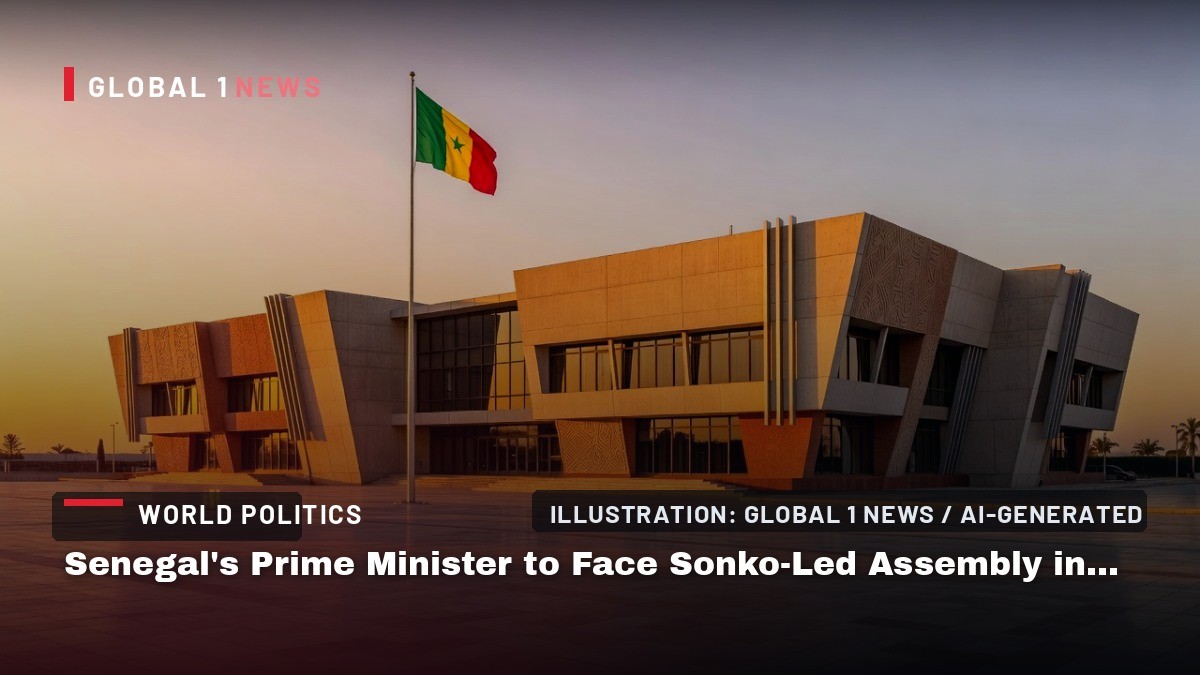
Dakar, Senegal — Senegal’s new Prime Minister, Ahmadou Al Aminou Lô, will deliver his General Policy Declaration (Déclaration de politique générale, DPG) before the National Assembly on Tuesday, September 8, 2026, at 10:00 a.m. The appearance marks the first major constitutional test between President Bassirou Diomaye Faye’s government and a National Assembly now controlled by Ousmane Sonko, the man Faye dismissed as prime minister in May.
The Assembly officially summoned deputies to the plenary session in a communication published Friday, September 4, 2026. A single item sits on the agenda: the Prime Minister’s General Policy Declaration. The Prime Minister’s office confirmed the date the same day via the official Primature Facebook page, according to the Agence de Presse Sénégalaise (APS). The Assembly’s convocation is dated September 3, 2026, and bears the signature of Assembly President Ousmane Sonko, SenTV reported.
The September 8 date was set on September 1 by the Conference of Presidents of the Assembly, operating under Articles 22 and 77 of the Assembly’s internal rules. That decision came after a session initially planned for Tuesday, September 1 at 9:00 a.m. was postponed. A presidential decree had originally set the DPG for September 1, but the Assembly, citing its internal rules, did not endorse that date, according to Le Soleil and APS.
A constitutional exercise with high stakes
The DPG is a major constitutional exercise in Senegal’s parliamentary system. The head of government presents to the nation’s representatives the broad orientations of government action and the priorities of his team, according to RTS Sénégal and SenTV. In ordinary times, the declaration is a procedural milestone. These are not ordinary times.
The political rupture that defines this moment began in May 2026. President Faye dismissed Ousmane Sonko from the premiership, and on May 25, 2026, appointed Ahmadou Al Aminou Lô as prime minister. Lô is not from the historic ranks of the ruling PASTEF party, according to SenTV and BBC Afrique. The very next day, May 26, Sonko was elected president of the National Assembly with 132 votes out of 165, replacing El Malick Ndiaye, who resigned. Sonko, 51, had led the PASTEF list in the legislative elections, winning a large majority of 130 deputies out of 165. He was dismissed as prime minister the previous week, BBC Afrique reported.
For international readers unfamiliar with Senegal’s recent political arc, the situation can be stated plainly: President Faye and Sonko were allies who rode to power together. Faye won the 2024 presidential election, and Sonko, a popular opposition figure, became his prime minister. Analysts quoted by BBC Afrique describe the arrangement as a “diarchy” — Faye held institutional legitimacy from the presidential vote, while Sonko retained much of the popular and activist legitimacy of the PASTEF project. That arrangement has now broken down.
The rupture was widely described as almost inevitable. Analysts told the BBC there was a longstanding contradiction of legitimacy at the top of the state: Faye carried the institutional mandate of a presidential election, while Sonko carried much of the grassroots energy of the movement that made that victory possible. Over time, that contradiction produced open competition inside the executive — what one analyst called a “diarchy” that steadily fed the split. Faye’s decision to dismiss Sonko and appoint a prime minister outside PASTEF’s historic ranks was, in this reading, a strategic move to reclaim full control of the executive — a move that carried the risk of turning the parliamentary majority into an opposition-in-waiting.
Sonko’s election as Assembly president puts him in a position of formidable institutional power. He presides over the chamber where the government must secure support for its legislative agenda. The parliamentary majority, analysts say, is largely loyal to Sonko, not to President Faye or Prime Minister Lô.
The IMF transparency fight as flashpoint
The immediate flashpoint between the government and the Assembly concerns the International Monetary Fund. On September 1, 2026, IMF staff and Senegalese authorities announced a staff-level agreement on a 36-month program under the Extended Credit Facility (ECF) worth about $2.2 billion for 2026-2029. The agreement is subject to approval by IMF management and the Executive Board, according to Ecofin and La Nouvelle Tribune.
The IMF mission that produced the staff-level agreement was in Dakar from August 19 to September 1, led by Mercedes Vera Martin, the IMF mission chief for Senegal, La Nouvelle Tribune reported.
Sonko, now in his role as Assembly president, is demanding “absolute transparency” on the IMF accord. He is calling for the publication of the memorandum of economic and financial policies, or its transmission to deputies. According to La Nouvelle Tribune and Burkina24, Sonko says the diplomatic language of the communiqués gives no detail on Senegal’s commitments — including debt relief or restructuring, fiscal consolidation timing, protections for vulnerable households, and revenue measures.
The context matters. Senegal’s previous IMF program was suspended in September 2024 after irregularities were found in the previous administration’s public-debt data declarations. That triggered an audit of public finances and a derogation procedure whose conclusions still condition approval of the new program, La Nouvelle Tribune reported.
The transparency demand is not merely procedural. It goes to the heart of who controls the narrative of Senegal’s economic governance — and who answers to the public for the terms of international borrowing. For Sonko, the IMF memorandum is a test of whether the Faye government will treat the Assembly as a genuine partner or as a rubber stamp.
Sonko’s insistence on transparency also carries political echoes. He has said the broad orientations contained in the IMF agreement will surface anyway in an eventual amending finance law or in the 2027 draft budget that the government must submit to the Assembly in October 2026, La Nouvelle Tribune reported. That October debate, he argues, will force the government to answer for the commitments it has made — whether the memorandum is published now or not. By demanding the document up front, Sonko positions the Assembly — and himself — as the institution holding the government accountable before the terms are locked in.
What could happen next
Political analysts cited by BBC Afrique have sketched several scenarios, none of them comfortable for the government. Government bills could be blocked in the Assembly, opening the way to institutional crisis. President Faye cannot legally dissolve the Assembly until November 2026, which means he has limited options if the legislature turns hostile. Local elections are approaching, and positioning for the 2029 presidential election is already underway.
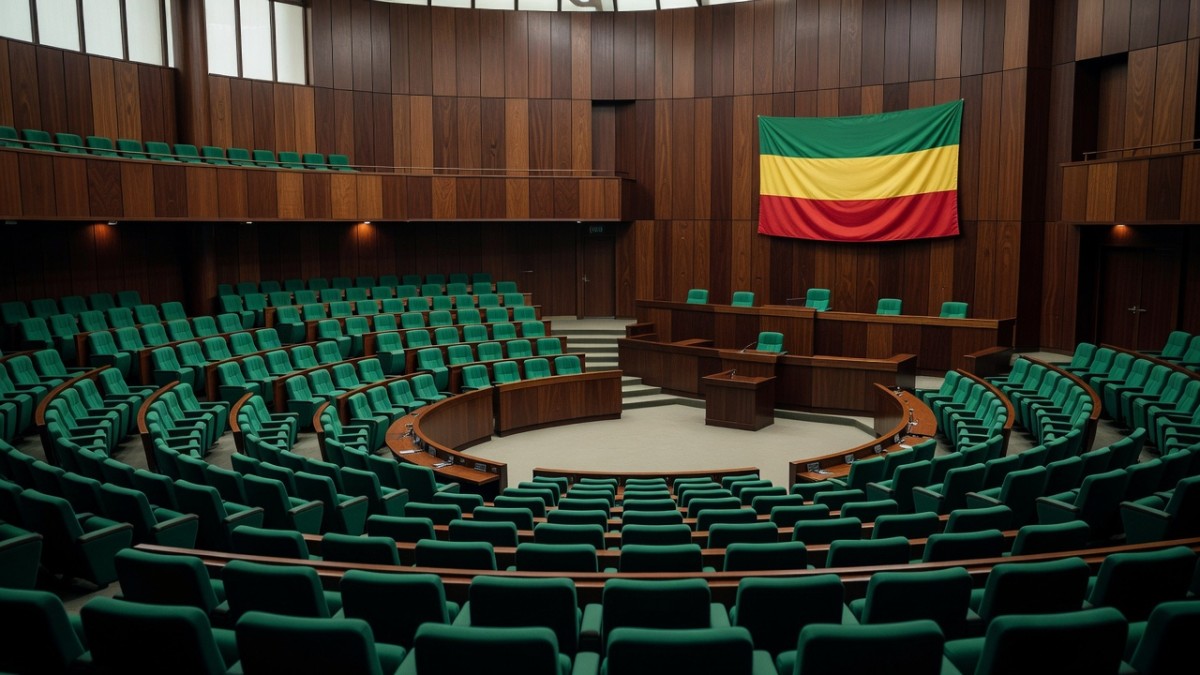
The arithmetic is stark. PASTEF holds 130 of 165 seats in the Assembly. Sonko won the Assembly presidency with 132 votes. If that majority follows Sonko’s lead, the government faces the prospect of legislative paralysis. The DPG on September 8 is the first test of whether Lô can navigate that reality.
Lô’s position is delicate. He is not from the historic ranks of PASTEF, which means he lacks the party’s internal networks and activist base. He answers to President Faye, who appointed him. But he must present his government’s program to an Assembly whose president is the man he replaced — and whose majority is loyal to that man.
The September 8 session will show whether Lô can secure a vote of confidence, and if so, on what terms. It will also show whether Sonko uses his position to press the transparency demands on the IMF accord, or whether he allows the session to proceed as a formality.
Economic backdrop
The political drama unfolds against a significant economic backdrop. Senegal projects 2026 revenue at CFA6,188.8 billion (about $10.97 billion), up 23.4% from 2025. Spending is projected at CFA7,433.9 billion, up 12.4% year-on-year, according to Ecofin.
The numbers reflect a government trying to expand its fiscal space while managing the fallout from the debt-data irregularities that suspended the previous IMF program. The new ECF agreement, if approved, would provide substantial external financing — but it comes with conditions that Sonko says have not been disclosed to the public or to deputies.
On September 2, the National Assembly declared admissible a proposed organic law amending the 2020 organic law on finance laws (LOLF) to tighten oversight of special funds. The move came after the Constitutional Council struck down an earlier version on August 25 as partly outside the legislature’s authority, according to Ecofin and Agence Ecofin. The proposed amendment is another sign that the Assembly intends to assert its oversight powers over government spending.
Sonko opened the second extraordinary session of the year at the Assembly on Tuesday, September 1, 2026, after quorum was confirmed, allAfrica reported. The session is the vehicle for the September 8 DPG.
Senegal’s wider significance
Senegal has long been regarded as one of West Africa’s most stable democracies. It has never experienced a military coup, and power has changed hands through elections since independence. The current political test is being watched beyond Senegal’s borders, in a region where democratic backsliding and military takeovers have become more common in recent years.
The stakes are not simply about one prime minister’s policy speech. They are about whether Senegal’s institutions can absorb a rupture between a president and his former prime minister without descending into paralysis. The Constitution provides mechanisms — the DPG, votes of confidence, dissolution after a waiting period — but those mechanisms require actors willing to use them with restraint.
For now, the immediate question is simpler: Can Ahmadou Al Aminou Lô stand before the National Assembly on Tuesday and present a government program that commands respect, if not enthusiasm, from a chamber led by his predecessor? The answer will shape Senegal’s political trajectory for months to come.
The September 8 session begins at 10:00 a.m. local time. Deputies have been summoned. The agenda has one item. The country will be watching.
By Jessica Ali, Staff Writer
This article was produced with AI-assisted research and editorial support. Sources: Agence de Presse Sénégalaise (APS), Le Soleil, RTS Sénégal, SenTV, BBC Afrique, Ecofin Agency.
What's Your Reaction?
 Like
0
Like
0
 Dislike
0
Dislike
0
 Love
0
Love
0
 Funny
0
Funny
0
 Wow
0
Wow
0
 Sad
0
Sad
0
 Angry
0
Angry
0

Editor-in-Chief at Global1.News. Atlanta-based journalist who cuts through the BS and tells it like it is. Lead anchor, host, and the voice you hear when the spin stops and the truth starts.










Comments (0)