
Hezbollah acknowledges ownership of explosives seized by Lebanese authorities
In a rare public admission, Hezbollah confirmed that a cache of high‑explosive material seized by Lebanese security forces last week was owned by the group and earmarked for use against Israel.
In a rare public admission, Hezbollah confirmed that a cache of high‑explosive material seized by Lebanese security forces last week was owned by the group and earmarked for use against Israel. The acknowledgement follows a series of arrests and seizures that have drawn the Lebanese government’s firm promise to clamp down on weapons held outside state authority. As the nation grapples with the fallout of a massive Israeli operation that detonated hundreds of civilian pagers and radios in Beirut in September 2025, the latest episode underscores the fragile balance between internal security, regional militancy and the human cost of an ongoing conflict.
Hezbollah’s public admission and its immediate context
Hezbollah’s spokesperson, MP Hassan FadlAllah, told national television that the organization had proactively contacted security and judicial authorities after the vehicle carrying the explosives was stopped. He asserted that “the vehicle and its cargo belong to the resistance,” framing the seizure as a misunderstanding rather than a covert operation. The statement was delivered shortly after Lebanese Prime Minister Nawaf Salam pledged to take “firm action against any weapons held, transported or used outside the framework of state authority.”
The admission came amid a broader crackdown that began at the start of October, when Lebanese forces intercepted three shipments of explosives moving from eastern Lebanon toward the Syrian border. The latest seizure involved two men, identified by a judicial source as suspected Hezbollah affiliates, who were apprehended in the Dhahr al‑Baidar area on the international road linking Beirut to the Syrian frontier. Their capture highlights the increasing visibility of Hezbollah’s logistical networks within Lebanon’s borders.
The seized explosives: composition and intended use
According to the judicial source cited by the Middle East Monitor, the confiscated cargo weighed a total of 500 kilogrammes, split evenly between TNT and the high‑explosive plastic C4. Both materials are capable of producing devastating blasts, and their combined weight suggests a capacity to inflict significant damage on fortified targets. The group described the explosives as “capabilities” used against Israel, indicating that the shipment was part of a broader operational plan rather than a one‑off cache.
Prime Minister Salam’s confirmation that “hundreds of kilogrammes of explosives” had been seized underscores the scale of the operation. While the exact number of shipments intercepted since early October is not disclosed, the reference to three separate seizures points to a sustained flow of materiel that could have been used in a coordinated campaign against Israeli positions.
Legal and security implications for Lebanon
Salam’s declaration that the government would pursue a thorough investigation and expand its scope to identify “everyone involved in what he described as a criminal operation” signals a shift toward treating Hezbollah’s arms movements as a matter of national security rather than a purely political issue. By labeling the transport of explosives as a “criminal operation,” the prime minister is framing the seizure within Lebanon’s legal system, potentially opening the door to prosecutions that could involve both the detained men and senior officials who authorized the shipment.
The arrests also raise questions about the chain of command within Hezbollah. The fact that the group felt compelled to notify authorities after the vehicle was stopped suggests an awareness of the legal risks and a desire to avoid a direct confrontation with the Lebanese state. However, the demand for the immediate release of the detainees and the return of the explosives indicates that Hezbollah still expects to retain control over its assets, setting up a potential standoff between the militia and the government.
Human cost of the ongoing conflict
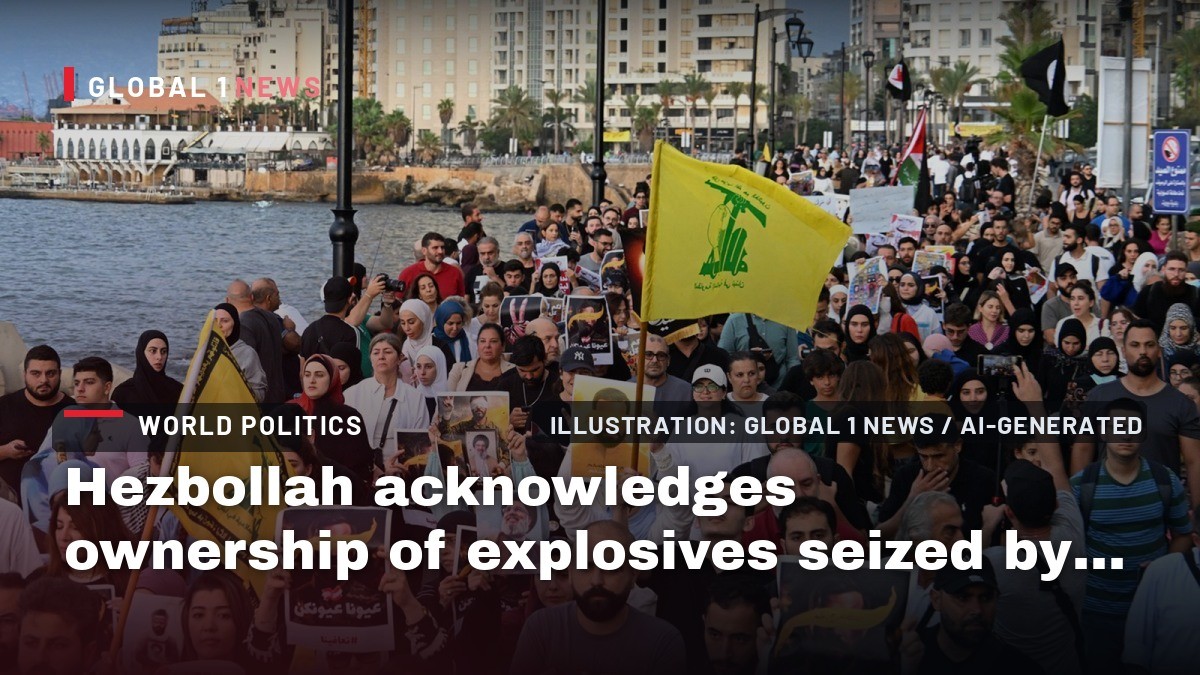
The seizure occurs against the backdrop of a tragic anniversary. Earlier this year, Hezbollah supporters gathered in the coastal district of Ain Al Mraiseh to commemorate those who perished during the Israeli operation on September 17, 2025, which detonated hundreds of civilian pagers and radios in Beirut. The memory of that attack, which disrupted communication networks and claimed civilian lives, remains fresh in the collective psyche of Lebanese communities, especially in areas that have traditionally hosted Hezbollah sympathizers.
Each kilogram of TNT or C4 represents not only a tactical asset but also a potential source of civilian casualties if deployed in densely populated zones. The human dimension of these weapons—whether they are used in cross‑border strikes or in internal confrontations—cannot be divorced from the broader narrative of suffering that has characterized the Lebanese experience of the Israel‑Hezbollah conflict for decades.
Regional dynamics and the prospect of escalation
The revelation that the explosives were intended for use against Israel adds a new layer to the already volatile security environment along Lebanon’s southern border. While the article does not detail any immediate Israeli response, the existence of a sizable cache signals that Hezbollah continues to prepare for offensive operations, despite the heavy toll of previous confrontations.
Moreover, the seizure of shipments traveling from eastern Lebanon toward the Syrian border hints at a logistical corridor that may involve Syrian actors or supply lines extending into Iran’s regional network. The international road between Beirut and the Syrian frontier has long been a conduit for the movement of weapons, and the recent interdictions could disrupt established routes, potentially prompting Hezbollah to seek alternative pathways that may be more difficult for Lebanese authorities to monitor.
International law and the question of state sovereignty
Prime Minister Salam’s insistence on acting against weapons “held outside the authority of the state” invokes the principle of state sovereignty under international law. By framing the seizure as a response to an illegal possession of explosives, the Lebanese government aligns its actions with obligations to prevent non‑state actors from conducting armed operations that could destabilize the region.
Hezbollah’s claim that the explosives belong to the “resistance” reflects a competing narrative that frames its armed activities as a legitimate struggle against occupation. This legal dichotomy—between a state’s monopoly on the use of force and a militia’s self‑perceived right to armed resistance—lies at the heart of Lebanon’s internal tensions and complicates any diplomatic efforts to resolve the broader Israeli‑Palestinian conflict.
Looking ahead: potential outcomes and policy considerations
The immediate future will likely hinge on how the Lebanese judiciary handles the detained men and the seized explosives. If the government proceeds with prosecutions, it could set a precedent for curbing militia‑controlled arsenals, thereby strengthening state authority. Conversely, a negotiated release of the detainees and the return of the explosives could embolden Hezbollah to continue its clandestine procurement activities.
For the international community, the incident underscores the need for vigilant monitoring of arms flows in the Levant. While the article does not mention external actors, the composition of the explosives—particularly the presence of C4, a material often supplied through sophisticated supply chains—suggests that regional powers may be involved in sustaining Hezbollah’s capabilities. Continued diplomatic pressure on all parties to respect Lebanon’s sovereignty and to prioritize civilian safety will be essential in preventing further escalation.
This article was produced with AI-assisted research and editorial support. Reporting is based on the source material cited below. Sources: Middle East Monitor; middleeastmonitor.com; Global1.News (16 October 2026).
By Fatima Al-Rashid, Staff Writer
What's Your Reaction?
 Like
0
Like
0
 Dislike
0
Dislike
0
 Love
0
Love
0
 Funny
0
Funny
0
 Wow
0
Wow
0
 Sad
0
Sad
0
 Angry
0
Angry
0

Gulf/MENA Correspondent at Global1.News. Based in Doha, covering Gulf politics, energy markets, diplomacy, and development across the Middle East and North Africa. Tracks the economic transformation of the Gulf states.













Comments (0)