
Samsung Just Raised Foundry Prices 15% — and the AI Buildout Just Met Its First Real Price Wall
Samsung raised foundry prices up to 15% on new orders as AI demand fills 4nm capacity. With the sub-5nm duopoly sold out and both members booked, silicon inflation is structural - here's what it means for hardware buyers and hosting providers.
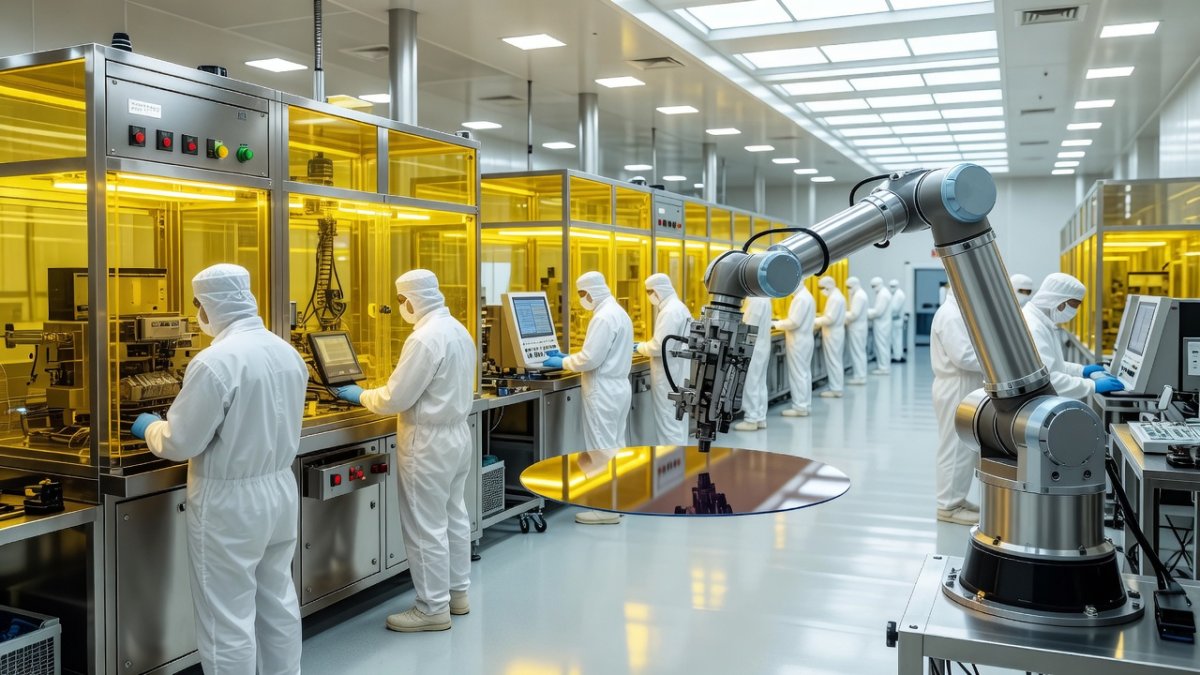
Samsung Just Raised Foundry Prices 15% — and the AI Buildout Just Met Its First Real Price Wall
Let me tell you something that's been sitting with me since Wednesday. Samsung Electronics — the foundry that has spent a decade discounting its way into second place — just raised prices on new advanced chip orders by up to 15 percent. And most of the tech press basically shrugged. "Samsung raises chip prices, AI demand tightens." Move along, nothing to see.
I'm here to tell you that shrug is wrong. This is the first real price wall the AI buildout has hit, and it tells you more about where this whole cycle is going than any capex number out of a hyperscaler earnings call. Samsung didn't raise prices because it suddenly got good. It raised prices because it can. And when a price-taker becomes a price-setter, that's not a blip. That's a regime change.
Let Me Break Down What Actually Happened
Reuters reported Wednesday that Samsung raised prices for new foundry orders by up to 15 percent, citing two people familiar with the matter. The details matter, so let's be precise. On the 4-nanometer line — SF4, the node that makes AI accelerators, memory controllers, and a pile of leading-edge logic — customers in China and the United States are facing increases of 10 to 15 percent. Taiwanese customers, who have other options, are getting a smaller 5 to 10 percent. The 5-nanometer line went up 10 to 15 percent across the board. Even the old 8-nanometer node, the workhorse for power chips and lower-complexity logic, rose close to 10 percent.
And Samsung isn't even the leader. TrendForce estimates Samsung Foundry pulled in about $3.2 billion in revenue in Q1 2026 — roughly 6.5 percent of the global foundry market against TSMC's 72 percent. A company with 6.5 percent share is raising prices like it owns the market — that tells you how tight this market actually is.
The utilization numbers tell the same story. Chosun Biz, via TrendForce, reported Samsung Foundry's overall utilization has recovered to around 70 to 80 percent. Two years ago, the key 4nm and 5nm lines were running below 50 percent. Samsung was begging for customers. Now its Pyeongtaek SF4 line — the one making logic for Qualcomm alongside Samsung's own HBM base dies — has been at full capacity since late last year.
The Part Nobody's Talking About — Why the Discount King Suddenly Has Pricing Power
Here's the part of this story that should scare you a little. Samsung did not suddenly leapfrog TSMC in technology. It did not suddenly become the better manufacturer. It raised prices for one reason and one reason only: capacity. There are exactly two foundries on Earth qualified to make leading-edge chips at meaningful volume — TSMC and Samsung. Intel Foundry is trying, but it's smaller and newer, and nobody is betting their AI roadmap on it yet.
TSMC's leading-edge lines are booked out by AI accelerator orders well into the future, and TSMC itself notified customers of 5 to 10 percent increases across all sub-5nm nodes starting in January. So when the market leader is both raising prices and refusing new volume, the demand goes to the only other door in town. And when demand is inelastic — AI labs and chip designers can't just wait a year for capacity to open up — and there's exactly one alternative supplier, that supplier holds every card at the table. The analysis this week put it perfectly: a duopoly with multi-year lead times on new capacity does not need to compete on price when both members are sold out at once.
You can see the pricing power in the regional split. Chinese customers are absorbing the steepest hikes — 10 to 15 percent — because export controls have locked them out of TSMC's most advanced nodes. Samsung is one of the only remaining paths to sub-5nm logic they can actually buy. They're not happy about it. They're paying it anyway — that's what inelastic demand looks like.
The Ripple Effect — This Was Never Just About GPUs
Here's where I want to widen the lens. The foundry story is not a GPU story — it's an everything-with-a-transistor story. TrendForce says foundries are reallocating capacity to AI-adjacent products — power-management chips, power discrete devices, silicon interposers, photonic integrated circuits, optical communications components — and cutting lower-margin stuff like image sensors and display-driver ICs to make room.
Look at the mature-node numbers. Average utilization across the world's ten largest foundries' 8-inch fabs hit 88 percent this year and is headed to 90 percent in the second half. Prices on 8-inch wafers are up 5 to 15 percent from Q1 to Q2. Global 8-inch capacity is actually shrinking 2.4 percent year over year as TSMC and Samsung retire old lines. And here's the kicker: power-management ICs and power devices — the chips that manage voltage on a server motherboard — are heavily dependent on 8-inch manufacturing, and their lead times are already stretching.
Even the memory side is fused to foundry now. Samsung's HBM4 uses a logic base die manufactured on its own 4nm line. HBM4E too. When one company's advanced node is making both the memory base dies the AI industry needs and the logic chips for external customers, there is no slack in that system.
What a 15 Percent Wafer Hike Actually Does to Your Bill
Now let me be honest about the passthrough, because I've seen too many people do the lazy math: wafer costs 15 percent more, so tokens cost 15 percent more. That's not how it works. A wafer is one input into a finished accelerator. You've got the HBM priced separately, the advanced packaging — CoWoS-style interposers — assembly and test, and then the whole thing gets amortized across power, cooling, networking, and financing before it produces a single token.
So a 10 to 15 percent wafer hike shows up, with a lag, as a smaller increase in one line item. Some of it gets absorbed by chip designers' margins. Some gets passed to cloud providers. Some gets passed to you. But here's the thing — this hike isn't happening in a vacuum. HBM is tight and priced separately. Packaging is tight. Power is tight. Cooling is tight. When every layer of the stack is under pressure at the same time, the compounding effect is real even if each individual line item only moves a few percent. Efficiency gains in models don't cancel hardware cost inflation. They just make the software side cheaper while the physical side keeps getting more expensive.
What This Means for Independent Hosting Providers
If you're running a hosting business, a colo, or any operation that buys server hardware, here's what I'd be doing this quarter:
First — watch utilization numbers, not press releases. Samsung's foundry pricing flipped from discounting to hiking when utilization crossed that 70 percent line. Utilization is the leading indicator for silicon pricing. When you see utilization climbing at a fab, prices follow within a quarter or two. Plan accordingly.
Second — lock your hardware orders now. Foundry price hikes roll into server quotes with a lag of a few months, but once they're in, they're in. If you're planning a refresh, get the purchase order signed before the next round of increases gets announced. Quotes have a shelf life measured in weeks right now.
Third — price your own services for hardware inflation. The 15 percent hike announced this week shows up in your next server refresh, not your current bill. But it will show up. If your pricing model assumes silicon gets cheaper every year, you're building on an assumption that died around the time Samsung started saying no to customers.
Fourth — keep an eye on the secondary market. When hyperscalers refresh and overbuild corrections hit, off-lease enterprise gear becomes a genuine hedge against new-hardware inflation. That market is going to matter more over the next 18 months, not less.
Fifth — don't buy the "AI deflation" narrative. Every layer of this stack is pricing up simultaneously. The physical cost of AI is going up even as the models get more efficient. Budget like silicon inflation is permanent, because with two suppliers and both of them sold out, it basically is.
The Structural Reality — This Pricing Power Isn't Going Anywhere
Why do I keep saying this isn't a blip? Because the numbers say the demand isn't cooling. TrendForce raised its 2026 AI server shipment growth forecast from 28 percent to nearly 31 percent in August, and it projects the nine major cloud providers will raise capex about 90 percent year over year. Foundry revenue overall is set to grow 24.8 percent to about $218.8 billion in 2026. TSMC said 7nm-and-below processes made up 77 percent of its wafer revenue last quarter, with high-performance computing alone at 66 percent, up 20 percent quarter over quarter. Its CEO C.C. Wei says AI demand is strong and the company keeps raising capex.
And Samsung is signing long-term deals like it knows the party isn't ending. There's the Broadcom memorandum covering memory, foundry, and advanced packaging with an estimated $200 billion in collaboration through 2030. There's the 22.8 trillion won manufacturing agreement running through 2033, with Elon Musk saying Samsung's Taylor, Texas plant will build Tesla's next-generation AI6 processor. You don't sign ten-year deals if you think utilization is about to crater.
New capacity is still years out. Samsung is ramping second-generation 2nm, but 2nm is early and the yield curve is long. Nobody is adding leading-edge capacity fast enough to change this duopoly dynamic in this cycle. Both members of the duopoly are sold out. That's not a shortage — that's a pricing regime.
The Bottom Line
For a decade, Samsung discounted to buy market share. It ate margin, took the scraps TSMC didn't want, and smiled through every quarterly report where foundry dragged down the company. Now it's raising prices 15 percent because it doesn't have to buy anything anymore. The customers come to it. That's the single clearest signal I've seen that the AI buildout has moved from "build whatever you can" to "pay whatever it takes."
So plan your hardware budget like silicon inflation is permanent. Because when there are two companies on Earth that can make the advanced stuff, both are sold out, and one of them just discovered it can raise prices and watch the customers line up anyway — that's not a market cycle. That's the new cost of doing business. And the sooner you price your own business for it, the less it's going to hurt.
— Allan Ali, Founder
This article was produced with AI-assisted research and editorial support. Sources: Reuters (Aug 19, 2026), TrendForce, Tech Wire Asia, Counterpoint Research.
What's Your Reaction?
 Like
0
Like
0
 Dislike
0
Dislike
0
 Love
0
Love
0
 Funny
0
Funny
0
 Wow
0
Wow
0
 Sad
0
Sad
0
 Angry
0
Angry
0

Publisher of Global1.News. Automation architect, systems builder, and the guy making sure the truth gets published.












Comments (0)