
Russia Sentences Georgy Pirogov to 23 Years for Alleged Spying for Poland
Russia's FSB says the Moscow City Court sentenced Georgy Pirogov to 23 years for allegedly spying for Poland's military intelligence. The verdict, announced Friday, comes as Russian treason convictions surge to record levels.
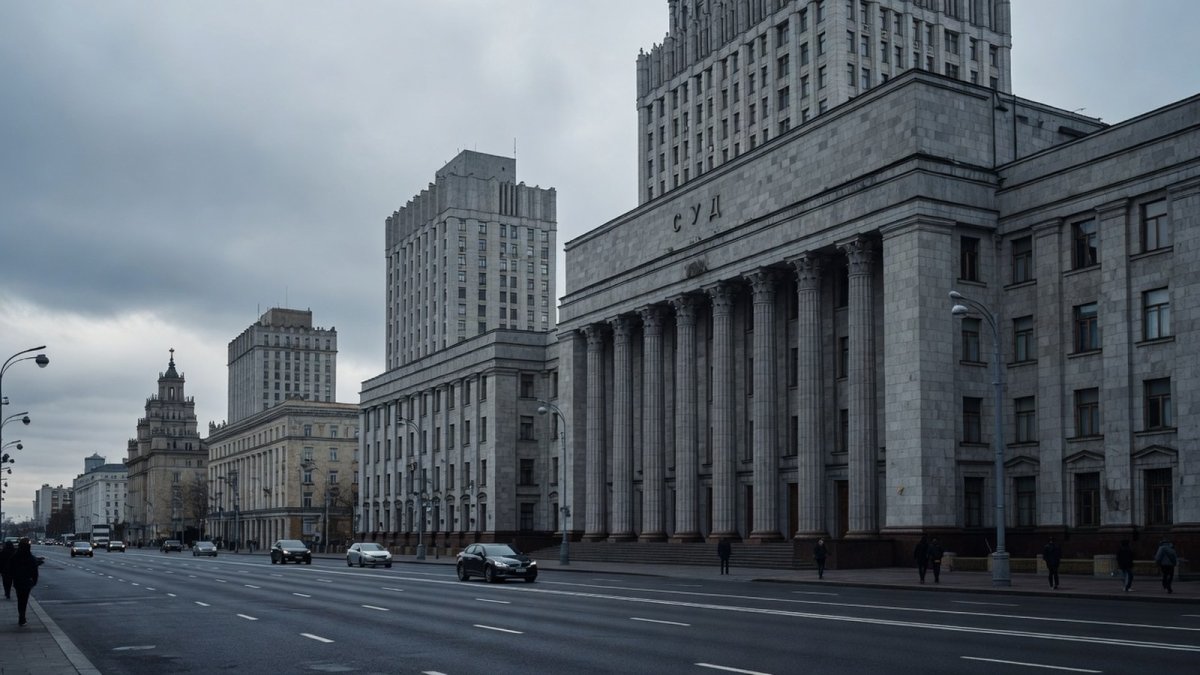
Russia’s Federal Security Service (FSB) announced on Friday that the Moscow City Court has sentenced Georgy Pirogov, a Moscow region resident, to 23 years in a high-security penal colony for high treason, alleging he spied for Poland’s military intelligence. The FSB also stated that Pirogov was fined 800,000 rubles (approximately $9,500). The announcement, carried by state media including TASS, comes more than a month after the verdict was handed down in mid-July, a delay that analysts suggest may be tied to broader geopolitical signaling.
Russia Sentences Georgy Pirogov to 23 Years for Alleged Spying for Poland, as Treason Convictions Surge to Record Levels
Moscow, Russia — The Federal Security Service confirmed on Friday that Georgy Pirogov, an industrial climber from the Moscow region, was convicted of high treason under Article 275 of the Russian Criminal Code. The Moscow City Court imposed the sentence in mid-July, but the FSB only publicized the verdict this week, according to a statement carried by TASS. Pirogov, who left Russia in April 2022 following the full-scale invasion of Ukraine, was arrested under circumstances that remain unexplained, with neither Russian nor Uzbek authorities clarifying how he was detained in Uzbekistan and transferred to Moscow’s Matrosskaya Tishina pre-trial detention facility in July 2024.
The Case Against Georgy Pirogov
According to the FSB’s official account, Pirogov initiated contact with the Military Intelligence Service of Poland’s National Defense Ministry after relocating to Georgia, where he worked as a high-altitude construction worker. The security service claims that Polish intelligence tasked him with collecting classified information about advanced Russian weapons systems, specifically missile systems used in the war in Ukraine. The FSB alleges that Pirogov leveraged contacts among Russian defense-sector workers to obtain classified data on the production and deployment of these missile systems, as well as personal information about individuals with access to state secrets.
The FSB also accused Pirogov of transferring cryptocurrency to the Ukrainian military and of purchasing and delivering ammunition from Poland to Ukraine. These allegations, however, cannot be independently verified. The FSB published video footage of Pirogov’s interrogation, in which he admitted to working with Polish intelligence, as well as footage of him being escorted into court. Neither the FSB’s account nor Pirogov’s defense position has been made available for independent scrutiny, and the Moscow City Court’s proceedings were not open to international observers.
The Mystery of the Detention in Uzbekistan
The circumstances surrounding Pirogov’s detention remain one of the most opaque elements of the case. Independent outlet Mediazona first reported the verdict in mid-July, citing an anonymous source, but the FSB’s Friday announcement added no new details about how Pirogov was apprehended. According to verified facts, Pirogov traveled to Kungrad, Uzbekistan, in July 2024 for work as an industrial climber. Days later, he reappeared inside Moscow’s Matrosskaya Tishina detention facility. Neither Russian nor Uzbek authorities have explained how he was detained or transferred across international borders.
This pattern is not unfamiliar to analysts tracking Russian security operations. In recent years, Russians living abroad have been detained in third countries — Uzbekistan, Georgia, and Kazakhstan among the most-cited transit routes — and returned to Russia without public explanation. The FSB does not disclose how these transfers are executed, and foreign governments rarely comment on them. The lack of transparency in Pirogov’s case has led human rights observers to question whether Russian security services are operating with impunity in allied states, though no evidence has emerged to confirm or deny such claims.
What the FSB Alleges
The FSB’s statement, as reported by TASS, outlines a detailed espionage operation. Pirogov is alleged to have established contact with Polish military intelligence voluntarily. The FSB claims he was tasked with gathering classified information about Russian missile systems, including their production schedules and deployment locations. The security service further alleges that Pirogov used his contacts in Russia’s defense industry to access sensitive data, and that he collected personal details of defense workers with clearance to state secrets.
In addition to espionage, the FSB accused Pirogov of financially supporting the Ukrainian military by transferring cryptocurrency, and of physically transporting ammunition from Poland to Ukraine. These claims, if true, would represent a significant escalation in the scope of activities attributed to a single individual. However, the FSB has not provided documentary evidence, such as transaction records or customs logs, to substantiate these allegations. The interrogation video published by the FSB shows Pirogov making admissions, but such footage is widely understood to be of limited evidentiary value, given the coercive environment of Russian pre-trial detention.
The Kremlin’s Expanding Treason Apparatus
Pirogov’s conviction is part of a broader trend that has seen Russia’s treason prosecutions reach unprecedented levels. According to the human rights group Department One, as reported by Meduza in June, Russian courts received 143 state security cases in the first quarter of 2026, resolving 62 of them within the quarter. This compares to 125 cases filed and 32 resolved in the first quarter of 2025. Courts handed down at least 107 verdicts in Q1 2026, convicting 110 people; March alone produced 48 verdicts, the highest monthly total on record. Treason accounted for 90% of convictions, with an average sentence of 15 years and five months — roughly two defendants convicted per working day.
This surge follows legislative changes enacted after the February 2022 invasion of Ukraine. Russian lawmakers broadened the definitions of treason and espionage, added criminal liability for “confidential cooperation” with foreign states, and transferred investigations to regional FSB offices. In the first half of 2025, 151 people were sentenced for treason, espionage, and confidential cooperation with foreigners, about double the prior year, according to istories.media, citing Judicial Department data. Before 2022, such cases numbered in the dozens annually. The expansion of the treason apparatus has created a climate of fear among Russians both at home and abroad, with the FSB increasingly targeting individuals who have left the country.

A Shadow War With NATO in Focus
The FSB’s decision to publicize Pirogov’s sentence on Friday comes just one day after Polish Prime Minister Donald Tusk announced that Poland had arrested a Russian national on August 7, allegedly hired by Moscow to kill a Ukrainian-American citizen in Warsaw. Tusk called it the first case of an alleged assassination of a US citizen on Russia’s orders on the territory of a NATO country. These two events are separate and should not be conflated, but their proximity is notable. Analysts suggest the timing could indicate a deliberate messaging strategy by Moscow, signaling that Russia views Polish intelligence activities as a direct threat warranting public exposure.
The Pirogov case, with its allegations of Polish military intelligence involvement, fits into a broader narrative of escalating Russian-Polish tensions. Poland has been a key transit hub for Western military aid to Ukraine, and Russian state media frequently portrays Warsaw as an aggressive NATO outpost. The FSB’s announcement, coming the day after Tusk’s statement, could be an attempt to shift the narrative and portray Poland as the aggressor in the intelligence sphere. However, without independent verification of the FSB’s claims, the full context of Pirogov’s alleged activities remains unclear.
What It Means for Russians at Home and Abroad
For Russians living abroad, the Pirogov case serves as a stark warning. The unexplained detention in Uzbekistan and subsequent transfer to Moscow demonstrates that the FSB’s reach extends beyond Russia’s borders, even into countries that are not formal allies. Russians who left the country after the invasion of Ukraine are increasingly vulnerable to such operations, particularly if they have any past connections to the defense industry or military. The lack of transparency around these detentions makes it difficult for individuals to assess their own risk, and human rights organizations have documented numerous cases of Russians being returned to Russia from third countries under murky circumstances.
Inside Russia, the surge in treason convictions has created a chilling effect. The broadening of legal definitions means that even indirect contact with foreign nationals, or the sharing of publicly available information, can be construed as treason. The average sentence of 15 years and five months, with two defendants convicted per working day, underscores the scale of the crackdown. For ordinary Russians, the message is clear: any interaction with foreign entities, particularly those from NATO countries, carries significant risk.
Analysis and Implications
The Pirogov case, while individually opaque, fits into a larger pattern of Russian security services using treason prosecutions to deter dissent and foreign contact. The delay between the mid-July verdict and the Friday announcement is itself noteworthy. Analysts suggest this could indicate that the FSB was waiting for a politically opportune moment to release the information, possibly to coincide with the Warsaw assassination-arrest news. The timing could also reflect internal bureaucratic processes, but the juxtaposition of the two announcements is unlikely to be coincidental.
The broader implications for Russia’s relationship with NATO are significant. The Pirogov case, with its allegations of Polish intelligence recruiting Russian nationals, and the Warsaw case, with its allegations of Russian assassination plots, point to an escalating intelligence war between Moscow and NATO member states. This shadow conflict operates below the threshold of open military engagement but carries real consequences for individuals caught in its crosshairs. For the international community, the lack of transparency in cases like Pirogov’s raises serious concerns about due process and the rule of law in Russia’s judicial system.
Looking ahead, the trend of rising treason convictions shows no signs of abating. The Russian legal system, under pressure from the Kremlin, continues to process state security cases at record speed, with courts resolving nearly half of all filed cases within a single quarter. The FSB’s willingness to operate across international borders, as demonstrated in the Pirogov case, suggests that Russians abroad will remain targets of surveillance and potential detention. For the international community, the challenge will be to respond to these developments without escalating tensions further, while still holding Russia accountable for its actions.
By Irina Volkov, Staff Writer
This article was produced with AI-assisted research and editorial support. Sources: Moscow Times, TASS, Meduza, Mediazona, Reuters, Department One.
What's Your Reaction?
 Like
0
Like
0
 Dislike
0
Dislike
0
 Love
0
Love
0
 Funny
0
Funny
0
 Wow
0
Wow
0
 Sad
0
Sad
0
 Angry
0
Angry
0
Russia/Eastern Europe Correspondent at Global1.News. Covering Russian politics, energy, security, and the shifting dynamics of the post-Soviet space. Provides clear-eyed analysis on one of the world's most opaque regions.















Comments (0)