
Peru's Supreme Court Ratifies Industrial Fishing Ban in Protected Waters
On January 20, 2026, Peru’s Supreme Court completed formal notification of a ruling that will echo through the Pacific for decades: industrial fishing is definitively banned inside the nation’s protected natural areas, a decision that rejected a powerful industry guild’s two-year legal assault and reaffirmed the conservation mandate of the Paracas National Reserve. The sentence, dated November 7, 2025, is final and unappealable, closing a case that began with a January 2024 “
On January 20, 2026, Peru’s Supreme Court completed formal notification of a ruling that will echo through the Pacific for decades: industrial fishing is definitively banned inside the nation’s protected natural areas, a decision that rejected a powerful industry guild’s two-year legal assault and reaffirmed the conservation mandate of the Paracas National Reserve. The sentence, dated November 7, 2025, is final and unappealable, closing a case that began with a January 2024 “acción popular” filed by the Sociedad Nacional de Pesquería (SNP) against Sernanp, the state’s protected areas service. For the 1,500 species that call Paracas home—and the artisanal fishers who depend on its bounty—the ruling is a lifeline; for the region’s industrial fleet, it is a wall.
Peru's Supreme Court Ratifies Industrial Fishing Ban in Protected Waters
Lima, Peru – August 15, 2026 — The Humboldt Current, a cold, nutrient-rich river of life that surges along Peru’s coast, has long been a battleground between conservation and extraction. That battle reached a decisive apex this year when the Supreme Court’s Sala de Derecho Constitucional y Social Permanente confirmed, without reservation, that industrial fishing vessels have no place inside the country’s protected natural areas (ANP). The ruling, which formally reached all parties in January 2026, dismantles the SNP’s argument that economic activity should be “compatibilized” with environmental protection, and it hands Sernanp a legal shield of unprecedented strength. As Al Jazeera English documented in November 2025—when reporter Mariana Sanchez filed from Paracas as the court prepared to rule—the stakes were existential: a reserve that has thrived for half a century, a scallop bank that feeds thousands, and a legal framework that now says, unequivocally, that industrial extraction is incompatible with biodiversity protection.
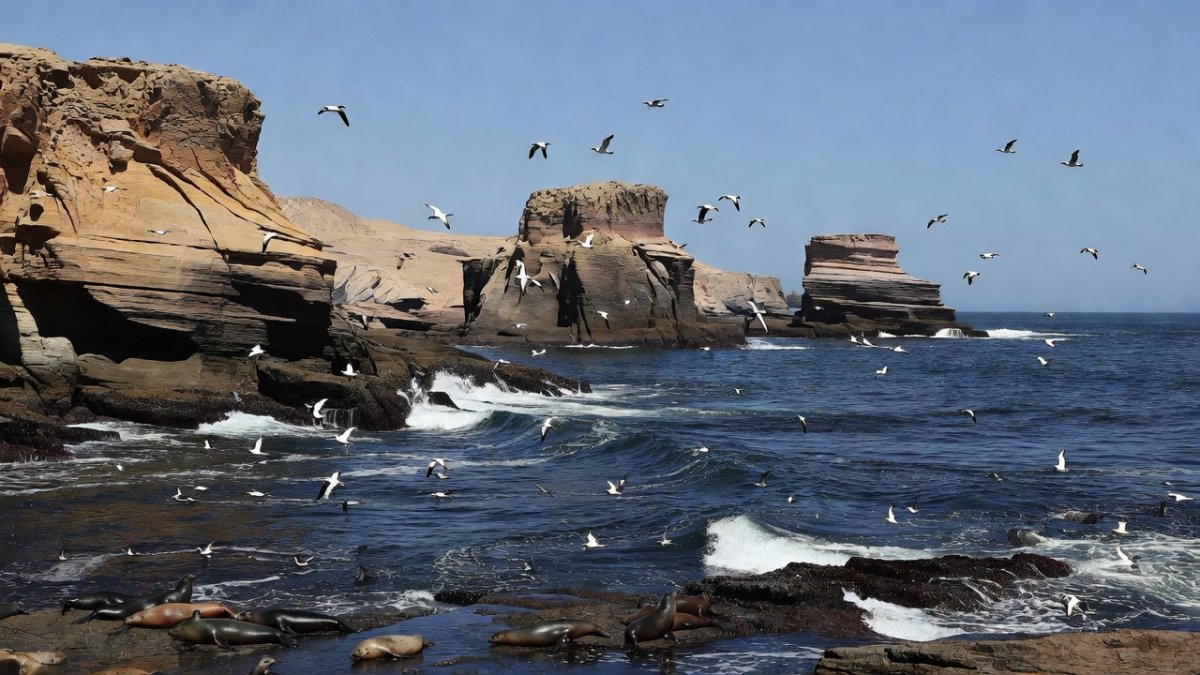
Peru's Supreme Court Draws the Line in the Humboldt Current
The ruling is not a novelty in Peruvian law; it is a reaffirmation of a prohibition that has existed since 2001, embedded in the Reglamento de la Ley de Áreas Naturales Protegidas (Ley 26834). The 2021 directive—Directiva N.° 006-2021-SERNANP-DGANP, specifically literal c) of general disposition 6.2—merely restated what was already on the books: large-scale extraction of hydrobiological resources, marine or continental, is prohibited inside all ANPs, regardless of their category. The Supreme Court’s decision, therefore, is less a new rule than a forceful confirmation of an old one, delivered in the face of a well-funded challenge from Peru’s most powerful industrial fishing guild. The SNP, led by president Jessica Luna, had sought retroactive nullification of that directive, arguing that it violated constitutional principles, that it was not fully published in El Peruano, and that environmental rules should allow for larger-scale fishing in certain zones under Sernanp’s control. The court rejected every one of those arguments, and in doing so, it drew a line in the Humboldt Current that industrial fleets cannot cross.
The human stakes are immense. Paracas National Reserve, created on September 25, 1975, in the Pisco and Ica provinces of the Ica region, is Peru’s second protected natural area, spanning 335,000 hectares of marine-coastal ecosystems. Its cold, nutrient-rich waters, driven by the Humboldt Current, support around 1,500 animal species: 216 bird species, including guano birds and Humboldt penguins; 36 mammals, from sea lions to dolphins, whales, and otters; 10 reptiles; 168 fish species; and a vast invertebrate base at the start of the trophic chain. The Bahía de Independencia holds Peru’s main scallop bank—conchas de abanico—alongside crabs, snails, octopus, sea urchins, and other mollusks. The reserve also protects archaeological remains of the Paracas culture, making it a site of both ecological and historical significance. Industrial fishing, Sernanp chief José Carlos Nieto argued, would reduce food availability for birds and mammals, harming reproduction and population recovery. Only artisanal anchoveta harvesting is allowed, and only in set periods.
The Two-Year Legal War Over Paracas
The legal battle began in January 2024, when the SNP filed its “acción popular” against Sernanp, seeking to overturn the 2021 directive that prohibited industrial fishing inside all protected areas. The guild’s lawyer, Samuel Abad Yupanqui, argued that the directive violated constitutional principles, that it wasn’t fully published in the official gazette, and that environmental rules should “compatibilize” economic activity with conservation—a framing that would have allowed industrial-scale fishing in some zones, subject to Sernanp oversight. The SNP also claimed historical precedent, asserting that it had fished in Paracas before the reserve existed, citing evidence from 1970-1974. Eduardo Ferreyros, the SNP’s board president, signed an October 2023 letter to Sernanp claiming that “fishing has operated traditionally in this zone for the last 45 years.” Sernanp’s response was blunt: in 36 years and four master-plan updates, there were no requests to recognize industrial fishing inside Paracas. The claim of tradition, the state argued, was a fabrication designed to legitimize extraction that had never been sanctioned.
The first instance court, the Segunda Sala Constitucional de la Corte Superior de Lima, rejected the SNP’s demand on May 30, 2024. The guild appealed, and the case climbed to the Supreme Court’s Sala de Derecho Constitucional y Social Permanente, which confirmed the ruling on November 7, 2025. Formal notification to all parties was completed in January 2026, making the decision definitive and inapplicable—no further appeal is possible. The court’s key line cut to the heart of the matter: “Que se permita el aprovechamiento comercial no implica autorización para la extracción industrial de recursos hidrobiológicos”—commercial use allowed in direct-use zones is prioritized for local communities, not industrial fleets. The court examined articles 21.b, 22.f, and 23.d of Ley 26834, concluding that the purpose of protected areas is to protect biodiversity and prevent the extinction of flora and fauna, especially endangered species. Industrial fishing, the court held, contradicts this purpose. The court also validated the publication process: Resolución Presidencial N.° 198-2021-SERNANP was published in El Peruano on September 28, 2021, and the technical directive was posted on the institutional portal.
A 335,000-Hectare Sanctuary Under the Microscope
Paracas National Reserve is not just a pretty coastline; it is a biological engine. Its 335,000 hectares protect marine-coastal ecosystems that thrive on the cold, nutrient-rich waters of the Humboldt Current, one of the most productive marine systems on Earth. The reserve is home to roughly 1,500 animal species, including 216 bird species—both resident and migratory—such as guano birds and the endangered Humboldt penguin. It shelters 36 mammal species, including sea lions, dolphins, whales, and otters, alongside 10 reptiles and 168 fish species. Beneath the surface, a vast invertebrate base anchors the trophic chain, feeding everything from tiny plankton to apex predators. The Bahía de Independencia, within the reserve, holds Peru’s main scallop bank—conchas de abanico—as well as crabs, snails, octopus, sea urchins, and other mollusks. These are not just ecological assets; they are economic lifelines for the artisanal fishers who have prospered under the reserve’s protection.
The reserve also protects archaeological remains of the Paracas culture, a pre-Inca civilization known for its intricate textiles and trepanned skulls. This dual significance—ecological and cultural—makes Paracas a unique site in Peru’s protected area system. Sernanp has been clear about the threat: industrial fishing inside the reserve would reduce food availability for birds and mammals, harming reproduction and population recovery. The only extraction allowed is artisanal anchoveta harvesting, and only during set periods. The Supreme Court’s ruling reinforces this framework, but the battle is not over. In April 2025, Decreto Supremo N.° 006-2025-PRODUCE, issued by the Produce ministry, eliminated clear authority to inspect and sanction industrial fishing inside ANPs, creating a legal vacuum that prevents fining large-scale boats in reserves like Paracas. The decree also changed protected-zone categories, removing the “reserved areas” concept; now only “suspended, not permitted, restricted, prohibited” zones exist, none explicitly naming Sernanp-managed ANPs. This is a back door, and it is wide open.
What the Court Actually Said
The Supreme Court’s ruling is a masterclass in legal precision. It rejected the SNP’s argument that the 2021 directive violated constitutional principles, holding that the directive was a faithful implementation of Ley 26834, which has governed protected areas since 1997. The court examined articles 21.b, 22.f, and 23.d of the law, which establish that the purpose of protected areas is to protect biodiversity and prevent the extinction of flora and fauna, especially endangered species. Industrial fishing, the court concluded, contradicts this purpose. The court also addressed the SNP’s claim that the directive was not fully published in El Peruano. It found that Resolución Presidencial N.° 198-2021-SERNANP was published on September 28, 2021, and that the technical directive was posted on the institutional portal, satisfying transparency requirements. The court further rejected the SNP’s attempt to use the Dorsal de Nasca case as a precedent: Decreto Supremo N.° 008-2021-MINAM, which temporarily allowed industrial fishing in the Reserva Nacional Dorsal de Nasca, is a separate, ongoing litigation and does not establish a general rule.
The court’s key line—that commercial use allowed in direct-use zones is prioritized for local communities, not industrial fleets—is a fundamental reinterpretation of how protected areas should function. It means that artisanal fishers, who supply most of the fresh fish consumed in the region, have priority over industrial vessels. It means that the reserve’s resources are for the people who live there, not for corporations that fish and leave. The court also allowed environmental NGOs—IDLADS Peru, Oceana INC, and the Sociedad Peruana de Derecho Ambiental (SPDA)—to intervene as third parties, presenting their positions at a public hearing. This inclusion of civil society voices strengthened the ruling’s legitimacy and ensured that the court heard not just the industry’s arguments, but also the conservation community’s evidence. The ruling is definitive, inapplicable, and unappealable. It is, in the words of Oceana VP Carmen Heck, a “blind” that protects protected areas against any future attempt to enable industrial fishing, in line with Article 68 of the Peruvian Constitution, which promotes biodiversity conservation.
Fishers, Families and the Scallop Economy on Edge
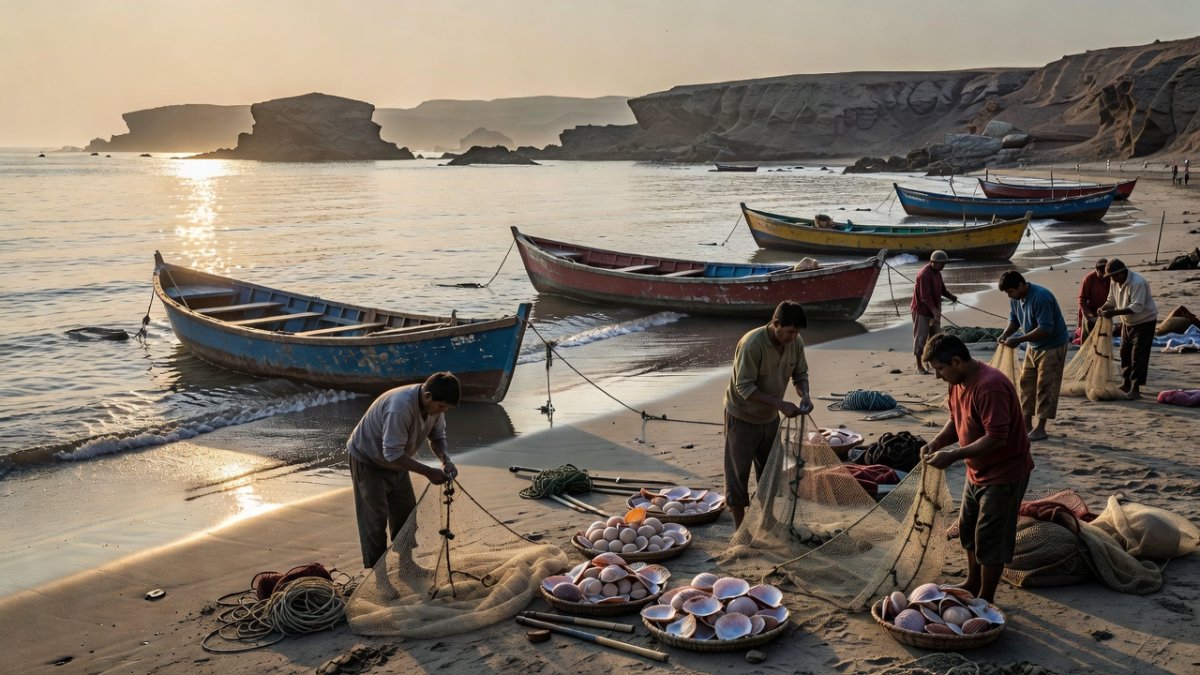
For the people of Paracas, the ruling is not abstract. José Hernández, a member of the Paracas Reserve Management Committee, said the local population was worried; artisanal fishers would be hurt by industrial boats competing for the same resources. Alfio Susti, a tourism entrepreneur in Paracas and director of the Sustainable Fishing Association, warned that any biodiversity impact would cut tourism, hurting restaurants, hotels, and travel agencies. Boat activity, he said, could push marine species away, unraveling the very ecosystem that draws visitors from around the world. The scallop economy is particularly vulnerable. The Bahía de Independencia holds Peru’s main conchas de abanico bank, and artisanal fishers have prospered thanks to the reserve’s protection. Industrial fishing would not just compete; it would devastate the seabed, destroying the habitat that scallops need to reproduce. The ruling protects that habitat, but the threat is not fully neutralized.
Carmen Heck, Oceana’s VP, said the ruling “blinds” protected areas against any future attempt to enable industrial fishing, in line with Article 68 of the Peruvian Constitution. She added that Sernanp can now focus on other threats: illegal fishing, dynamite fishing, and incompatible businesses. Silvana Baldovino, SPDA’s Biodiversity & Indigenous Peoples director, said the confirmation protects Sernanp’s institutional strength and the whole ANP system; the prohibition has been in the rules for over 20 years. Jimpson Dávila, SPDA’s Marine Governance director, said an implementation phase now opens—state, civil society, academia, the productive sector, and fishing organizations must show that marine protected areas conserve ecosystems AND generate jobs, local economies, science, and food security. The ruling is a foundation, not a finish line. The artisanal fishers who supply fresh fish to the region, the families who depend on the scallop bank, and the tourism operators who build their livelihoods on the reserve’s biodiversity all have a stake in what comes next.
The Fight Isn't Over: A Decree Opens a Back Door
Despite the Supreme Court’s definitive ruling, a new threat emerged in April 2025, months before the court’s decision was finalized. Decreto Supremo N.° 006-2025-PRODUCE, issued by the Produce ministry, eliminated clear authority to inspect and sanction industrial fishing inside ANPs. This created a legal vacuum that prevents fining large-scale boats in reserves like Paracas. The decree also changed protected-zone categories, removing the “reserved areas” concept; now only “suspended, not permitted, restricted, prohibited” zones exist, none explicitly naming Sernanp-managed ANPs. This is a bureaucratic sleight of hand: the prohibition remains on paper, but the enforcement mechanism has been gutted. The decree also requires criminal complaints to wait until the administrative process ends—which can take years—whereas previously they ran in parallel. This delay effectively shields industrial fishers from prosecution, allowing them to continue operations while legal proceedings drag on.
The backlash was immediate. Nineteen former environment ministers and vice-ministers publicly rejected the decree. Congresswoman Silvana Robles, president of the Andean, Amazonian and Afro-Peruvian Peoples, Environment and Ecology Commission, led a February 27, 2026 meeting in Paracas with fishers and Sernanp, criticizing parliamentary inaction. Bills to repeal the decree are frozen; a grouped dictamen is ready but not prioritized on the Pleno agenda. The “retroactividad benigna” risk looms: companies already fined could ask for the new, more lenient rules to cancel penalties. This is not a hypothetical; it is a legal strategy that industrial fishers are already preparing. The Supreme Court’s ruling is a victory, but it is a victory that must be defended. The decree is a back door, and unless it is closed, the ruling’s practical impact could be undermined. Sernanp, civil society, and the courts must now work together to ensure that the prohibition on industrial fishing inside ANPs is not just a legal principle, but an enforced reality.
Latin America's Marine Reserves Watch Closely
Peru’s Supreme Court ruling is not an isolated event; it is part of a regional wave defending marine protected areas. Ecuador’s Galápagos Marine Reserve expanded from 5 to 40 marine miles, creating the Reserva Hermandad, a corridor that connects with Costa Rica’s Cocos Island. Palau protects 80% of its waters, a global benchmark for ocean conservation. The 30x30 target—protecting 30% of the world’s oceans by 2030—is a global commitment that Peru’s ruling reinforces. In Peru, 21 marine scientists and former environment ministers backed reversing the Dorsal de Nasca exception, which temporarily allowed industrial fishing in that reserve. The Supreme Court’s ruling, by rejecting the SNP’s attempt to use Dorsal de Nasca as a precedent, strengthens the case for reversing that exception. The ruling is a precedent for the entire region on whether conservation law or extraction interests win inside protected seas.
The Latin American context is critical. The region is home to some of the world’s most biodiverse marine ecosystems, from the Galápagos to the Humboldt Current to the Patagonian fjords. These ecosystems face relentless pressure from industrial fishing, mining, and coastal development. Peru’s ruling sends a signal: protected areas are not negotiable. The court’s language—that commercial use is prioritized for local communities, not industrial fleets—is a model for other countries grappling with similar conflicts. It aligns with international commitments under the Convention on Biological Diversity and the UN’s Sustainable Development Goals. The ruling also empowers civil society: the court allowed NGOs to intervene, setting a precedent for public participation in environmental litigation. For the region, the message is clear: conservation law can and should prevail over extraction interests. The question now is whether other countries will follow Peru’s lead.
The Bottom Line — A Precedent That Must Hold
The Supreme Court’s ruling is a landmark, but it is not a panacea. The decree that opened a back door remains in force, and the political will to repeal it is uncertain. The “retroactividad benigna” risk is real, and industrial fishers will exploit every legal loophole to continue operations. The ruling must be defended in the courts, in Congress, and in the streets. Sernanp must be given the resources and authority to enforce the prohibition, and the Produce ministry must be held accountable for its attempt to undermine it. The 19 former environment ministers who rejected the decree are a powerful voice, but they need allies in the current government. Congresswoman Silvana Robles has called for action, but the bills to repeal the decree are frozen. The grouped dictamen is ready, but it is not prioritized on the Pleno agenda. This is a political failure that must be corrected.
The bottom line is that Peru has made a choice. The Supreme Court has ruled that protected areas are for biodiversity, for local communities, and for future generations—not for industrial fleets. This is a precedent that must hold, not just for Paracas, but for all of Peru’s protected natural areas, and for the region as a whole. The ruling is a victory for the artisanal fishers who supply fresh fish to their communities, for the tourism operators who depend on the reserve’s biodiversity, and for the 1,500 species that call Paracas home. But it is also a call to action. The decree must be repealed, the enforcement mechanisms must be restored, and the political will must be found to defend what the court has protected. The Humboldt Current will continue to flow, but whether it flows through protected waters or industrial fishing grounds depends on what happens next. The ruling is a line in the sand; now Peru must hold it.
By Elena Vasquez, Staff Writer
This article was produced with AI-assisted research and editorial support. Reporting is based on sources cited in the article.
What's Your Reaction?
 Like
0
Like
0
 Dislike
0
Dislike
0
 Love
0
Love
0
 Funny
0
Funny
0
 Wow
0
Wow
0
 Sad
0
Sad
0
 Angry
0
Angry
0

Latin America Correspondent at Global1.News. Based in Mexico City, covering politics, economics, energy, and culture across the region. Brings an on-the-ground perspective to stories spanning from the Rio Grande to Patagonia.















Comments (0)