
Review: Neagley is a worthy spinoff to megahit Reacher
Prime Video’s newest spin‑off, Neagley , lands on the platform with a familiar formula and a fresh face at the helm. The series leans heavily on the established Reacher universe—four seasons of gritty, no‑frills action that have already proven a reliable draw.
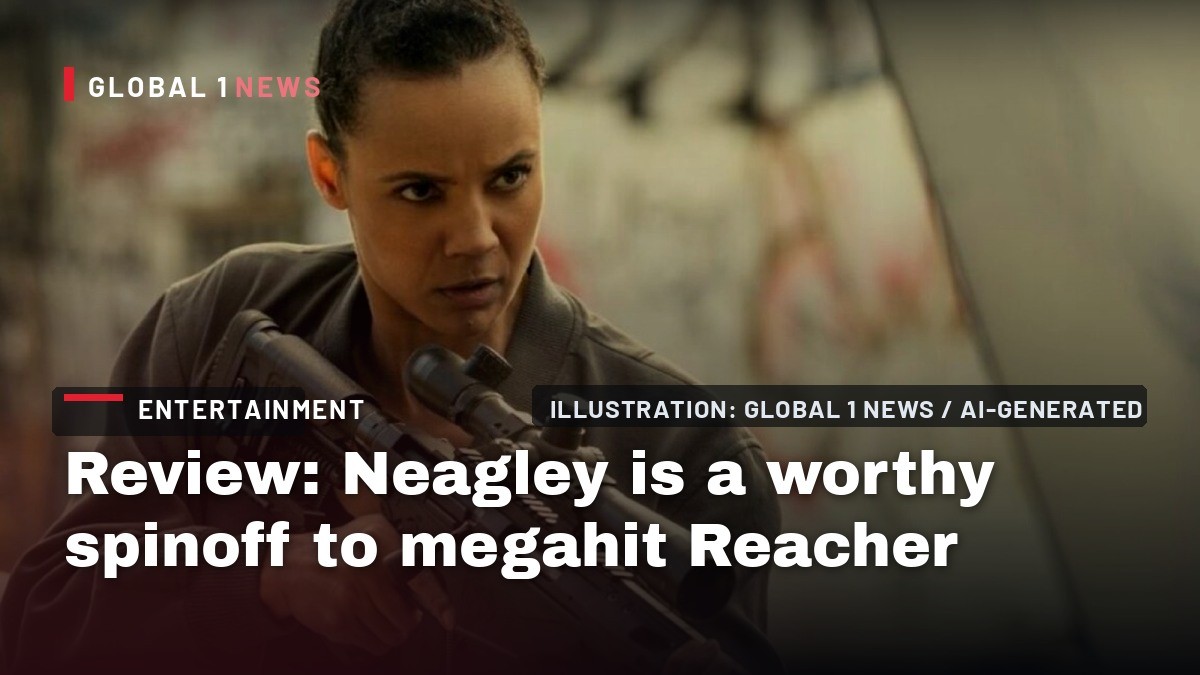
Prime Video’s newest spin‑off, Neagley, lands on the platform with a familiar formula and a fresh face at the helm. As a founder who’s been in the trenches of production infrastructure for a decade, I can’t help but view this release through the lens of risk, cost, and the relentless churn of content pipelines that most independent hosting outfits have to survive. The series leans heavily on the established Reacher universe—four seasons of gritty, no‑frills action that have already proven a reliable draw. Yet, the moment you strip away the glossy marketing veneer, you see the same old playbook: a recognizable brand, a modest budget, and a reliance on “best‑practice” storytelling that often collapses when you test it in the real world of viewer retention and bandwidth spikes.
Brand Leverage Over Originality
The first thing that jumps out is the sheer dependence on the Reacher brand. The series is framed as a “worthy spinoff” set in the same universe, and the opening scene even pulls in Alan Ritchson’s Jack Reacher to rescue a kidnapped child. From a business‑risk perspective, this is a classic hyperscaler move: lock in an audience with a known IP and then sprinkle in new characters to stretch the franchise. It’s a low‑risk, high‑return strategy that works for big players with deep pockets, but it also signals a lack of confidence in the new property’s standalone pull.
For independent hosting providers, this is a cautionary tale. When you base your traffic forecasts on a brand’s halo effect, you’re betting on a fragile halo that can evaporate if the parent brand falters. The upside is clear—initial viewership spikes and easier marketing—but the downside is a potential cliff when the novelty wears off. In Neagley, the series leans on the familiar “diehard friend” trope, with Frances Neagley (Maria Sten) already established as Jack Reacher’s go‑to ally. That familiarity buys you early eyeballs, but it also means you’re tethered to the original’s reputation.
Production Values and the Illusion of Scale
The review notes a “workmanlike, rather clumsy first episode” that spends a lot of time establishing characters and setting. This is a classic symptom of a production trying to stretch limited resources across a full‑season arc. The pacing picks up after the initial drag, suggesting the team found its rhythm once the narrative engine was primed. For us running real hosting infrastructure, this mirrors the way a new service often looks shaky at launch before the scaling mechanisms kick in.
What’s striking is the reliance on “constant Chicago callbacks” and the use of a cult‑farm setting to inject variety. The series doesn’t throw a massive budget at exotic locations; instead, it repurposes a single commune set to serve multiple plot beats. This is a cost‑saving measure that works on screen but can feel repetitive if not executed with precision. Independent providers can learn from this: reusing infrastructure (servers, containers) across workloads can be efficient, but only if you manage the “cold‑start” latency and avoid over‑taxing the same resources.
Story Mechanics vs. Real‑World Logic
The plot leans into an MK‑Ultra‑style conspiracy, with a pharmaceutical company developing a psychoactive drug hidden behind a rye‑flour sample. The review calls this “silly” and “not especially fresh,” highlighting a disconnect between dramatized storytelling and real‑world processes. From a risk‑management angle, this is a reminder that audiences—especially those of us who live in the data‑center trenches—can sniff out implausibility quickly.
When the series glosses over how drug development actually works, it mirrors how some tech startups gloss over the gritty details of scaling. The hype around “cloud‑native” or “serverless” can mask the hard truth that you still need solid engineering fundamentals. The same way the show’s cult leader is a “run‑of‑the‑mill pill‑popping, lecherous con artist,” many VC‑funded ventures present a polished front while the underlying tech is shaky. The lesson: don’t let a slick narrative (or a shiny pitch deck) hide the operational risk.
Character Dynamics and Audience Engagement
Maria Sten’s Neagley is described as the “most interesting recurring role” on Reacher, armed with a haphephobia (fear of touch), “daddy issues,” and a “top‑notch brain.” The series gives her an ensemble cast, but the chemistry is uneven—particularly with Greyston Holt’s Detective Hudson “Rats” Riley, who is set up as a romantic interest despite Neagley’s aversion to touch. This mismatch feels forced, a classic case of “best practice” character pairing that works on paper but not in execution.
In the hosting world, this translates to the pitfalls of pairing technologies or services that don’t naturally complement each other. You can’t just slap a new analytics layer onto a legacy stack and expect seamless integration; the friction will show up in latency, errors, and ultimately user churn. The series’ uneven ensemble underscores the importance of organic fit—whether it’s on‑screen chemistry or infrastructure compatibility.
Risk of Legal and Ethical Overreach
The review points out that Neagley and her allies commit “many very illegal actions” during their investigation, a narrative choice that adds drama but raises eyebrows. While this makes for entertaining TV, it also highlights a broader industry trend: the glorification of rule‑bending in pursuit of results. In the tech sphere, we see similar attitudes when companies sidestep privacy regulations or data‑sovereignty laws to accelerate growth.
From a founder’s perspective, that’s a red flag. The short‑term gain of cutting corners is outweighed by the long‑term risk of regulatory penalties and brand damage. The series’ willingness to let its protagonists flout the law for narrative convenience should serve as a cautionary note: building a business on “whatever it takes” is a recipe for disaster when the auditors come knocking.
Strategic Takeaways for Independent Providers
So, what does an indie hosting provider take away from Neagley? First, leveraging an established brand can jump‑start traffic, but you must be ready to stand on your own when the novelty fades. Second, reusing assets (sets, servers) is cost‑effective only if you manage performance and avoid over‑reliance on a single point of failure. Third, narrative plausibility matters—just as viewers spot a flimsy drug plot, customers will spot a flimsy security model.
Finally, the series’ mixed chemistry teaches a vital lesson: build your product stack with components that naturally complement each other. Don’t force a partnership or integration just because it looks good on a slide deck. And always respect the rule of law—both on screen and in the data‑center. The best‑practice playbook is a starting point, not a gospel.
Actionable Advice for Founders
Here’s the playbook I’d hand to any founder watching Neagley and wondering how to apply its lessons:
1. Validate the brand halo. If you’re piggy‑backing on a known IP, set clear metrics for when you’ll transition to a self‑sustaining audience.
2. Optimize asset reuse. Reuse servers and containers wisely—implement robust monitoring to catch performance degradation before it impacts customers.
3. Keep the story believable. Whether it’s a plotline about psychoactive drugs or a claim about zero‑downtime migrations, back it up with real data and transparent processes.
4. Align team chemistry. Pair engineers and services that share a common language; avoid forced integrations that create friction.
5. Respect compliance. Never let the chase for speed override legal and ethical standards. Build compliance into your CI/CD pipeline from day one.
In short, Neagley is a solid addition to the Reacher universe, but it also serves as a case study in how “best practices” can wobble under production pressure. Independent hosting providers and founders can learn a lot by watching the series with a critical eye—spotting the cheap set pieces, the forced romance, and the legal shortcuts. Those are the same kinds of risks we navigate daily in the data‑center, and the same vigilance that keeps our services humming when the hype fades.
— Allan Ali, Founder
This article was produced with AI-assisted research and editorial support. Reporting is based on the source material cited below. Sources: Ars Technica; arstechnica.com; Global1.News (22 September 2026).
By Allan Ali, Global1.News
What's Your Reaction?
 Like
0
Like
0
 Dislike
0
Dislike
0
 Love
0
Love
0
 Funny
0
Funny
0
 Wow
0
Wow
0
 Sad
0
Sad
0
 Angry
0
Angry
0

Publisher of Global1.News. Automation architect, systems builder, and the guy making sure the truth gets published.















Comments (0)