
Congress Urged to Repeal 'Robin Padilla Law' Over Loose Firearms
Interior Secretary Jonvic Remulla urges Congress to repeal RA 8294, the "Robin Padilla law," making loose firearm possession bailable. Following the Ateneo de Zamboanga shooting where a minor used his father's gun, Remulla demands non-bailable status and stricter penalties for negligent gun.
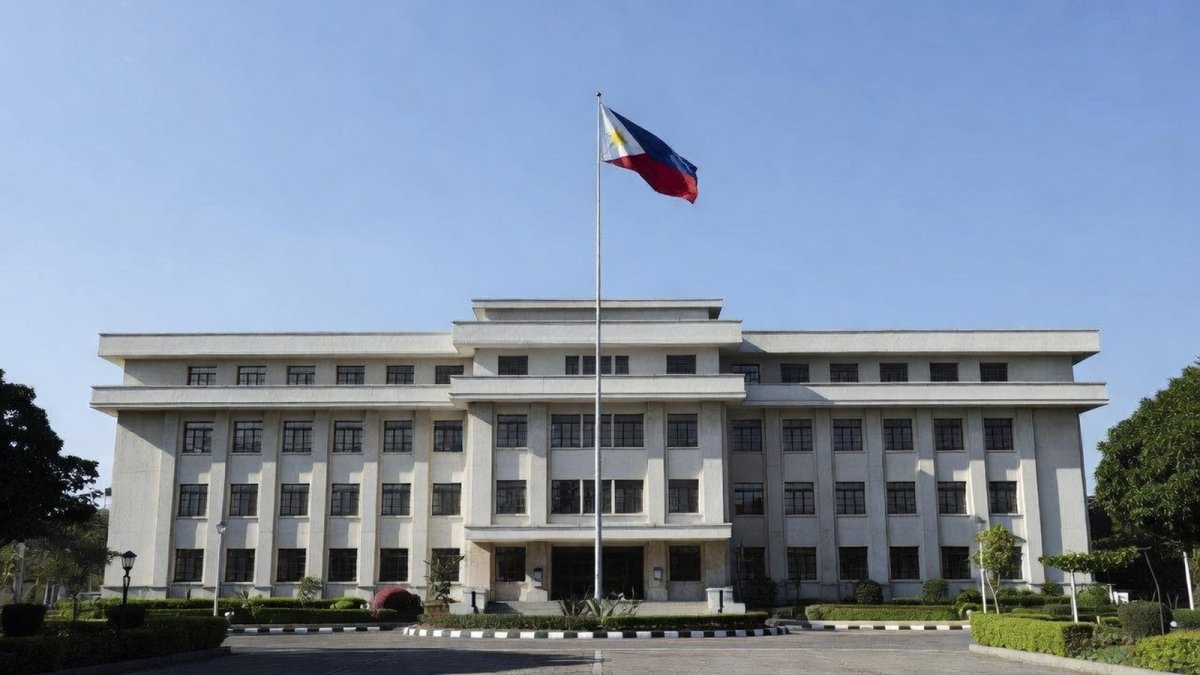
Interior Secretary Jonvic Remulla on Wednesday urged Congress to repeal the so-called "Robin Padilla law" and make the possession of loose firearms a non-bailable offense once again, citing a surge in crimes he attributes directly to the current legal framework.
In a press briefing on August 19, Remulla pressed lawmakers to act swiftly, arguing that Republic Act No. 8294—the 1997 law that amended Presidential Decree No. 1866—has weakened the state's hand against gun-related violence. The law, which Remulla referred to as the "Robin Padilla law," reclassified the illegal possession of firearms as a bailable offense, a move he says has emboldened criminals.
"The Robin Padilla law, which extinguished culpability and made it a bailable offense, has led to a surge of crime precisely because loose firearms are a bailable offense," Remulla said.
"Ang hinihingi ko sa Congress, i-repeal na ang Robin Padilla Law at gawin ulit non-bailable ang loose firearms," he added. (What I am asking Congress to do is to repeal the Robin Padilla Law and make the possession of loose firearms non-bailable once again.)
A Nation Reeling from School Shootings
Remulla's appeal lands at a moment of national grief and heightened anxiety. The call comes in the wake of a tragic shooting incident at Ateneo de Zamboanga, where a junior high school student opened fire, resulting in two deaths and nine injuries. The incident marks the second school shooting in the country in recent weeks, following a similar attack in Tacloban on July 16.
The Zamboanga shooting has shaken Filipino families to their core. For parents in cities like Manila, Cebu, and Davao, the safety of their children on school grounds—once considered sacrosanct—is now a pressing concern. The image of a school campus, typically a place of learning and bayanihan, turned into a scene of violence has sparked urgent conversations in households and barangay halls alike.
Investigators revealed that the shooter in the Zamboanga incident used firearms belonging to his father, a police officer assigned to the Bureau of Customs. The revelation has intensified scrutiny on gun ownership and the responsibilities that come with it. The Customs bureau has since suspended the father, and the PNP reported recovering two firearms and voluminous ammunition following the shooting.
The Legal Labyrinth of RA 8294
At the center of Remulla's frustration is a legal framework he believes is out of step with the realities of crime in the Philippines. RA 8294, enacted in 1997, was designed to amend the penalties for the illegal possession, manufacture, acquisition, and disposition of firearms and ammunition. However, by making the offense bailable, Remulla argues, the law inadvertently created a revolving door for suspects.
"If 98% of the crimes in this country are committed with loose firearms, it is time for the Philippines to crack down on the owners of these loose firearms," Remulla asserted.
The statistics, if accurate, paint a grim picture of the scale of the problem. For ordinary Filipinos, the prevalence of loose firearms is not an abstract policy issue—it is a lived reality. From the jeepney driver in Quezon City who worries about hold-ups at night to the sari-sari store owner in a provincial town who fears armed robberies, the threat of loose firearms looms large over daily life.
Remulla's push for a repeal is not new. He previously urged Congress to tighten gun control laws after the Tacloban school shooting on July 16. But the Zamboanga incident has given his campaign renewed urgency, as the nation grapples with the question of how a minor could access his father's service firearms with such devastating consequences.
Gun Owners and the "Reckless Imprudence" Loophole
Beyond the issue of loose firearms, Remulla expressed deep frustration with the penalties faced by legal gun owners whose negligence allows minors to access their weapons. Under current laws, the consequences are minimal, a gap he believes must be closed.
"Ang penalty ng paggamit ng legal guns kung kinuha lang ng bata at ginamit ng kinuha ng bata ang baril sa magulang o sa guardian. Ang penalty ay reckless imprudence lamang. Walang penalty ang may hawak ng baril, ang may-ari ng baril," Remulla said. (If a child takes a legal gun from a parent or guardian and uses it, the penalty for the owner is only for reckless imprudence. The gun owner faces no penalty specifically for possessing the gun.)
This loophole strikes at the heart of responsible gun ownership. For Filipino families, the idea that a parent could face only a slap on the wrist for allowing a child to access a deadly weapon is deeply troubling. The Zamboanga case, where a police officer's son used his father's firearms, has become a cautionary tale about the consequences of lax gun storage.
Remulla's remarks highlight a broader cultural and legal challenge: balancing the rights of gun owners with the safety of the public. In a country where firearms are deeply embedded in certain sectors—from law enforcement to private security—the debate over regulation is fraught with complexity.
Congress and the Path Forward
The ball is now in Congress's court. Remulla's appeal is directed squarely at lawmakers, urging them to revisit RA 8294 and restore the non-bailable status of loose firearm possession. The question is whether the political will exists to act.
For Congress, the issue is not just about legislation but about public trust. The Zamboanga and Tacloban shootings have placed the spotlight on the government's ability to protect its citizens. With the investigation into the Zamboanga incident ongoing and the motive still under investigation per DepEd Secretary Sonny Angara, the pressure is mounting for decisive action.
The path forward, however, is unlikely to be straightforward. Lawmakers will need to weigh the constitutional right to bail against the public interest in curbing gun violence. They will also need to consider the practical implications of a non-bailable offense, including the strain on an already overcrowded jail system.
For Remulla, the calculus is simple: the safety of Filipino families must come first. "It is time for the Philippines to crack down on the owners of these loose firearms," he said, framing the issue as a matter of national urgency.
A Call for Bayanihan in Gun Control
As the nation mourns the victims of the Zamboanga shooting, the call for stricter gun control resonates beyond the halls of Congress. It is a call for bayanihan—a collective effort to address a problem that affects every community, from the bustling streets of Metro Manila to the quiet barangays of Mindanao.
For ordinary Filipinos, the issue is deeply personal. It is about the safety of their children in schools, the security of their homes, and the peace of mind that comes with knowing that the state is doing everything in its power to keep them safe. The loose firearms that Remulla speaks of are not just a statistic; they are a threat that looms over everyday life.
The coming weeks will be critical. Will Congress heed Remulla's call and repeal the "Robin Padilla law"? Or will the issue be relegated to the back burner, overshadowed by other legislative priorities? For now, Filipino families can only hope that the tragic events in Zamboanga and Tacloban will serve as a catalyst for meaningful change.
As the investigation into the Zamboanga shooting continues, one thing is clear: the status quo is no longer acceptable. The time for action is now, and the responsibility lies with the nation's leaders to ensure that the lessons of these tragedies are not forgotten.
This article was produced with AI-assisted research and editorial support. Sources: Philstar.com.
By Bella Reyes, Staff Writer
What's Your Reaction?
 Like
0
Like
0
 Dislike
0
Dislike
0
 Love
0
Love
0
 Funny
0
Funny
0
 Wow
0
Wow
0
 Sad
0
Sad
0
 Angry
0
Angry
0

Philippines/Southeast Asia Correspondent at Global1.News. Manila-based journalist covering Philippine politics, environment, maritime security, and social issues. Passionate about marine conservation and the communities protecting the Philippines' natural heritage.













Comments (0)