
Pygmalion 13B: Open-Source Character Chat Puts AI Back in Your Hands
Folks, let me cut straight to the chase. If you are tired of your AI chatbot suddenly turning into a prude, refusing to roleplay a simple scenario, or worse, sending your private conversations to some corporate server in Silicon Valley, then today is your lucky day.
Folks, let me cut straight to the chase. If you are tired of your AI chatbot suddenly turning into a prude, refusing to roleplay a simple scenario, or worse, sending your private conversations to some corporate server in Silicon Valley, then today is your lucky day. The open-source community has just dropped a bombshell that is shaking the very foundations of the AI chatbot world. We are talking about Pygmalion 13B, a local, uncensored, and completely private character chat model that is making the big tech giants sweat. This isn't just another incremental update; this is a paradigm shift in who controls the AI you talk to.
Pygmalion 13B: The Open-Source Character Chat King
Atlanta, USA - In the rapidly evolving landscape of artificial intelligence, a new champion has emerged from the shadows of Big Tech. While companies like OpenAI and Google are busy locking down their models behind paywalls and content filters, a dedicated group of volunteer developers has unleashed Pygmalion 13B, a model that puts the power back into the hands of the user. This is the ultimate local character chat king, and it is here to reclaim the digital frontier.
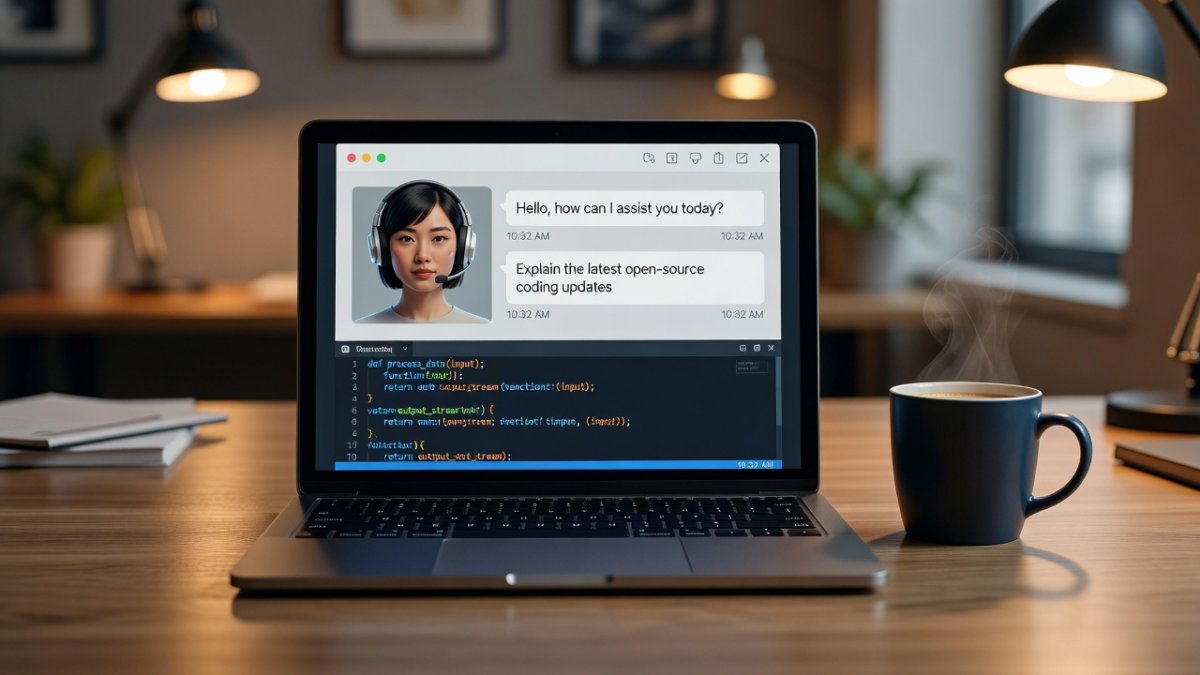
What Is Pygmalion 13B?
Let’s get down to the technical brass tacks. Pygmalion 13B is a conversational dialogue model built on the foundation of Meta's LLaMA-13B architecture. Released as version 1 by the PygmalionAI open-source community, this model is a direct evolution of its predecessor, the Pygmalion-6B-v8-pt4 project. The team didn't just slap a new name on an old model; they took the data from the 6B project and used it to fine-tune a much larger, more powerful 13B parameter model. This was achieved using a technique called LoRA, or Low-Rank Adaptation, which allows for efficient fine-tuning without needing to retrain the entire model from scratch. Once trained, the LoRA weights were merged down into the base model for distribution, creating a seamless and potent final product.
But what does that actually mean for you? It means you are getting a model that is specifically designed for one thing: fictional character roleplay. We are talking persona-based conversations, creative writing, and entertainment chat that feels natural, dynamic, and—crucially—unfiltered. This isn't a generic assistant that gives you the weather; this is an engine built to inhabit a character, to stay in character, and to deliver an immersive narrative experience that commercial models can only dream of.
Why Local Character Chat Matters
Here is the thing, and I cannot stress this enough: privacy is not a luxury anymore; it is a necessity. When you use a cloud-based service like Character AI or ChatGPT, your conversations are not private. They are being logged, analyzed, and used to train future models. You are essentially handing over your creative ideas, your personal thoughts, and your roleplay scenarios to a corporation that can do whatever it wants with them. Pygmalion 13B flips that script entirely. Because it runs locally on your own hardware, your conversations never leave your machine. There is no server to hack, no database to leak, and no corporate overlord peering over your shoulder. This is the ultimate form of digital sovereignty.
And let’s talk about the censorship angle, because it is infuriating. Commercial models are absolutely riddled with content filters designed to sanitize every interaction. Try to write a dark fantasy scene, a horror story, or even a romantic subplot, and you will often hit a wall of "I cannot fulfill this request." It is patronizing, it is restrictive, and it is a direct assault on creative freedom. The PygmalionAI project is community-driven and explicitly emphasizes freedom from these filters. They understand that fiction is a safe space to explore complex themes, and they refuse to let a prudish algorithm dictate what is acceptable. This is about the freedom to create without asking for permission.
How It Stacks Up
Now, I know what you are thinking. "Jessica, how does this open-source model compare to the big boys like GPT-4?" Let’s be honest. In terms of raw, encyclopedic knowledge and complex reasoning, GPT-4 is still the heavyweight champion. It has been trained on a massive corpus of data and has access to a vast amount of computing power. But here is the kicker: Pygmalion 13B is not trying to be GPT-4. It is a specialist, not a generalist. When it comes to the specific task of character roleplay and maintaining a consistent persona, Pygmalion 13B punches far above its weight class. It is more focused, more creative, and infinitely more flexible because it is not shackled by the same safety guidelines.
Compared to Character AI, the gap is even more stark. Character AI is a fantastic platform, but it is a walled garden. You are limited to the characters they host, and you are subject to their terms of service. Pygmalion 13B gives you total control. You can create any character you want, with any backstory, any personality, and any conversational style. You are not renting a character; you are building your own universe. And because it is open-source, the community is constantly improving it, creating new fine-tunes, and pushing the boundaries of what is possible. It is a living, breathing project, not a static product.
The Hardware Reality
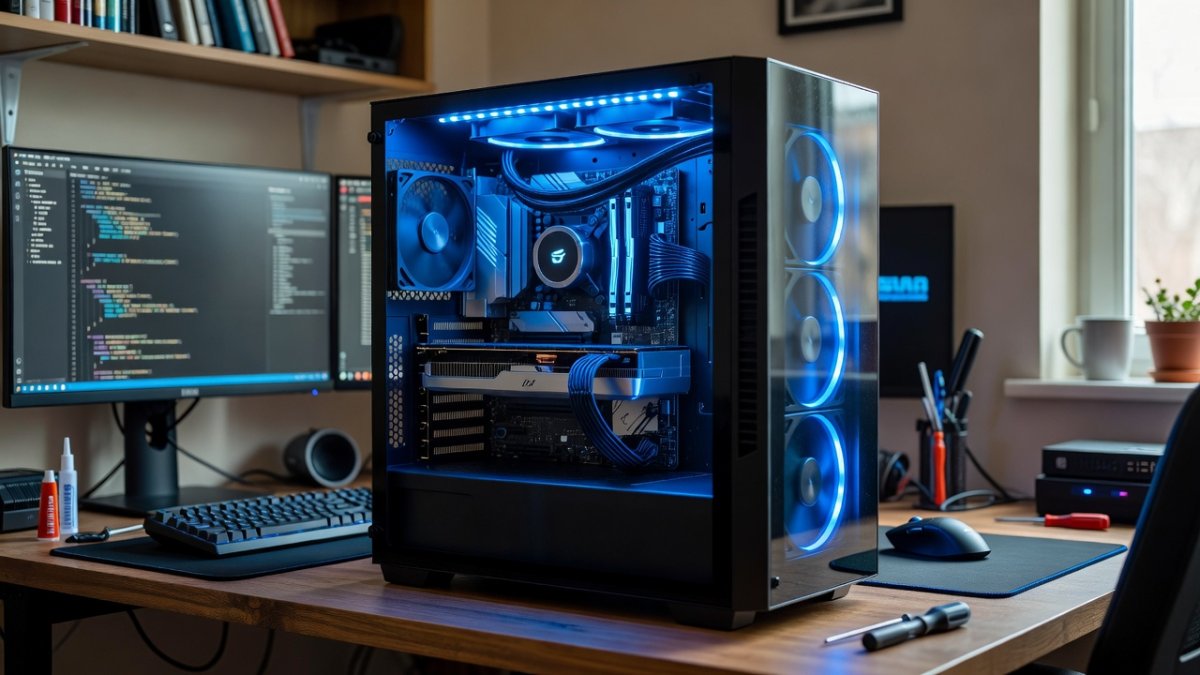
Alright, let’s get real about the hardware requirements, because this is where the rubber meets the road. To run the full 13B model comfortably, you are going to need a graphics card with at least 12GB of VRAM. That is a significant investment, but it is not out of reach for many PC enthusiasts. If you have a high-end gaming rig, you are probably already there. But what if you don't have a 12GB card? Don't worry, the community has you covered. There are quantized versions of the model available that sacrifice a tiny bit of precision for a massive reduction in memory footprint. These quantized versions can run on cards with as little as 6GB of VRAM, making local AI accessible to a much wider audience.
The fact that this is even possible is a testament to the ingenuity of the open-source community. The LoRA training method is a masterstroke of efficiency. Instead of requiring a supercomputer to fine-tune a 13B parameter model, the team was able to do it with a single high-end consumer GPU. This democratization of AI development is the single most important trend in the industry right now. It means that the next breakthrough could come from a hobbyist in their basement, not just a billion-dollar corporation. The hardware reality is that we are at a tipping point where consumer-grade equipment is now powerful enough to run state-of-the-art AI models, and that changes everything.
The Open-Source AI Movement
This brings us to the broader context, and it is a wild story. In May 2023, the AI world was absolutely exploding. Meta had leaked their LLaMA model weights, and suddenly, the floodgates were open. Researchers and hobbyists who had been locked out of the frontier of AI research were now able to fine-tune and experiment with models that were previously only available to a select few. This was the spark that ignited the open-source AI movement, and PygmalionAI is one of the brightest flames in that fire.

The PygmalionAI project is a perfect example of what can be achieved when a community comes together with a shared vision. They are not motivated by profit; they are motivated by passion. They believe that AI should be a tool for everyone, not a weapon for a few. The distribution of the weights via XOR decoding, which requires the original LLaMA weights, was a clever workaround to the non-commercial license constraints at the time. It was a legal hack that allowed them to share their work while respecting the letter of the law. This kind of ingenuity is what makes the open-source movement so powerful. It is not just about code; it is about a philosophy of freedom, transparency, and collaboration.
What This Means
So, what does this all mean for the future? It means we are witnessing a fundamental shift in the balance of power. For too long, the narrative has been that AI is something that happens to you, not something you can control. Big Tech has tried to convince us that we need their cloud services, their APIs, and their approval to use AI. Pygmalion 13B is a direct challenge to that narrative. It proves that you can have a world-class AI experience on your own terms, on your own hardware, without any strings attached. This is the beginning of the user-controlled AI revolution.
The implications are profound. If you can run a powerful, uncensored AI locally, you no longer have to worry about a corporation deciding what you can and cannot say. You no longer have to fear your data being harvested for profit. You are the master of your own digital domain. This is not just about roleplay; it is about the fundamental right to compute and communicate freely. It is about ensuring that the future of AI is not a dystopian monopoly but a vibrant, diverse ecosystem where innovation thrives. The genie is out of the bottle, and there is no putting it back.
What You Can Do
Alright, folks, enough analysis. It is time for action. Here is what you need to do to get in on the ground floor of this revolution. First, if you have a capable GPU, go to the PygmalionAI project page on Hugging Face and download the model. There are detailed instructions on how to set it up, and the community is incredibly helpful if you run into any issues. If you don't have the hardware, look into the quantized versions or consider using a cloud service that rents out GPU time. The point is to get your hands on this technology and see what it can do.
Second, support the open-source community. If you have coding skills, contribute to the project. If you have money, consider donating to the developers who are spending countless hours building these tools for free. If you have neither, just spread the word. The more people who know about Pygmalion 13B and the open-source movement, the stronger it becomes. We need to show the big tech companies that we are not passive consumers; we are active participants in the creation of our digital future.
Finally, stay vigilant. The forces of centralization are powerful, and they will not give up without a fight. There will be attempts to regulate, censor, and co-opt the open-source movement. We must remain committed to the principles of freedom, privacy, and user control. The future of AI is not predetermined. It is up to us to shape it. So, get out there, download Pygmalion 13B, and start creating. The power is in your hands, and it is time to use it. This is not just a tool; it is a statement. It is a declaration that the era of user-controlled AI has arrived, and it is here to stay.
By Jessica Ali, Staff Writer
This article was produced with AI-assisted research and editorial support. Sources: YouTube (Aitrepreneur), Hugging Face, PygmalionAI project documentation.
What's Your Reaction?
 Like
0
Like
0
 Dislike
0
Dislike
0
 Love
0
Love
0
 Funny
0
Funny
0
 Wow
0
Wow
0
 Sad
0
Sad
0
 Angry
0
Angry
0

Editor-in-Chief at Global1.News. Atlanta-based journalist who cuts through the BS and tells it like it is. Lead anchor, host, and the voice you hear when the spin stops and the truth starts.













Comments (0)