
Namibia stun Proteas in T20I tri-series opener as fans fume over 'missing' broadcast
Namibia stun Proteas in T20I tri-series opener as fans fume over 'missing' broadcast WINDHOEK – There are defeats that sting, and then there are defeats that leave you scratching your head wondering where it all went wrong. Friday 28 August 2026 delivered both for South African cricket, as Namibia stunned the Proteas by 18 runs in the opening T20I of the tri-series at the Namibia Cricket Ground. But the drama wasn't confined to the middle.

Namibia stun Proteas in T20I tri-series opener as fans fume over 'missing' broadcast
WINDHOEK – There are defeats that sting, and then there are defeats that leave you scratching your head wondering where it all went wrong. Friday 28 August 2026 delivered both for South African cricket, as Namibia stunned the Proteas by 18 runs in the opening T20I of the tri-series at the Namibia Cricket Ground. But the drama wasn't confined to the middle. While the hosts were busy rewriting the script against their more fancied neighbours, thousands of Proteas supporters back home were locked out of the action, fuming at a broadcast fiasco that has cast a shadow over what Cricket South Africa (CSA) boldly called the start of a "defining international season."
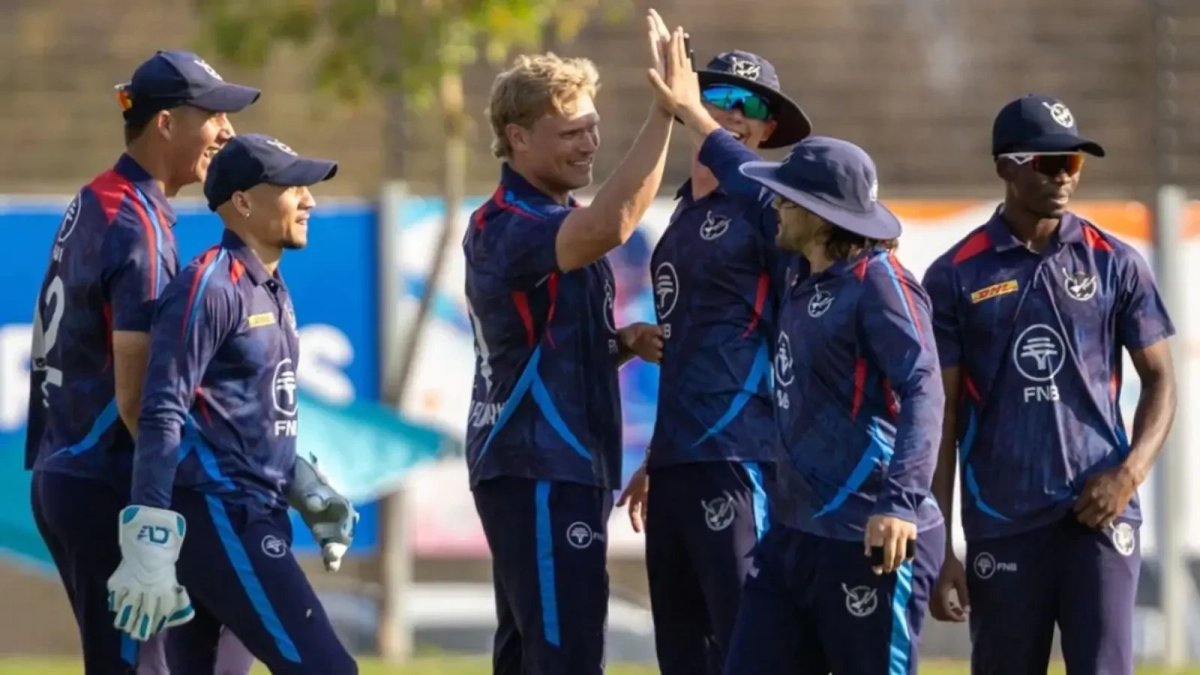
The result itself was seismic enough. Namibia, sent in to bat by stand-in Proteas captain Bjorn Fortuin, posted a competitive 163-9 before bowling South Africa out for 145-9. It extends Namibia's unbeaten record over their neighbours to two matches, following their first-ever victory over the Proteas last year. For a South African side that reached the T20 World Cup semi-finals, this was a sobering reality check. But for many fans, the inability to simply watch the match on regular television was the real outrage.
The broadcast battle: A tale of two screens
Let's get this straight from the start: the cricket was on. According to the International Cricket Council (ICC), SuperSport is the official broadcaster for the tri-series involving South Africa, Namibia, and Zimbabwe. The match was available on DStv's streaming platform and Channel 245 – the dedicated Over-The-Top (OTT) streaming channel. It was also streaming free of charge on the ICC's own platform, icc-cricket.com. But here's the rub: for the average South African cricket lover, "streaming" is not the same as "watching the game on TV."
The frustration boiled over on social media, where CSA's own posts highlighting the match became a magnet for discontent. Grant Fielding didn't mince words on X: "@DStv decide not to broadcast the game and then the stream quality is pathetic. Is this what we are paying for every month?" The sentiment was echoed across platforms. On Instagram, South_africaking captured the weary resignation of the Proteas faithful: "Imagine supporting cricket south Africa 😂 u get to see them play a few games in a year and on top of that u can't watch them on TV😂"
The anger wasn't just about access; it was about value. On Facebook, Ikraam Mohomed tagged SuperSport and its cricket imprint directly, asking a question that will resonate with every DStv premium subscriber: "What's the purpose of paying so much for premium package and there's 3 African countries playing a series and dstv is an African brand but we must stream the game yet watch England vs Pakistan on our home cricket channel?" It's a fair point. How does an African broadcaster prioritise a match between two European sides over a continental clash featuring three African nations?
And for those who did manage to find the stream, the experience was often poor. Dehan_st highlighted the technical woes on Instagram: "Channel is struggling to work. Keeps lagging." Even when fans navigated to SuperSport's website and clicked on "LIVE: Nam T20 Tri-Series – Namibia v South Africa," they were greeted with a "WATCH LIVE" button that still demanded a paid subscription. DStv's support centre agents confirmed that streaming this particular game was a pay-per-view service. Meanwhile, the ICC's platform was streaming the match at no cost – all you needed was an account and a login. The irony was not lost on anyone.
Frylinck and Steenkamp set the tone
While the broadcast drama unfolded off the field, Namibia were busy making a statement on it. Fortuin won the toss and, perhaps surprisingly, elected to bowl first. The hosts made that decision look questionable almost immediately. Jan Frylinck and Louren Steenkamp tore into the Proteas attack, racing to 57 without loss inside the powerplay. The pair put on a rapid 84 for the first wicket, with Steenkamp playing the aggressor before falling to Fortuin in the 10th over – bowled for a brisk 41 off just 29 balls.
Frylinck, however, was in no mood to stop. The veteran continued his assault, reaching a magnificent 60 from just 38 deliveries before he was dismissed by part-time spinner Dewald Brevis while attempting a third successive six. It was a moment of audacity that summed up Namibia's fearless approach. His dismissal, though, triggered a wobble. The hosts lost a bit of momentum and surrendered nine wickets for just 79 runs in the second half of their innings. Fortuin led the fightback with tidy figures of 2-17, while Prenelan Subrayen was the pick of the bowlers with 3-23. There was even a silver lining for the Proteas in the form of debutant Duan Jansen, who struck twice in two balls late in the 19th over to help restrict Namibia to 163-9.
But the day wasn't without its worries. Lutho Sipamla left the field midway through his second over with a left hamstring problem – an injury concern that will be monitored closely ahead of Saturday's clash with Zimbabwe.
Brevis fights, but the chase unravels
If the Proteas' bowling effort was a mixed bag, their chase was a disaster waiting to happen. The top order crumbled under the pressure of a modest target. Jordan Hermann, Lhuan-dre Pretorius, and Tony de Zorzi all fell cheaply, leaving the T20 World Cup semi-finalists reeling at 39-3 inside seven overs. Rubin Hermann was then bowled to leave the Proteas in deeper trouble at 78-4. It was left to the 22-year-old Brevis to launch a one-man counter-attack.
And what a counter-attack it was. Brevis, who had earlier claimed the key wicket of Frylinck, smashed a brilliant 75 from just 50 balls – his second T20I half-century. For a while, he gave the Proteas genuine hope of pulling off an improbable heist. But with little support around him, the task proved too great. He was caught at short third man off Ruben Trumpelmann with two overs remaining, and his dismissal effectively ended the contest. The Proteas limped to 145-9, falling 18 runs short.
Trumpelmann was the hero with the ball for Namibia, finishing with excellent figures of 3-24. For the Proteas, the only real positives were Jansen's all-round display – he added an unbeaten 25 to his two wickets – and Brevis' fighting knock. But in the cold light of day, this was a defeat that raises serious questions about the depth and resilience of this Proteas side.
A defining season, a worrying start
CSA had billed this tri-series as the beginning of a "defining international season." With the 2027 World Cup set to be hosted by South Africa, Namibia, and Zimbabwe, the timing of this result – and the broadcast mess – could not be worse. The Proteas are meant to be building momentum, not stumbling at the first hurdle against a side they are expected to beat. Namibia's unbeaten record over South Africa now stands at two matches, and that is no longer a footnote; it is a trend.
For South African cricket, this defeat is a wake-up call. The Proteas' chase unravelled with alarming speed, exposing a fragility that will be exploited by better sides. But the broadcast issue is arguably a more pressing concern for the sport's long-term health. Cricket in South Africa thrives on accessibility. It thrives on the Saturday afternoon ritual of gathering around the TV with family and friends. When fans are forced to navigate confusing streaming platforms, pay extra for a pay-per-view service, or simply give up in frustration, the game loses its connection to the very people who sustain it.
The fact that an African broadcaster is showing England vs Pakistan on a "home cricket channel" while an all-African tri-series is relegated to an OTT channel is a slap in the face to the continent's cricketing ambitions. It sends a message that African cricket is not a priority, even to its own broadcasters. And with the 2027 World Cup on the horizon, that is a dangerous message to send.
The Proteas will have a chance to bounce back when they face Zimbabwe in Windhoek on Saturday. But the scars of this defeat – and the frustration of a fanbase left in the dark – will not heal overnight. This was supposed to be the start of something special. Instead, it has become a cautionary tale about the perils of poor planning, both on and off the field.
By Dante Williams, Staff Writer
This article was produced with AI-assisted research and editorial support. Sources: The South African, SABC Sport.
Tags: Proteas, Namibia, T20I tri-series, SuperSport, DStv, Dewald Brevis, Bjorn Fortuin, Cricket South Africa, Windhoek, broadcast fiasco, 2027 World Cup, Jan Frylinck, Ruben Trumpelmann
What's Your Reaction?
 Like
0
Like
0
 Dislike
0
Dislike
0
 Love
0
Love
0
 Funny
0
Funny
0
 Wow
0
Wow
0
 Sad
0
Sad
0
 Angry
0
Angry
0

Breaking News and Investigations Correspondent at Global1.News. Based in London, covering global breaking news, security, and investigative stories. Known for digging deeper and connecting the dots across continents.












Comments (0)