
FIFA's Soul Crisis: What Happened to the Beautiful Game?
The beautiful game is asking itself a brutal question this week. From Soweto to Zurich, FIFA president Gianni Infantino is fighting for survival after a $20bn sell-off collapsed and UEFA, AFC and CONCACAF weigh a no-confidence vote — while SA Sports Minister Gayton McKenzie backs Patrice Motsepe to lead world football.
The beautiful game is asking itself a brutal question this week, and the answer is shaking the foundations of world football. From the streets of Soweto to the corridors of power in Zurich, the soul of the sport is under the microscope. And for South African fans, the drama unfolding around FIFA president Gianni Infantino is not just a distant political squabble — it is a moment that could reshape the global game and hand Africa the keys to the kingdom.
FIFA's Soul Crisis: What Happened to the Beautiful Game?
Johannesburg, South Africa – The Al Jazeera English video asks the question millions of us have been whispering in taverns and stadiums for years: what happened to the beautiful game? The answer, it turns out, is tangled up in a $20 billion corporate sell-off that collapsed in disgrace, a rebellion brewing among football's most powerful confederations, and a South African sports minister who believes the time has come for an African to sit on the throne. This is not a slow news day. This is the most explosive week in the modern history of global football administration, and it is happening right now.
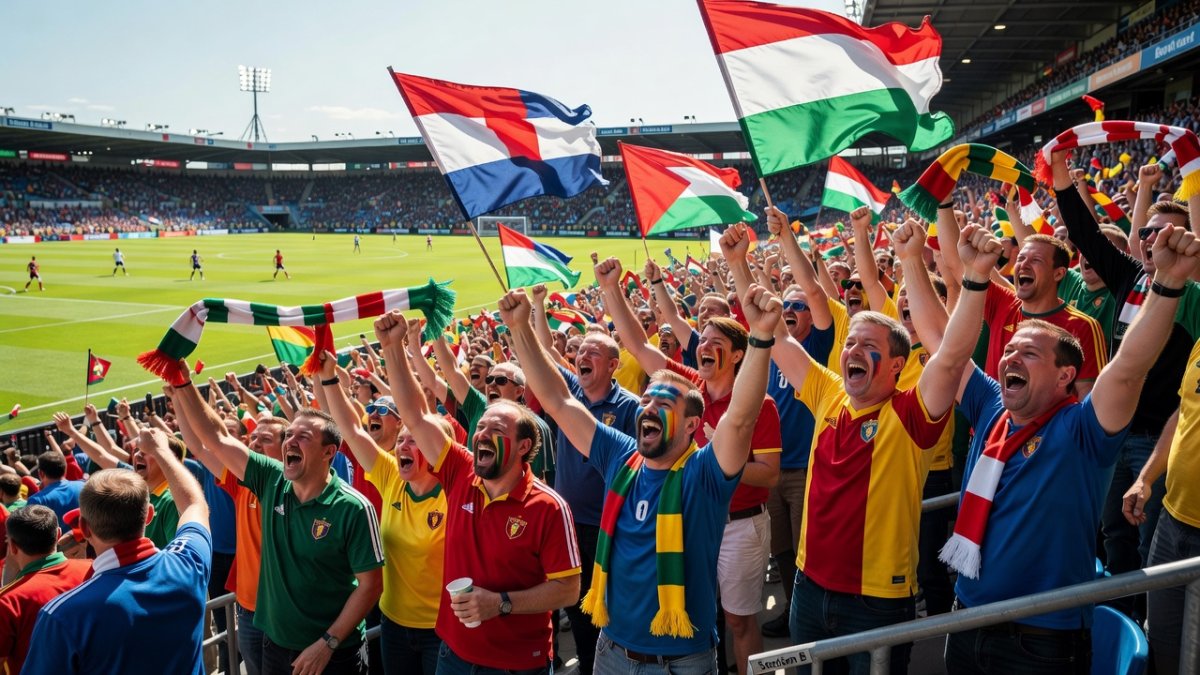
From Joga Bonito to the Boardroom
Let us start with the romance, because that is what is at stake. Pele, the man who defined the beautiful game, said it best back in 2014: "They don't care about the beautiful game. They don't care about the elegance of football. In my time, we used to think and give a little show." His 1970 Brazil side — the team that dismantled Italy 4-1 in Mexico City on June 21, 1970 — remains the gold standard, the last great team many believe won a World Cup while playing football as art.
But the corporatisation crept in quickly. The 1974 World Cup in West Germany marked the turning point, when Joao Havelange's election as FIFA president ushered in an era of lucrative global sponsorship deals. Adidas and Coca-Cola became entrenched FIFA partners, and broadcast rights costs skyrocketed from around 1980. The beautiful game was being packaged, priced, and sold. The Netherlands of 1974, with Johan Cruyff's total football, and Brazil's 1982 side featuring Socrates, Zico, Eder and Junior, are remembered as beautiful teams that did not win. They lost to the machine. And by 2014, the machine had fully taken over — Brazil were humiliated 7-1 by Germany in the World Cup semifinal, a defeat that symbolised the era of hard-running, athletic teams with strict tactical plans.
Fast forward to the 2026 World Cup in the USA, Canada and Mexico, and the numbers tell the story. English Premier League tickets have gone up 800 percent since 1990, according to a supporter group survey. Fans are priced out of the very game they love. World Cup 2026 tickets ranged from $60 to more than $10,000, helping FIFA generate nearly $9 billion in revenue. A category one World Cup final ticket rose 600 percent from 2022 to 2026 — inflation-adjusted, that is a jump from $1,833.91 to $10,990. The beautiful game has become a luxury commodity.
Yet amid the corporate excess, there was one glorious flash of the old magic. The expanded 48-team World Cup allowed debutants Cape Verde to reach the knockout stage, and on July 3, 2026, they pushed defending champions Argentina to a heroic 3-2 defeat after extra time. Sidny Lopes Cabral scored what many called the goal of the tournament. That is the beautiful game — the underdog, the flair, the moment of pure footballing joy. But it is getting harder to find.
The $20bn Plan That Backfired
Now we get to the mess. On August 1, 2026, FIFA formally abandoned the deeply controversial $20 billion plan to privatise the commercial rights of the World Cup. The "FIFA Forward Enterprise" (FFE) proposal, championed by Infantino, would have consolidated broadcasting, sponsorship and ticketing for all future World Cups into a new subsidiary. The plan was to raise an estimated $4.2 billion by selling a minority stake of up to 30 percent to a private equity consortium reportedly led by Thrive Eternal.
The backlash was immediate and ferocious. FIFA apologised for the way the matter was handled, but the damage was done. UEFA immediately lodged a formal vote of no confidence against Infantino. Reports describe "the most explosive week in the modern history of global football administration" and "a fatal collapse of Infantino's authority." This was not a minor policy disagreement. This was a direct challenge to the man who has run world football with an iron grip, and it has left him fighting for his political survival.
For South African fans, the FFE collapse is significant because it represents a rare victory for transparency and accountability in a sport that has often lacked both. The idea of selling off the World Cup's commercial soul to private equity was a step too far, even for a football establishment that has grown comfortable with excess. The apology was a sign of weakness, and the vultures are circling.
The No-Confidence Rebellion
The rebellion is now in full swing. Between August 20 and 23, UEFA, the Asian Football Confederation (AFC) and CONCACAF began considering submitting a motion of no confidence against Infantino to force him out. A Reuters source put it bluntly: "There is no way out. Either he will leave peacefully, deciding not to run in March, or he will leave the hard way."
The mechanics are complicated. FIFA statutes allow an extraordinary congress to be convened by the FIFA Council or a written request from one-fifth of FIFA's 211 member associations, but there is no formal procedure for a no-confidence motion. That means the rebels are navigating uncharted waters. Infantino intends to seek another term at the March 2027 FIFA Congress election, with the deadline for submitting candidacies set for November 18. No challenger has yet emerged, and UEFA president Aleksander Ceferin said on August 24 that he will not challenge Infantino.
But the pressure is mounting. On August 23, Infantino defied a FIFA vice president and made a rare appearance at a youth event amid the furor. A UEFA boycott faces its first test at the FIFA U-20 Women's World Cup, which began on August 26. The question is whether the confederations can translate their anger into action, or whether Infantino will once again outmanoeuvre his opponents. For South African football, this power struggle matters because it will determine the direction of global football for the next decade — and whether Africa finally gets a seat at the head of the table.
Africa's Moment: The Motsepe Question
Enter South Africa's Sports Minister, Gayton McKenzie, who has thrown his weight behind CAF president Dr Patrice Motsepe to succeed Infantino as FIFA president. McKenzie is not shy about his ambitions for the continent. "There is no other person other than Gianni Infantino who should run FIFA than Dr Patrice Motsepe. Don't look too far," he told SportsBoom.co.za. "When he took over CAF as president, Dr Motsepe brought in money and brought professionalism to his job. So after Infantino, we are moving with Dr Motsepe as president of FIFA."
McKenzie acknowledged that Motsepe does not want the job, but he is insistent. "There is no one better than Dr Patrice Motsepe, although he doesn't want the job. That I can tell you for free... Regardless of what he says, the people of football want him." He urged patience, saying, "Even Infantino should support Motsepe. He should serve his remaining term. We are not in a hurry as Africa, but it's time for an African president."
Motsepe has led CAF since 2021 and was re-elected by acclamation in March 2025. His record is a mixed bag. On one hand, he has brought in money and professionalism. On the other, the academic critique from Gerard A. Akindes, writing in The Conversation Africa and allAfrica on August 27, paints a more troubling picture. Akindes argues that African football is economically dependent on FIFA: the FIFA Forward Development Programme has injected over US$1 billion into African football since 2016, confirmed by Infantino in 2025. In Togo, FIFA funds about 30 percent of the national federation's budget. This dependency has eroded political autonomy. "African football association presidents and Caf's president have proved unable to push back against Fifa. This is evident in their unanimous support for Infantino's re-election in March 2027 and their silence on 2026 World Cup immigration abuses," Akindes writes.
Even more damning is the claim that Infantino influenced CAF's leadership transitions in 2017 and 2021, "effectively hand-picking its current president, Patrice Motsepe." If that is true, then Motsepe's rise to the FIFA presidency would not be a break from the old order — it would be a continuation of it. Akindes also notes that private African football academies function mainly as export-oriented pipelines draining talent, while satellite broadcasts of European leagues divert fans from homegrown football. The beautiful game in Africa is being hollowed out by the very structures that claim to support it.
The South African Perspective
Back home, the football governance crisis is hitting close to the bone. Sports Minister McKenzie blamed SAFA for the delayed implementation of VAR technology and asked what happened to R13 million donated for VAR. Videos of his comments went viral on Monday, August 24. He is also scheduled to appear before Parliament's Portfolio Committee on Sport, Arts and Culture for a second time over R30.9-million taxpayer expenditure for a 151-member delegation to the 2026 FIFA World Cup. That is a lot of money for a trip that produced no silverware and plenty of questions.
McKenzie has also weighed in on the delayed contract negotiations between SAFA and incoming Bafana Bafana head coach Pitso Mosimane. The man who has won everything in African club football is waiting to sign, and the delay is an embarrassment. For South African fans, these issues are not abstract. We watch the DStv Premiership on SuperSport, we pour our hopes into Bafana Bafana, and we deserve better than a federation that cannot get VAR in place or sign a coach on time. The beautiful game starts at home, and right now, the home front is a mess.
The bigger picture is this: South Africa has a voice in the global football conversation, and McKenzie is using it. Whether you agree with his methods or not, he is putting African football on the agenda. The question is whether that voice will be used to demand real change or simply to back a status quo that has failed the continent for decades.
What to Watch For
The next few months will be decisive. The November 18 candidacy deadline for the FIFA presidency is the first major milestone. If no challenger emerges by then, Infantino's path to another term is clear. But the no-confidence motion from UEFA, AFC and CONCACAF could change everything. The March 2027 FIFA Congress will be the battleground, and the question of whether an extraordinary congress can be convened to force Infantino out before then remains open.
For Motsepe, the pressure is building. He has publicly supported Infantino, but McKenzie's endorsement puts him in an awkward position. If he truly does not want the job, he needs to say so clearly and step aside. If he does want it, he needs to start building a coalition. The silence is not sustainable.
For SAFA, the clock is ticking. The VAR money needs to be accounted for, the Mosimane contract needs to be signed, and the federation needs to show it can govern competently. The World Cup delegation expenditure will be scrutinised in Parliament, and the answers need to be convincing. South African football cannot be a laughing stock on the global stage while we demand a seat at the table.
The beautiful game is at a crossroads. The 2026 World Cup showed us both the best and worst of football — Cape Verde's heroics and $10,000 tickets, the joy of the underdog and the cold logic of the boardroom. The question posed by the Al Jazeera video is not rhetorical. It demands an answer. And the answer will be written in the corridors of power over the next six months.
For South African fans, the hope is that this moment of crisis becomes a moment of opportunity. An African-led FIFA, a reformed SAFA, a Bafana Bafana under Pitso Mosimane — these are not pipe dreams. They are possibilities within reach. But they require courage, accountability, and a willingness to break with the old ways. The beautiful game deserves nothing less. The question is whether the people in charge have the vision to see it through.
This article was produced with AI-assisted research and editorial support. Sources: Al Jazeera English, Reuters, The Conversation Africa, The African Mirror, SportsBoom.
By Dante Williams, Staff Writer
What's Your Reaction?
 Like
0
Like
0
 Dislike
0
Dislike
0
 Love
0
Love
0
 Funny
0
Funny
0
 Wow
0
Wow
0
 Sad
0
Sad
0
 Angry
0
Angry
0
Breaking News and Investigations Correspondent at Global1.News. Based in London, covering global breaking news, security, and investigative stories. Known for digging deeper and connecting the dots across continents.









Comments (0)