
President Erdoğan, Pashinyan meet amid Türkiye-Armenia normalization push
President Recep Tayyip Erdoğan’s meeting with Armenian Prime Minister Nikol Pashinyan in New York on 23 September 2026 underscores a subtle yet persistent shift in the South‑Caucasus diplomatic landscape.
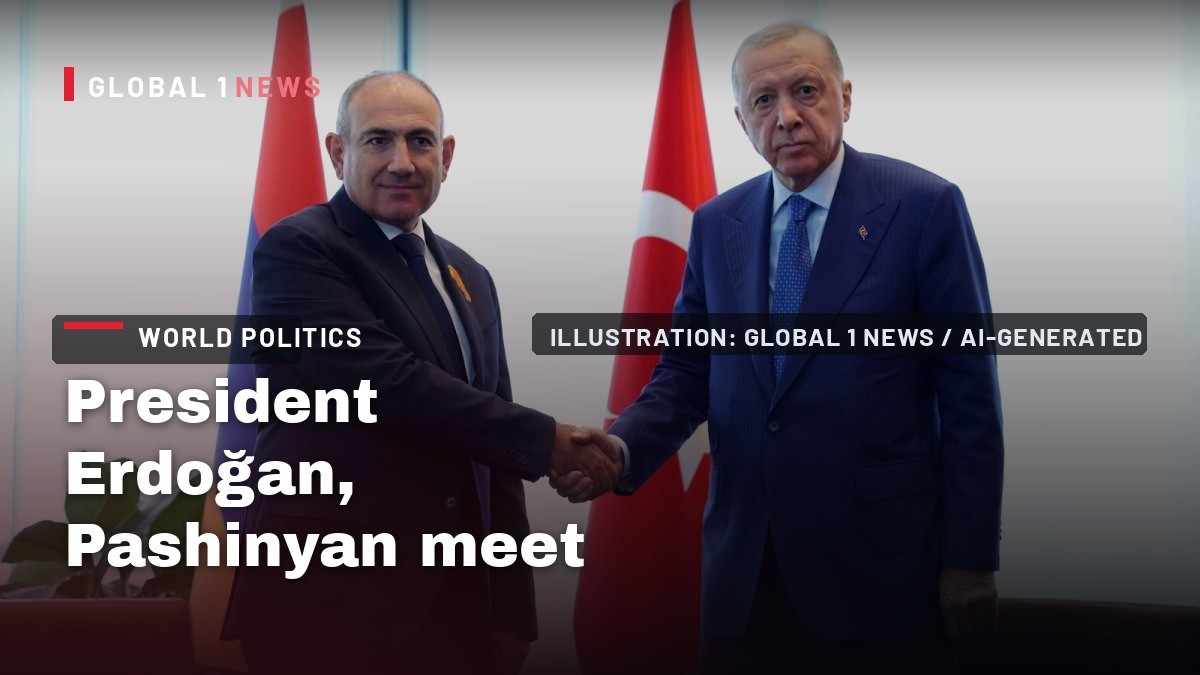
President Recep Tayyip Erdoğan’s meeting with Armenian Prime Minister Nikol Pashinyan in New York on 23 September 2026 underscores a subtle yet persistent shift in the South‑Caucasus diplomatic landscape. Held behind closed doors at the Turkish House on the sidelines of the 81st United Nations General Assembly, the encounter was part of a broader itinerary of bilateral talks that the Turkish president has been conducting throughout his visit to the U.N. headquarters. While the immediate substance of the dialogue was not disclosed, the very fact of the meeting signals a continuation of the years‑long normalization drive that Ankara and Yerevan have been nurturing since the appointment of special representatives in late 2021.
Historical backdrop to the Türkiye‑Armenia rapprochement
The relationship between Turkey and Armenia has been haunted by the legacy of the early 1990s, when the two neighbours closed their shared border in the wake of the Nagorno‑Karabakh conflict and the broader fallout from the dissolution of the Soviet Union. That closure, which has remained in place since 1993, has been a tangible reminder of the deep‑seated mistrust that still colours bilateral interactions. Yet, over the past few years, both capitals have taken incremental steps to thaw the freeze. The resumption of direct flights and air‑cargo links, for instance, has provided a modest but meaningful channel for people‑to‑people contact and commercial exchange, suggesting that the political will to move beyond the stalemate is gaining traction.
In late 2021, the two governments formalised their intent to pursue a structured dialogue by appointing special representatives tasked with steering the normalization process. This institutionalisation marked a departure from ad‑hoc contacts and signalled a willingness to engage in a systematic, agenda‑driven approach. While full diplomatic relations have not yet been restored, the establishment of these channels has laid the groundwork for the kind of high‑level engagement exemplified by the recent New York meeting.
Strategic calculus behind Ankara’s outreach
Turkey’s diplomatic overture towards Armenia cannot be examined in isolation from its broader regional strategy. Ankara has repeatedly framed progress in its bilateral ties with Yerevan as a component of a larger vision for stability in the South Caucasus. In particular, Turkish officials have linked the prospect of a comprehensive peace agreement between Armenia and Azerbaijan to the potential for deeper economic integration and connectivity across the region. By positioning itself as a facilitator of a durable settlement between Baku and Yerevan, Turkey hopes to enhance its own role as a regional hub for trade routes that could link the Black Sea to the Caspian and beyond.
From a strategic standpoint, a thaw in Türkiye‑Armenia relations also offers Ankara an additional lever in its competition with other great powers for influence in the Caucasus. While Russia has traditionally been the dominant external actor in the area, the evolving security architecture—particularly the growing involvement of the European Union and the United States—creates space for Turkey to assert a more proactive diplomatic profile. The normalization drive, therefore, serves both a pragmatic economic purpose and a geopolitical one, allowing Turkey to diversify its partnerships and hedge against the uncertainties of great‑power rivalry.
Implications for the Armenia‑Azerbaijan peace process
The renewed diplomatic energy between Turkey and Armenia arrives at a moment when the peace process between Yerevan and Baku remains fragile. Although a comprehensive settlement has not yet been achieved, the prospect of a broader regional framework that includes Turkey could provide the necessary impetus for both sides to compromise. Turkish officials have suggested that progress in bilateral ties with Armenia could act as a catalyst for a lasting peace agreement, implying that Ankara sees its own normalization as a confidence‑building measure that might reduce the security dilemmas facing both capitals.
In practical terms, the reopening of transport corridors—such as the direct flights and cargo links already reinstated—could lay the logistical foundation for future trade routes that would benefit a post‑conflict South Caucasus. Enhanced connectivity would not only facilitate the movement of goods but also promote people‑to‑people contact, a factor often cited as essential for sustaining peace. By aligning its diplomatic outreach with the broader goal of regional economic integration, Turkey is positioning itself as a stakeholder whose interests are intertwined with the stability of the Armenian‑Azerbaijani frontier.
Economic dimensions of the normalization trajectory
While the political symbolism of the Erdoğan‑Pashinyan meeting is evident, the economic undercurrents are equally significant. The resumption of direct air links, for instance, has already begun to generate modest commercial activity, allowing Armenian exporters to reach Turkish markets more efficiently and vice versa. This nascent trade flow, though limited in scale, demonstrates how incremental confidence‑building measures can translate into tangible economic benefits.
Beyond bilateral trade, the prospect of a more integrated South Caucasus corridor holds strategic allure for Turkey’s broader energy ambitions. The region sits at the crossroads of several potential pipeline routes that could diversify Europe’s energy supplies, a goal that aligns with Ankara’s long‑standing interest in positioning itself as an energy transit hub. By fostering stability and connectivity, Turkey hopes to attract investment in infrastructure projects that could link the Caspian oil and gas fields to Mediterranean ports, thereby enhancing its leverage in the global energy market.
Domestic political considerations in Ankara and Yerevan
Both leaders must also navigate domestic political realities as they pursue normalization. In Turkey, President Erdoğan’s foreign policy agenda is closely scrutinised by a public that remains sensitive to historical grievances and national security concerns. Demonstrating tangible progress—such as the ability to host high‑level talks in a neutral venue like the Turkish House in New York—offers a way to showcase diplomatic achievements without provoking domestic backlash.
Similarly, Prime Minister Pashinyan must balance the expectations of a constituency that has endured decades of conflict and economic hardship. Advancing talks with Turkey, especially in the context of broader regional peace initiatives, can be framed as a pragmatic step towards improving Armenia’s economic prospects and reducing its strategic isolation. The political calculus for both sides thus intertwines external diplomatic gains with internal legitimacy, making each incremental advance a carefully calibrated move.
Future outlook and potential challenges
The path towards full diplomatic relations remains fraught with obstacles. The land border, closed since 1993, has yet to be fully reopened, and the absence of a formal diplomatic mission on either side underscores the provisional nature of the current engagement. Moreover, any breakthrough will likely depend on the broader regional dynamics, including the pace of a comprehensive peace settlement between Armenia and Azerbaijan and the willingness of external powers to support a stable South Caucasus framework.
Nevertheless, the very occurrence of a closed‑door meeting between Erdoğan and Pashinyan at a high‑profile international forum signals a willingness to keep dialogue channels open. As the 81st UN General Assembly proceeds, the diplomatic choreography in New York may serve as a barometer for the momentum of the normalization process. Should subsequent rounds of talks build on this encounter, the prospects for a more integrated, economically vibrant South Caucasus—anchored by Turkey’s strategic outreach—could become a tangible component of the region’s evolving security architecture.
Regional ramifications and the broader Middle‑East context
The Türkiye‑Armenia dialogue must also be situated within the wider Middle‑East environment, where Sunni‑Shia competition, great‑power rivalry, and energy security intersect. Turkey’s engagement with Armenia, a predominantly Christian nation, adds a nuanced layer to Ankara’s balancing act between its traditional Sunni allies and the Shia axis led by Iran. By fostering ties with Yerevan, Turkey can diversify its diplomatic portfolio, potentially offsetting pressures from other regional actors.
Furthermore, the normalization effort dovetails with Turkey’s broader foreign‑policy thrust of expanding its influence through economic corridors and diplomatic outreach. As the United Nations session draws global attention to issues ranging from climate change to security, the subtle yet strategic moves made on the sidelines—such as the Erdoğan‑Pashinyan meeting—illustrate how regional actors leverage multilateral platforms to advance bilateral agendas. In this intricate tapestry of competing interests, the incremental steps taken in New York may well become a cornerstone of a longer‑term strategy aimed at reshaping the geopolitical and economic contours of the Near East and the South Caucasus alike.
This article was produced with AI-assisted research and editorial support. Reporting is based on the source material cited below. Sources: Daily Sabah Middle East; dailysabah.com; Global1.News (24 September 2026).
By Malik Hassan, Staff Writer
What's Your Reaction?
 Like
0
Like
0
 Dislike
0
Dislike
0
 Love
0
Love
0
 Funny
0
Funny
0
 Wow
0
Wow
0
 Sad
0
Sad
0
 Angry
0
Angry
0

Middle East Correspondent at Global1.News. Based in Beirut, covering politics, conflict, energy, and society across the Middle East. Brings context and depth to a region often reduced to headlines.












Comments (0)