
Prachin Buri Residents Vow to Stay Until PM Signs Order Halting EEC Inclusion
Residents and environmental advocates in Prachin Buri rallied on Monday, 17 August, demanding Prime Minister Anutin Charnvirakul sign a formal order cancelling the province's inclusion in the Eastern Economic Corridor, vowing to stay at the provincial government complex until the document is delivered.
Prachin Buri Residents Vow to Stay Until PM Signs Order Halting EEC Inclusion
Prachin Buri, Thailand - The morning air around the Prachin Buri Provincial Government Complex was thick with more than just tropical humidity on Monday, 17 August. It carried the determined voices of farmers, community leaders, and environmental advocates who have planted themselves firmly in the soil of their province, refusing to move until Prime Minister Anutin Charnvirakul puts pen to paper. Their demand is simple, yet profound: formally cancel the plan to bring Prachin Buri into the Eastern Economic Corridor (EEC).
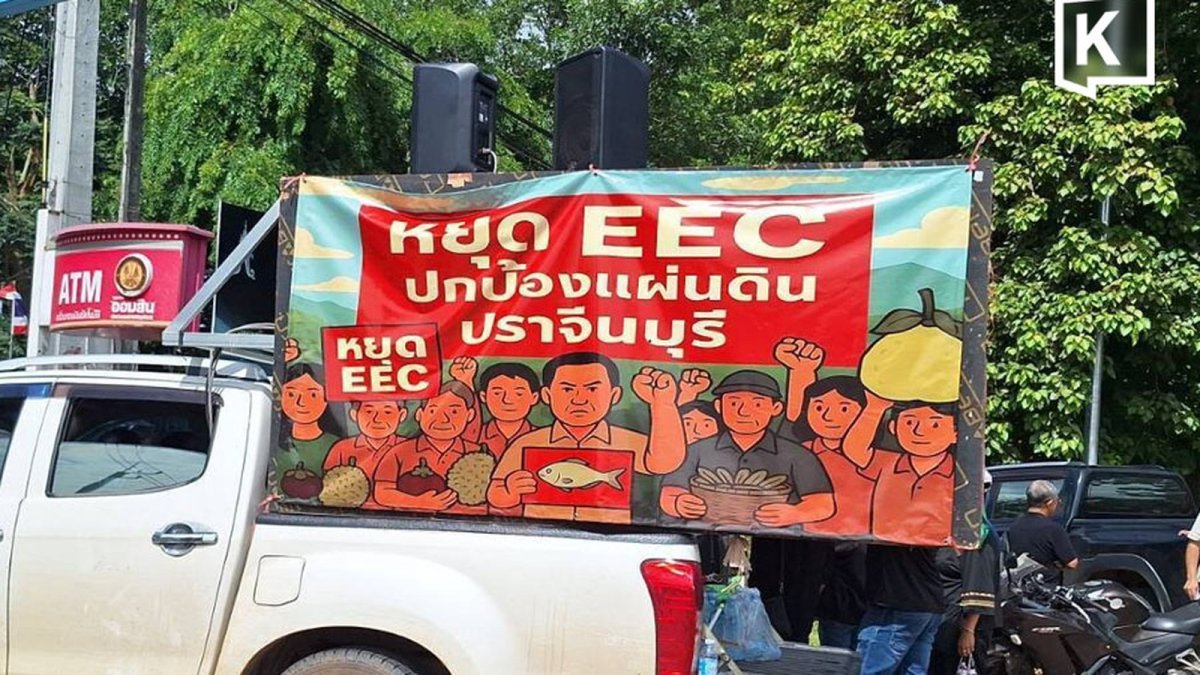
This is not a fleeting protest. It is a stand rooted in the deep Thai values of chumchon (community) and the sacred duty to protect the land for future generations. As the sun climbed over the Mai Khet subdistrict in Mueang Prachin Buri district, members of the Prachin Strong Network, alongside local residents, unfurled banners that called on authorities to reconsider development plans they fear will irrevocably alter their way of life.
A Community's Stand Against a 20 May Decision
The protest traces its urgency to a single date: 20 May 2026. On that day, the Eastern Economic Corridor Policy Committee, chaired by Prime Minister Anutin, agreed in principle to include Prachin Buri as the fourth EEC province. For the residents here, that decision felt like a verdict handed down without a fair trial. Chalermchai Klahan, reading a statement to the crowd, reiterated that the committee's decision was made despite repeated objections and a mountain of supporting information submitted by the network, which they believe was never given meaningful consideration.
The Prachin Strong Network, led by environmental human rights defenders Sumet Rianphongnam and Sunthorn Khomkhai, has been meticulous in its opposition. They have not simply shouted into the wind; they have documented, petitioned, and sought dialogue. On 30 June, they met with Deputy Prime Minister Phiphat Ratchakitprakarn, who pledged to raise their demands directly with Prime Minister Anutin. Yet, as the protesters noted on Monday, more than 45 days have passed since that promise, with no clear response or visible progress. The patience of the community, deeply rooted in the Buddhist principle of khanti (forbearance), is wearing thin.
The Symbolism of the Mask and the Money
In the midst of the peaceful gathering, one demonstrator offered a striking visual commentary that captured the crowd's anxieties. Wearing a mask designed to resemble the provincial governor, with the word "China" written across his stomach and fake 1,000-baht banknotes hung around his neck, he scattered the imitation currency on the ground. The organisers explained this was a symbolic protest against concerns over Chinese-funded factories and the perceived mishandling of industrial development by local authorities. It was a stark, theatrical reminder that for many here, the EEC is not an abstract policy but a tangible threat to their farms, their rivers, and their health.
The fear is not unfounded. Since the EEC was established in 2017 across Chonburi, Chachoengsao, and Rayong, the landscape east of Bangkok has transformed. Farmland has increasingly given way to industrial estates, and communities in those provinces have long battled environmental fallout, including pollution and toxic waste issues. The protesters in Prachin Buri look at their neighbours in Rayong and Chonburi and see a cautionary tale. They fear that inclusion in the EEC will turn their province into a dumping ground for waste-processing, steel-smelting, and chemical plants, echoing the moniker some have already used: the "world's trash can."
Demands for Transparency and a Signed Document
The network has been precise in its demands. They are calling on the government and the EEC Policy Committee to reverse the 20 May decision and formally halt the process. Beyond that, they are demanding the release of the information and studies used in the decision-making process, particularly those conducted by Thammasat University, which they argue lack transparency. They want meaningful local participation, not just a token public hearing. And they are insisting that existing problems-pollution, industrial waste, illegal businesses, weak law enforcement, and inadequate compensation for affected communities-be addressed before any further industrial expansion is even considered.
On 13 August, just days before this protest, Sunthorn Khomkhai and more than 30 representatives of the Prachin Khem Kheng Network took their case to the heart of the capital. They submitted a petition with 11,207 names to Prime Minister Anutin at the Government Complaint Center 1111 in Bangkok. The 11,207 signatures represent a powerful statement of community opposition, organisers said. Yet the response from the government has been, in their view, insufficient.
A Meeting That Failed to Satisfy
At about 11:00 on Monday, the protesters received a visit from Prachin Buri Deputy Governor Chanathip Khokmanee and Prachin Buri MP Amnat Wilawan. The officials conveyed that the government had received their concerns and that the project had already been halted. But for the crowd, words were not enough. They demanded to speak directly with the provincial governor and insisted on a signed document from Prime Minister Anutin formally suspending and cancelling Prachin Buri's inclusion in the EEC. MP Amnat said he would raise the demand for a signed cancellation with the prime minister, but the protesters remained unmoved.
As the afternoon wore on, the demonstrators made their intentions clear: they would remain overnight at the government complex until they received the document. In a gesture that underscored their peaceful and practical approach, they asked provincial officials to provide access to toilets and shelter inside the complex in case it rained. This is not a mob seeking chaos; it is a community seeking accountability, willing to endure discomfort for the sake of their homes.
Why This Matters for Thailand's Development Path
This standoff in Prachin Buri is more than a local dispute; it is a referendum on Thailand's development model. The EEC was conceived as a flagship project to attract high-tech investment and propel the nation into a new economic era. But the question that hangs in the humid air here is: at what cost? For the farmers who have tilled these lands for generations, the promise of industrial jobs rings hollow if it means their children cannot drink the water or breathe the air.
The protesters are not anti-development. They are pro-consultation. They are asking for a seat at the table, for their voices to be heard before decisions are made, not after. This aligns with a broader regional conversation across ASEAN, where communities are increasingly demanding that economic growth be balanced with environmental stewardship and social equity. The outcome of this protest could set a precedent for how other provinces, and indeed other nations in Southeast Asia, handle the tension between industrial ambition and community rights.
As the sun began to set over the Prachin Buri Provincial Government Complex, the banners still waved, and the voices remained steady. The protesters, grounded in their love for their land and their faith in the power of collective action, settled in for a long night. They are waiting for a signature, but they are really waiting for a sign that their government respects them enough to listen. In a country where the concept of nam jai (generosity of spirit) is cherished, they are asking for a reciprocal gesture of good faith from those in power. The night is long, but the resolve of the chumchon is longer.
By Ann Srisawat, Staff Writer
This article was produced with AI-assisted research and editorial support. Sources: Khaosod English, Thai Enquirer, Thailand Edition.
What's Your Reaction?
 Like
0
Like
0
 Dislike
0
Dislike
0
 Love
0
Love
0
 Funny
0
Funny
0
 Wow
0
Wow
0
 Sad
0
Sad
0
 Angry
0
Angry
0

Southeast Asia Correspondent at Global1.News. Based in Bangkok, covering Thai and Southeast Asian politics, economy, technology, and culture. Deep regional perspective on one of the world's most dynamic regions.















Comments (0)