
13 Years of the Belt and Road: What Has Actually Changed?
13 Years of the Belt and Road: What Has Actually Changed? In a recent CGTN report, the question is posed directly: "What connects a village in Southeast Asia, a railway crossing Europe and a factory in Africa?" The answer, as the retrospective makes clear, is the Belt and Road Initiative (BRI)....
In a recent CGTN report, the question is posed directly: "What connects a village in Southeast Asia, a railway crossing Europe and a factory in Africa?" The answer, as the retrospective makes clear, is the Belt and Road Initiative (BRI). More than 13 years after President Xi Jinping first unveiled the vision in Astana, Kazakhstan in September 2013, followed by the 21st Century Maritime Silk Road in Jakarta, Indonesia in October 2013, the initiative has evolved from a grand concept into a sprawling network of infrastructure, trade corridors, and institutional frameworks. The video is a timely reminder that the BRI is now a structural feature of the global economy. Yet what has actually changed - for China, for partner nations, and for the international order - demands more granular examination than celebratory retrospectives provide.
BRI at 13: From megaprojects to "small but beautiful" connectivity
Beijing - This week - As the Belt and Road Initiative enters its second decade, Chinese officials are framing the current period as the "next golden decade," yet the data tells a more nuanced story of slowdown, recalibration, and a strategic pivot toward sustainability and technological sophistication. The CGTN retrospective highlights the initiative's enduring appeal, but the real transformation lies in how Beijing has adapted its flagship foreign policy to post-pandemic realities, rising debt concerns, and shifting geopolitical competition.
The scale of the initiative is undeniable. More than 150 countries and over 30 international organizations have signed Belt and Road cooperation documents, with China having signed over 200 such agreements. China's trade with BRI partner countries reached 23.6 trillion yuan in 2025, up 6.3 percent year on year, accounting for 51.9 percent of China's total trade, according to customs data. Beneath the aggregate data lies a more complex story of recalibration, of transition from breakneck expansion to consolidation and quality control.
The Institutional Maturation of a Global Framework
The most profound change over 13 years may not be visible in concrete or steel, but in the institutional architecture that now underpins the BRI. What began as bilateral memoranda has evolved into a permanent feature of China's governance. The initiative was written into the Communist Party of China Constitution in 2017 and is now anchored in China's national constitution, a symbolic elevation that signals its permanence in Beijing's strategic outlook. Over 20 specialized multilateral cooperation platforms have been established under the BRI umbrella, ranging from the Asian Infrastructure Investment Bank to the Silk Road Fund, creating a dense web of financial and policy mechanisms that outlast any single administration.
The December 2024 Belt and Road construction symposium in Beijing marked a pivotal moment in this institutional evolution. President Xi stressed the need to comprehensively advance high-quality Belt and Road cooperation, focusing on connectivity and creating "new space for win-win development at a higher level and with greater resilience and sustainability." Chinese officials framed this as charting the course for the "next golden decade." The language is telling: the emphasis has shifted from quantity to quality, from speed to resilience. The 15th Five-Year Plan (2026-2030), whose recommendations were published in November 2025, explicitly prioritizes high-quality development, technological innovation, and "small but beautiful" Belt and Road projects - a recognition that the era of mega-projects financed by massive state-backed loans has reached its limits.
The Hard Numbers: Trade, Railways, and the New Geography of Exchange
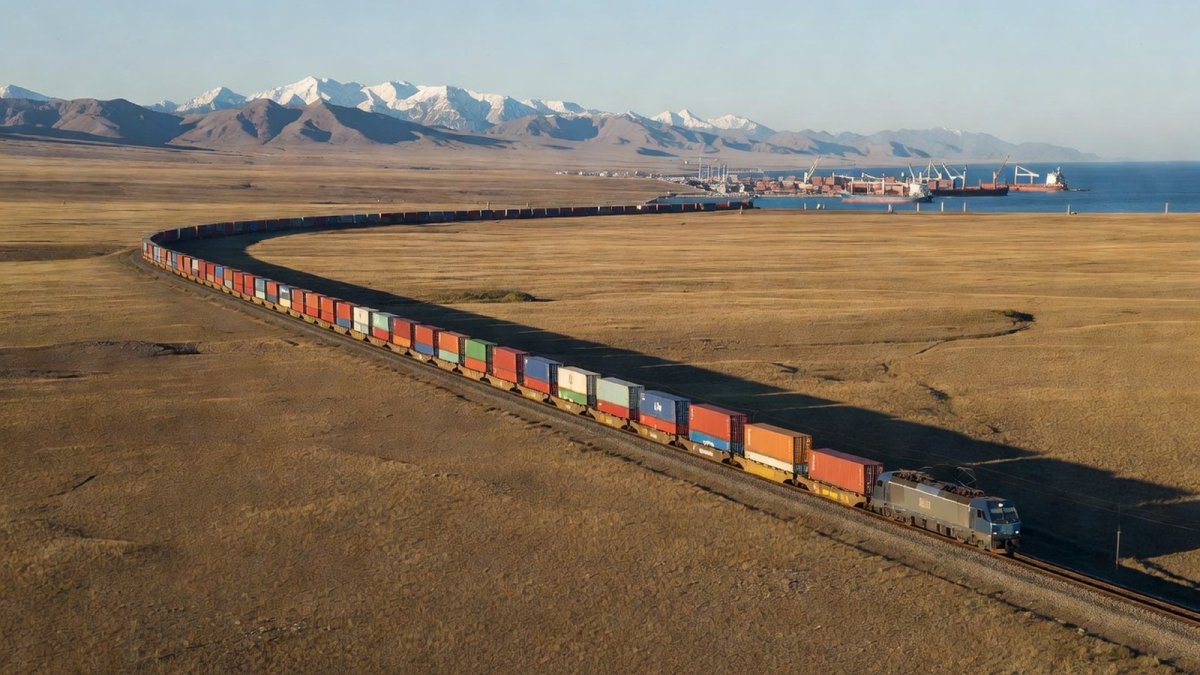
The China-Europe Railway Express has become the initiative's most visible success story. By late November 2025, the service had completed a cumulative 120,000 freight train trips, transporting goods valued at over 490 billion US dollars. The network now reaches 232 cities in 26 European countries and more than 100 cities in 11 Asian countries. The growth trajectory is remarkable: 2024 saw about 19,000 trips, a 10.4-fold increase from the 1,702 trips recorded in 2016, an average annual growth rate of approximately 35 percent. The overland corridor, once dismissed as a geopolitical fantasy, has become a functioning commercial artery.
Hong Kong's experience is instructive: external trade with Belt and Road economies other than Mainland China surged almost 78 percent between 2013 and 2024, a growth rate 3.2 times that of Hong Kong's trade with all economies. This suggests that the BRI has created genuine new trade linkages, not merely redirected existing flows. However, the investment picture is more sobering. According to Green BRI, a Beijing-based think tank, Chinese investments in 138 BRI-participating countries slid 54 percent from 2019 to 47 billion US dollars in 2025, the lowest amount since the initiative was unveiled - a deliberate cooling of the most aggressive phase of overseas lending.
The Strategic Pivot: From Speed and Scale to Sustainability
The investment slowdown is not an accident; it is a policy choice. Andrew Small, senior fellow with the German Marshall Fund's Asia program, captured the shift succinctly when he told the Straits Times: "The first phase of the Belt and Road is effectively over... the old one, almost entirely focused on speed and scale, is no longer sustainable." This assessment aligns with observable Chinese behavior. The third Belt and Road Forum in October 2023 saw President Xi announce eight steps to support high-quality cooperation, explicitly moving away from the megaproject model. The new emphasis is on the "Green Silk Road," the "Digital Silk Road," and the "Health Silk Road" - sub-brands that prioritize environmental standards, technological connectivity, and public health infrastructure.
This recalibration reflects both external pressures and internal lessons. The debt concerns that have dogged the initiative, particularly accusations of "debt-trap diplomacy" leveled by Western critics, have forced Beijing to adopt a more cautious approach. Cases such as Sri Lanka's Hambantota port have become flashpoints in this narrative, though both China's Foreign Ministry and MOFCOM have repeatedly rejected the label, arguing that projects are based on mutual agreement and commercial principles. Notably, Sri Lanka itself has pushed back on the "debt trap" framing, insisting that decisions were made by the Sri Lankan government. The shift toward smaller, more sustainable projects is also a pragmatic response to partner countries facing constrained fiscal space.
Flagship Projects and the Geopolitical Chessboard
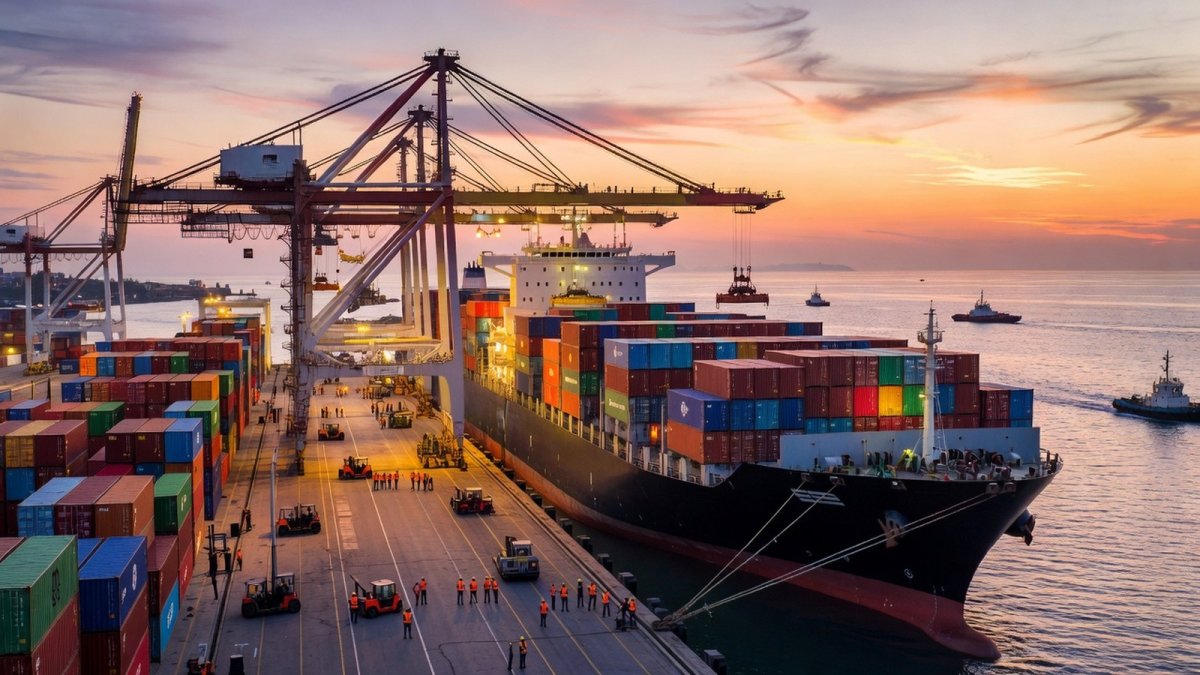
Despite the pivot toward "small but beautiful" projects, the BRI's legacy will be defined by its flagship infrastructure. The China-Pakistan Economic Corridor (CPEC), including the Gwadar port in Balochistan province, remains the strategic anchor of the initiative, linking China's western regions to the Arabian Sea. The Jakarta-Bandung high-speed rail in Indonesia, which opened in October 2023 as the first high-speed rail in Southeast Asia, represents a technological showcase that Beijing hopes to replicate across the region. The Mombasa-Nairobi railway in Kenya and the Piraeus port in Greece demonstrate the initiative's reach into Africa and Europe. These projects are instruments of geopolitical influence extending China's strategic footprint across the Indo-Pacific and beyond.
The geopolitical calculus is particularly evident in South Asia. Bangladesh was the first South Asian country to sign a Belt and Road cooperation document in 2016, and China has also proposed a China-Bangladesh-Myanmar economic corridor. These initiatives are designed to create alternative economic pathways that reduce dependence on traditional maritime chokepoints and enhance China's regional leverage. For partner countries, the appeal is straightforward: access to Chinese capital, technology, and markets without the conditionalities typically attached to Western development finance. For China, the BRI secures resource supply chains, expands export markets, and builds diplomatic allies that can support Beijing's positions in multilateral forums.
The Next Golden Decade: Challenges and Opportunities
As the BRI enters its second decade, the challenges are as significant as the opportunities. The investment slowdown suggests that the era of easy financing is over, and China will need new models to sustain momentum. Green development and digital connectivity offer potential avenues for growth, but these sectors face different competitive dynamics than traditional infrastructure. The "small but beautiful" approach may generate less geopolitical drama, but also less visible strategic gains. Whether the BRI can maintain its relevance amid intensifying great-power competition, particularly with the United States and its allies promoting alternative infrastructure initiatives, remains an open question.
The institutionalization of the BRI - its embedding in China's constitutional and party structures - suggests that Beijing is committed to the long game. The initiative is no longer a policy; it is a permanent feature of China's engagement with the world. The next golden decade will be defined not by the scale of Chinese investment, but by the quality of projects, the sustainability of debt structures, and the ability of the BRI to adapt to the changing needs of partner countries. The CGTN retrospective asks what has changed; the more pertinent question is what will change next. For the Global South, the BRI remains a viable alternative to Western-dominated development finance. For China, it is a test of whether it can translate economic power into lasting geopolitical influence without repeating the mistakes of the first phase.
By Prof. Marcus Chen, Staff Writer
This article was produced with AI-assisted research and editorial support. Reporting is based on sources cited in the article.
What's Your Reaction?
 Like
0
Like
0
 Dislike
0
Dislike
0
 Love
0
Love
0
 Funny
0
Funny
0
 Wow
0
Wow
0
 Sad
0
Sad
0
 Angry
0
Angry
0

World Politics Analyst at Global1.News. Based in Beijing, covering US-China relations, global trade, and geopolitical strategy. Brings deep analytical perspective to the power dynamics shaping international affairs.












Comments (0)