
PM Burnham duped by fake Susie Wiles in security scare
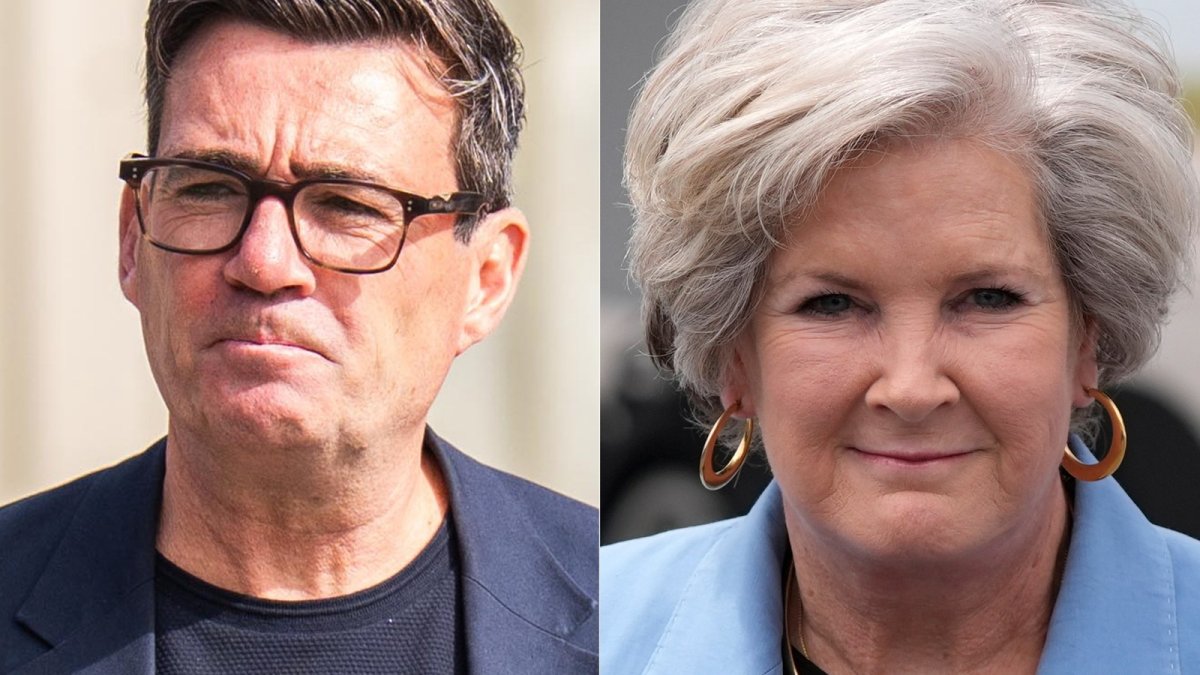
The Prime Minister, Andy Burnham, exchanged messages with an individual posing as White House chief of staff Susie Wiles, in a security breach that has sent ripples through Westminster and Washington. The contact, first reported by Politico, was terminated after only a “few messages” when Downing Street became suspicious of the communication’s legitimacy. The incident, which occurred before Burnham became suspicious, has been referred to the appropriate authorities.
The Prime Minister, Andy Burnham, exchanged messages with an individual posing as White House chief of staff Susie Wiles, in a security breach that has sent ripples through Westminster and Washington. The contact, first reported by Politico, was terminated after only a “few messages” when Downing Street became suspicious of the communication’s legitimacy.
The incident, which occurred before Burnham became suspicious, has been referred to the appropriate authorities. It raises fresh questions about the vulnerability of senior political figures to sophisticated impersonation tactics, particularly in an era of heightened cyber espionage and disinformation.
PM Burnham duped by fake Susie Wiles in security scare
London, UK – 17 August 2026 — The Prime Minister, Andy Burnham, was targeted by an impersonator posing as White House chief of staff Susie Wiles, in a communication that was quickly identified as illegitimate and reported to the authorities. The exchange, which involved only a “few messages” and no conversation, was first revealed by Politico and has since been confirmed by multiple government sources. The British embassy in Washington was sufficiently concerned to raise the matter directly with the White House, underscoring the diplomatic sensitivity of the episode.
Downing Street has declined to comment on the specifics, with a UK government spokesperson stating: “We do not comment on national security matters.” However, a White House official told the BBC that the latest incident “had nothing to do” with Wiles’ phone being hacked, a clarification that seeks to distance this event from previous breaches. A source close to Wiles told the Daily Beast that the Trump aide did not even possess Burnham’s personal mobile number, suggesting the impersonator was working from outdated or incomplete contact lists.

This is not the first time that Wiles has been used as a vector for such attacks. In May 2025, the FBI and the White House launched an urgent probe after senior politicians and business leaders received calls and messages from someone purporting to be Wiles. That incident involved an impersonator using her contacts file to message top US officials, including senators, governors, and executives. The current episode appears to be a distinct, albeit related, attempt, with the impersonator targeting the UK Prime Minister directly.
The timing of this revelation is particularly awkward for the Burnham administration, which has sought to project an image of robust digital security and transatlantic competence. The Prime Minister, who succeeded Keir Starmer on 20 July 2026, has made strengthening the UK’s cyber defences a cornerstone of his early tenure. This incident, while minor in scope, threatens to undermine that narrative, especially given the precedent of high-profile hoaxes that have plagued British politics in recent years.
A Pattern of Sophisticated Impersonation
The Burnham episode fits a disturbing pattern of impersonation attacks targeting senior UK politicians. In 2024, the Foreign, Commonwealth & Development Office (FCDO) confirmed that then-Foreign Secretary David Cameron had fallen victim to a hoax call with someone pretending to be former Ukrainian President Petro Poroshenko. Lord Cameron exchanged text messages with the impersonator before the ruse was discovered. The FCDO released details publicly over fears that the incident could be “manipulated” by hostile actors, a decision that was widely praised for its transparency.
Two years earlier, in 2022, two government ministers were targeted by an imposter pretending to be Ukraine’s Prime Minister Denys Shmyhal. Defence Secretary Ben Wallace blamed Russian “dirty tricks” for the calls, which were made via Microsoft Teams. Home Secretary Priti Patel confirmed she also received them. A Ministry of Defence source described the video call as “fairly sophisticated”, indicating that the impersonators had access to detailed biographical information and were able to mimic the mannerisms of the real officials.
These incidents highlight a systemic vulnerability in the UK’s political communication infrastructure. While the Burnham exchange was brief and quickly terminated, the fact that the Prime Minister’s personal contact details were accessible to an impersonator is a cause for concern. It suggests that either the Prime Minister’s personal security protocols have gaps, or that the impersonator had access to a compromised contact list, possibly from a third-party source.
The UK’s National Cyber Security Centre (NCSC), part of GCHQ, has repeatedly warned about the rise of “deepfake” and impersonation attacks. The Burnham incident is likely to accelerate calls for a review of communication protocols at the highest levels of government, including the use of encrypted messaging apps and verification procedures for new contacts.
For the public, this incident raises uncomfortable questions about the security of their own data. If the Prime Minister can be targeted by an impersonator, what does that mean for ordinary citizens who are increasingly subjected to phishing scams and fraudulent calls? The government’s response to this incident will be closely watched, not just for its handling of the immediate security breach, but for its broader implications for digital trust in the UK.
White House Response and the Wiles Factor
The White House has moved to downplay the significance of the Burnham exchange, with officials stressing that the contact was brief and quickly resolved. However, the fact that the British embassy in Washington felt compelled to raise the matter directly with the White House suggests that the diplomatic fallout was more significant than initially acknowledged. The embassy’s decision to escalate the issue indicates that there were concerns about the potential for the impersonator to cause further damage, either by leaking the messages or by using the contact to gain access to other officials.
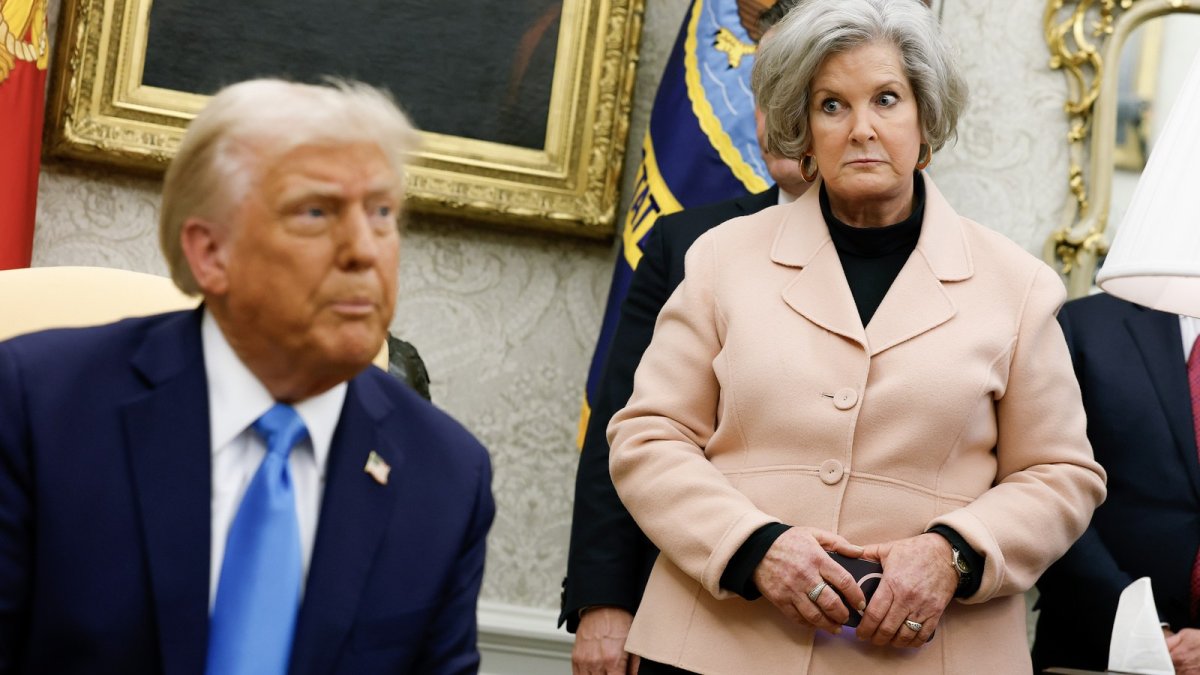
Susie Wiles, 68, is a key Trump ally and the first woman to serve as White House chief of staff. She has been a central figure in the Trump administration, known for her steely management style and her ability to navigate the often chaotic world of Washington politics. Trump himself has dismissed the earlier hacking reports, saying: “Nobody can impersonate Susie. There’s only one Susie. There’s only one.” He called Wiles “an amazing woman” and expressed confidence that “she can handle it.”
Wiles’ team has been quick to distance her from the Burnham incident, with a source close to her telling the Daily Beast that she did not have Burnham’s cell number. This suggests that the impersonator was working from a list of contacts that may have been obtained from a third party, possibly a political ally or a business associate of the Prime Minister. The provenance of that contact list is likely to be a focus of any investigation now under way.
The White House’s response has been carefully calibrated to avoid any suggestion that Wiles herself was compromised. However, the fact that her name continues to be used in impersonation attempts is a significant reputational risk for the Trump administration. It also raises questions about the security of the White House’s own communication systems, particularly given the December 2025 Signalgate scandal, in which Defence Secretary Pete Hegseth discussed details of a military operation in a Signal group chat to which a journalist had been added. That incident, which was detailed in a US defence department report, concluded that Hegseth had endangered the lives of US service personnel.
Domestic Political Ramifications
For Burnham, this incident is an unwelcome distraction from his domestic agenda. The Prime Minister has been focused on delivering his domestic agenda, including significant investment in the NHS, housing and green energy. The security scare threatens to dominate the news cycle, forcing Burnham to answer questions about his personal security protocols rather than his policy initiatives.
The opposition has been quick to seize on the incident, with senior Conservative figures demanding clarity on how the Prime Minister’s communications are verified and protected. Questions are expected at the next session of Prime Minister’s Questions, with MPs across the House seeking assurances that such a breach cannot recur.
However, government allies have pushed back, arguing that the incident is evidence that the Prime Minister’s security protocols worked. “The fact that the messages were quickly identified as illegitimate and reported to the authorities shows that our systems are functioning as they should,” a Downing Street source said. “The Prime Minister acted swiftly and appropriately.”
The incident also has implications for the UK’s relationship with the United States. Burnham has sought to build a close working relationship with the Trump administration, despite ideological differences. The impersonation attempt could strain that relationship, particularly if it emerges that the impersonator was attempting to extract sensitive information or to sow discord between the two governments.
For the public, the incident is a reminder of the persistent threat posed by cyber espionage and disinformation. The UK has been a target of Russian, Iranian, and Chinese cyber operations, and the Burnham incident is likely to be seen as part of a broader pattern of hostile activity. The government’s response will be scrutinised for its effectiveness in deterring future attacks and in protecting the integrity of the UK’s political system.
Historical Precedents and Lessons Learned
The Burnham incident is the latest in a long line of hoax calls and impersonation attempts that have targeted British politicians. In 2018, then-Foreign Secretary Boris Johnson was the target of a prank call from someone pretending to be the Armenian Prime Minister. In 2015, a Russian prankster duo known as “Vovan and Lexus” successfully called several world leaders, including then-Prime Minister David Cameron, posing as Ukrainian officials.
These incidents have often been dismissed as embarrassing but harmless pranks. However, the increasing sophistication of impersonation techniques, combined with the growing use of AI-generated voice and video, has elevated the threat level. The Burnham incident, while brief, demonstrates that even the most senior political figures are vulnerable to these attacks.
The UK government has taken steps to address the threat, including the establishment of the National Cyber Security Centre and the introduction of the Online Safety Act. However, the Burnham incident suggests that more needs to be done to protect political leaders from targeted impersonation attacks. This could include the use of verified communication channels, the implementation of multi-factor authentication for all official communications, and the development of rapid-response protocols for when an attack is detected.
For the public, the incident is a reminder of the importance of digital literacy and vigilance. As impersonation techniques become more sophisticated, it is increasingly difficult to distinguish between genuine and fraudulent communications. The government has a responsibility to lead by example, ensuring that its own communication systems are secure and that its leaders are protected from these threats.
What Happens Next?
The immediate priority for Downing Street is to contain the fallout from the incident and to reassure the public that the Prime Minister’s security is not compromised. The government has confirmed that the matter has been referred to the appropriate authorities, with security officials and the National Cyber Security Centre expected to be involved in any assessment.
In the longer term, the incident is likely to prompt a review of communication protocols at the highest levels of government. This could include the introduction of new verification procedures for all incoming communications, the use of secure messaging apps with end-to-end encryption, and the implementation of stricter controls on the sharing of personal contact details.
The White House has indicated that it does not believe the incident is linked to any broader security breach, and that Wiles’ phone was not compromised. However, the fact that the impersonator was able to target the Prime Minister suggests that there is a gap in the security architecture that needs to be addressed.
For Burnham, the incident is a test of his leadership. How he handles the fallout will be closely watched by both the public and his political opponents. If he is seen to be transparent and decisive, he may emerge from the incident with his reputation enhanced. If he is seen to be evasive or complacent, the incident could become a significant political liability.
The UK’s allies will also be watching closely. The incident is a reminder that even the closest of allies are not immune to the threat of cyber espionage and disinformation. The UK’s response will be seen as a test of its resilience and its commitment to protecting its democratic institutions from foreign interference.
Conclusion: A Wake-Up Call for Digital Security
The Burnham incident is a wake-up call for the UK’s political establishment. It demonstrates that no one is immune to the threat of impersonation, and that the security of our digital communications cannot be taken for granted. The Prime Minister’s swift action in reporting the incident is commendable, but it also highlights the need for a more robust and proactive approach to digital security.
As the UK navigates an increasingly complex geopolitical landscape, the protection of its political leaders from cyber threats must be a top priority. The government must invest in the tools and training needed to detect and respond to impersonation attacks, and it must work with its allies to share intelligence and best practices.
For the public, the incident is a reminder of the importance of staying vigilant in the face of digital threats. Whether it is a phishing email, a fraudulent phone call, or a sophisticated impersonation attempt, the principles of caution and verification are more important than ever. The Burnham incident may be a minor episode in the grand scheme of things, but it is a reminder that the threat is real, and that we must all do our part to protect ourselves and our institutions.
By Erica Thornton, Staff Writer
This article was produced with AI-assisted research and editorial support. Reporting is based on sources cited in the article.
What's Your Reaction?
 Like
0
Like
0
 Dislike
0
Dislike
0
 Love
0
Love
0
 Funny
0
Funny
0
 Wow
0
Wow
0
 Sad
0
Sad
0
 Angry
0
Angry
0

US Politics and Policy Correspondent at Global1.News. Based in Washington DC, covering American politics, policy, elections, and the courts. Knows how the system works and tells you what it actually means.














Comments (0)