
Panama Canal to cut number of ships passing through due to El Niño
Panama Canal cuts daily transits from 36 to 32 due to severe El Niño drought, with rainfall down 34% and water inflows down 44%. Draft reductions and water-saving measures follow, threatening $3bn revenue and global supply chains. Crisis mirrors broader Latin American water stress.
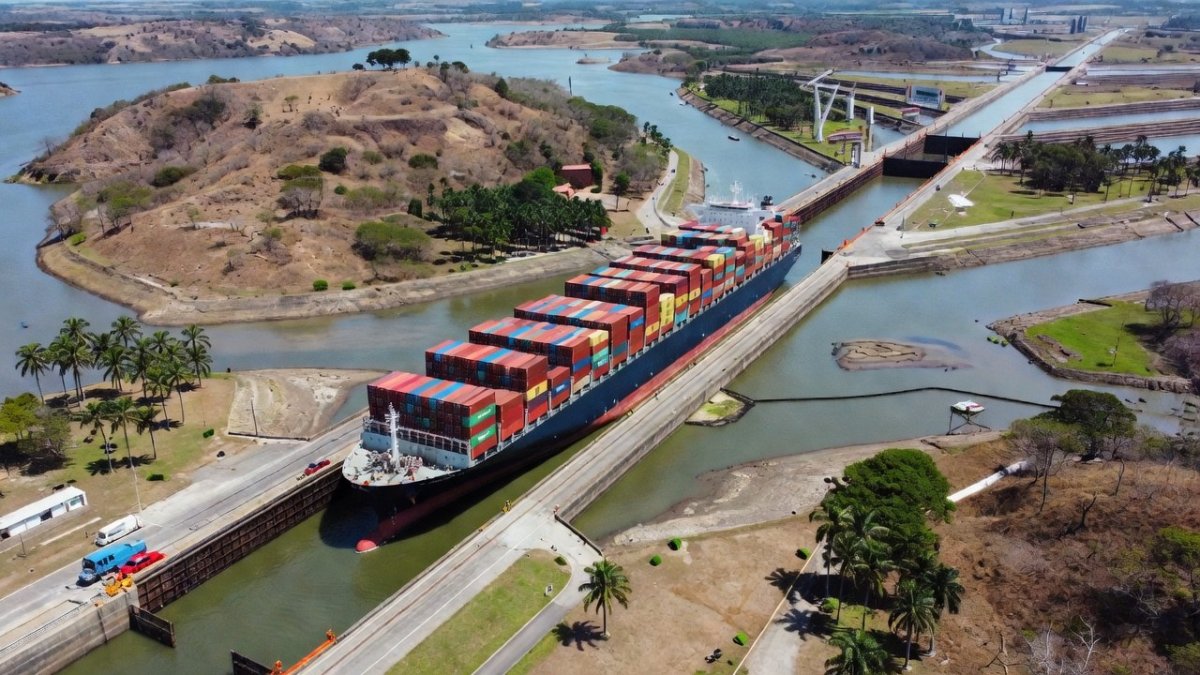
The Panama Canal Authority (ACP) is tightening the screws on global shipping once again, announcing this week a reduction in daily vessel transits as a punishing El Niño event drains the watershed that feeds one of the world's most critical trade arteries. The move, which will see daily crossings drop from 36 to 32 by mid-September, is a stark reminder that climate change is no longer a distant threat but a present-day disruptor of supply chains, economies, and daily life across Latin America. For a region already grappling with water stress from the Amazon to the Andes, the canal's plight is a bellwether for a future defined by scarcity.
Panama City, Panama — The ACP informed shipping firms on Thursday that it will cap transits at 34 per day starting next week, before dropping to 32 vessels daily from 15 September. The phased reduction is a direct response to a catastrophic shortfall in rainfall: between May and August of this hydrological year, accumulated precipitation in the canal's watershed has been 34% below the historical average, while water inflows into the basin have plummeted by a staggering 44%. The numbers paint a picture of a system under siege, and the authority is bracing for worse.
A Water Crisis Decades in the Making
This is not Panama's first rodeo with El Niño, but it may be its most severe. The ACP's advisory, issued this week, explicitly warns that forecasts for the 2026-2027 El Niño phenomenon suggest "further reductions in rainfall and water inflows during the remainder of the rainy season," raising serious concerns about water availability for the next dry season, expected between January and April 2027. The last comparable event, in 2023-2024, forced the canal to slash transits to historic lows after Panama experienced its driest October since records began in 1950. That crisis cost the country billions in revenue and sent shockwaves through global supply chains. Now, with the Met Office predicting this El Niño could be one of the strongest in living memory, the region is bracing for a repeat—only worse.
The immediate trigger is hydrological, but the underlying causes are structural. The canal relies on a complex system of artificial lakes—most notably Gatún and Alhajuela—to feed its locks. These lakes are replenished by rainfall, and when the rains fail, every transit becomes a negotiation over a finite resource. The ACP has been forced to make painful trade-offs: water for ships versus water for the 2.5 million Panamanians who depend on the same watershed for drinking water. "These measures are being implemented to preserve the reliability of the service, safeguard water resources for human consumption, and provide customers with timely and transparent information," the authority stated in its advisory.
The Numbers Behind the Bottleneck
The operational details are sobering. Under the new schedule, the canal will offer 9 Neopanamax slots and 25 Panamax slots per day starting 4 September, before shifting to 9 Neopanamax and 23 Panamax slots (5 regular, 18 super) from 15 September. But the traffic cap is only half the story. The ACP has also been steadily reducing the maximum draft—the depth at which ships can sit in the water—for vessels using the larger Neopanamax locks. From 49.5 feet on 3 July, the draft was cut to 49 feet on 24 July, then to 48.5 feet on 15 August. Further reductions to 48 feet on 26 August and 47.5 feet on 3 September are already scheduled. For shippers, this means lighter loads: a container ship that could carry 14,000 TEUs (twenty-foot equivalent units) a month ago may now be limited to 13,000 or fewer, driving up per-unit costs and complicating logistics.
The stakes are immense. The canal handles roughly 14,000 ships per year, operating 24 hours a day, 365 days a year. It is a vital shortcut that saves vessels thousands of miles and weeks of travel between the Atlantic and Pacific oceans. For Panama, it is an economic lifeline, generating approximately $3 billion annually—a significant chunk of the country's GDP. Every reduction in transits or draft is a direct hit to the national treasury, but the alternative—running the canal dry—is unthinkable.
Latin America's Shared Water Woes
While Panama's crisis is acute, it is far from isolated. Across Latin America, water stress is becoming the defining challenge of the decade. Brazil, the region's largest economy, has endured successive years of severe drought in the Amazon and the Pantanal, with river levels in Manaus hitting record lows in recent years. The Amazon rainforest—often called the "lungs of the planet"—is itself a victim of the same El Niño-driven weather patterns that are starving Panama's watershed. When the rainforest dries, it releases carbon instead of absorbing it, accelerating the very climate change that intensifies these phenomena.
Further south, Chile has been in the grip of a "mega-drought" for over a decade, with reservoirs at critically low levels and cities like Santiago facing water rationing. Argentina's Paraná River, a key grain export artery, has seen water levels drop so low that shipping has been disrupted, affecting the country's agricultural exports. And in Mexico, the Cutzamala system, which supplies water to Mexico City, has repeatedly flirted with collapse. The pattern is unmistakable: climate change is not a future threat but a present reality, and Latin America is on the front lines.
Global Supply Chains Under Pressure
The canal's troubles come at a particularly inopportune moment for global trade. The shipping industry is already reeling from disruptions caused by the Iran war, which has sharply reduced vessel transits through the Strait of Hormuz, a critical chokepoint for oil and gas. Now, with the Panama Canal throttling capacity, shippers face a double squeeze. Some will opt for longer routes around Cape Horn or through the Suez Canal, but those alternatives carry their own risks and costs. The result is likely to be higher freight rates, delayed deliveries, and increased pressure on already-strained supply chains.
For Latin American exporters, the impact is direct. Countries like Chile, Peru, and Ecuador rely heavily on the canal to ship minerals, agricultural products, and manufactured goods to markets in Asia and the eastern United States. A slower, more expensive canal means higher costs for consumers and reduced competitiveness for regional producers. It also underscores a bitter irony: the region that contributes the least to global greenhouse gas emissions is among the most vulnerable to the consequences of climate change.
Adaptation and the Road Ahead
The ACP has not been idle. Since December 2025, it has implemented a suite of water-saving measures, including cross-filling of the locks, use of short chambers, joint transit of vessels, and suspension of hydraulic assistance. These measures have helped, but they are not enough. The authority is also exploring longer-term solutions, including the construction of new reservoirs and the potential for desalination plants, though these projects are years away and carry significant environmental and financial costs.
In the meantime, the canal is operating on a knife's edge. The rainy season, which typically runs from May to November, has been a disappointment so far—June rainfall was 17% below average, and the trend has not improved. The ACP's advisory makes clear that further measures may be necessary if conditions deteriorate. For shippers, this means uncertainty; for Panamanians, it means a constant reminder that their country's most valuable asset is also its most fragile.
A Warning for the Region
The Panama Canal's predicament is a microcosm of a broader regional crisis. As El Niño intensifies and climate change amplifies its effects, Latin America must confront a future where water is no longer abundant. The choices made in the coming years—whether to invest in infrastructure, reform water governance, or curb emissions—will determine whether the region can adapt or whether it will be overwhelmed. For now, the canal's reduced capacity is a warning shot, a signal that the era of cheap, reliable water is over. The question is whether the region is listening.
This article was produced with AI-assisted research and editorial support. Sources: BBC News, Reuters, Panama Canal Authority (ACP).
By Elena Vasquez, Staff Writer
What's Your Reaction?
 Like
0
Like
0
 Dislike
0
Dislike
0
 Love
0
Love
0
 Funny
0
Funny
0
 Wow
0
Wow
0
 Sad
0
Sad
0
 Angry
0
Angry
0

Latin America Correspondent at Global1.News. Based in Mexico City, covering politics, economics, energy, and culture across the region. Brings an on-the-ground perspective to stories spanning from the Rio Grande to Patagonia.















Comments (0)