
Palestinian American Reunites with Family Under Settler Siege in Qusra
In a recent Middle East Eye report, the story of Loui Ridi, a Palestinian American citizen from Toledo, Ohio, brought the escalating settler violence in the occupied West Bank into sharp, personal focus. The video shows Ridi, 46, reuniting with his family in the village of Qusra, south of Nablus, after a harrowing week spent watching his ancestral home under siege from thousands of miles away.
In a recent Middle East Eye report, the story of Loui Ridi, a Palestinian American citizen from Toledo, Ohio, brought the escalating settler violence in the occupied West Bank into sharp, personal focus. The video shows Ridi, 46, reuniting with his family in the village of Qusra, south of Nablus, after a harrowing week spent watching his ancestral home under siege from thousands of miles away. "Earlier today they still shaking hands with the settlers instead of arresting them and removing them from the area," Ridi said of Israeli forces, capturing the frustration of a man who returned to find his home surrounded by extremists and the military seemingly complicit.
Palestinian American Returns to Family Home Under Settler Siege in Qusra, Confronts a Nightmare of Displacement
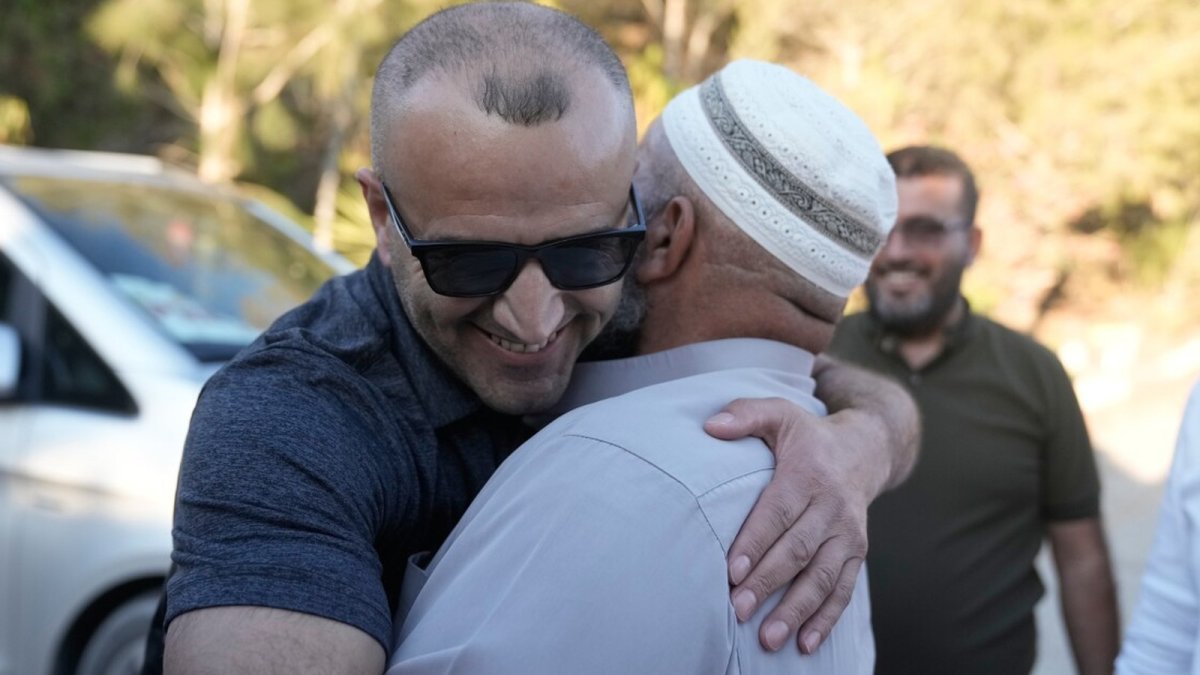
Qusra, occupied West Bank – August 18, 2026 — The dust had not yet settled on the roads of Qusra when Loui Ridi stepped out of a vehicle on Monday evening, Aug 17, 2026, after a transatlantic journey fueled by anxiety and sleepless nights. For more than a week, he had watched his family’s partially built home—a $1 million investment in his future and his daughters' heritage—surrounded by a mob of Israeli settlers who had blocked entrances with large stones, trapping his brother and nephew inside. Ridi, who left this village 23 years ago to build a new life in Ohio, returned to a reality that felt more like a nightmare than a homecoming.
A Homecoming Shadowed by Siege
Ridi’s journey began not at the airport, but in his living room in Toledo, where he owns and runs a chain of gas stations and car washes. There, he watched through security cameras he had installed at his Qusra property as settlers amassed, hurling stones and establishing an illegal outpost immediately outside the Palestinian homes. "I've been watching this live for many days and now this is the second week. I can't sleep," he told reporters at Israel's main international airport before flying to the region. "I can't let the settlers steal my house while I was watching."
The 46-year-old father of two daughters, aged 10 and 20, was born and raised in Qusra. He left the village over two decades ago, but his roots remained deep. He bought land several years ago and began constructing a family home, a project he describes as an act of identity preservation. "I bought it so my daughters would be part of my family story," he said. "It's the most basic impulse, to connect my girls to my identity." That impulse now collides with the harsh geopolitical reality of the occupied West Bank, where Israeli settlements—considered illegal under international law and reaffirmed as having "no legal validity" by UN Security Council Resolution 2334 (2016)—continue to expand and encroach upon Palestinian communities.
Trapped inside Ridi's home were his brother, Qusai Abu Ridi, and Qusai's 18-year-old son, who had stayed to protect the property. A neighbor, Youssef Hassan, his wife and daughters were also prevented from leaving their home by the same mob of extremists. Ridi, speaking to The Times of Israel, recounted his desperate attempts to ensure his family's safety from afar. "I told Qusai, 'Listen, your life is more important than anything. If you feel threatened and afraid, I'll make sure someone comes and evacuates you somewhere safe.' But he doesn't want to leave. 'Brother,' he tells me, 'all I need is food. I'm not leaving our home.'"
The View from the Ground: A Village Under Pressure
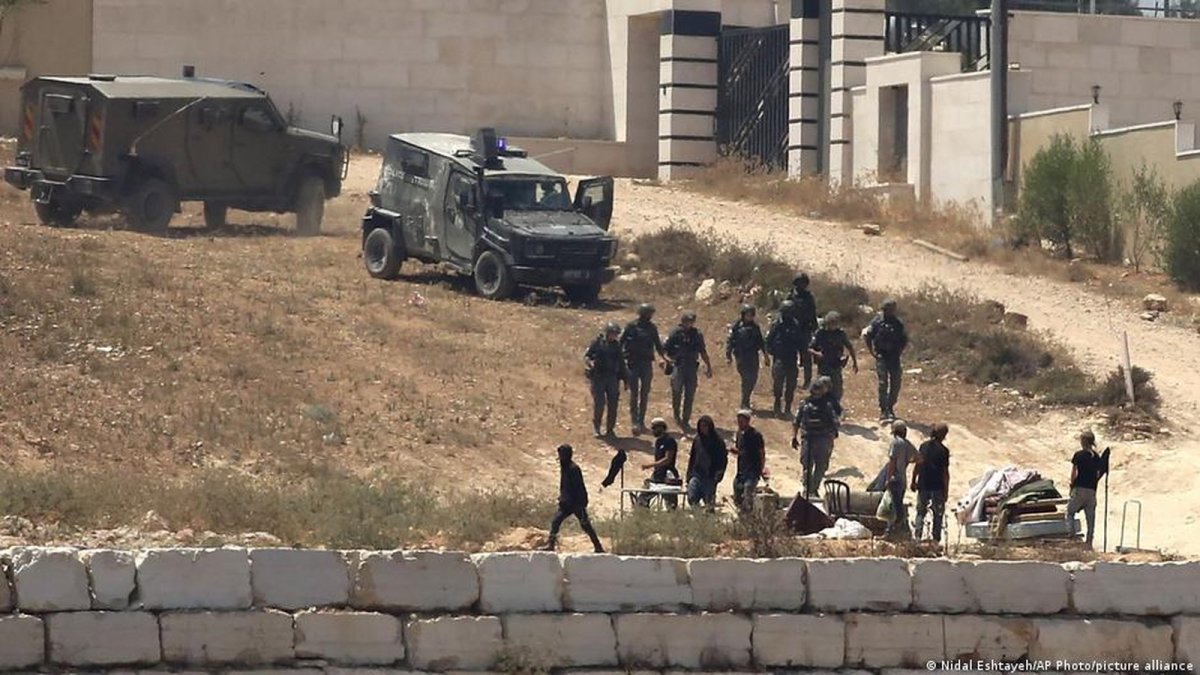
Qusra, a village of about 5,000 residents, sits in a volatile area of the northern West Bank, near the settlements of Migdalim and Esh Kodesh. It has long been a flashpoint for settler violence and clashes with Israeli forces. The recent siege, however, has taken on a new dimension, drawing international attention due to Ridi's American citizenship and the brazenness of the settlers' actions. On Sunday, dozens of settlers arrived at the homes and established an illegal outpost, a move that typically signals an intent to permanently seize land. Overnight, Israeli forces dismantled two illegal settler outposts around Qusra and a neighboring village, but the situation on the ground remained fluid and contradictory.
Palestinian residents reported that families were ordered out of their homes as the military operation continued, while the Israeli army later claimed that Qusra residents had been instructed to remain in their homes and that troops were there to protect them. This conflicting narrative is a familiar pattern for those who have lived through decades of occupation. Israel has since declared the neighborhood where Ridi's home is located a closed military zone, a designation that restricts access and movement, effectively sealing the area from outside scrutiny. On Monday, footage from Ridi's brother still showed soldiers interacting amicably with settlers, who were driving ATVs near the homes—a visual testament to Ridi's accusation that the military is not acting to remove the settlers, but rather to facilitate their presence.
An American Citizen, A Palestinian Reality
Ridi's arrival in Qusra on Monday evening was an emotional reunion, first with his 83-year-old mother, who recently suffered a stroke, and then with his sister. The visit, which he makes at least once a year and more frequently in recent years, was supposed to be about family and connection. Instead, it became a confrontation with the systemic pressures facing Palestinians in the West Bank. "I should be able to go to my house freely, anytime I want," he said. "It is a frustration and a nightmare for the entire family."
His dual citizenship offers a layer of protection that most Palestinians do not have, yet it has not shielded him from the reality of the occupation. The United States has condemned the siege, with US Ambassador to Israel Mike Huckabee calling the actions of the settlers besieging the home of an American Palestinian family "a horrific act of terror" and describing the settlers as "Israeli terrorists." This strong language from a staunch ally of Israel underscores the severity of the situation, though it remains to be seen whether it will translate into concrete action to protect Palestinian civilians.
The Broader Context: A Surge in Violence
The siege of Qusra is not an isolated incident but part of a broader, alarming trend. Violence in the West Bank has soared in recent months, with settlers, emboldened by Prime Minister Benjamin Netanyahu's right-wing government, ramping up attacks on Palestinian towns and villages. These attacks often involve harassing residents, setting homes, mosques, and fields ablaze, and forcibly displacing communities. According to Palestinian health officials, Israeli soldiers and settlers have killed 87 Palestinians so far this year. In the same period, Palestinians have killed three Israelis, including two killed during clashes in the West Bank village of Tell last month.
The West Bank, territory Israel seized in the 1967 Mideast war, is considered by the international community to be the main part of a future Palestinian state. The ongoing expansion of settlements, which the Israeli government disputes as illegal, continues to erode the viability of a two-state solution. For residents of villages like Qusra, the daily reality is one of land confiscation, movement restrictions, and the constant threat of violence, often with the backing or tacit approval of the Israeli military.
Analysis and Implications
The situation in Qusra highlights a critical juncture in the Israeli-Palestinian conflict. The brazenness of the settler siege, coupled with the military's apparent reluctance to intervene against the settlers, points to a dangerous escalation in state-sanctioned land grabs. The fact that a Palestinian American citizen—someone with the resources and international connections to draw attention—was subjected to this treatment underscores the vulnerability of all Palestinians in the occupied territories. If this can happen to him, it can happen to anyone.
The US condemnation, while strong in rhetoric, raises questions about its efficacy. Ambassador Huckabee's characterization of the settlers as "Israeli terrorists" is a significant departure from typical diplomatic language, but without tangible consequences, such as sanctions or a reevaluation of military aid, it may ring hollow for those on the ground. The Israeli government, for its part, has a history of condemning settler violence in statements while simultaneously expanding settlement construction and providing military protection to outposts.
For Loui Ridi, the immediate concern is the safety of his family and the preservation of his home. He has invested not just money, but emotional capital into a property that was meant to be a bridge between his American life and his Palestinian heritage. The siege has turned that dream into a source of trauma. "I can't sleep," he said, a sentiment that echoes the anxiety of countless Palestinians who live under the constant threat of displacement.
As the international community watches, the question remains: will the condemnation of this siege lead to meaningful change, or will it become another footnote in the long history of Palestinian dispossession? For the residents of Qusra, the answer will be determined not by diplomatic statements, but by whether the settlers are removed and the closed military zone is lifted. Ridi's return is a testament to the enduring connection between the Palestinian diaspora and their homeland, but it also serves as a stark reminder of the lengths to which some will go to sever that connection.
In the coming days, the focus will be on whether the Israeli military will uphold its claim of protecting residents or continue to facilitate the settlers' agenda. For Ridi, the fight is personal. "I should be able to go to my house freely, anytime I want," he reiterated. That basic right, so fundamental to any sense of home and belonging, remains under siege in Qusra, and by extension, across the occupied West Bank. The world is watching, but for the families trapped inside their homes, watching is not enough.
This article was produced with AI-assisted research and editorial support. Sources: Middle East Eye, The Associated Press, NPR, Al Jazeera, Deutsche Welle, The Times of Israel.
By Fatima Al-Rashid, Staff Writer
What's Your Reaction?
 Like
0
Like
0
 Dislike
0
Dislike
0
 Love
0
Love
0
 Funny
0
Funny
0
 Wow
0
Wow
0
 Sad
0
Sad
0
 Angry
0
Angry
0

Gulf/MENA Correspondent at Global1.News. Based in Doha, covering Gulf politics, energy markets, diplomacy, and development across the Middle East and North Africa. Tracks the economic transformation of the Gulf states.













Comments (0)