
P60 NCR Wage Hike Approved as P85 Increase Remains Frozen in Court
NCR wage board approves P60 daily minimum wage hike (Wage Order NCR-28), potentially raising the non-agricultural rate to P755 by late September if NWPC affirms. Labor lawmakers warn the new order could undermine the legal fight for the frozen P85 increase under NCR-27.
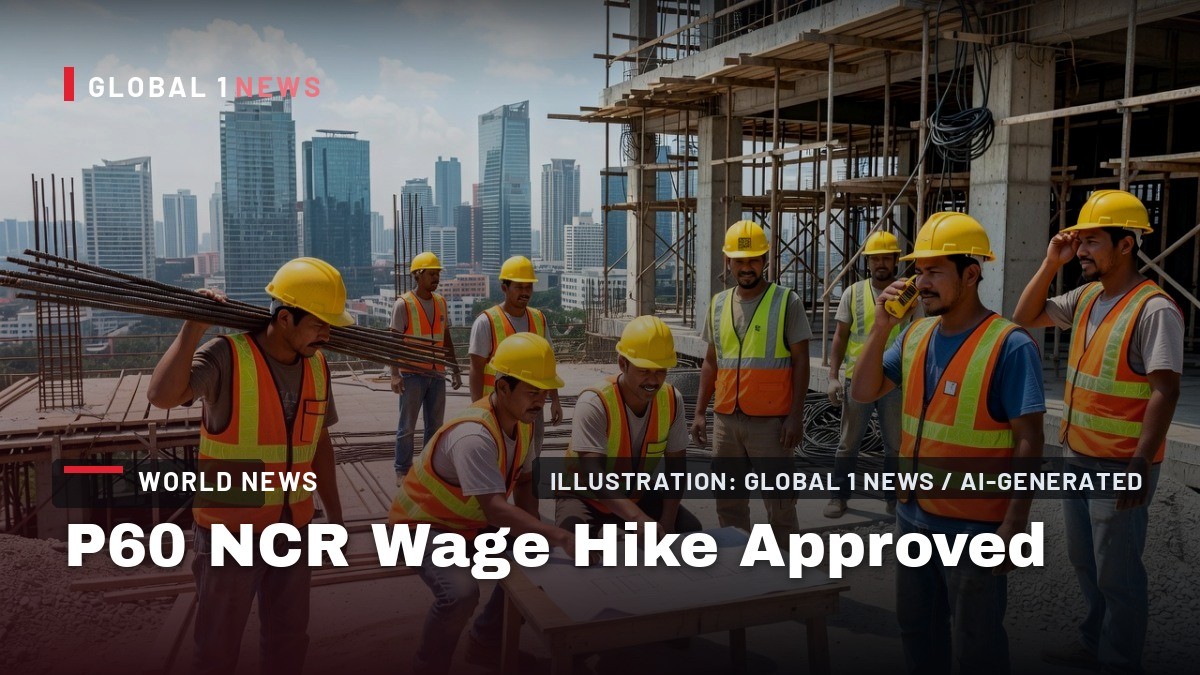
MANILA, Philippines - The Regional Tripartite Wages and Productivity Board in the National Capital Region has approved a new P60 daily minimum wage increase for private sector workers, a move that could lift the non-agricultural rate to P755 by late September if affirmed by the National Wages and Productivity Commission. But the approval, which came in a tight 4-3 vote, has sparked concern among labor lawmakers who warn that issuing a second wage order while the original P85 increase remains frozen in court could weaken the legal fight for the full amount.
A new wage order in the shadow of a frozen one
The new Wage Order No. NCR-28 was approved Monday night, September 7, according to DOLE-National Capital Region Director Roy Buenafe, who disclosed the development during a House hearing on the Department of Labor and Employment's proposed 2027 budget on Tuesday, September 8. The order has been forwarded to the NWPC for review and affirmation.
If affirmed by the commission and published as required, the P60 increase could take effect around September 26 or 27, Buenafe said. The increase would be implemented in a single tranche, bringing the daily minimum wage for non-agricultural workers from P695 to P755. For agricultural workers, as well as employees of small retail and service establishments and small manufacturing firms covered by the lower NCR minimum, the rate would rise from P658 to P718.
The approval, however, was not unanimous. The wage board passed the order in a 4-3 vote, with two labor representatives and one employer representative dissenting. The split reflects the deep tensions surrounding wage policy in the capital region, where workers have been waiting for relief while employers have been fighting increases in court.
The P85 order that never took effect
The new order arrives against the backdrop of Wage Order No. NCR-27, which granted an P85 increase in two tranches: P60 beginning July 25 and another P25 on January 20, 2027. That order, however, was blocked before the first tranche could take effect following court challenges filed by employers.
"The non-implementation of Wage Order No. NCR-27 resulted from the successive issuance of judicial injunctive reliefs, specifically a Status Quo Ante Order (SQAO) issued July 24, 2026, a Temporary Restraining Order, and a Writ of Preliminary Injunction," Wage Order No. NCR-28 stated.
DOLE and the wage authorities continue to challenge the injunction and maintain that the wage order remains valid. The Supreme Court is also considering a separate petition by labor groups seeking to nullify the lower court orders that blocked its implementation.
Lawmakers question the timing
During the House budget hearing, lawmakers from labor party-lists pressed DOLE officials on why a new wage order was being issued while the P85 increase remains the subject of pending litigation. Rep. Sarah Elago of Gabriela party-list, Elijah San Fernando of Kamanggagawa party-list, and Deputy Speaker Raymond Mendoza of the Trade Union Congress Party-list all raised concerns.
They warned that the new order could be seen as accepting the court injunction and settling for P60 instead of pursuing the full P85 increase under the original order. Elago was direct in her criticism, saying in Filipino: "Mali ang naging injunction sa Wage Order 27 at kapag tinanggap ito ng DOLE, at ngayon meron nang Wage Order 28, para na rin silang pumayag na legal ito."
In English, her point is clear: the injunction against Wage Order No. 27 was wrong, and if DOLE accepts it and now issues Wage Order No. 28, it would be as if they agreed that the injunction was legal. The concern is not merely procedural - it strikes at the heart of whether workers will ever receive the full P85 increase they were promised.
The legal battle over wage boards' authority
At the center of the dispute is a fundamental question about the power of courts to interfere with wage-setting. Labor groups have argued that the lower courts had no authority to restrain the wage order, citing Article 126 of the Labor Code. The provision prohibits courts, tribunals, and other entities from issuing injunctions or temporary restraining orders against proceedings before the NWPC or regional wage boards.
Whether that prohibition invalidates the court orders blocking Wage Order NCR-27 is among the issues raised in the pending legal challenges. The Supreme Court's consideration of the labor groups' petition could ultimately determine not just the fate of the P85 increase, but the broader balance of power between the judiciary and the wage-setting bodies created under the Labor Code.
For ordinary workers, the legal nuances may seem distant from the daily reality of rising prices at the palengke and the struggle to make ends meet. But the outcome of these cases will shape how much they take home each day - and whether the wage boards' decisions carry real weight or can be easily set aside by court challenges.
What the increase means for workers and families
If the P60 increase takes effect as scheduled, a minimum wage earner in the non-agricultural sector would see their daily pay rise from P695 to P755. Over a typical 26-day working month, that translates to an additional P1,560 - a meaningful sum for a family budgeting for rice, transportation, and school supplies, but still far from what labor groups have long argued is a living wage.
For agricultural workers and those in smaller establishments covered by the lower minimum, the increase from P658 to P718 would add P60 per day, or roughly P1,560 monthly. In a city where a single jeepney ride can cost over P15 and a kilo of rice has climbed well past P50 in recent years, every peso counts.
The increase, however, is not yet a reality. It could take effect around September 26 or 27 if affirmed by the NWPC and published as required. Until then, workers continue to receive the current rates - P695 for non-agricultural workers and P658 for those under the lower minimum - while they wait for the bureaucratic process to run its course.
The risk of settling for less
The deeper worry among labor groups is that Wage Order No. NCR-28, even if it delivers P60 to workers, could inadvertently undermine the push for the full P85. If the new order is affirmed and implemented, employers could argue that the matter has been resolved - that workers have received an increase, and the courts' intervention in the earlier order was effectively accepted by the government's decision to move forward with a new one.
That argument, labor lawmakers fear, could lead to the P25 second tranche under Wage Order NCR-27 being abandoned or permanently blocked. The result would be workers receiving P60 instead of the P85 they were originally granted - a difference of P25 per day, or P650 per month, that could mean the difference between enough food on the table and going without.
DOLE and the wage authorities, for their part, maintain that Wage Order NCR-27 remains valid and continue to challenge the injunction in court. The issuance of Wage Order NCR-28, they suggest, is a separate matter - an attempt to provide relief to workers through a new order while the legal fight over the earlier one continues.
What happens next
The immediate path forward depends on the NWPC's review of Wage Order No. NCR-28. If the commission affirms the order and it is published as required, the P60 increase could take effect around September 26 or 27. Workers would then see the higher rates in their paychecks, though the timing of the first payout would depend on their employers' payroll cycles.
In the meantime, the Supreme Court's consideration of the labor groups' petition regarding Wage Order NCR-27 continues. A ruling in favor of the workers could restore the P85 increase and potentially invalidate the lower court orders that blocked it. A ruling against them could cement the P60 increase as the final word - at least until the next round of wage hearings.
For the millions of minimum wage earners in the National Capital Region, the stakes are personal. They are the construction workers building the city's high-rises, the factory staff assembling goods for export, the service workers in restaurants and malls, the sari-sari store owners and jeepney drivers whose daily earnings barely keep pace with the cost of living. They are our kapitbahay, our family members, the people who keep the city running.
The P60 increase, if it takes effect, is a step forward. But the fight over the P85 - and over the very authority of the wage boards to set rates without court interference - is about something larger: whether the system designed to protect workers can actually deliver on its promise. As the legal battles continue and the NWPC reviews the new order, workers and employers alike are watching closely, knowing that the outcome will shape the daily wage landscape of the capital for months and possibly years to come.
This article was produced with AI-assisted research and editorial support. Sources: Philstar.com - "Wage board clears P60 NCR wage hike while P85 order remains frozen" by Renalyn Ramirez, Sept. 9, 2026.
By Bella Reyes, Staff Writer
What's Your Reaction?
 Like
0
Like
0
 Dislike
0
Dislike
0
 Love
0
Love
0
 Funny
0
Funny
0
 Wow
0
Wow
0
 Sad
0
Sad
0
 Angry
0
Angry
0

Philippines/Southeast Asia Correspondent at Global1.News. Manila-based journalist covering Philippine politics, environment, maritime security, and social issues. Passionate about marine conservation and the communities protecting the Philippines' natural heritage.















Comments (0)