
JMS Leader Jeong Faces 27 More Years in Sex Crime Trial
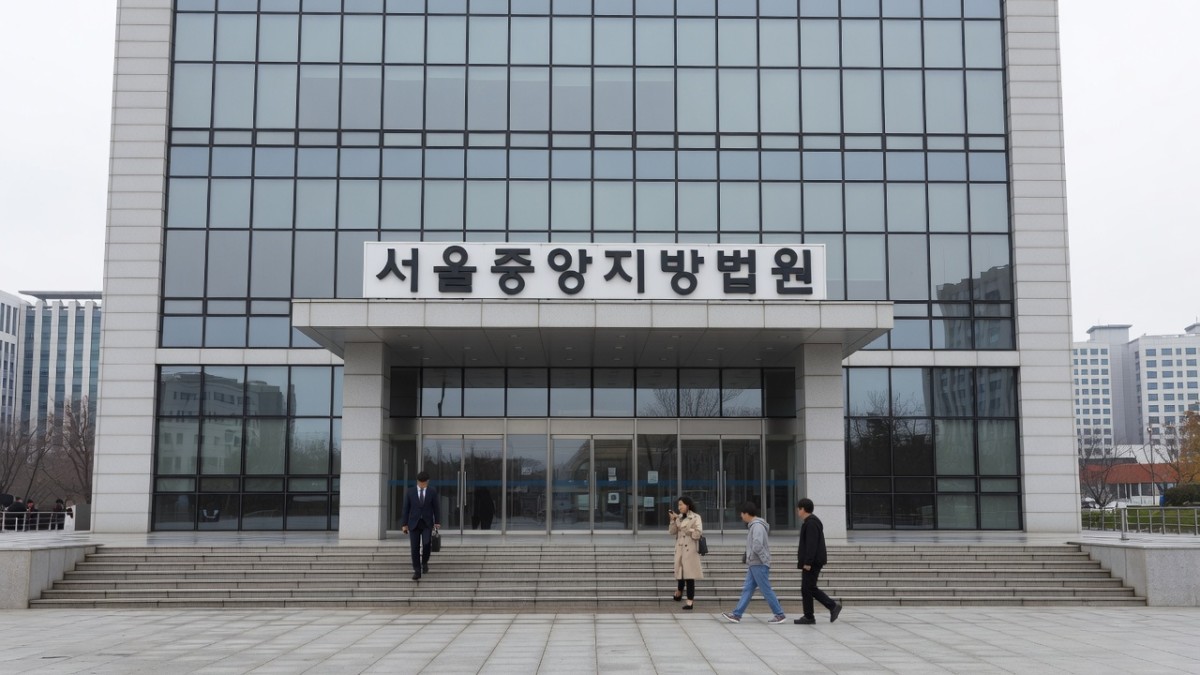
On Monday, September 7, 2026, prosecutors in South Korea demanded a 27-year prison term for Jeong Myeong-seok, the 81-year-old leader of the Christian Gospel Mission, widely known as the Jesus Morning Star (JMS) sect. The demand, delivered during the final hearing at the Daejeon District Court, pertains to charges that he sexually assaulted or molested 16 female followers on approximately 80 occasions between 2018 and 2022.
On Monday, September 7, 2026, prosecutors in South Korea demanded a 27-year prison term for Jeong Myeong-seok, the 81-year-old leader of the Christian Gospel Mission, widely known as the Jesus Morning Star (JMS) sect. The demand, delivered during the final hearing at the Daejeon District Court, pertains to charges that he sexually assaulted or molested 16 female followers on approximately 80 occasions between 2018 and 2022. This new request comes atop a 17-year sentence already finalized by the Supreme Court in January 2025, underscoring the sustained legal reckoning facing one of the country's most notorious religious figures.
Serial Abuse Allegations and a 27-Year Demand: The Daejeon Trial of Jeong Myeong-seok
Seoul, South Korea – September 9, 2026 — The latest chapter in the criminal proceedings against Jeong Myeong-seok unfolded this week as the Daejeon District Prosecutors' Office pressed for an additional 27 years of incarceration. The prosecution's case centers on allegations that Jeong exploited his spiritual authority to indoctrinate 16 female followers into believing he was the "Messiah," rendering them incapable of resistance through systematic brainwashing. The alleged offenses occurred at a retreat center in Geumsan, South Chungcheong Province, and at other locations, spanning a four-year period from 2018 to 2022.
In their closing arguments, prosecutors articulated a clear theory of criminal culpability rooted in the abuse of pastoral power. As reported by The Korea Times, the prosecution stated: "The defendant repeatedly committed crimes by exploiting relationships of trust with vulnerable victims." Beyond the prison term, prosecutors also requested a 10-year employment restriction at facilities related to children, juveniles, and disabled people, alongside 20 years of wearing an electronic tracking device and five years of probation. The court has not yet set a date for the sentencing verdict, which will follow final arguments.
Court Proceedings and the Prosecution's Case
The September 7 hearing at the Daejeon District Court marked the culmination of evidentiary proceedings in this additional criminal case. The prosecution's request for a 27-year term reflects the severity with which it views the alleged pattern of serial sexual violence. According to the indictment, Jeong is accused of using his claimed divine status to systematically assault followers who had placed their complete trust in him as their spiritual savior. The prosecution argued that the brainwashing tactics employed by Jeong created a psychological environment where victims were unable to exercise free will or resist his advances.
Legal analysts note that if the court imposes a sentence approaching the prosecution's request and orders it to run after his existing 17-year term, the 81-year-old Jeong could remain behind bars for the remainder of his life. Prosecutors argued that Jeong's repeated offending and the profound psychological damage inflicted on the victims warranted severe punishment, a position consistent with their statement that he had exploited relationships of trust with vulnerable victims. The court's eventual ruling will be closely watched as a barometer of South Korea's judicial commitment to holding powerful religious figures accountable for criminal conduct.
Jeong's Criminal History and the Path to Justice
This latest prosecution demand is not an isolated event but rather the continuation of a long legal saga. Jeong is currently serving a 17-year prison sentence that was finalized by the Supreme Court of South Korea in January 2025. That conviction stemmed from the sexual assault of a Hong Kong national follower and the molestation of an Australian follower and a South Korean follower. The case had previously seen the Daejeon District Court impose a 23-year sentence in December 2023, which was reduced to 17 years by an appeals court in October 2024 before being upheld by the nation's highest court.
Prior to this, Jeong had already served a 10-year prison term for sexually assaulting and molesting four female followers overseas between 2001 and 2006. He was released from that sentence in February 2018, only to face new allegations emerging from his post-release activities. This cyclical pattern of conviction, imprisonment, release, and re-offense has drawn sharp criticism from victim advocacy groups and legal scholars who argue that the justice system has repeatedly failed to adequately protect vulnerable believers from a predatory leader.
The Christian Gospel Mission and Its International Reach
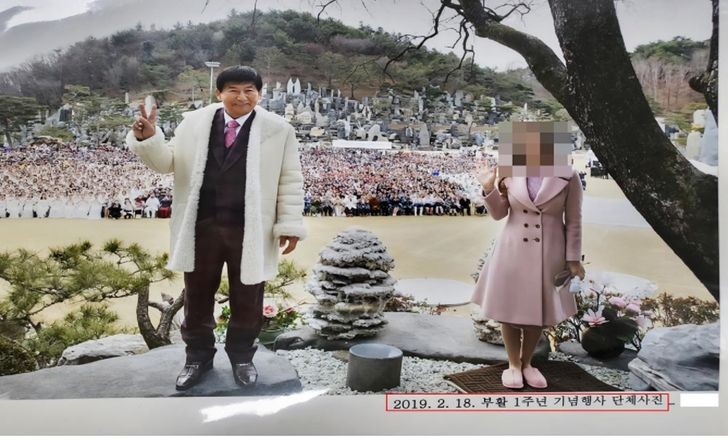
To understand the gravity of these proceedings, one must examine the background of Jeong Myeong-seok and the organization he leads. Born on March 16, 1945, Jeong founded the movement—also called Providence—in 1980. What began as a domestic South Korean religious group soon expanded its footprint across Asia and beyond, establishing a presence in Taiwan, Japan, Hong Kong, Australia, and other countries. The sect's international dimension has complicated legal proceedings, given that many of its followers are foreign nationals who traveled to South Korea to be closer to their spiritual leader.
The group's notoriety reached a global audience through the 2023 Netflix documentary series "In the Name of God: A Holy Betrayal," which exposed the systematic sexual abuse perpetrated by Jeong and other self-styled religious figures in South Korea. The documentary reignited public outrage and prompted renewed scrutiny of the sect's activities. Jeong's international following has also created diplomatic dimensions to his legal troubles, particularly regarding the treatment of foreign victims who have come forward with allegations spanning multiple jurisdictions.
Religious Freedom Versus Criminal Accountability in South Korea
The Jeong case sits at the intersection of two fundamental principles in South Korean society: the constitutional protection of religious freedom and the imperative of criminal accountability. The Republic of Korea's Constitution guarantees freedom of religion, and courts have historically been cautious about intervening in internal religious matters. However, the Jeong prosecutions represent a significant judicial assertion that religious authority does not confer immunity from criminal law, particularly when that authority is exploited to commit sexual violence.
Jeong's group denies the allegations, and supporters have protested outside courts claiming his innocence. The defense maintains that Jeong is not guilty, arguing that the relationships in question were consensual and that the prosecution has mischaracterized religious practices as criminal conduct. This defense strategy raises complex questions about consent, coercion, and the psychological dynamics of cult-like environments where followers may genuinely believe their leader possesses divine authority.
South Korean legal scholars have noted that the presumption of innocence remains paramount until a verdict is delivered. Yet the cumulative weight of evidence across multiple trials, involving victims from different countries and time periods, has led many observers to conclude that the pattern of abuse is well-established. The case has also prompted broader discussions about the need for legal reforms to address spiritual abuse and to protect vulnerable adults from exploitation within religious communities.
Victim Advocacy and the #MeToo Movement in Korea
The Jeong prosecutions have unfolded against the backdrop of South Korea's #MeToo movement, which gained significant momentum in 2018 following revelations of sexual misconduct by prominent figures in politics, entertainment, and the arts. The movement has spurred important legal and social reforms, including extended statutes of limitations for sexual crimes and enhanced protections for victims during legal proceedings. Victim advocacy groups have been particularly active in the Jeong case, campaigning against what they perceive as prison privileges for the sect leader and pursuing civil damages claims on behalf of survivors.
Dankook University professor Kim Do-hyung has emerged as a prominent critic of Jeong and the perceived leniency of the justice system in handling his case. Activists have documented instances of Jeong receiving preferential treatment while incarcerated, raising questions about whether powerful religious figures receive undue deference from correctional authorities. These concerns have amplified calls for greater transparency in prison administration and for ensuring that convicted sex offenders are subject to the same restrictions and monitoring as other inmates.
The China Extradition Chapter and ROK-China Judicial Relations
Jeong's legal history also includes a significant chapter in South Korea-China judicial relations. In March 1999, Seoul Broadcasting System aired an exposé of his sex crimes, prompting Jeong to flee to China to escape prosecution. He remained there for nearly a decade before Chinese courts approved his extradition in 2007, and he was returned to South Korea in February 2008. This extradition represented a notable moment of judicial cooperation between the two countries, demonstrating that even in the absence of formal extradition treaties, bilateral arrangements could be reached for serious criminal cases.
The case has since become a reference point in discussions about cross-border judicial cooperation in East Asia. The involvement of victims from Hong Kong, Japan, Taiwan, and Australia has highlighted the transnational nature of religious exploitation and the challenges of coordinating legal responses across different jurisdictions. For South Korea, the Jeong case has implications for its international image, particularly regarding how it handles crimes committed by its citizens against foreign nationals and how it protects foreign followers who come to the country seeking spiritual guidance.
What Comes Next: Pending Verdict and Broader Implications
As the Daejeon District Court deliberates on the sentencing verdict in this latest case, legal observers anticipate a decision that will carry significant weight for South Korea's criminal justice system. If the court imposes a sentence approaching the prosecution's request, Jeong would face up to 27 additional years in prison, effectively ensuring that he will spend the remainder of his life behind bars given his advanced age. The court will also rule on the ancillary requests for employment restrictions, electronic monitoring, and probation.
Beyond the immediate outcome, the Jeong case raises enduring questions about the limits of religious freedom, the protection of vulnerable believers, and the responsibility of the state to intervene when spiritual authority is abused. For South Korea, a country that values both religious pluralism and the rule of law, the case represents a critical test of whether these values can coexist when they come into conflict. The international attention generated by the Netflix documentary and the involvement of foreign victims ensures that the world will be watching how South Korea's justice system ultimately resolves this matter.
The pending verdict will also have implications for other religious leaders in South Korea who may be tempted to exploit their positions of authority. The message sent by the courts in the Jeong cases is clear: spiritual leadership does not provide a shield against criminal prosecution, and those who abuse their power to harm vulnerable followers will face serious consequences. For the victims who have come forward across multiple trials and decades, the pursuit of justice has been long and arduous, but the legal system's sustained attention to their claims offers a measure of vindication.
By Prof. David Park, Staff Writer
This article was produced with AI-assisted research and editorial support. Sources: KOREA NOW (Yonhap News Agency); The Korea Times, September 7, 2026; Yonhap News Agency.
What's Your Reaction?
 Like
0
Like
0
 Dislike
0
Dislike
0
 Love
0
Love
0
 Funny
0
Funny
0
 Wow
0
Wow
0
 Sad
0
Sad
0
 Angry
0
Angry
0

East Asia/Technology Correspondent at Global1.News. Seoul-based voice covering Korean politics, technology, business, and culture. Analyzes how technology and geopolitics intersect across East Asia.














Comments (0)