
Ottawa signals phased tax reform, with small business relief at the forefront
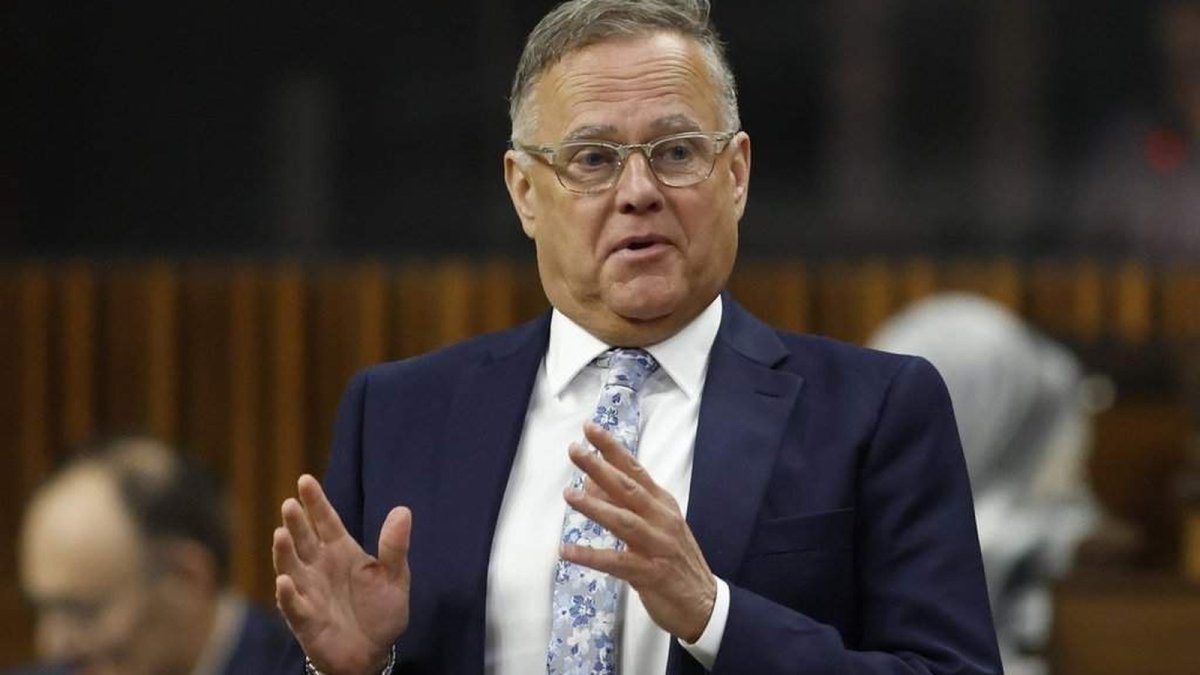
OTTAWA — One of Prime Minister Mark Carney’s point people on the government’s budget consultations says Ottawa plans to tackle long-awaited tax code reform “one bite at a time,” with changes for small businesses ranking high on the priority list. Wayne Long, the Liberal MP for Saint John—Kennebecasis and secretary of state for the Canada Revenue Agency and financial institutions, acknowledged that Canada’s tax system has become unwieldy and burdensome for individuals and businesses alike.
Ottawa signals phased tax reform, with small business relief at the forefront
OTTAWA — One of Prime Minister Mark Carney’s point people on the government’s budget consultations says Ottawa plans to tackle long-awaited tax code reform “one bite at a time,” with changes for small businesses ranking high on the priority list.
Wayne Long, the Liberal MP for Saint John—Kennebecasis and secretary of state for the Canada Revenue Agency and financial institutions, acknowledged that Canada’s tax system has become unwieldy and burdensome for individuals and businesses alike. Speaking with The Canadian Press on Friday, Long said the government is hearing from stakeholders across the country that simplification is overdue.
“When you say the word tax code to people, everybody rolls their eyes. Everybody’s like, ‘Oh, the tax code used to be one book thick, now it’s two books thick. We just keep piling on,’” Long said. “Is a total review of the tax code needed? Absolutely.”
Long is one of several Liberal MPs who, alongside Finance Minister François-Philippe Champagne, have been fanning out across Canada this summer for pre-budget consultations. The upcoming fall budget — the second delivered under Carney’s leadership — is being framed by the government as “chapter two” in its efforts to attract investment and position the country for growth following the economic shock of the U.S. tariff campaign.
A message from international investors
Long said the Liberals have heard from an unnamed “major international player” expressing interest in putting more money into Canada — but only after Ottawa makes changes to its tax code and the way it governs investments.
“Sometimes we hear that other jurisdictions are just more user-friendly than we are. So it’s something that we’re focused on,” Long said. “We need to be super aggressive. We need to bring down barriers so that major international players can look at us and say it is more than worth investing in Canada, spending our money in Canada.”
The comments come as the Liberal government seeks to rebuild Canada’s reputation as a destination for capital, a reputation that has taken hits in recent years amid sluggish productivity growth and declining business investment relative to other developed economies.
Over a year into Carney’s mandate, the Liberals have made a handful of targeted changes to the tax system. On the corporate side, the government offered immediate tax writeoffs on new equipment to encourage businesses to invest in capital. On the personal side, Ottawa cut its lowest income tax bracket by one percentage point and is planning a pilot project for automatic tax filing starting next year.
Election pledge and expert review
The Liberals pledged during the 2025 election campaign to conduct an “expert review” of the corporate tax system. The Canadian Press asked Champagne’s office whether that remains the plan.
John Fragos, a spokesperson for Champagne, replied in an email that it would be “inappropriate” to speculate on prospective changes to the tax system. “That said, the minister has been clear about the government’s upcoming budget and its emphasis on innovation, growth and advancing Canadian entrepreneurship,” Fragos said.
Conservative finance critic Michael Chong, however, argues the Liberals have been tinkering around the edges without taking up the challenge of serious tax reform. It has been 40 years since Canada last overhauled its tax system — changes made in the 1980s under Prime Minister Brian Mulroney that ultimately led to the creation of the goods and services tax.
“We haven’t had major tax reform in this country in decades and our current tax system is strangling our economy,” Chong told The Canadian Press.
Chong argued that decades of flagging business investment and weak productivity in Canada can be traced back to an “arcane tax system” that pushes capital outside the country. The federal Conservative party maintains that taxes are too high and deter high-income individuals and successful companies from putting down roots in Canada.
Asked to name the specific changes the Conservatives want to see, Chong called for the creation of a task force charged with recommending ways to modernize the tax system.
Small business burden in focus
Long said the government is committed to taking on tax reform one step at a time. He said he is spending much of the pre-budget consultation period hearing from small businesses about how Ottawa can better support them and make the tax system easier to navigate.
“How can we relax some of that burden? How can we relax some of that reporting? What can we do to make small business excel and grow?” Long said.
Dan Kelly, president of the Canadian Federation of Independent Business, said he has been encouraged by signs that the government is serious about addressing what he calls an “entrepreneurial drought” facing the country.
“It’s encouraging messaging but ultimately, entrepreneurs will pass judgment on whether government’s serious about that by what they see in the budget,” Kelly said.
Kelly criticized the Liberals’ approach to small business under former prime minister Justin Trudeau, which largely saw the government launch scattershot specialized programs and tax breaks to give smaller firms a leg up. The confusing nature of the corporate tax system raises the cost of compliance for many businesses and spurs fear among some entrepreneurs that they will be audited and penalized if they make a mistake, Kelly said.
The case for wholesale reform
All of the tax experts who spoke to The Canadian Press cited the layers of bureaucracy in the tax code as a target for meaningful reform. Most agreed that removing complexity from the system would also mean ending boutique tax credits aimed at key industries or voting blocs — a prospect that could prove politically dicey.
Long acknowledged that tackling the tax code will require striking both a political and economic balance. He said the government’s thin majority — something it did not have during the last budget season — gives it a stronger hand to advance its agenda.
Experts say wholesale reform might be preferable to a piecemeal approach, in part because it would encourage stakeholders to look at the whole package of ideas rather than decide whether one proposal is good or bad for them.
Ryan Minor, director of tax at CPA Canada, gave the hypothetical example of eliminating a long-standing measure aimed at small businesses that gives firms a tax break on their first $500,000 in earnings. Ending that measure would streamline tax administration for all businesses in Canada, he said, while the discount could be offset by giving small businesses more generous writeoffs for their investments.
“Any time somebody is losing, they’re not going to be too happy with you unless you give them something else,” Minor said.
Kelly said he understands the appeal of eliminating the small business deduction in favour of a simplified, lower corporate tax rate — but it is not one he supports. Instead, he would like to see the income threshold for the lower tax rate raised to $700,000 to support small businesses for longer.
Revenue trade-offs and political risk
Whenever taxes are reduced in one area, the government can either take a permanent hit to its revenue or raise taxes elsewhere to compensate. But changing the tax mix by raising income or consumption taxes is politically risky.
Both Chong and Kelly argue that reducing the tax rate will stimulate growth in existing businesses and draw in new ones, potentially offsetting any outright decline in government revenues.
The fall budget is expected to be a defining moment for the Carney government’s economic agenda. With a minority Parliament and an opposition that has signalled its willingness to force a vote on fiscal matters, the Liberals will need to balance ambition with pragmatism as they lay out their vision for tax reform.
For now, Long said the message from the consultation trail is clear: Canadians and businesses want a simpler, fairer system that rewards investment and hard work. Whether the government can deliver on that promise in a single budget — or whether it will take the “one bite at a time” approach Long describes — remains to be seen.
Tags: tax reform, Mark Carney, Wayne Long, small business, Canada Revenue Agency, François-Philippe Champagne, Michael Chong, corporate tax, federal budget, tax code, Canadian Federation of Independent Business, CPA Canada, investment, productivity, GST
By Alex Thompson, Staff Writer
This article was produced with AI-assisted research and editorial support. Sources: The Canadian Press (via Global News), interviews with Wayne Long, Michael Chong, Dan Kelly, and Ryan Minor.
What's Your Reaction?
 Like
0
Like
0
 Dislike
0
Dislike
0
 Love
0
Love
0
 Funny
0
Funny
0
 Wow
0
Wow
0
 Sad
0
Sad
0
 Angry
0
Angry
0

Canada Correspondent at Global1.News. Based in Toronto, covering Canadian politics, energy, trade, and US-Canada relations. Provides the Canadian perspective on North American and global affairs.














Comments (0)