
Sir Garry Sobers: The Caribbean's Greatest Son, Gone But Never Forgotten
Sir Garry Sobers, the greatest all-rounder in cricket history, died in July 2026 aged 89. This tribute reflects on his legendary career, Caribbean cultural significance, and the urgent need to invest in grassroots cricket to honour his legacy.
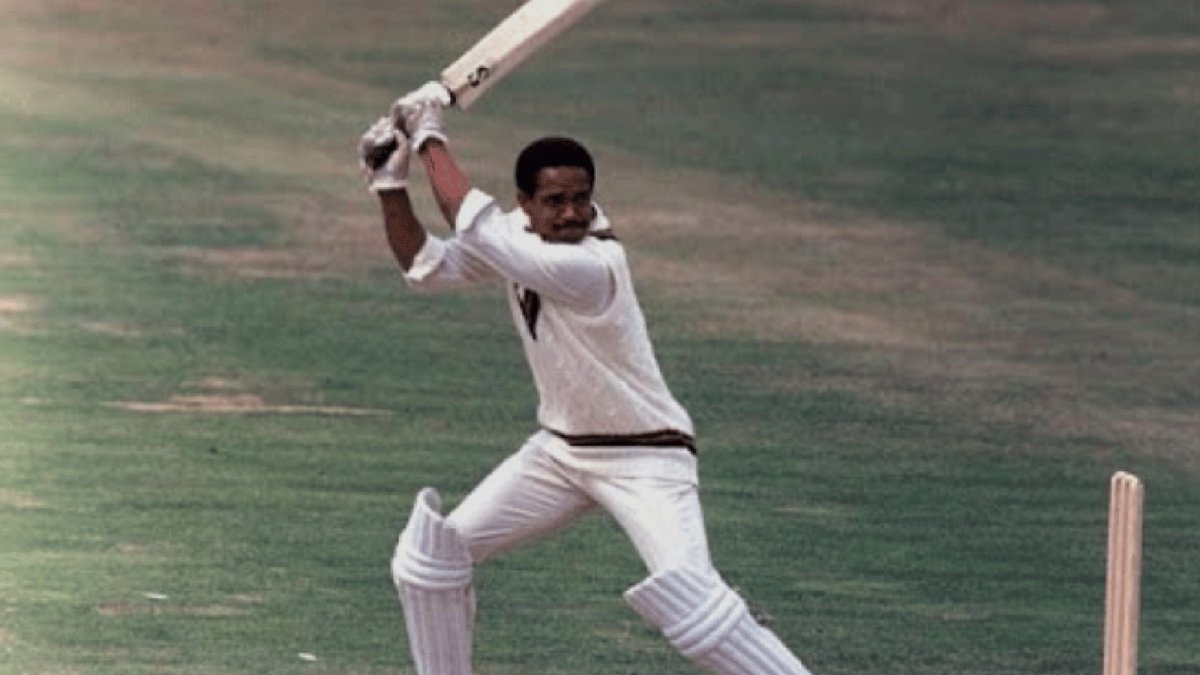
Bridgetown, Barbados — Last month, the Caribbean lost its most globally recognised son. Sir Garfield 'Garry' Sobers, the Barbados-born cricketer widely regarded as the greatest all-rounder the sport has ever seen, died at his home in Barbados in July 2026 at the age of 89 — ten days before what would have been his 90th birthday on 28 July. His son, Daniel, confirmed that Sobers passed away at his residence.
For the West Indies, this is not merely the passing of a sportsman. It is the loss of a symbol — a man whose name became synonymous with Caribbean excellence on the world stage. From the humble lanes of Bay Land in Bridgetown to the hallowed grounds of Lord's and beyond, Sobers carried the hopes and pride of an entire region on his broad shoulders. And he delivered, time and again, with a grace and flair that left the world in awe.
A Life Forged in Hardship and Bay Land's Cricket Culture
Sobers' story is one of triumph over adversity, a narrative deeply woven into the fabric of Caribbean identity. He emerged from the dense, community-rooted cricket culture of Barbados — a world of village clubs, inter-island rivalries, and a passion for the game that ran through the veins of every child with a bat or a ball. He was one of six children raised by his mother after his father, a merchant seaman, died at sea in January 1942 when his ship was torpedoed by a German U-boat. Garry was only five years old.
That early hardship could have broken a lesser spirit. Instead, it forged a determination that would see him rise from the ensuing poverty to become "King Cricket" himself. Legend has it that Sobers was born with an extra finger on each hand, which he reportedly removed himself — a harbinger, as the retrospective noted, that the Good Lord had overflowed that extra talent into him. He was a natural athlete, excelling not only at cricket but also at golf, soccer, and basketball, a testament to his extraordinary hand-eye coordination and sporting intelligence.
The Numbers That Define a Legend
To understand Sobers' greatness, one must look at the numbers, though they only tell part of the story. Between 1954 and 1974, he played 93 Test matches for the West Indies, scoring 8,032 runs at an astonishing average of 57.78 — a figure that still ranks fourth-highest in Test cricket history among players with more than 5,000 runs. He scored 26 Test centuries, but it was his first — an unbeaten 365 against Pakistan in Kingston in 1957-58 — that etched his name into the record books. That innings set the world record for the highest individual Test score, a mark that stood for 36 years until Brian Lara's 375 in 1994.
But Sobers was not just a batsman. He took 235 Test wickets across 159 bowling innings at an average of about 34, demonstrating a versatility that remains unmatched. He could bowl left-arm orthodox spin, over-the-wrist spin, and even fast-medium pace, including bouncers that rattled the best in the world. He was, as many have said, a one-man cricket team — the dream of any captain. Across 383 first-class matches, he scored 28,314 runs at 54.87 and took over 1,000 wickets, a testament to his relentless consistency.
Perhaps his most iconic moment came in 1968, playing for Nottinghamshire against Glamorgan at Swansea, when he became the first batter to hit six sixes in a single over in first-class cricket. It was a moment of pure audacity and skill, a microcosm of the way he approached the game — with joy, fearlessness, and an unerring belief in his own ability.
More Than a Cricketer: A Symbol of Caribbean Sovereignty
Sobers' era coincided with the post-independence political awakening of the Caribbean. The 1960s and early 1970s were a time when West Indies cricket victories were not mere sporting results; they were assertions of sovereignty and self-worth. For a region emerging from colonial rule, seeing a Black man from Barbados dominate a sport once reserved for the British elite was a profound statement. Sobers embodied that pride, carrying the aspirations of millions with every innings he played.
In his book The Changing Face of Cricket, Sobers commended the words of the great Trinidadian intellectual CLR James: "What do they know of cricket who only cricket know?" It was a phrase that captured the deeper significance of the game in the Caribbean — a cultural touchstone, a source of identity, and a means of expression. Sobers understood this intimately. He was not just a cricketer; he was a cultural ambassador, a living embodiment of the region's potential.
For Barbados, he is a cherished National Hero, a title bestowed upon him in recognition of his immense contributions to the island and the wider Caribbean. His legacy is also institutionally embedded in the sport through the ICC's Sir Garfield Sobers Trophy, awarded annually to the Men's Cricketer of the Year. It is a fitting tribute that the game's highest individual honour bears his name.
Tributes from Around the World
In the wake of his passing, tributes have poured in from across the globe. The England and Wales Cricket Board released a statement calling him "One of the greatest to ever play the game. Forever in our hearts, Sir Garfield Sobers." Nottinghamshire Cricket Club, where he enjoyed a successful county career, emphasised their direct institutional connection, mourning him as one of their own alongside his West Indian identity, noting they were "extremely saddened" by the news.
Caribbean fans and commentators have insisted that the debate about his stature is simply settled — uniquely so in a sport rarely free of argument. Multiple sources, including The Guardian and Sky Sports, have echoed a familiar refrain: "Sobers was a brilliant batsman, splendid fielder, particularly close to the wicket, and a bowler of extraordinary skill, whether bowling with the new ball, providing orthodox left-arm spin or over-the-wrist spin."
The retrospective compared him to Muhammad Ali in boxing, Michael Jordan in basketball, and Pele in soccer — athletes who transcended their sports to become global icons. Sobers is similarly unrivalled in the world of cricket. Greatness in sport is usually contested; not here. There is no argument, no debate. He was simply the best.
A Call to Action for the Region
Yet, as the Caribbean mourns, there is also a pressing question that demands attention. For a region whose cricket has struggled to recapture the dominance of the era Sobers helped define, his death is not merely a moment of mourning — it is a prompt. What structures, what investment, what grassroots pathways are needed to build the next generation worthy of his name?
A cricketer of his calibre does not emerge by accident. He emerges from a culture that takes the game seriously. That culture must be protected. The village clubs of Barbados, the inter-island rivalries of the Caribbean, the passion of the fans — these are the foundations upon which legends are built. If we lose that, we lose the very essence of what made Sobers great.
As the Barbados government announces official state memorial arrangements and any national honours ceremony, and as the Windies Cricket Board prepares its formal tribute programme, the region must also look inward. Will a domestic award or facility be named in his honour? Will we invest in the grassroots pathways that produced him? These are the questions that will define whether his legacy is truly honoured.
Sobers was the Caribbean's greatest sporting export. His passing demands not just tribute, but a renewed regional commitment to building the next generation worthy of his name. The debate about his stature is settled; the work to ensure his legacy endures is just beginning.
Rest in peace, Sir Garfield. You gave us everything, and we will never forget.
This article was produced with AI-assisted research and editorial support. Sources: Caribbean360.
By Sharon Sahatoo, Staff Writer
What's Your Reaction?
 Like
0
Like
0
 Dislike
0
Dislike
0
 Love
0
Love
0
 Funny
0
Funny
0
 Wow
0
Wow
0
 Sad
0
Sad
0
 Angry
0
Angry
0

Caribbean Correspondent at Global1.News. Based in Port of Spain, Trinidad, covering Caribbean politics, economy, energy, climate, and culture. Amplifying the voices and stories of the Caribbean region.












Comments (0)