
Oprah Winfrey to Close Her School for Girls in South Africa as She Expands Scholarship Programme
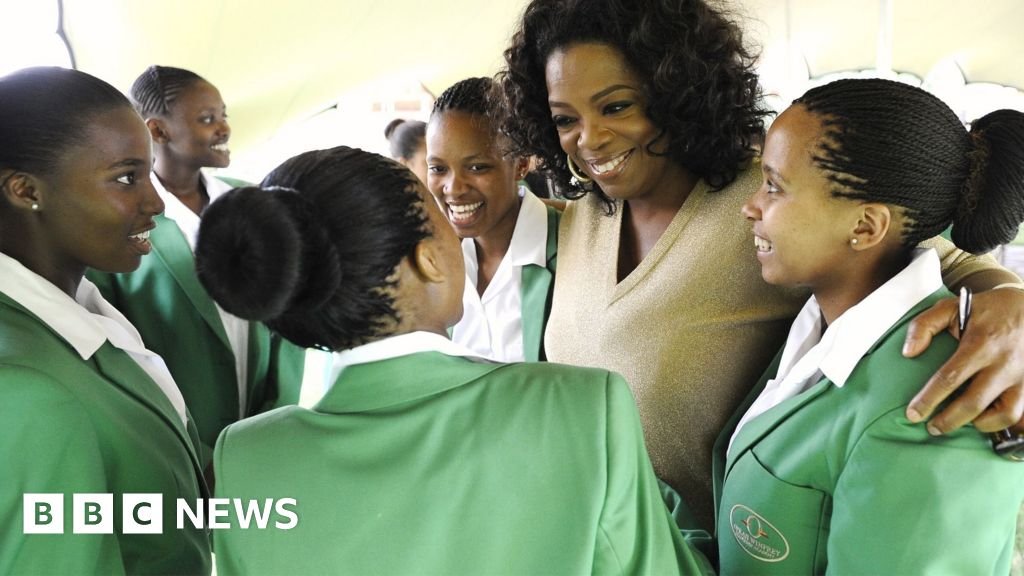
Oprah Winfrey to Close Her School for Girls in South Africa as She Expands Scholarship Programme Henley-on-Klip, South Africa — Oprah Winfrey is closing the doors of her landmark girls' school in South Africa after nearly two decades, transitioning the $40 million campus to local education authorities while launching an expanded national scholarship programme for young women across the country.
Oprah Winfrey to Close Her School for Girls in South Africa as She Expands Scholarship Programme
Henley-on-Klip, South Africa — Oprah Winfrey is closing the doors of her landmark girls' school in South Africa after nearly two decades, transitioning the $40 million campus to local education authorities while launching an expanded national scholarship programme for young women across the country.
The Oprah Winfrey Leadership Academy for Girls (OWLAG), located in Henley-on-Klip, Gauteng, will cease operations as a residential academy after the 2027 academic year. The campus will be handed over to the Gauteng Department of Education, marking the end of an era that began in 2007 when Winfrey opened the school with 152 girls from disadvantaged backgrounds.
A Vision Born from Nelson Mandela's Inspiration
The academy was born from a conversation between Winfrey and the late Nelson Mandela, who encouraged her to invest in South Africa's future through education. When the school opened its gates in January 2007, it represented something unprecedented — a fully funded, world-class educational institution for girls who might otherwise never have had access to such opportunity.
"Investing in the education of young women remains my greatest legacy," Winfrey said in a statement announcing the transition. Her words carry weight across a continent where girls' education remains one of the most effective — yet underfunded — tools for breaking cycles of poverty.
The first cohort of students graduated in 2012, and over the years, the academy has produced doctors, lawyers, engineers, and leaders who now contribute to South Africa's development. From the townships of Soweto to the classrooms of Henley-on-Klip, the ripple effects of this single institution have been felt across the nation.
A Shift from Campus to Country
The closure of the physical campus does not signal a withdrawal from South Africa. Rather, it represents a strategic shift. Winfrey's new approach will fund scholarships for girls to attend leading schools throughout South Africa, potentially reaching far more students than the single campus ever could.
The Gauteng Department of Education has welcomed what it called the academy's "bold new direction." The provincial government will take ownership of the Henley-on-Klip campus, which will continue to serve educational purposes under local administration.
This transition reflects a broader conversation happening across the African continent about the sustainability of donor-funded institutions. For every success story like OWLAG, questions linger about what happens when founding donors move on — a dilemma familiar to communities across Senegal, Ghana, Kenya, and beyond, where foreign-funded schools and clinics face uncertain futures when funding cycles end.
What the Scholarship Programme Means for South African Girls
Under the expanded scholarship programme, girls who meet academic criteria will receive full funding to attend top-tier schools across South Africa's nine provinces. This model allows recipients to remain in their communities while accessing elite education, rather than relocating to a single central campus.
Education analysts in Johannesburg have noted that the scholarship model addresses one of the longstanding critiques of the original academy — that it concentrated opportunity in one location while girls in other provinces had limited access. By spreading support across multiple institutions, Winfrey's programme could create a broader network of empowered young women.
The shift also aligns with global trends in philanthropy, where foundations increasingly favour systemic change over single-institution investment. For African education, where resources are perpetually stretched thin, this approach offers a template for how targeted funding can achieve maximum impact.
Two Decades of Impact — A Legacy in Numbers
Since its founding, OWLAG has educated hundreds of girls from grade 7 through grade 12, providing not only tuition but also housing, meals, healthcare, and extracurricular development. The $40 million investment covered state-of-the-art facilities, including science laboratories, a library, sports fields, and arts centres — resources that rival any private school in the developed world.
For many of its graduates, the academy was a lifeline. Girls who entered as children from circumstances of deep poverty left as young women prepared for university, equipped with confidence and capability. Their success stories stand as a testament to what is possible when resources meet determination.
Yet the academy also faced challenges. In 2007, shortly after opening, reports surfaced that a dormitory staff member had been involved in allegations of abuse — an incident Winfrey addressed publicly and personally, flying to South Africa to comfort students and overhaul the school's safeguarding protocols. The episode became a defining moment in the academy's history, demonstrating both the vulnerabilities inherent in such institutions and the accountability required of those who lead them.
Pan-African Implications — Diaspora Philanthropy and Education
Winfrey's transition carries significance beyond South Africa. Across the continent, diaspora figures and international philanthropists have established educational institutions — from the African Leadership Academy in Johannesburg to the Ashesi University in Ghana. Each faces the same fundamental question: how to build lasting educational infrastructure that outlives its founding donor.
For Senegal and Francophone West Africa, the lessons are equally relevant. While fewer high-profile philanthropic schools exist in the region, the model of targeted scholarships supporting students at existing institutions rather than building new campuses is gaining traction. In Dakar, similar conversations are underway about how to maximise educational impact when resources are limited.
What Winfrey's transition demonstrates is that sustainable education investment is not about buildings — it is about people. A scholarship that sends a girl to a good school costs a fraction of building and maintaining a new one, and it integrates her into the broader educational ecosystem rather than isolating her from it.
What Comes Next for Henley-on-Klip
The Gauteng Department of Education has not yet detailed its plans for the campus after the handover. Local education authorities are expected to repurpose the facilities, potentially as a public school or teacher training centre. For the surrounding community in Henley-on-Klip, the transition represents both an ending and a new beginning.
Current students will complete their education at the academy through the 2027 academic year, with support provided for their transition to university or further study. Staff members have been assured of assistance in finding placements at other institutions.
For the young women still enrolled, the news of their school's closure arrives with the reassurance that Winfrey's commitment to their futures remains unchanged. The scholarship programme will continue to support them, and the broader vision of empowering African girls through education will endure — simply in a new form.
The Bottom Line — A Legacy That Transcends Bricks and Mortar
When Oprah Winfrey opened her academy in 2007, she made a promise to South Africa's girls. Nearly two decades later, that promise is not being broken — it is being reimagined. The campus may close, but the mission continues, dispersed across a nation where hundreds of young women will now have the chance to learn, lead, and lift their communities.
For Amara Diop, reporting from a continent where girls' education is both the most urgent challenge and the most promising investment, this story resonates deeply. The school buildings may pass to new hands, but the futures they shaped will not be forgotten. From the classrooms of Henley-on-Klip to the scholarship desks of South Africa's finest schools, the legacy of one woman's vision lives on in every girl who dares to dream beyond her circumstances.
By Amara Diop, Staff Writer
This article was produced with AI-assisted research and editorial support. Reporting is based on sources cited in the article.
What's Your Reaction?
 Like
0
Like
0
 Dislike
0
Dislike
0
 Love
0
Love
0
 Funny
0
Funny
0
 Wow
0
Wow
0
 Sad
0
Sad
0
 Angry
0
Angry
0

West Africa/Sahel Correspondent at Global1.News. Dakar-based journalist covering politics, security, climate, and development across Francophone and Anglophone West Africa. Tells the stories of a region undergoing profound transformation.














Comments (0)