
Ohuira Bay Ammonia Plant Conflict: Federal Plan Meets Indigenous Resistance
TOPOLOBAMPO, Mexico — Twelve years after it was approved, the nearly completed ammonia plant beside Ohuira Bay has brought the Mexican government and the Yoreme-Mayo communities who live beside the water to a defining crossroads.
Ohuira Bay Ammonia Plant: Federal Plan Meets Indigenous Resistance
TOPOLOBAMPO, Mexico — Twelve years after it was approved, the nearly completed ammonia plant beside Ohuira Bay has brought the Mexican government and the Yoreme-Mayo communities who live beside the water to a defining crossroads. A federal proposal unveiled last week promises safeguards and investment — but leaves the plant itself intact, and the communities must now decide whether to accept it through their own assemblies. The blockade outside the plant gate, now in its 72nd day, remains in place until they do.
The federal proposal and what it promises
Federal officials unveiled a plan last week to address the 12-year conflict over the nearly completed ammonia plant beside Ohuira Bay in northern Sinaloa. The proposal, presented after six days of roundtable talks, includes environmental safeguards, community monitoring and public investment around the German-backed GPO-Proman facility. Federal commissioner Mauricio Rodríguez Alonso stressed that the plan grew out of dialogue among the communities, GPO-Proman and government agencies, and said the company had agreed in principle to its commitments.
The plan promises that GPO-Proman will stop drawing water directly from Ohuira Bay and instead use water discharged through a nearby Federal Electricity Commission canal. Wastewater would be carried offshore rather than released back into the lagoon system. An environmental baseline study, continuous water-quality monitoring and an oversight body made up of community members, scientists, government officials and company representatives are also part of the proposal — a body that would have authority to monitor compliance with environmental safeguards and raise alerts if standards are not met.
Additional measures aim to address existing sewage and agricultural runoff entering the bay, improve emergency preparedness and civil protection, and meet longstanding community needs such as housing, education, fishing infrastructure and assistance in certifying local shrimp and crab products for higher market prices. The proposal also keeps planned methanol and urea plants and a port terminal on hold unless the communities agree to them.
While the government frames the plan as a path toward resolving one of Mexico’s longest-running environmental battles, movement leaders emphasized that no agreement has been reached and that they do not have the authority to accept the plan on behalf of their communities. The proposal must first be explained and discussed in assemblies in Ohuira, Paredones, Lázaro Cárdenas and Topolobampo.
The communities' opposition and the 72-day blockade
Indigenous Yoreme activist, rural sociologist and law student Melina Maldonado said she did not feel relieved when the federal proposal was presented. “They didn’t listen to our reasons for saying no,” Maldonado said. “They listened for a way to make it a yes.” After six days of talks she had begun to feel hopeful, but the proposal left the plant’s operation largely intact, exposing the fundamental divide: the government offers ways to make the plant safer, while the communities closest to the bay insist it should not operate at all.
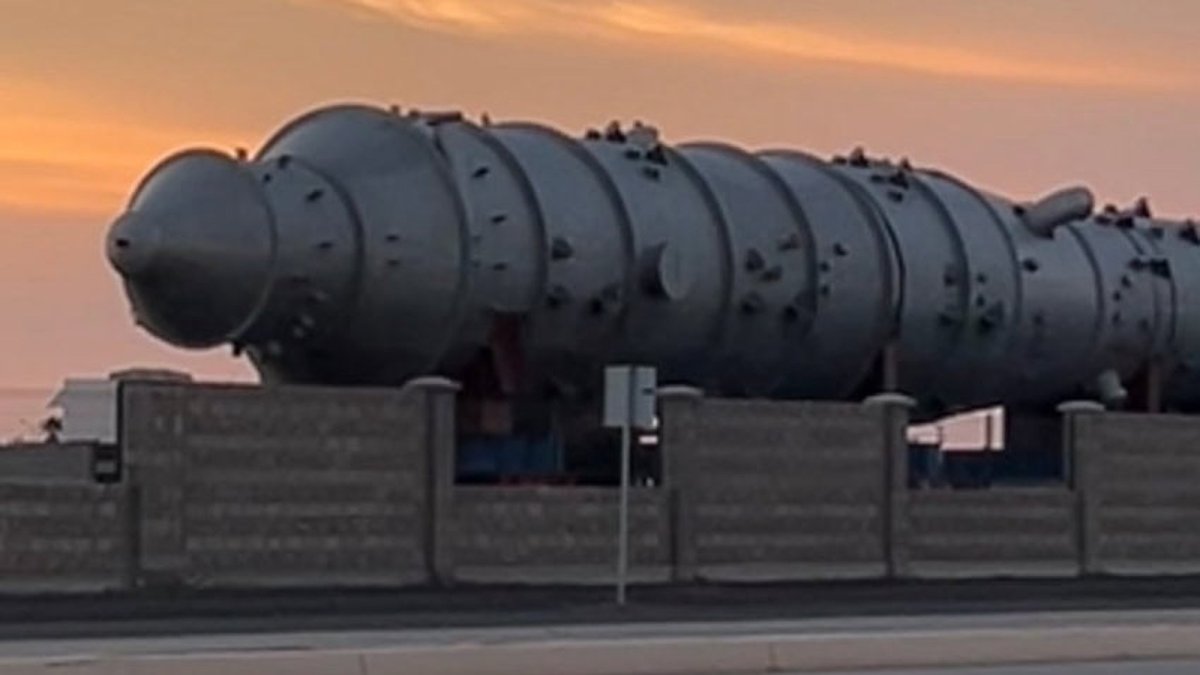
The opposition has taken the form of a blockade outside the gate to the plant, now in its 72nd day. Protesters began in late May by trying to block the movement of massive absorption towers from the port, later shifting their encampment to the plant entrance where they have remained through extreme heat and intense storms. The blockade is maintained by the ¡Aquí No! (Not Here!) collective, led by Yoreme-Mayo communities surrounding Ohuira Bay.
Claudia Susana Quintero, a Yoreme educator and resident of Ohuira, explained that the community must hold its own internal assemblies to analyze the proposal and reach consensus. “We have to hold our own internal assemblies,” said Claudia Susana Quintero. “We have to explain it to the community, analyze it and decide how we are going to reach consensus.” The representatives’ role is to take the proposal home and return with a decision reached collectively — not to accept it on their communities’ behalf.
Movement leaders stressed that they cannot accept the plan on behalf of their communities, and that the blockade will remain until a collective decision is made. The protest has become a symbol of the broader struggle over industrial projects on Indigenous lands in Mexico.
The plant's scale and history (12-year conflict, approved 2014, $1.6 billion, 88% complete)
The US $1.6 billion plant, designed to produce 2,200 metric tons (2,425 tons) of ammonia a day, is reportedly about 88% complete. Opposition began soon after the project was approved in 2014 and has centered on threats to fishing, the lagoon ecosystem, industrial safety and what Yoreme communities describe as a deeply flawed Indigenous consultation.
The facility sits beside the Santa María-Topolobampo-Ohuira lagoon system, a Ramsar wetland of international importance. The four communities that would bear the plant’s most direct impacts — Ohuira, Paredones, Lázaro Cárdenas and Topolobampo — have been at the forefront of the resistance for over a decade.
The government's food sovereignty argument (Sheinbaum, Economy Ministry, fertilizer imports)
President Claudia Sheinbaum has repeatedly presented the Ohuira Bay ammonia plant as a cornerstone of her administration’s food sovereignty agenda. She argues that domestic ammonia production will cut reliance on foreign fertilizer supplies, which currently meet almost all of Mexico’s agricultural needs.
During her morning press briefings (mañanera), Sheinbaum has highlighted that the plant underwent an environmental review and received majority support in the government-led Indigenous consultation — a process the four communities closest to Ohuira Bay continue to dispute. She has also emphasized that the plant is nearly finished, suggesting that halting it would waste significant public and private investment.
The Economy Ministry backs this view, estimating that the GPO plant could slash fertilizer imports by up to 70%, retaining roughly half a billion dollars annually in the national economy. Officials frame the project as a strategic move to strengthen Mexico’s agricultural resilience and reduce vulnerability to global market fluctuations.
Critics, however, argue that national food security should not come at the expense of local ecosystems and community health. They contend that the risks of industrial accidents and long-term environmental damage are concentrated in the Yoreme villages surrounding the bay, while the benefits accrue to distant agribusinesses and urban consumers.
The catastrophic ammonia release risk (15km/45km zones, 75,000 metric tons storage)
Despite the promised safeguards, movement leaders warn that the underlying danger of a catastrophic ammonia release remains. According to GPO-Proman’s own risk assessment, a five-minute leak could create a high-impact zone extending roughly 15 kilometers (9 miles) from the plant, encompassing Topolobampo and nearby Yoreme communities. A broader impact zone could reach as far as 45 kilometers (28 miles), extending toward Los Mochis and other surrounding areas.
The plant is designed to store up to 75,000 metric tons (82,670 tons) of anhydrous ammonia near populated communities. Ulises Pinzón, Topolobampo’s municipal representative, said the risk is still present and not fully clear to residents. “That risk is still there, and it is still not clear to us,” Pinzón said. “The first people affected would be those of us who live in Topolobampo.”
Claudia Susana Quintero echoed this concern, noting that while the proposal may reduce certain environmental impacts, it cannot eliminate the consequences of a major industrial accident. “You can remediate many things,” she said. “What you cannot remediate is the loss of life.”
Melina Maldonado pointed to the company’s brightly colored risk map, stating, “This is the risk zone the company itself identified,” she said. “And now they are minimizing it or pushing it into the background.” For her and many others, the mere presence of such a storage volume near homes is unacceptable.
The government proposal does include new safeguards: an emergency-response center, joint industrial-risk monitoring, water curtains around pipelines and storage tanks, and a regional civil-protection plan — something Rodríguez Alonso acknowledged does not currently exist. However, activists argue that emergency planning and mitigation cannot remove the fundamental hazard posed by storing tens of thousands of tons of toxic ammonia close to residential areas.
Threats against leaders and the human rights protection mechanism
Several of the movement’s most visible leaders have received threats related to their opposition to the plant and now live under government protection measures. Four of ¡Aquí No!’s most visible leaders, including Melina Maldonado, Claudia Susana Quintero and Ohuira traditional governor Felipe Montaño, have been enrolled in Mexico’s federal protection mechanism for human rights defenders and journalists.
Protection measures can include bulletproof vests and government-issued panic buttons intended to summon help in an emergency. Quintero said such equipment offers little comfort as the communities prepare to deliver an answer that government officials and project supporters may not want to hear. “I know my community is going to say no,” she said. “But now the government is putting us in the line of fire against the rest of society that says yes.”
She also warned that protection equipment offers little comfort if someone decides to act tomorrow. The experience, she added, has gradually consumed the rest of their identities. “We are no longer mothers, daughters or sisters,” she said. “We are nothing more than defenders.”
The threats underscore the heightened risks faced by environmental and Indigenous activists in Mexico, particularly when large-scale infrastructure projects intersect with communal lands and resources.
What happens next (community assemblies, consensus decision, blockade)
Until the proposal is discussed and decided upon in community assemblies, the blockade outside the plant gate will remain in place. The representatives of ¡Aquí No! must take the plan back to their villages, explain it, analyze it and reach a consensus through their traditional Indigenous governance model.
Enrique Ayala, a longtime activist staying at the blockade, said movement leaders spent six hours Thursday with scientists and lawyers analyzing the proposal and plotting their next steps. “The government proposal is one-sided,” Ayala said. “They are pushing ahead with their project.” Yet he also saw progress in the government’s willingness to sit down with them after years of being ignored. “We have to get up, keep going and make proposals of our own,” he said. “After 12 years when they paid us no attention, now we have them sitting at the table.”
Despite the government’s apparent intention to move the plant toward operation, Ayala said the movement has not abandoned its original goal. “We still believe we can get the company to leave,” he said. “Sometimes you have to dream.” The coming weeks will see assemblies in Ohuira, Paredones, Lázaro Cárdenas and Topolobampo, where the Yoreme-Mayo communities will determine whether to accept the federal proposal or maintain their demand for the plant’s cancellation.
Tags: Ohuira Bay, ammonia plant, Sinaloa, Yoreme, Indigenous consultation, Claudia Sheinbaum, GPO-Proman, fertilizer imports, food sovereignty, human rights defenders, ¡Aquí No!, environmental risk, ammonia leak, Topolobampo, federal protection mechanism, community assemblies, Ramsar wetland
This article was produced with AI-assisted research and editorial support. Sources: Mexico News Daily (August 9, 2026), Ojalá, Causa Natura Media, Mazatlán Weekly.
By Rosa Martinez, Staff Writer
What's Your Reaction?
 Like
0
Like
0
 Dislike
0
Dislike
0
 Love
0
Love
0
 Funny
0
Funny
0
 Wow
0
Wow
0
 Sad
0
Sad
0
 Angry
0
Angry
0

Latin America/Andes Correspondent at Global1.News. Based in Bogota, covering politics, environment, energy, and social movements across the Andean region. Passionate about environmental journalism and communities protecting their land.














Comments (0)